South Africa feels more like Europe than Africa—a cleaner, more affordable, and sprawling version of Europe. It boasts automated guest accommodations, potable tap water, excellent road infrastructure and markings, a clean environment, and a diverse mix of white and black residents, which all bring Europe to mind. However, it also experiences significant street crime, obvious poverty, drivers who rarely stop for pedestrians, and widespread English proficiency—traits not typically associated with Europe.
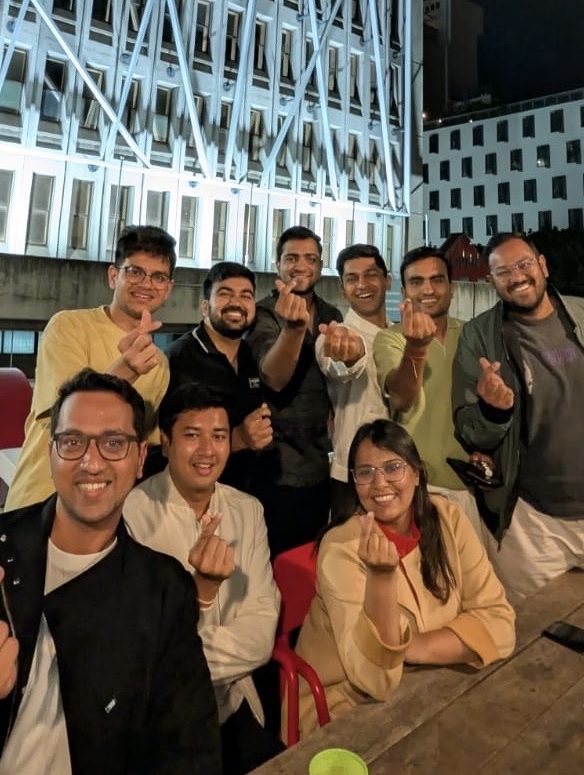
A group of ten friends, including myself, embarked on a 14-day journey across South Africa. Trust me, South Africa has become my top travel destination. We departed on December 21, 2024, and returned on January 4, 2025. Here is a look at our itinerary:
| Date | Day | When Awake | Night in |
| 21st Dec | Sat | Flight from India | Joberg |
| 22nd Dec | Sun | Maboneng, Apartheid-Soweto Tour | Joberg |
| 23rd Dec | Mon | Marloth Park Drive | Kruger |
| 24th Dec | Tue | Grand Kruger Drive | Kruger |
| 25th Dec | Wed | Trip to Eswatini (Swaziland) | Kruger |
| 26th Dec | Thu | Fly to Cape Town- Self Drive Starts | Hermanus |
| 27th Dec | Fri | Shark Cage Diving & Garden Route Drive | Garden Route |
| 28th Dec | Sat | Robberg Reserve Trek & Knysna Sunset | Garden Route |
| 29th Dec | Sun | Tsitsikamma Canyoning & Bungee | Garden Route |
| 30th Dec | Mon | Oudtshoorn & George | Garden Route |
| 31st Dec | Tue | Betty’s Bay & NYE | Cape Town |
| 1st Jan | Wed | Table Top Mountain & Gaming Arcade | Cape Town |
| 2nd Jan | Thu | Canal Walk Mall & Mama Africa | Cape Town |
| 3rd Jan | Fri | Souvenir Shopping & Travel to Joberg | Joberg |
| 4th Jan | Sat | Fly back to India |
Something about today’s South Africa
South Africa has become my absolute favorite country so far. It is incredibly diverse in its offerings. The population density is quite low in both the cities and the outskirts alike. This leads to large houses, ample open spaces, traffic-free roads, a lot of public space to oneself, and shorter queues everywhere.
In terms of experiences, South Africa features a vibrant city like Cape Town, well-developed wildlife experiences at Kruger National Park, and beautiful beaches and countryside along the Garden Route. The country has three capitals: Pretoria (administrative), Cape Town (legislative), and Bloemfontein (judicial), while Johannesburg (a.k.a. Joburg) serves as the financial capital.
South Africa boasts the best road infrastructure anyone in our group has ever seen. This includes friends who have traveled to the USA, most Western European countries, and even to the major oil-producing nations of the Middle East. All roads in South Africa have such perfect road markings, signboards, “Stop” signs, and timed traffic lights that driving there itself is a sought-after experience.
South Africa is the most English-speaking country I have visited, and no, I haven’t been to the UK, USA, or Australia yet. Everyone, rich or poor, speaks English comfortably, making conversations, negotiations, and arguments much easier.
The country is definitely more expensive than India, roughly 1.6 times the price level in India. However, when you travel for 12+ hours and find the place to be cheaper than Europe (with the same travel time), it feels like a sweet deal. Alcohol is actually much cheaper than in India. You can get Jagermeister shots for around INR 120, even in premium restaurants, and South Africans say they never buy alcohol from restaurants due to high prices.
In terms of food, the country is a big-time meat-eater. Vegan restaurants are a rare sight—perhaps one or two in Cape Town—which are not particularly fancy or serving the best vegan dishes. Nevertheless, vegan and lacto-vegetarian options are easily found in all restaurants. Even if a menu has only a few vegan options, restaurant staff are trained to accommodate vegan needs and can modify certain items accordingly. For those who do not wish to eat at restaurants that also serve meat, South Africa could present a challenge.
Crime on the streets is a significant issue, and I will cover that separately in another section.
Almost everyone accepts bank cards, with both Mastercard and Visa being accepted nearly everywhere. In terms of currency, like India, all prices are quoted in the local currency, which is the South African Rand (ZAR). The INR to ZAR ratio was about 4.6 to 1 when we visited. Unlike Sri Lanka or Egypt, we did not find a black market for converting USD into cheaper local currency. Therefore, I advise travelers to bring either forex convertible cards, Rands, or USD converted to Rands at the start of your trip.
The country lies below the Tropic of Capricorn, meaning December corresponds to summer in South Africa. December and January are considered their hottest months, but temperatures rise only to about 25-26 degrees Celsius, and that too for just a few hours at noon. Their summers are, in fact, somewhat chilly or mild for us Indians. Since the country is large, days are longer by an hour in Cape Town compared to Johannesburg. It would get dark after 8 PM in Cape Town, compared to around 7 PM in Johannesburg and Kruger.
And no, you don’t need a yellow fever vaccine certificate to enter South Africa or to return to India. However, many African and South American countries do require it; India will also require it if you are returning from one of those countries or have spent over 12 hours in their airports. Our layover in Ethiopia (a Yellow Fever country) was only for two hours and four hours, respectively, so we didn’t need one.
The Unsafe South Africa
Nobody walks in South Africa. This was an instant observation on the second day of our trip, in Johannesburg. South Africa serves as a stark example of what extreme inequality does to a society. Whites make up 8%, Indians and Asians 9%, 1% are miscellaneous, and the remaining 82% are black. It felt as though all the wealth is concentrated among that first 8%. All Airbnb hosts, restaurant owners, hotel owners, anyone driving a luxury car, and most customers at decent to premium cafés and bars, as well as managerial staff in hospitality and other upscale sectors, were predominantly white. In contrast, all taxi drivers, most waiters, all beggars and homeless individuals, all luggage handlers, parking attendants, and many other menial jobs were performed by black individuals. It doesn’t take a Eureka moment to connect the dots between the legacy of apartheid and the current South African situation.
The country’s unemployment rate is at 33%—one-third of the working population is unable to find work, and most of this group is black. This has led to widespread begging, large ghettos, mass mugging, and other crimes throughout the country. Johannesburg is particularly affected by these issues. One can observe the dire situation of the poor from the cab window, along with the potential threat of being attacked, should they not be safely inside the cab.
In many Indian cities, there is a fear of being molested by a stranger, but the fear of being mugged is usually absent. In European cities like Paris and Rome, the risk of molestation is quite rare, but mugging or being attacked from behind or in a dark alley is commonly heard of. In South African cities, particularly Johannesburg, the threat is not lurking behind you or concealed in a desolate alley; it is very much in front of your eyes. In most neighborhoods, you can see a large number of poor individuals who both appear to have the motive and the demeanor to rob you of your valuables.
We visited the Maboneng Precinct, one of the more tourist-friendly areas of Joburg, and we have never felt so unsafe in our lives. All eight of us walked together in uncomfortable proximity, refraining from taking out our phones for any pictures (at least initially), and we remained constantly vigilant of our surroundings. The grocery store had a metal grill for the cashier, the café staff demarcated the areas where we should walk, and a Bangladeshi shop worker informed us about the seven instances of gun violence that took place at the shop in the last four years. If a tourist area feels this way, I wonder what the other neighborhoods must be like.
Everyone with money has a paid private security service, a phone call away from their homes. Each house’s wall displays a poster indicating which security agency protects it, serving to deter trespassers. The homes are equipped with emergency alarm systems that lock all gates and windows and can immediately alert both the police and the private security company.
In Kruger, accommodations must be booked in advance within the already highly controlled larger area, which is relatively safe from crime. The towns along the Garden Route also appeared quite safe during the day, especially if you have access to a car. However, larger towns again harbor poor ghettos, leading to some streets being unsafe for strolling. Cape Town, being a large city, is much safer than Johannesburg but still has significant risks associated with walking at night or even during the day in less crowded streets. The areas near the V&A Waterfront are relatively safer than those farther away from it.
Cost of the Trip
| Amount (INR) | Comment | |
| International Flights | 40,000 | BOM-ADD-JNB (Ethiopian) |
| Visa, Insurance, SIM | 3,500 | Visa free (VFS fees Rs 2301), SIM is too cheap (MTN), Any Insurance |
| Stays | 48,000 | 14 nights, 3.5k pp/night |
| Self-Drive Car | 9,000 | 5 days, 3 cars, rent + fuel + fines |
| Entrances & Tours | 65,000 | Kruger Safari, Bungee, Shark Cage, Canyoning, Soweto Tour, Arcade etc |
| Food & Drinks | 45,000 | 14D, 3 meals + alcobevs, Rs 3.2k pp/ day |
| Internal Flights | 26,000 | Kruger to Cape T, Cape T to Johannesburg |
| Shopping | 10,000 | Souvenirs, Duty Free |
| Indian Domestic Flights | 18,000 | BLR-BOM, BOM-BLR + Extra baggage fees |
| Intra-City Cabs | 2,500 | Uber in South Africa |
| Total | 2,67,000 |
Visa Fees & Process
Indians can obtain a free visa for South Africa; however, a pre-approved visa is mandatory. There are two types of visas one can apply for, both requiring the same documentation to be submitted. The first is the e-visa, which can be applied for through their website. It takes about one week for this visa to be granted. The second option is a sticker visa, which can be applied for directly through VFS, through an agent via VFS, or through Atlys.
Although the visa fee is nil, VFS charges Rs 2,301 for processing, while Atlys might charge slightly more, and the agent plus VFS option would cost around Rs 5,000. The sticker visa typically takes about 7-10 calendar days to issue, not counting working days. Eight of us applied for the sticker visa and received it in one go; one person applied for the e-visa and also got it in one go. The tenth individual was a Nepali citizen who was rejected twice, leading to a delay of more than three months, and he also had to pay a visa fee.
Our 14D14N Itinerary
21st Dec, Saturday
We checked flights from all major Indian airports to all major South African airports (and back) and were pleasantly surprised to find that the Mumbai-Johannesburg return flight on a full-service airline, with only a two-hour layover and no need for a transit visa, was costing us just Rs 40,000! This price range was offered by both Ethiopian Airlines and Kenya Airways. We chose Ethiopian Airlines as their timings suited us better.
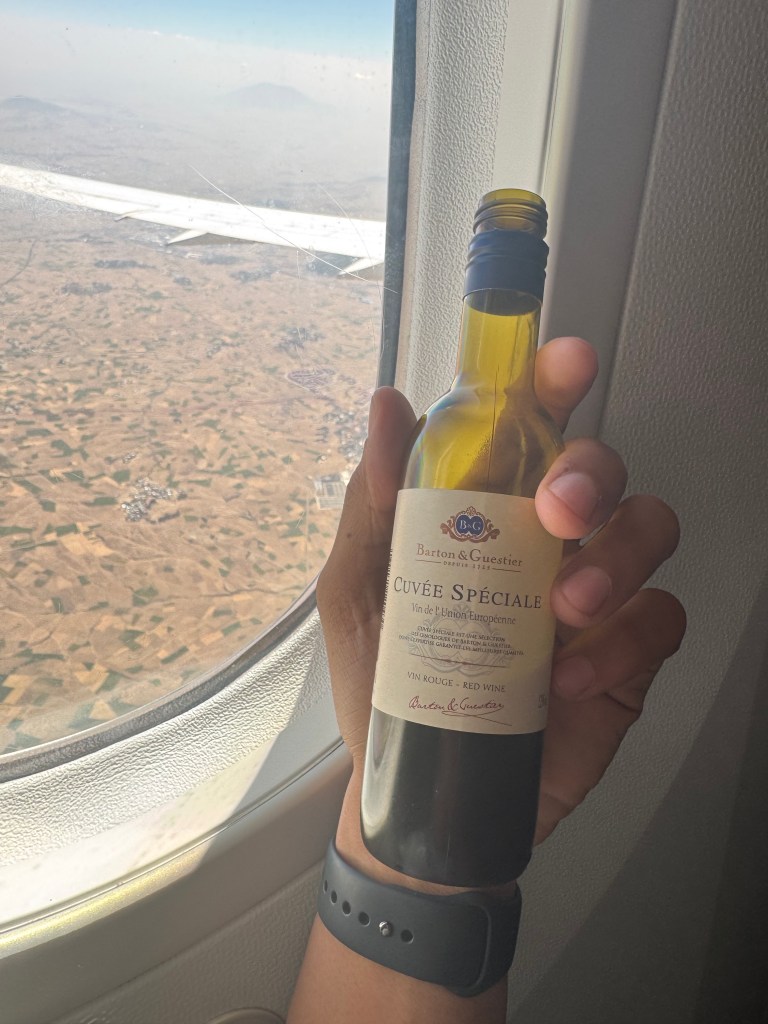
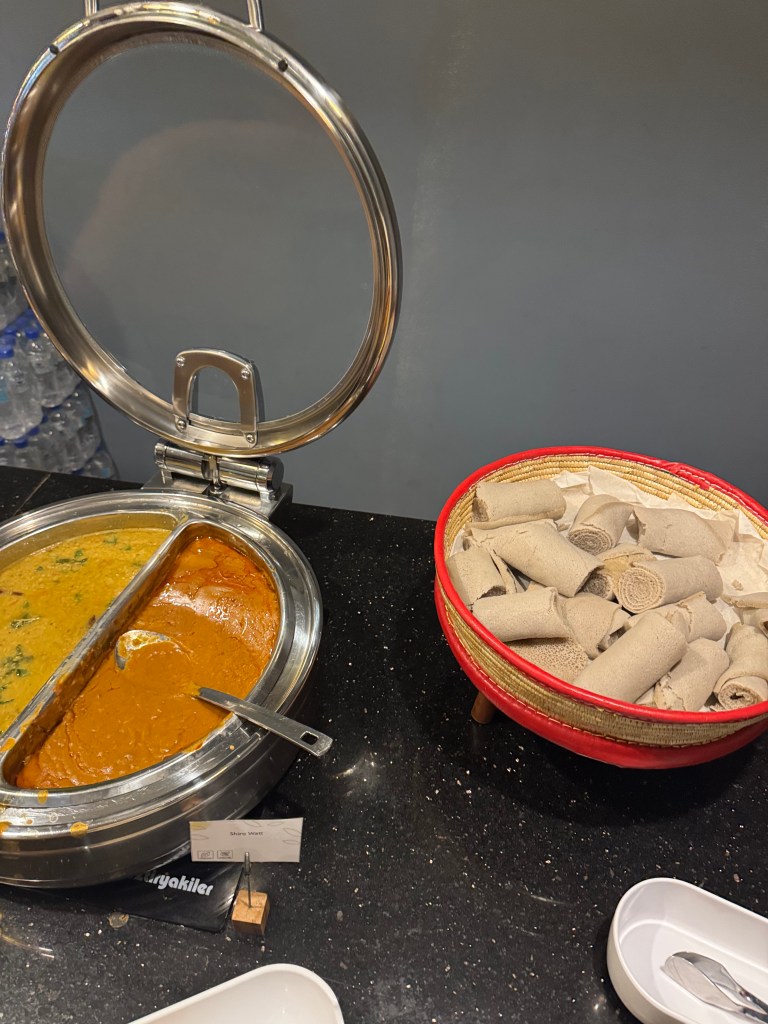
Our BOM-ADD (Addis Ababa) flight was scheduled for around 11 AM from Mumbai and reached Addis Ababa after about 5 to 5.5 hours. The Ethiopian Airport had open-access Wi-Fi and a decent lounge that accepted both Diners and Priority Pass. We all entered and enjoyed some Injera with curry. We then continued on another 5 to 5.5-hour flight to JNB. Due to some VIP movement in Ethiopia, we had to remain in the aircraft for about 1.5 hours! As a result of this delay, we arrived at JNB at 9:45 PM.

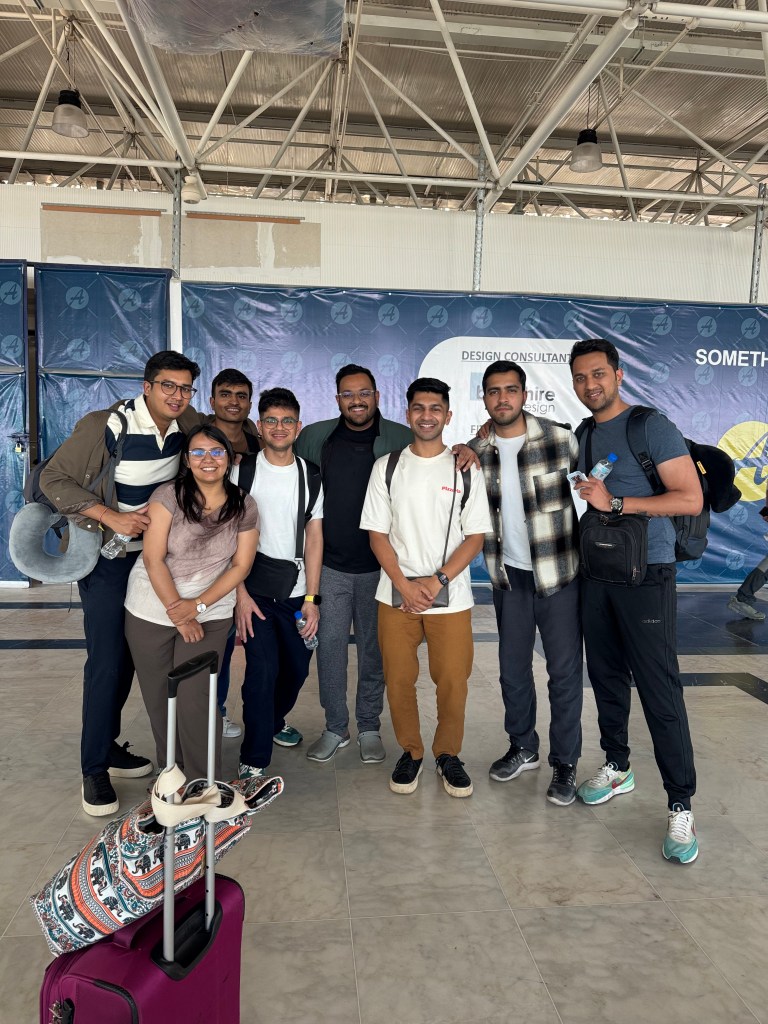
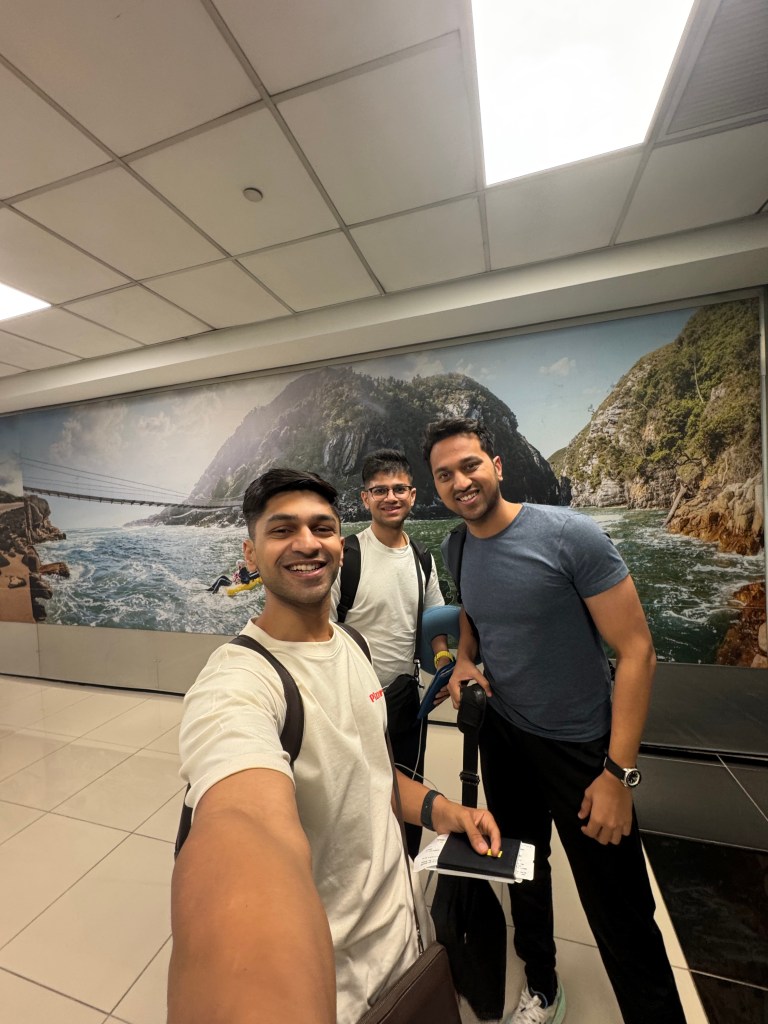
We completed our immigration process easily, collected our bags, logged into the airport Wi-Fi, and booked Ubers to our Airbnb. Please note that many random drivers at the airport will claim to be from Uber; ignore them and book only through the app. On the app, review the driver’s history and ratings before getting in. Cars there have alpha-numeric license plates, so be extra careful to match the plate number with the one displayed in the app. Unfortunately, all shops and restaurants were closed at the airport by the time we landed, leaving us without options for food. The SIM card shops for both Vodafone and MTN were also shut at that hour, meaning we had no mobile connection after leaving the airport’s free Wi-Fi.
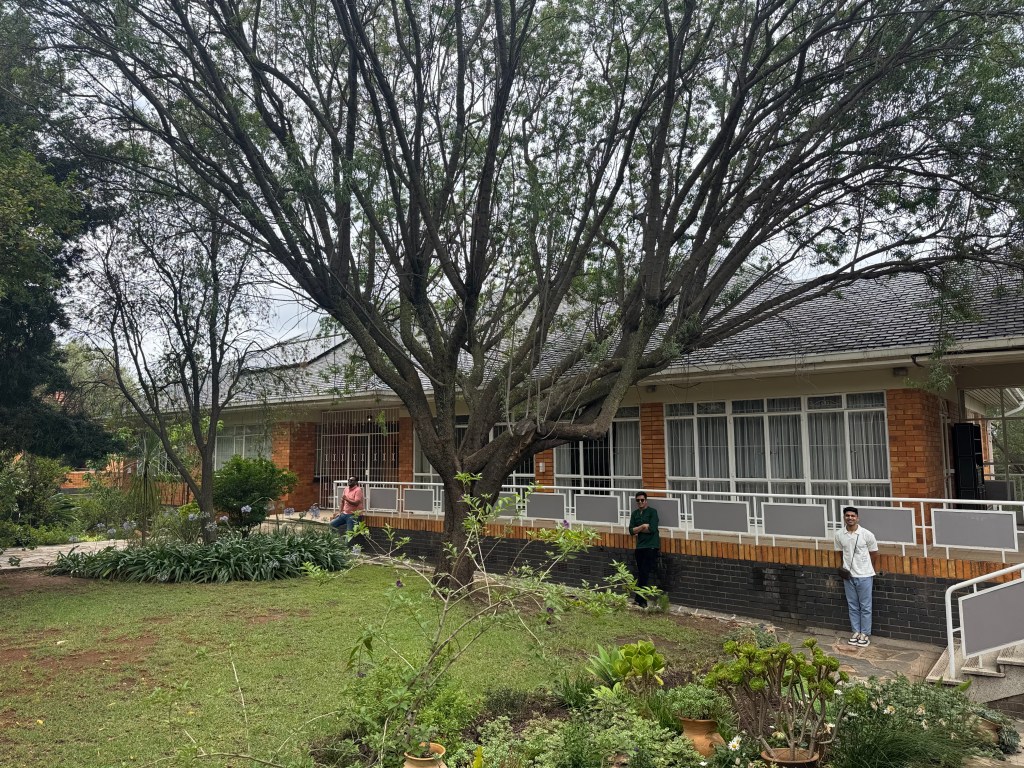
We arrived at our Airbnb around 11 PM, and it was the most lovely bungalow I have ever stayed in. It’s listed as the Solar African Soul Villa by Mini. It featured two private gardens, one private pool, multiple well-furnished rooms, a huge kitchen and dining area, a spacious sitting area, and a private room for couples. It was almost midnight and many restaurants on the Uber Eats app were about to close. Being vegetarians, our options were already limited. The card payment was continuously throwing up challenges, and we couldn’t place our order, which resulted in the closure of all food options on the app (at midnight). We were hungry and out of options for dining in or going out. Luckily, one of us had brought Bhel packets from India, which became our dinner on the first night. We had initially considered going out clubbing, as it was a Saturday night, but ultimately decided against it since the entire city seemed deserted and quiet at that hour, and we were somewhat tired from a full day of air travel. We enjoyed a few drinks, played some light games around the table, and called it a night.
On a scale from -5 to +5, I would rate Ethiopian Airlines as a +1 and the Solar African Soul Villa as a +4.
22nd Dec, Sunday
We all woke up somewhat hungry, having had a very light dinner the previous night. So, we immediately ordered vegetarian sandwiches, oatmeal, and smoothies for all of us through Uber Eats. We used a PayPal account to make the online payment, as the app doesn’t accept cash on delivery beyond a certain order value. The food arrived somewhat late, but the delivery and collection process was quite similar to India’s Zomato/Swiggy.
We visited getyourguide.com and booked a 4-5 hour Apartheid Museum and Soweto Tour for the eight of us at 1 PM. It was 9:30 AM, and we all got ready and headed to Maboneng Precinct. The internet called it a tourist-friendly street known for graffiti, cafés, and shops. Upon arriving, we found ourselves in a very hostile neighborhood. There were hawkers and beggars all around, who seemed to have both the potential and desire to harm us.
At the Maboneng District, all eight of us stayed close together. We first looked for a SIM card shop, as seven out of the eight of us didn’t have an internet connection. We found a shop run by two Bangladeshis who spoke Hindi as well. They informed us that MTN offers a SIM card with 5 GB of data and a validity of 7 days for just 50 rands. The informal MTN SIM distribution network even includes beggars who earn a commission from these sales. The shopkeeper called over one of these girls sitting on the sidewalk across the road, and she sold us seven SIM cards. No passport or identification of any kind was needed to acquire the SIM cards; it came with 5 GB of data but no talk time. It worked perfectly. After 7 days, the remaining data lapses, and one can go to any supermarket to recharge for the same amount of 5 GB data for just 50 rands.
This SIM card acquisition took a good 40-50 minutes, and we remained vigilant the entire time, as many people were staring at us. Afterward, we rushed back to a supermarket. The cashier had a steel barricade between him and the customers, seemingly to protect himself from physical violence. From there, we headed to Pata Pata African Restaurant, located across the street, for an early lunch.

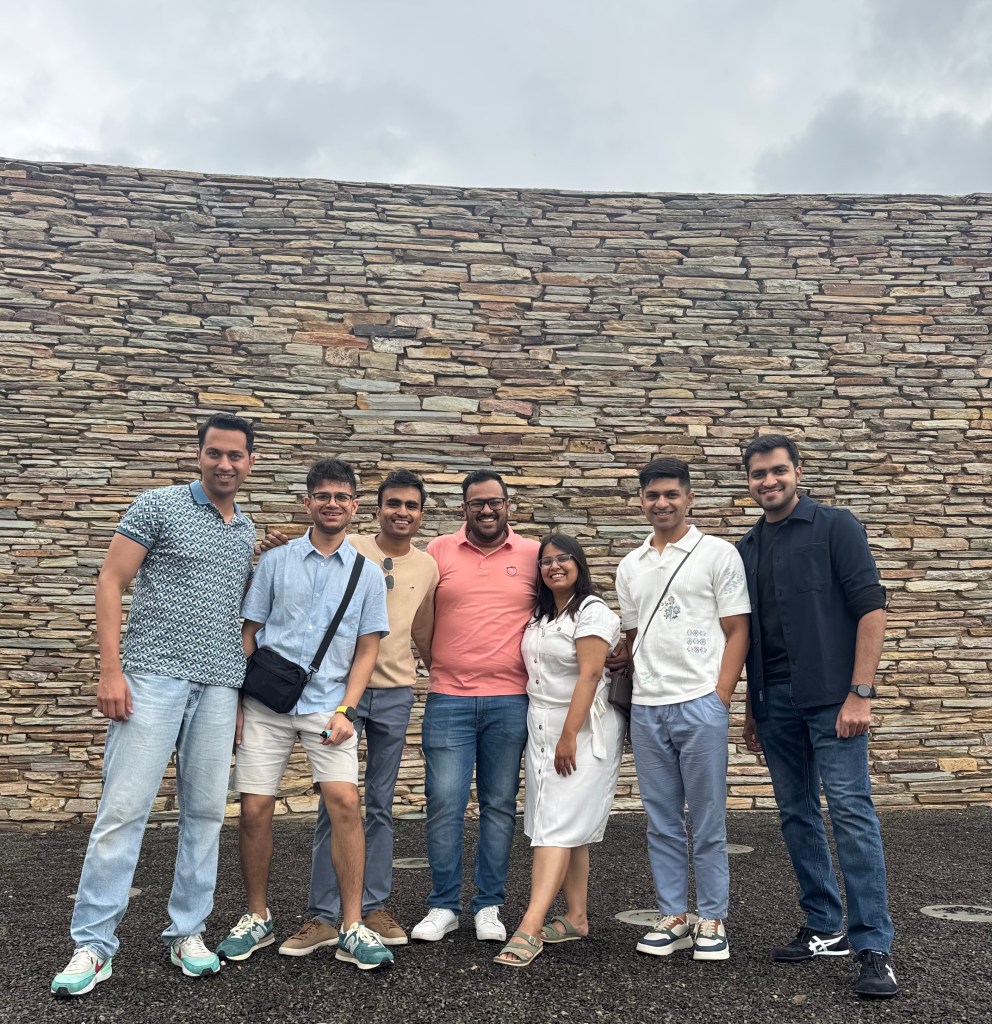
The pickup for our Apartheid tour arrived a little after 1 PM. The meeting point was very public, with decent vehicle movement, so we mustered the courage to take a few pictures while waiting for the driver. When the driver arrived, we headed to the Apartheid Museum. The museum is huge and filled with visual stimuli and short writings that explain the chain of events. A short, rushed tour takes about 1.5-2 hours.
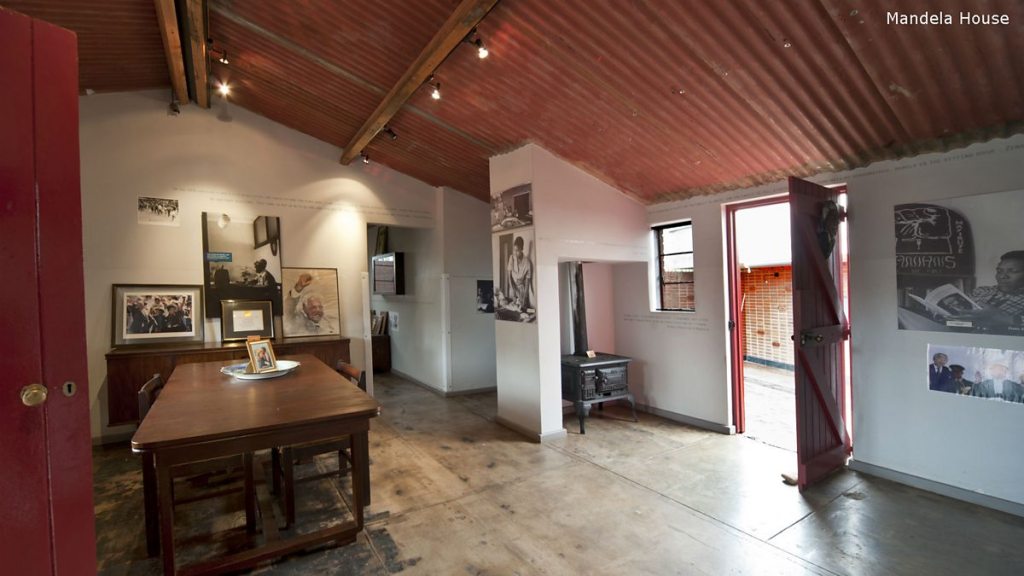
From there, we traveled to the Soweto neighborhood. Soweto stands for South Western Township and is the largest township in South Africa. Just before reaching Soweto, we passed one of the largest hospitals in the world, the Chris Hani Baragwanath Hospital, which has 3,200 beds (the largest in India is GMC Kozhikode, with 3,025 beds). Soweto is an all-black neighborhood with a deep history of the evils of apartheid. We drove through various lanes, observing the abysmal living conditions of its residents (much better than Dharavi or other Indian squatters). We visited Nelson Mandela’s house, which has been converted into a museum with guided tours lasting about 20 minutes. Desmond Tutu’s house is also on the same lane, but entry is not permitted, as his family still lives there. Fun fact: this lane is the only one in the world to have the houses of two Nobel Prize winners (Peace).
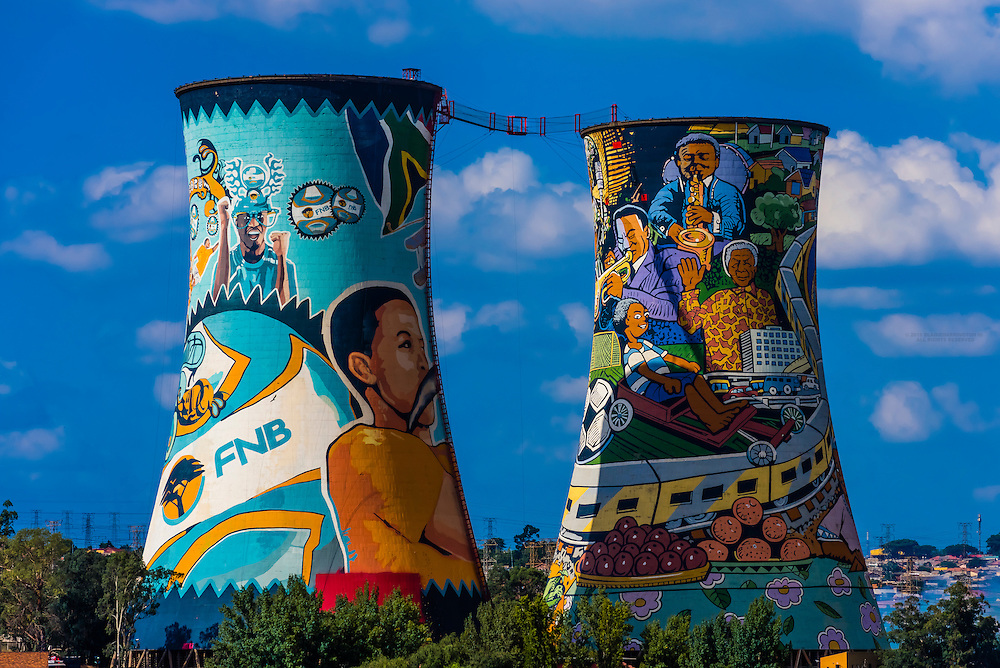
South Africa also boasts really large malls, and they aren’t mistaken. We could have gone to the largest mall, called the Fourways Mall, but it was about 17 kilometers away, so we opted for another big mall that was closer, called Eastgate Mall. It was quite large; unlike Indian malls, which usually have multiple floors labeled B1, G, 1, 2, and 3, this mall had only G and 1. The spread was huge but nothing compared to the Dubai Mall. We shopped a bit (nothing extraordinary) and then headed to News Cafe, which served excellent cocktails and delicious vegetarian dishes (though they had only four options). We had a fantastic night filled with drinks and table games before heading back to our Airbnb to crash.
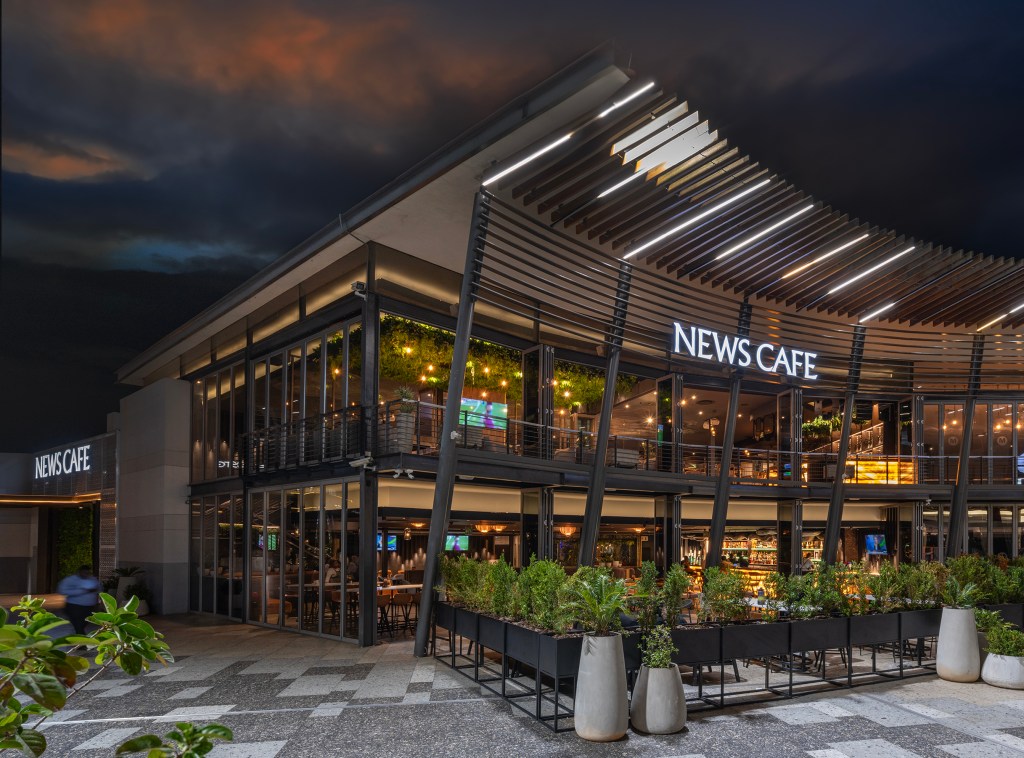
On a scale of -5 to +5, I would rate Maboneng Precinct as a -3, Pata Pata African Restaurant a +2, the Apartheid Museum a +2.5, the Soweto Neighborhood Tour a +1.5, the Eastgate Mall a +0.5, and News Cafe as a +2.5.
23rd Dec, Monday
The day started early as we had our pickup arranged for 7 AM. The car would take us five hours to Kruger National Park. We all got up around 5:30-6 AM, got ready, and packed our bags. The previous night, we had shopped for groceries at the supermarket in the mall for today’s breakfast. Two of us volunteered to make sandwiches and instant noodles with flavored yogurt for everyone. By 6:45 AM, we were all ready and had breakfast. The car arrived at 7:10 AM, and we packed our 20+ bags into it and the trailer.
The roads in South Africa are excellent throughout the country. Our driver was also skilled and was the only white driver we encountered during our stay. After two stops for fuel and restrooms, we reached our resort in the Marloth Park section of the Greater Kruger Area around 1 PM.
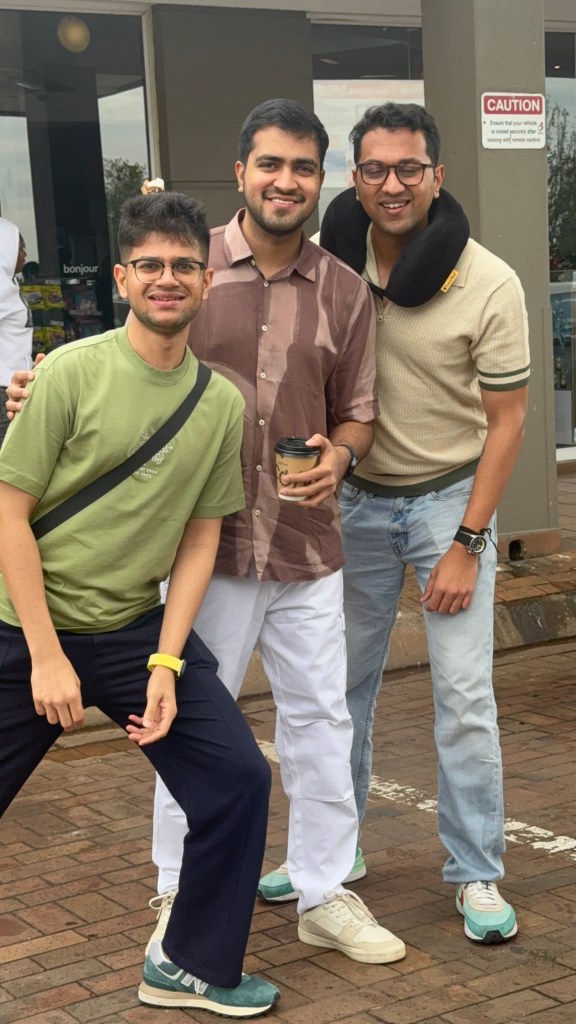
A little about the Kruger Safari Experience: Kruger National Park is a government-owned and operated national park. Unlike in India, where there are also privately owned wildlife reserves, the main Kruger Park is surrounded by numerous privately owned reserves where wild animals roam free. These privately owned reserves bordering the main Kruger Park constitute the Greater Kruger Area. Almost all these reserves, including Kruger, allow visitors to drive their own vehicles inside the parks to explore wildlife, which includes lions, cheetahs, elephants, rhinos, leopards, etc. However, I recommend opting for safari-style open jeeps for the best experience. Please note that hundreds of jungle resorts and Airbnbs are located across the Greater Kruger Area, and wild animals roam freely throughout these lands. Facilities such as restaurants, fuel stations, supermarkets, and recreational areas are clustered across the Greater Kruger Area, and with a self-drive vehicle, it’s very convenient to navigate within a cluster, though movement after dark is regulated.
We stayed at The Grand Kruger Lodge and Spa in the Marloth Park area. It is located south of Kruger Park and offers several accommodation options along with multiple restaurants. Animals like zebras, greater kudus, wildebeests, impalas, wild boars, and mongooses roam freely (no big cats, reptiles, elephants, or rhinos). Since we chose not to self-drive in Kruger, our movement was somewhat restricted after dark, so we needed to have meals only at our accommodation. On our way to the hotel, we had asked them for menus in advance and placed the food order for everyone. At around 2 PM, we sat at the table with our food almost ready. We enjoyed our meals and drinks before checking into our rooms.

At 3:30 PM, we had booked a short Marloth Park drive in a jeep through the hotel. Booking safaris can be tricky in Kruger. While researching how to book the ‘Jeep Safari Experience’ at Kruger, we came across three options: First, all the hotels offer jeep safaris, either operated by their own staff or in partnership with other safari agencies. Just ensure you are okay with their rates. We paid 890 rands per person for a 12-hour safari, plus a 590 rand conservation fee that is standard for the park. The second option is to book via Viator, GetYourGuide, or Klook, but their pick-up points for the safari can be challenging based on where your resort is, and listings on these websites seemed much more expensive than what the hotel offered us. The third option is to book via an agency, but agents usually require a large advance as a bank transfer, which results in high international remittance fees. I felt that the first option is the best among the three.
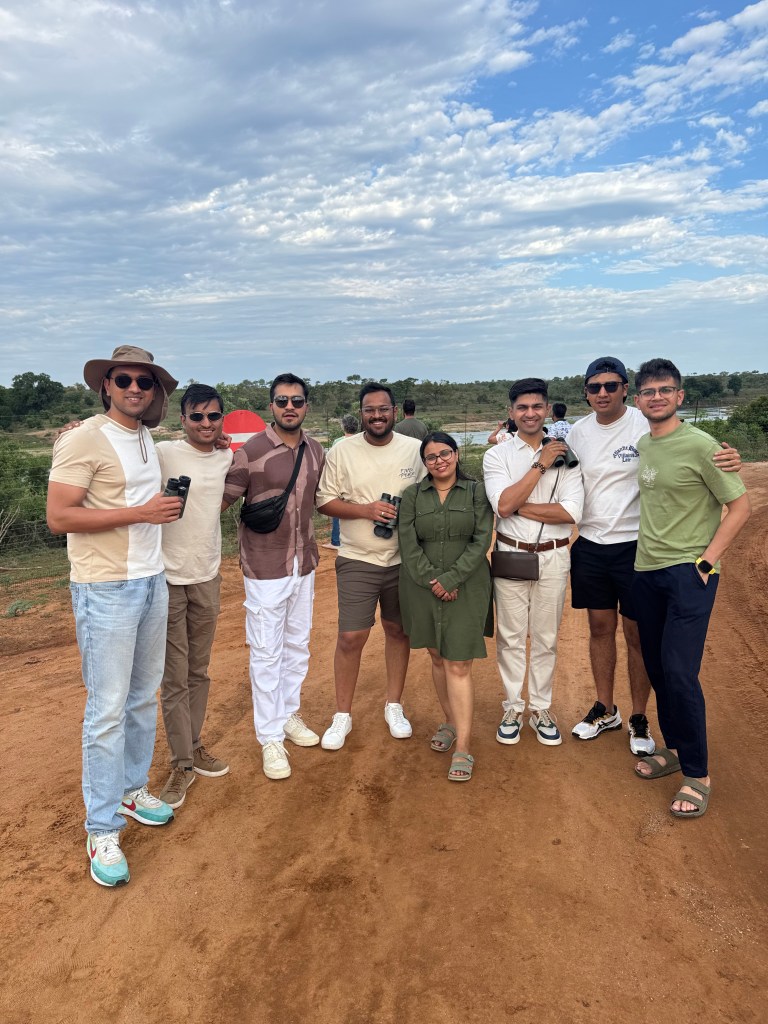
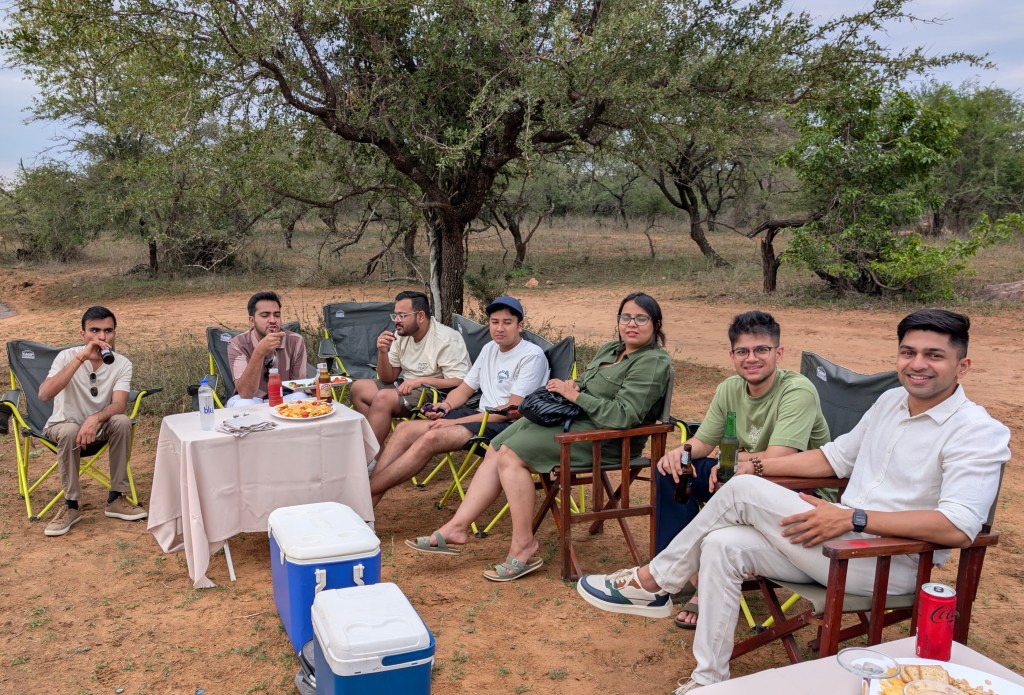
The Marloth Park drive lasted about two hours. Since it was our first day, we were excited to see any and every animal. The herbivores mentioned in the previous paragraphs roamed freely in the area. Marloth Park borders Kruger National Park, and an electric fence demarcates this border. We saw some tourists who had set up a camera on a tripod with a huge lens, taking pictures of two lions resting. We requested to take a look, and after our turn, we could only see their backs—there was no way to confirm if they were still there! The drive took us to a small picnic stop set up exclusively for us, where the safari operators provided beers and soft drinks in chillers along with some nuts and cut fruits. Outdoor chairs were placed, and we chilled there for about 30-45 minutes. The tour ended just before sunset, and we were dropped back at our resort.
For dinner, we had no other option since we were neither allowed to walk outside in the dark nor did we have a car to self-drive. Unfortunately, the dinner was quite disappointing and expensive for vegetarians. We needed to get up early for the next day’s safari, so we decided to call it a night.
On a scale of -5 to +5, I would rate The Grand Kruger Lodge a +1.5 and the Marloth Drive a +1.
24th Dec, Tuesday
We all got up at 3:30 AM and got ready. We had to report downstairs by 4:30 AM to head for our full-day safari in Kruger. Like good tourists, we were all ready and downstairs by 4:30 AM. The resort had prepared takeaway breakfast parcels that included a sandwich, juice, a protein bar, and fruits. We boarded our jeep—the same one we had taken to Marloth Park just the previous evening. The jeep accommodates nine people in the back, along with one driver and one passenger in the front. It was a Mahindra jeep.
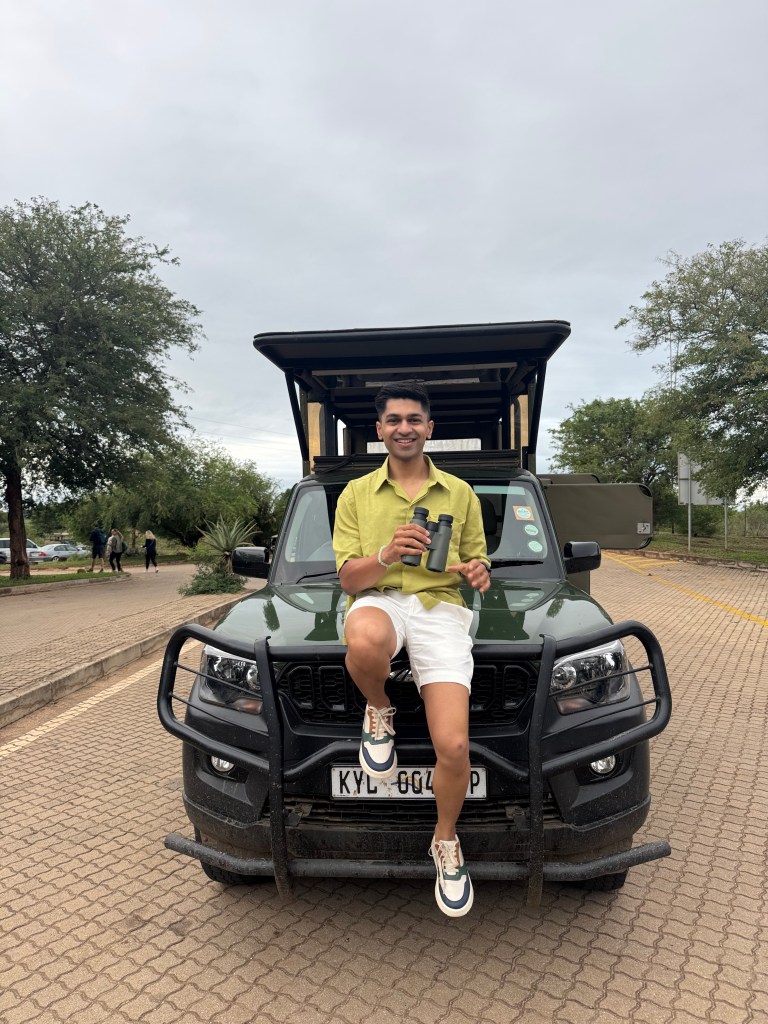
It took about 30-40 minutes to reach the entrance gate of Kruger. It was super windy and cold, so do carry jackets and ear warmers (this was late December, their warmest period). We had signed our forms at the resort. Registered Kruger jeeps (like ours) had a faster queue with no need for driver or car registration verification. The driver presented our signed forms, paid the conservation fees, and off we went.

From 6 AM until 3 PM, we spotted a group of three adult cheetahs lounging around with two cubs, a pride of lions feasting on a wildebeest they had hunted before our arrival, a pack of African wild dogs, two elephants, two water buffalos, numerous giraffes, zebras, impalas, a few kudus, some wildebeests, several crocodiles, a few baboons, a lot of hippos, different types of vultures, weavers, eagles, storks, and the very rare southern ground hornbill. The thrill of seeing animals every few minutes made the ride enjoyable, and the variety only added to the experience. Unfortunately, we didn’t spot the rhino or the leopard from the Big Five. The jeep takes a 45-minute break for restrooms and lunch (self-paid) at a large restaurant and tourist center.

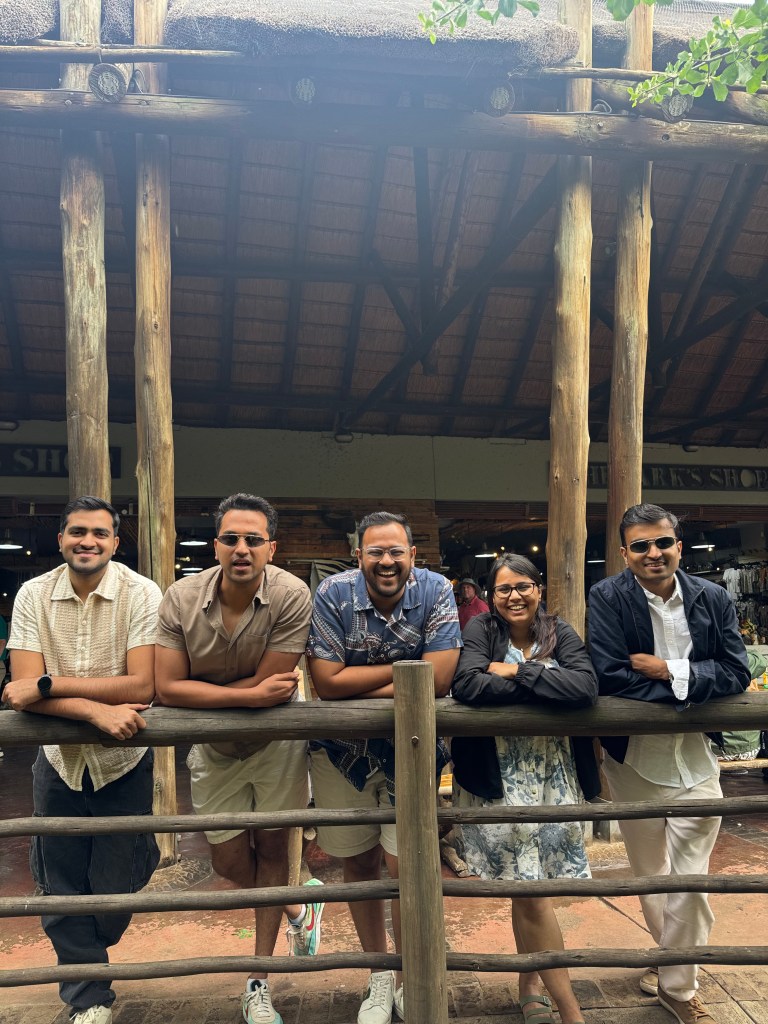
At 3:30 PM, we left the park and headed to a restaurant in the Marloth Park area. Since it was still daytime, we could have walked back to our hotel. The jeep dropped us at Bos Restaurant & Bar, where we had some pizzas, wine, and vegetarian starters. We decided to walk back to our resort. Since it was still light, some of us wanted to explore the Marloth Park area in hopes of encountering wild animals along the way. Four of us headed to a viewpoint that was a 15-minute walk from our resort, where we encountered a wild boar with her numerous piglets, who ran away upon seeing us.
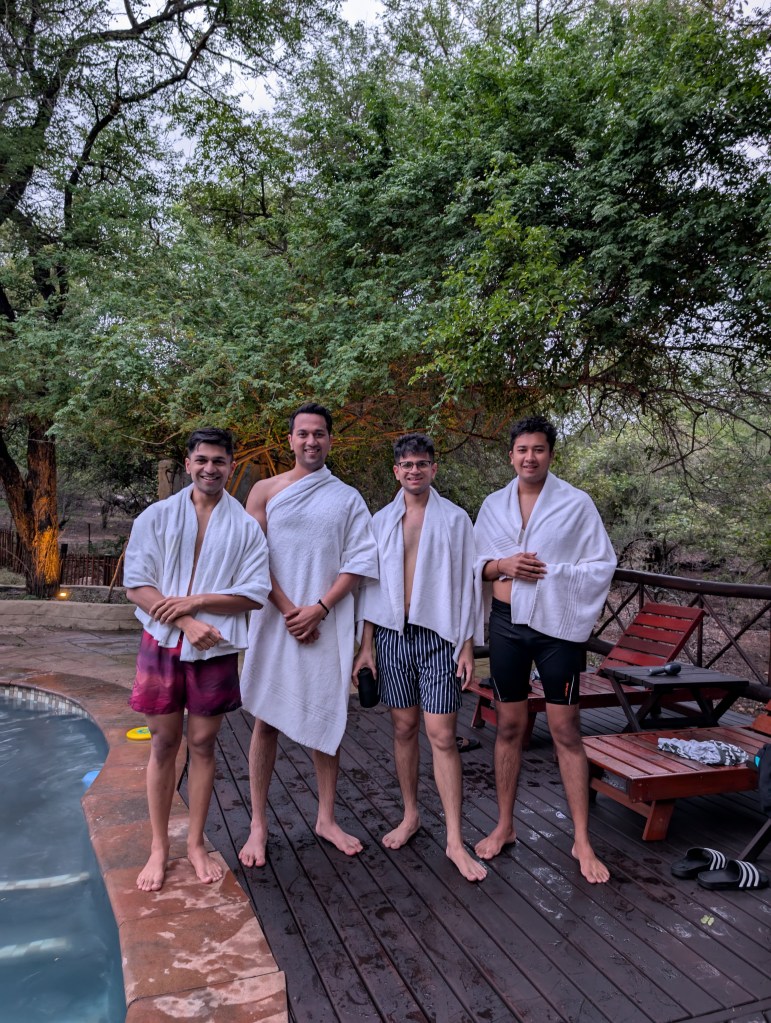
By now, it was dark, and the resort had prepared a festive dinner buffet in celebration of Christmas. Although the chef tried very hard to cater to her vegetarian guests, most of my friends ended up disliking the food. We had paid 390 rands, or Rs 1,850 per person, for this dinner and for the dinner on the 23rd as well. We went to bed early again, as we would have another early morning on the 25th.
On a scale of -5 to +5, I would rate the Kruger full-day safari as a +3.5 and Bos Restaurant as a +1.
25th Dec, Wednesday
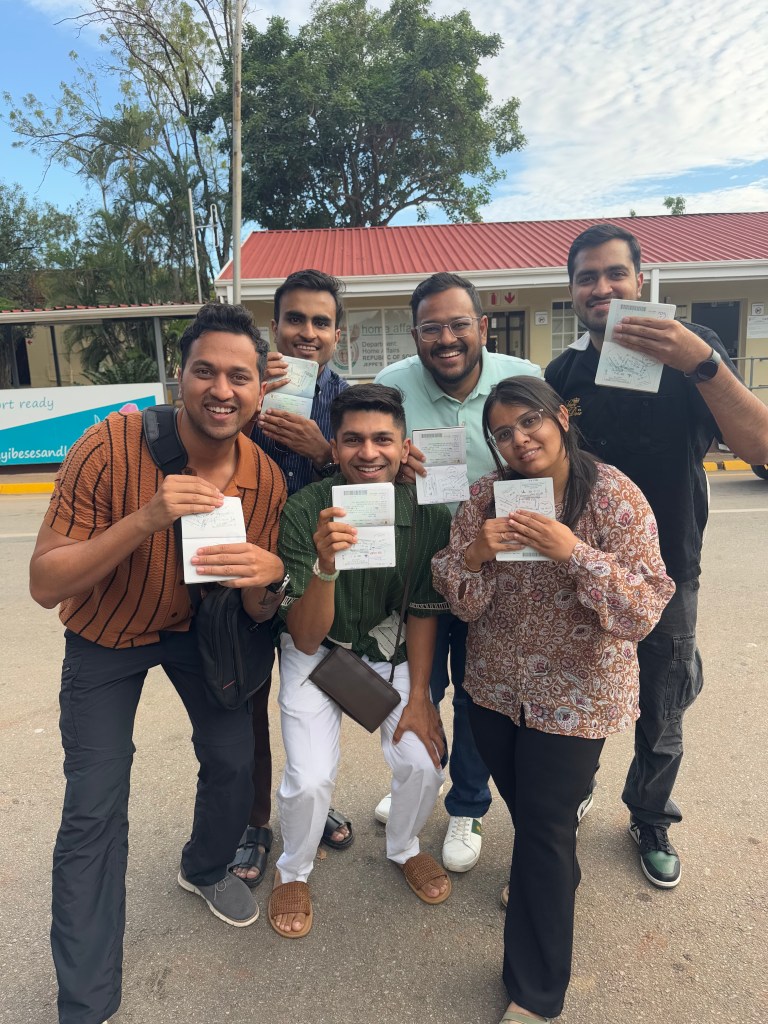
Today, the group split up: two people wanted to go for another safari drive while six opted for a day trip to Swaziland, also known as Eswatini. Eswatini is a separate country, landlocked between South Africa and Mozambique, and it is very close to the Marloth Park area. We left at 6 AM and reached the border control in just one hour.

(If you plan on visiting Eswatini, feel free to reach out to me before doing so. The visa situation can be quite complicated.)
We had very low expectations for the place, and we were glad to be pleasantly surprised. The country was extraordinarily beautiful. It is a hilly region, and the expansive hills surrounding us, with little to no tree cover or habitation, presented a landscape of plain green for kilometers. The country also has a significant timber industry, with large areas converted into farmland for growing industrial timber. The trees, grown in perfect rows, provided a gorgeous view.
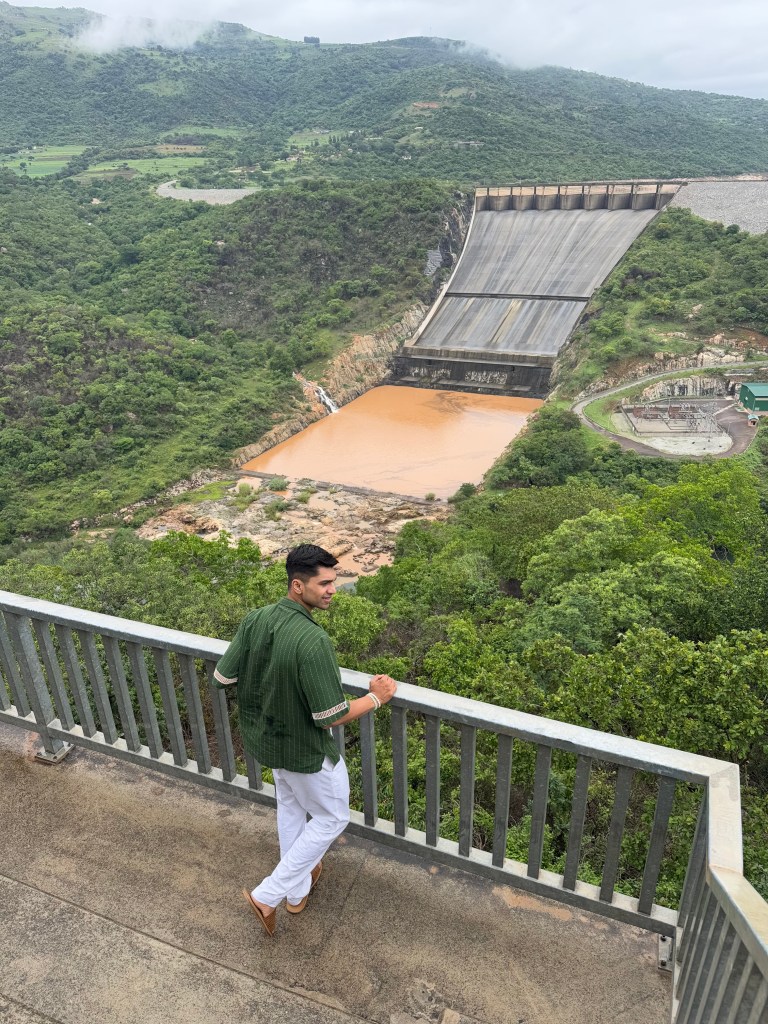
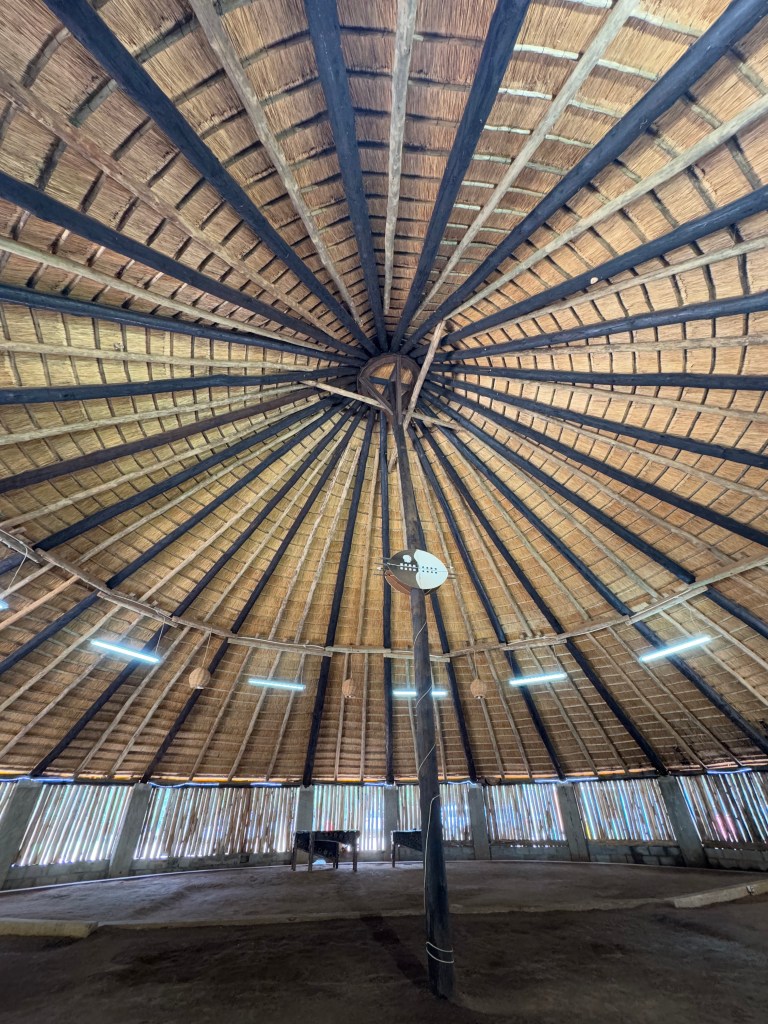
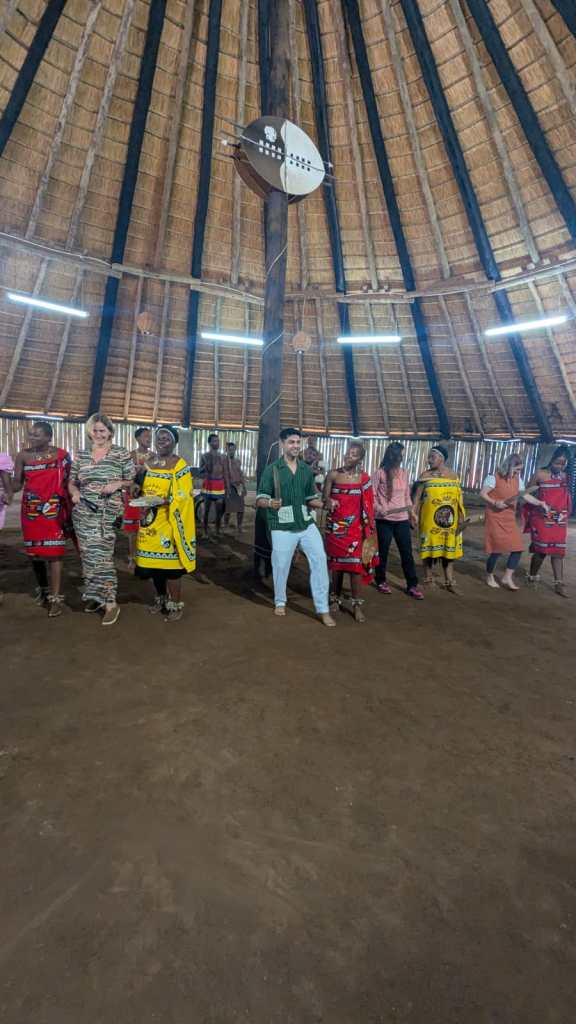
Our first stop was a hill overlooking a lake/reservoir. Next, we headed to a viewpoint over a dam. Third, we visited a Swazi village for their ethnic dance and singing show. I must admit, I’m not typically a fan of such performances, but I couldn’t help but admire their singing and dancing; they were impressively talented. Later, they informed us that they had somewhat modernized their songs to cater to changing tourist preferences. I believe all ancient art forms should consider doing the same. After this fantastic show, we were taken on a guided tour of a model Swazi village and learned about their customs and family dynamics, which was very entertaining.
We were supposed to visit a glass factory and a candle factory as part of the tour, but unfortunately, both experiences were closed due to Christmas, as were most restaurants. Imagine six vegetarians looking for food in Eswatini with most places closed! We decided to go to a supermarket and buy fresh fruits, yogurt, and other vegetarian options. We picked an assortment and had our lunch before returning to South Africa. Knowing that the hotel dinner would likely be disappointing, we made a small stop at Giraffe Pub & Grill in the Marloth Park area and ordered takeaway pizza boxes. We had a good dinner and played card games until late into the night.
On a scale of -5 to +5, I would rate the visit to Eswatini as a +3.5, the dam viewpoint as a +1, the Swazi dance and singing show as a +4, the Swazi village tour as a +3, and Giraffe Pub & Grill as a +1.5.
26th Dec, Thursday
The day began with all of us waking up without any alarms or morning commitments. We leisurely bathed, had breakfast, checked out of the resort at around 10:30 AM, and headed to Nelspruit (MQP) airport, which was only an hour away. We had booked an airport transfer with the resort in advance.
We booked a direct flight with Airlink at around 1:30 PM from Nelspruit to Cape Town (CPT). It was a 2.5-hour flight, during which they served us a vegetarian panini. We landed on time and headed to the SIXT car rental agency from which we had reserved our self-drive cars. Two more friends joined us for the trip, bringing our group to a total of ten people. We had booked three cars—all were 5-seater SUVs: two Toyota Urban Cruisers and one BMW X3. The formalities took about an hour for the three cars. We packed our luggage and set off for the town of Hermanus, which was about 1.5 to 2 hours away.
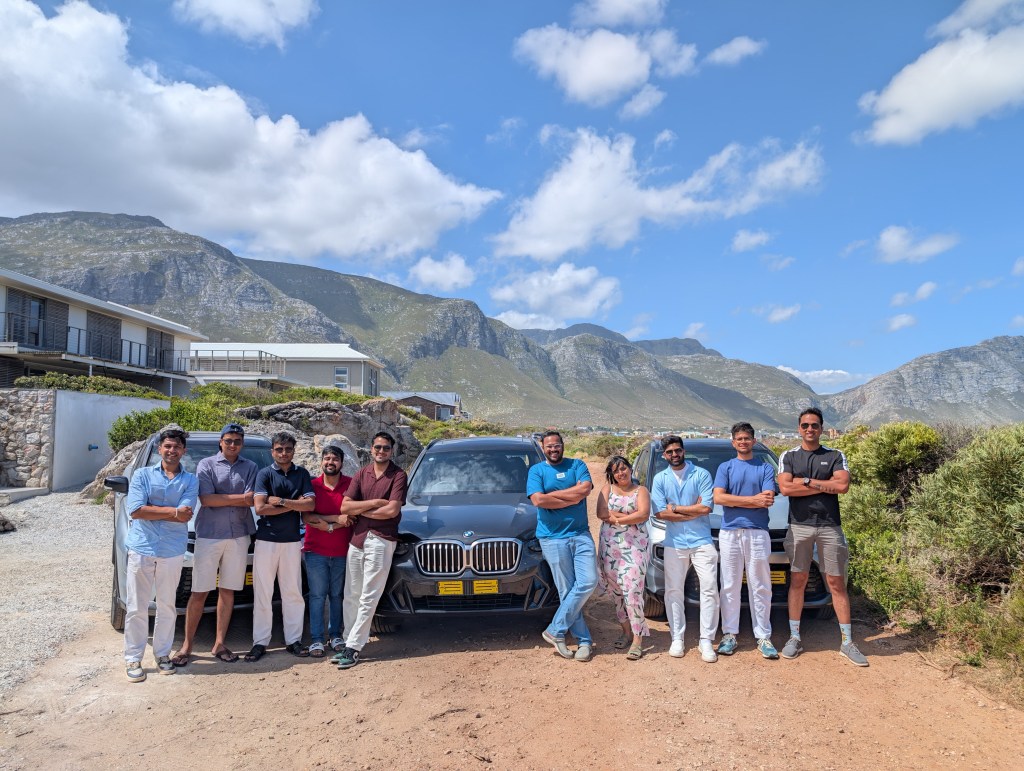
Car rental in South Africa is similar to that in Europe, but there are a few differences. The similarities include being able to drive with your Indian driver’s license, no additional permits required, a similar credit card blocking practice (requiring the credit card to be in the driver’s name), a full-to-full fuel policy, basic insurance, and extra fees for an additional driver. However, the main difference lies in the insurance coverage. Unlike in Europe, where a full top-up of insurance means you could, say, throw the car off a cliff and still be fully insured, in South Africa, there is never full coverage, and there will always be a base amount to be paid in the event of damages. Rentalcovers.com is a third party that appears when you’re booking and offers full insurance at a much cheaper rate than the rental agency. We went with them, only to find that while SIXT recognizes them, in case of mishaps, SIXT would charge us the full amount, and we could then reach out to Rental Covers for reimbursement, whenever or however that might happen. My suggestion would be to take the full insurance directly from SIXT, despite the cost differential between them and Rental Covers.
Our journey on the famous Garden Route began. The roads in South Africa are so well maintained; they are undoubtedly among the best in the world. Our drive to Hermanus was scenic and comfortable. As a former British colony, South Africa drives on the left, much like India, which made driving feel quite natural to all of us. Hermanus is a small town where most areas are largely safe, even at night. We booked a backpackers’ hostel here as it was just a transitory pit stop, called Hermanus Backpackers Hostel. We checked in, changed, and headed out to explore the town.
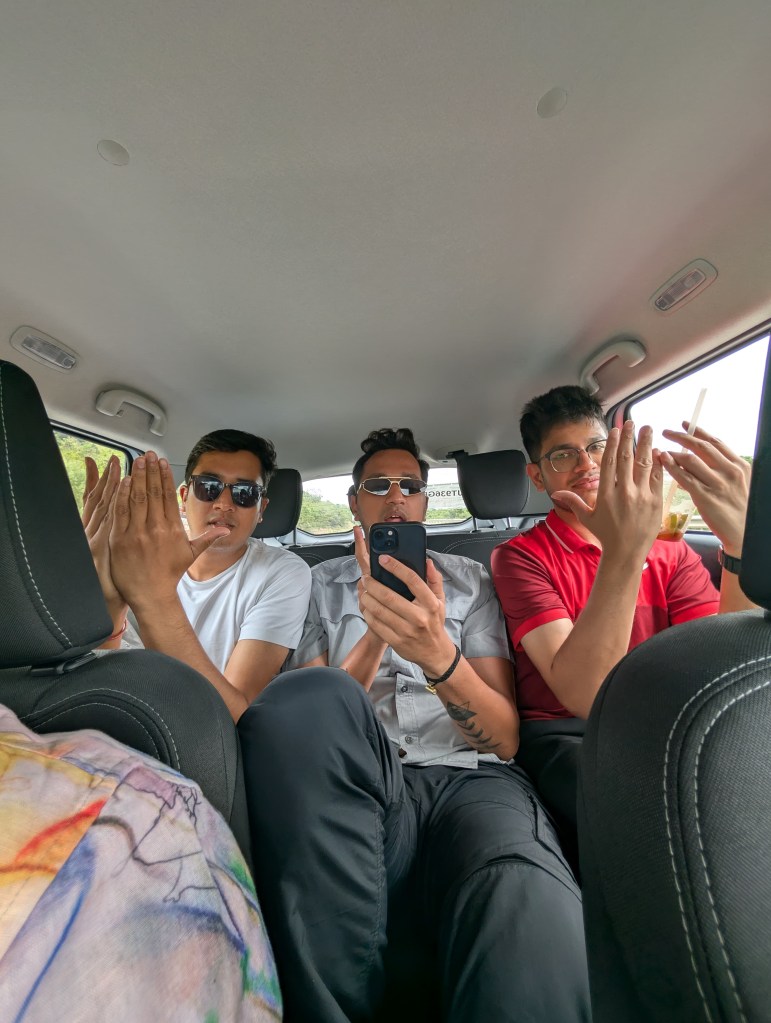
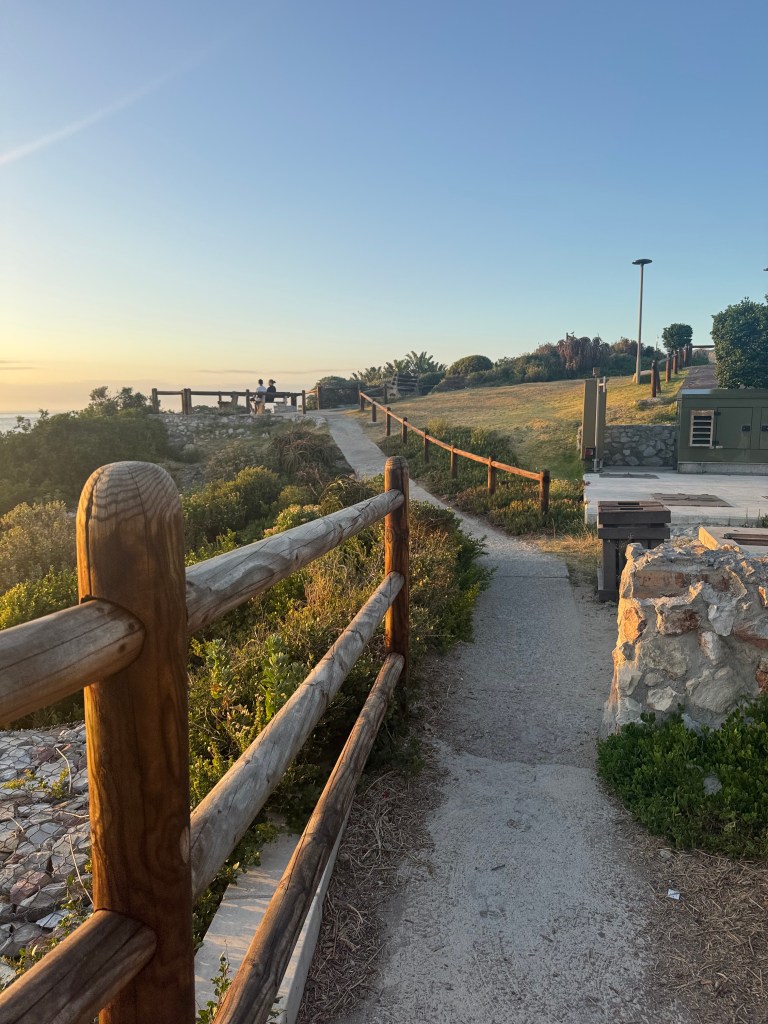
I can’t wait to tell you how beautiful the town was. For most of us, Hermanus was the most beautiful human settlement we had ever seen anywhere in the world, and I was among that majority. By the time we ventured out, the sun was setting, and the ocean was beautifully reflecting various hues. We walked along the coast, agreeing that we had to come back in the morning.
We strolled to our dinner location—The Pear Tree Bistro—which was an amazing place. It had the finest cocktails, a great vegetarian assortment, and friendly staff. We drank and ate a lot, becoming quite tipsy and enjoying a lovely evening. We walked back to our hostel and fell asleep early, as we wanted to jog along the Hermanus coast in the morning.
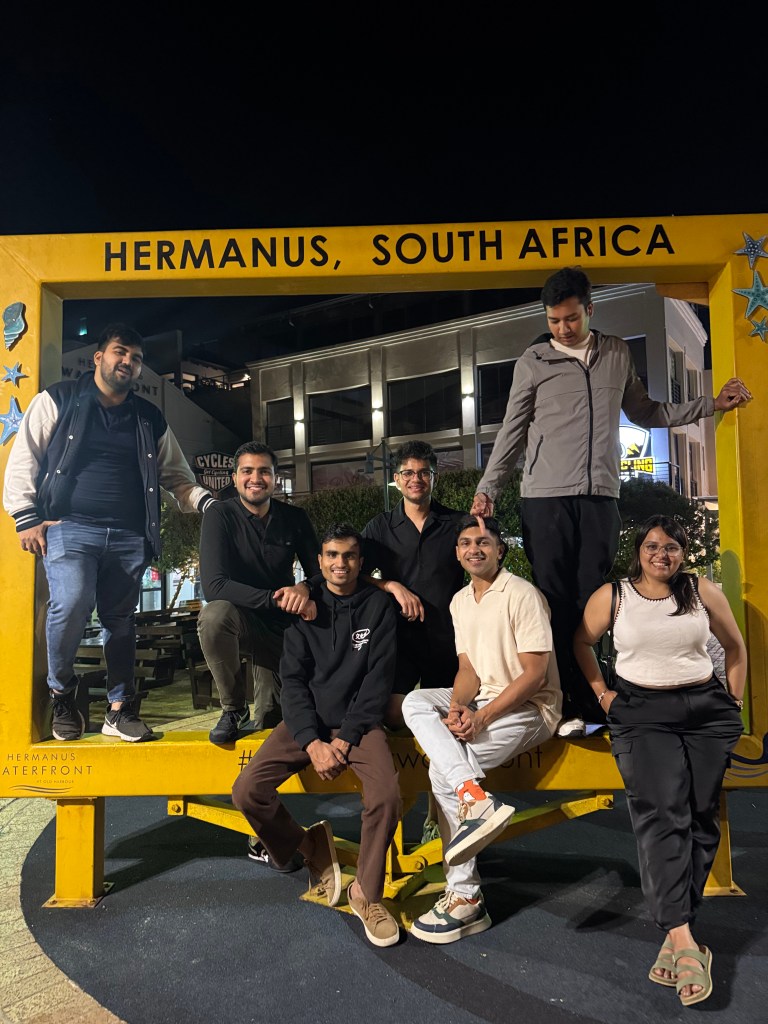
On a scale of -5 to +5, I would rate SIXT car rental a +0.5, the Garden Route scenery a +5, Hermanus as a town a +5, Hermanus Backpackers a +2.5, and Pear Tree Bistro a +3.5.
27th Dec, Friday
Some of us woke up early, around 6 AM, and headed to jog along the most beautiful track imaginable. One side offered stunning ocean views, while the other showcased the quaint and clean town. The path was perfectly laid out amid shrubs and trees, featuring small bridges, hyraxes, rock pools, flower beds, and much more. It couldn’t get more beautiful than this. We loved Hermanus and wished we had more time here. However, it was time to depart, so we packed our bags and left the town unbathed at around 8:30 AM.
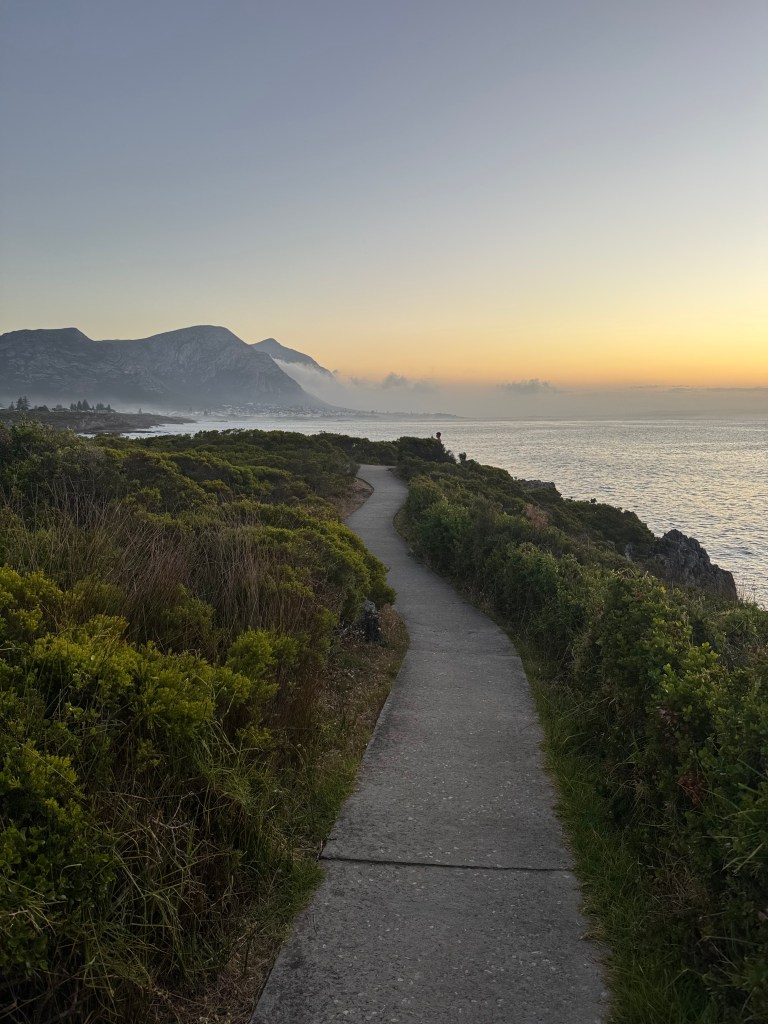

We were heading to Gansbaai, another coastal town 30-40 minutes from Hermanus. Gansbaai is famous for sea activities like whale watching and shark cage diving. Since December is not the season for spotting whales, we booked only the Shark Cage Diving Experience. We all reported to Great White Shark Tours at 9 AM. This activity cost us around 7,500-8,000 INR.
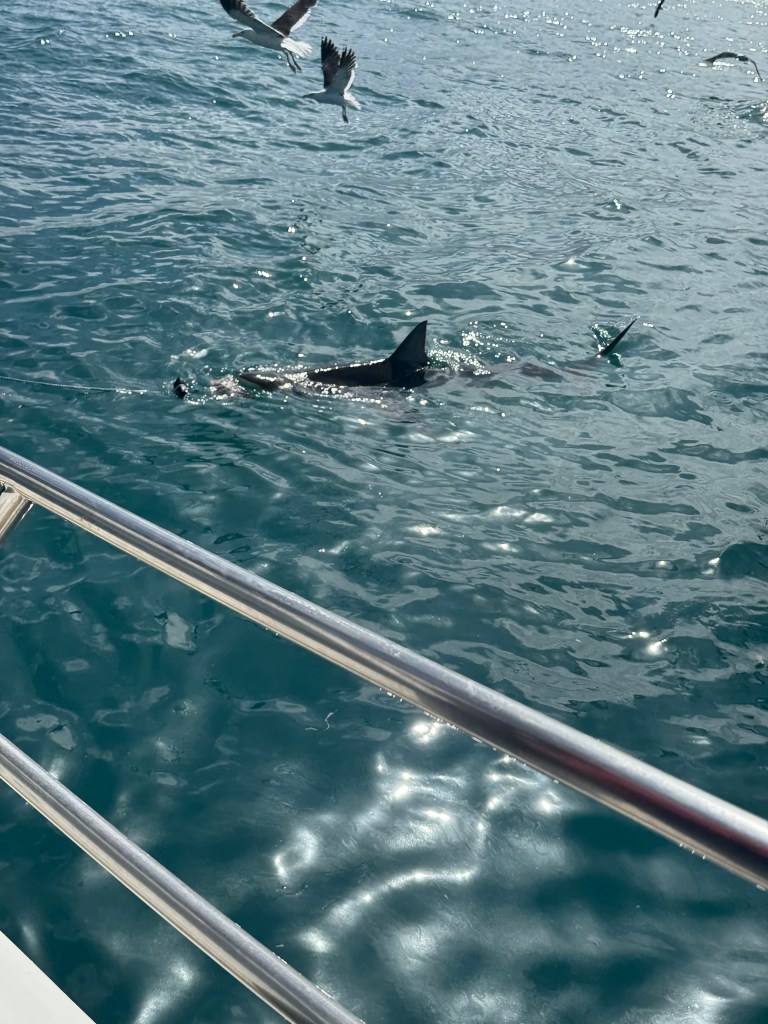
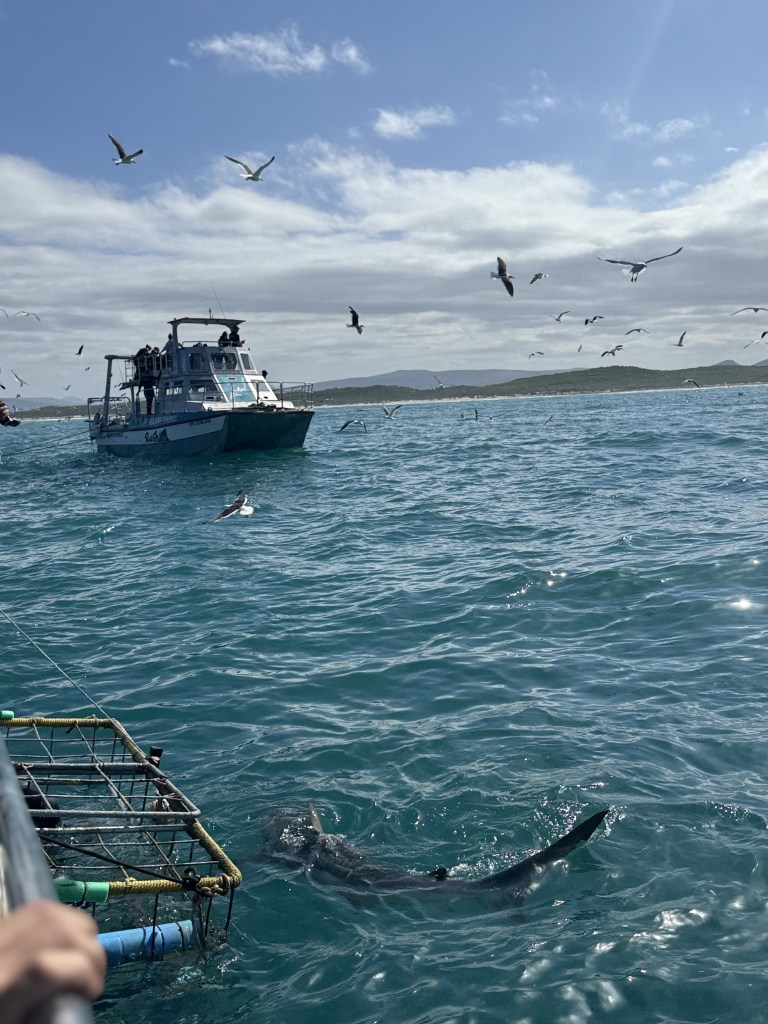
This is one of the safest adventure activities one can experience. We were taken out in a boat to an area in the sea where shark movements are frequent. The crew brought along plenty of fish bait to attract the sharks. The bait was attached to a chain that a crew member maneuvered to direct the sharks. Tourists are fitted with wetsuits, and a metallic cage that can hold 4-5 people is attached to one side of the boat. The cage is somewhat submerged in the water but still attached to the boat. We all entered it one after the other. Inside the cage, there is a bar to hold onto (not the external cage bar that the shark can bite upon, but an internal one that the shark can’t reach). Our legs rested on the cage wall attached to the boat, giving us a comfortable position to stand in. The cage’s design means that our upper torsos remained above water while everything below the chest was submerged. There were no breathing apparatuses provided; instead, we were given diving masks that allowed us to see while blocking our noses, forcing us to breathe through our mouths. As the bait was moved with the chain, the sharks were brought close to the cage. When this happened, a crew member shouted, “Down, down!” and we plunged our faces into the water to see the sharks up close. The activity lasted around 10-15 minutes, with about 30-40 instances of sharks coming close to the cage.
Now, regarding our personal experience: it was summer in South Africa, and we had expected the sea water to be somewhat warmer. The sailor informed us that the water’s temperature was about 11 degrees Celsius, which we thought would be manageable. However, the water was freezing cold. Our entire bodies felt numb, and I feared we might succumb to hypothermia. The wetsuits even came with monkey caps, covering us from head to toe, except for our palms and faces. Our palms, which were constantly in the water, started to ache from the cold. Each plunge to see the sharks exposed our faces to the freezing water, creating significant discomfort. For the first time in my life, I joined others around me in shouting out of cold.
Despite paying a good amount for the experience, the sharks came frighteningly close. They banged their tails against the cage, opened their mouths, and swam towards us as if they were going to attack. We had expected to see Great White Sharks, but sightings are rare; most tourists, like us, see copper sharks instead, which are smaller but still very shark-like in appearance. After around 15-20 plunges (10 minutes) in that extremely cold water, we decided to ask the crew to bring us up, as the expected value of seeing the same sharks again was outweighed by the discomfort of remaining in the icy water. We climbed out, removed our wetsuits, dried off, and tried to overcome the seasickness from being on a still boat bobbing in the ocean. After returning to land, we took a short shower at the Great White Shark Tours office.
It was about 12 PM now. We continued on our Garden Route journey and headed toward George, stopping at Stanford for breakfast. Our restaurant was named Ou Meul Stanford—a lovely place to have breakfast. By about 1:30 PM, it took us 3.5 to 4 hours from there to reach our stay in George. We had booked the Protea King George Hotel for the next four nights, checking in around 6 PM. Tired from the drive, the shark cage diving, and the morning jog, we opted for a simple dinner. We went to a lovely Italian restaurant called Portobello Italian Kitchen, which offered excellent pizzas, ravioli, and wine. Highly recommended! We filled our stomachs and then returned to our hotel for some drinks and games.
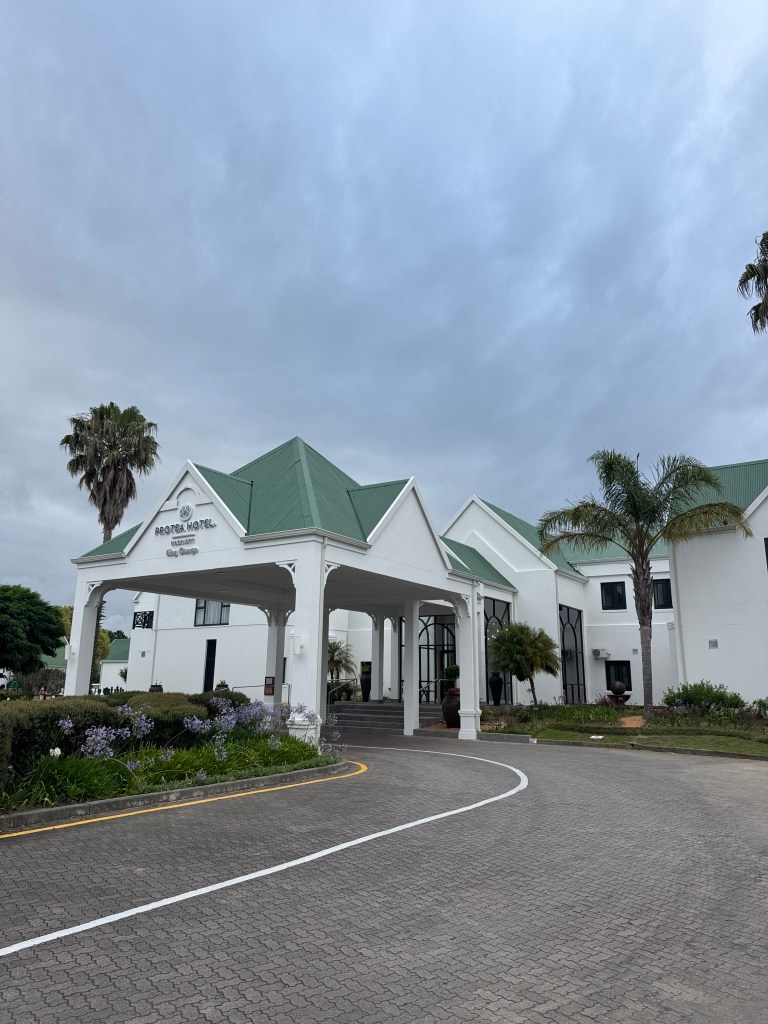

On a scale of -5 to +5, I would rate Hermanus jogging trek a +5, Shark Cage Diving a +0.5, Ou Meul Stanford a +1.5, Protea King George Hotel a +2 & Portobello Italian Kitchen a +3.
28th December, Saturday
Once again, we didn’t have to wake up early, so we all got up and got ready by 10 AM. We had planned road trips from George for all our days. Today, we were heading to a UNESCO World Heritage trek in the Robberg Nature Reserve, near Plettenberg Bay. It was a 2-hour journey to reach there, and we stopped at Ilali Restaurant in Wilderness for a quick breakfast.
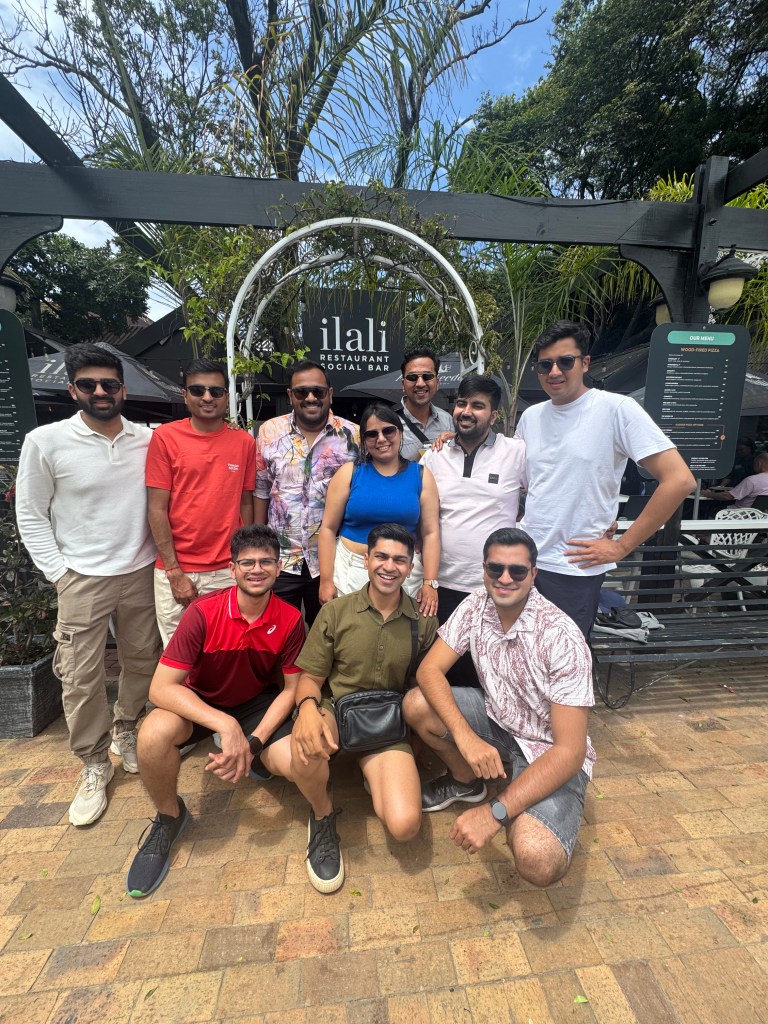
The Robberg Nature Reserve offers a hiking trail with three different distances to choose from. The shortest is 2.1 km and takes about 30 minutes; the next is 5.5 km and takes about 2 hours; and the complete round is approximately 9 km, taking about 4.5 hours. The entry fee is nominal and remains the same regardless of which length of trek you choose.
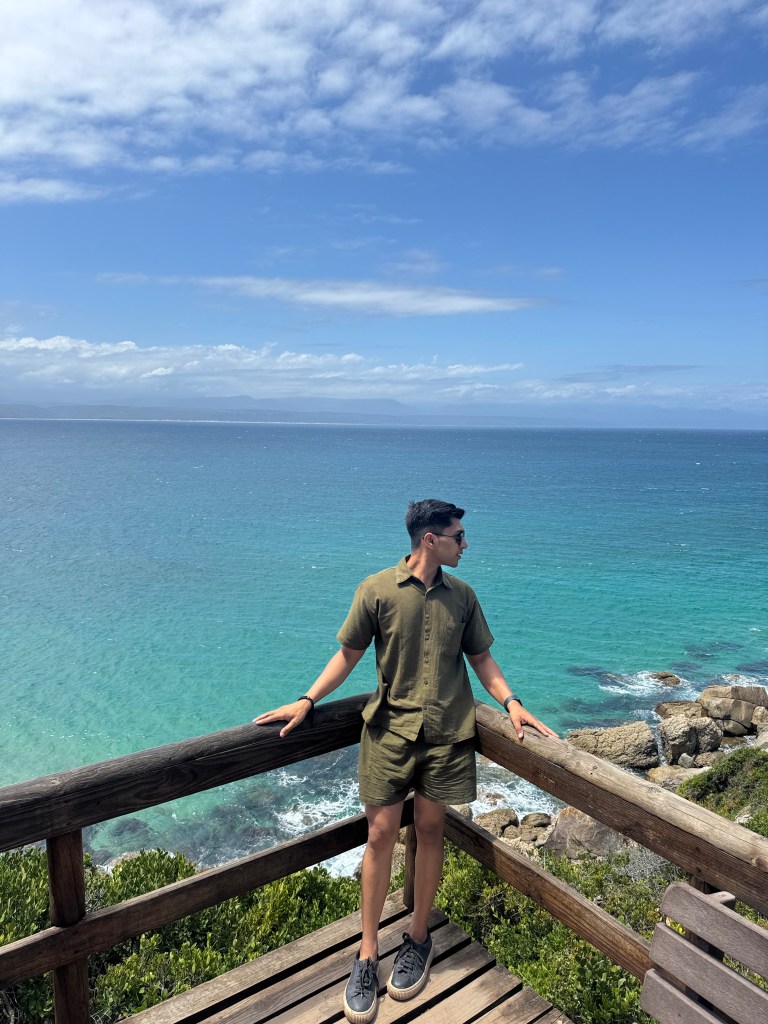
We opted for the second option, as it covers the seal colony, the sandy part of the trek, and the beach with waves on both sides. The trek is fairly standard and easily manageable for anyone who can walk 5 km straight. Two of our friends turned back and completed just the first route of 2.1 km. For the eight of us, the trek was not tiring at all. The scenery along the trek is beautiful throughout its course. Since we arrived around noon, the sun was directly overhead, and we wished for a cloudier day. Nevertheless, the wind provided some relief. In the distance, we spotted a large seal colony, but we couldn’t get close as it was quite far down. After viewing the seal colony, the terrain turned sandy. Walking on this sand was challenging, and it managed to get into our shoes, making things more difficult. This stretch lasted for about 500 meters.
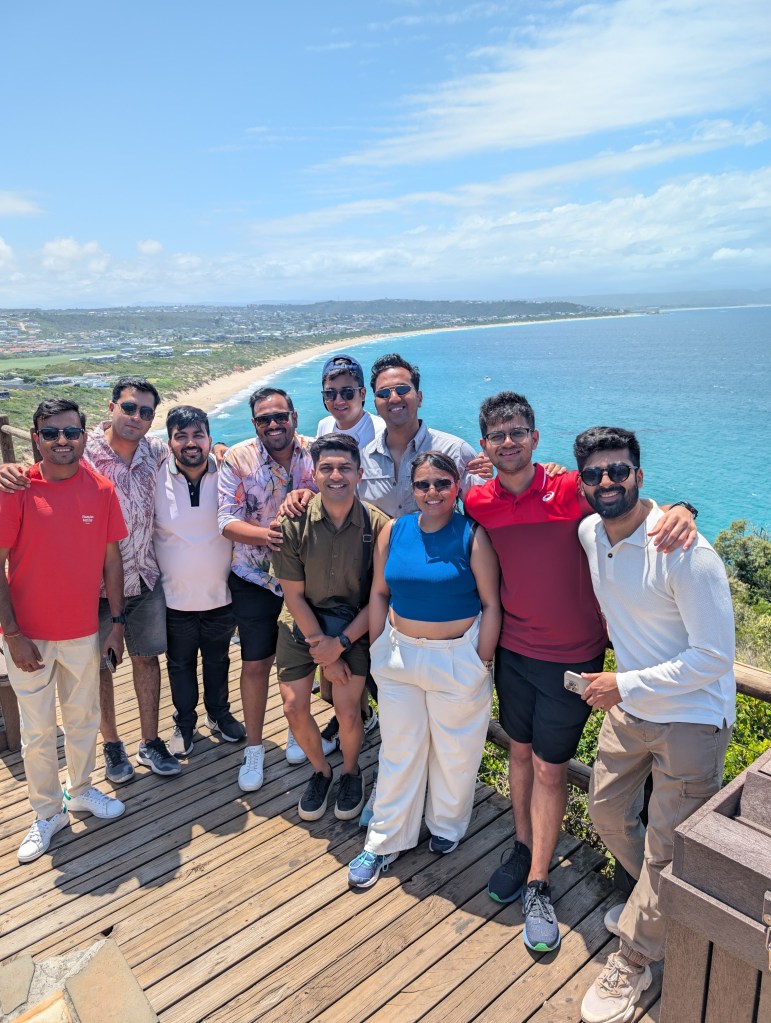
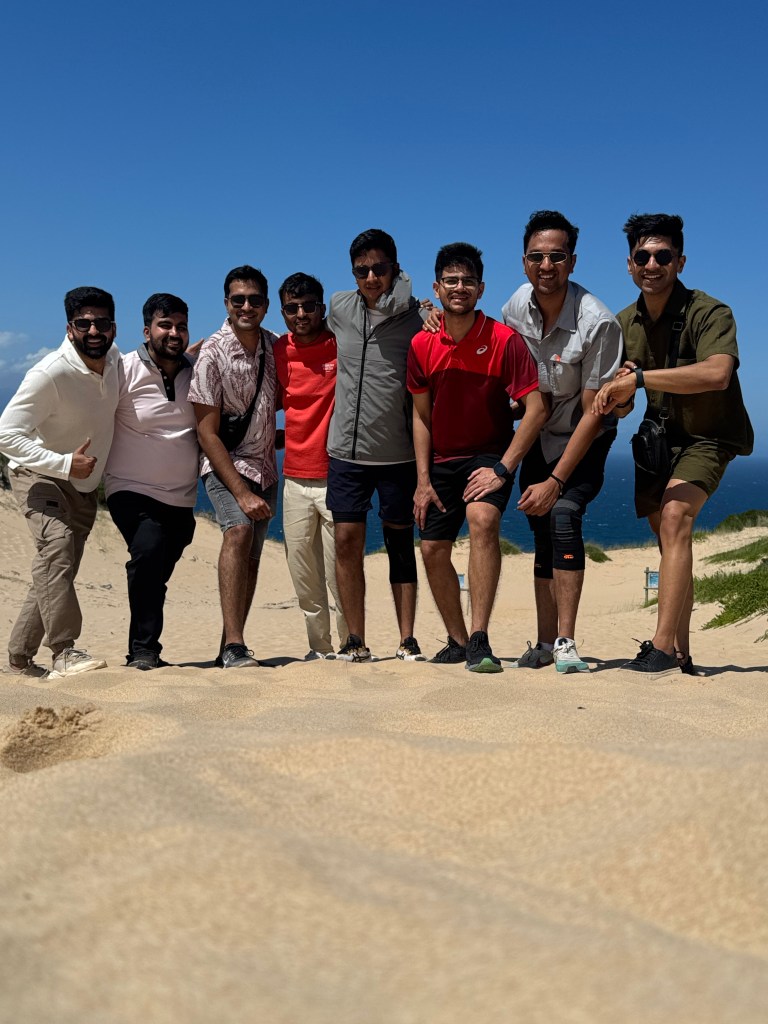
Eventually, the sand opened up to reveal the most stunning beach with waves crashing on both sides. It was a sight to behold! We went down to play in the waves, but the water was quite cold. We even came across a dead seal washed up on the shore. From here, the hike took us back to the start, albeit through a different route. I can’t tell you how many beautiful spots we encountered along this trek. It was truly magnificent and not difficult at all.
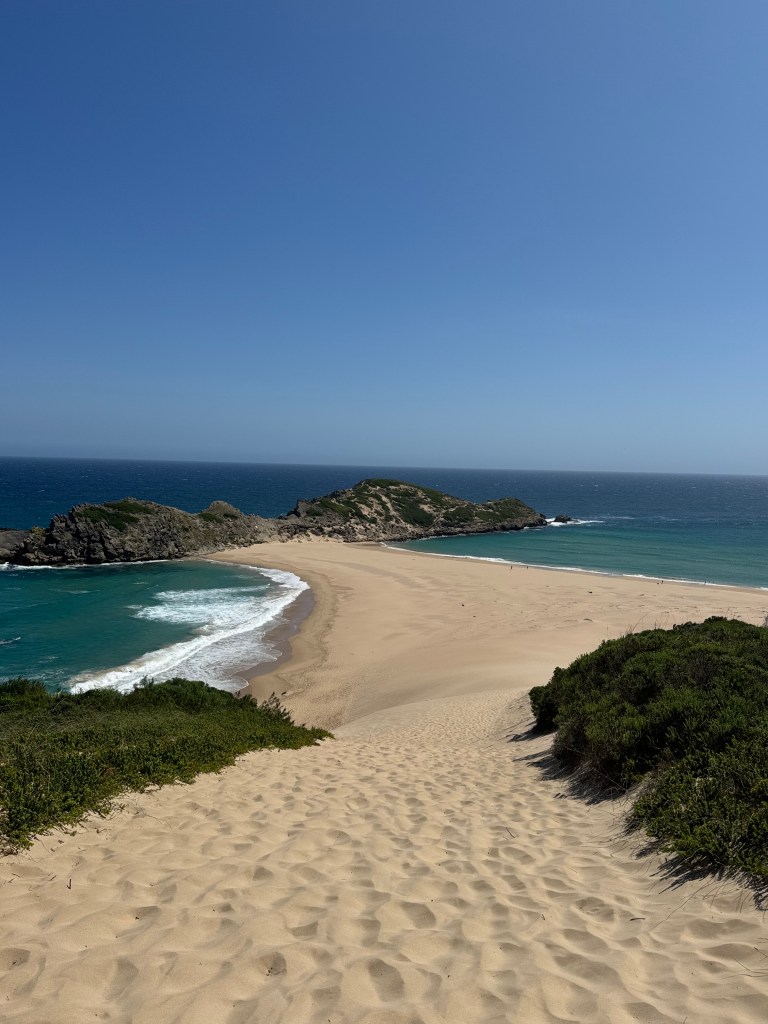
It was close to 4 PM by the time we finished. From there, we headed toward Knysna, which was just a half-hour drive from Robberg. We were hungry and wanted to find a nice café or restaurant overlooking the sunset, as Knysna is famous for its sunsets. Many people even take boat rides to view them. Upon reaching Knysna, we headed to Thesen’s Island, which had numerous restaurants. Unfortunately, it wasn’t our lucky day. Restaurants were either closed for a religious holiday week or closed because they shut at 4:30 PM every day (who closes a restaurant at 4:30 PM?!), or the open restaurants had no available seating. Restaurants in South Africa take reservations very seriously; walk-in guests could be turned away even from a fully vacant restaurant if it was fully reserved, hoping that the reserved guests would show up. After searching for a while, we finally found a table at Tapas & Oysters. The food was quite disappointing, but we were hungry, so we ate. Their Wi-Fi didn’t work either.
After leaving the restaurant, we decided to head for Wilderness—not because it was closer to George or because it was getting dark, but because Wilderness has a huge and beautiful beach that tourists admire from the cliffs above as part of the Garden Route. We reached Wilderness just before sunset and played with a frisbee on the beach. We considered taking a plunge, but the water was too cold.

We returned to our hotel. Most of us weren’t hungry, so we played some games, enjoyed drinks for a while, and then called it a night.
On a scale of -5 to +5, I would rate Ilali Restaurant a +1, Robberg Nature Reserve a +4, Tapas & Oysters a -1.5, and Wilderness beach a +2.5.
29th Dec, Sunday
This was the best day of the trip for all ten of us. The day started with all of us getting up early and leaving without bathing at 8:30 AM from the hotel. We were headed to Tsitsikamma National Park, which was a 2-hour drive away. We had a canyoning and abseiling experience booked with Africanyon. The tour was planned to start at 11 AM. Since we hadn’t had breakfast, we were lucky to find Peppermill Café right next to the Africanyon base. We had 30 minutes, so we quickly enjoyed some avocado toasts and hummus falafel wraps.
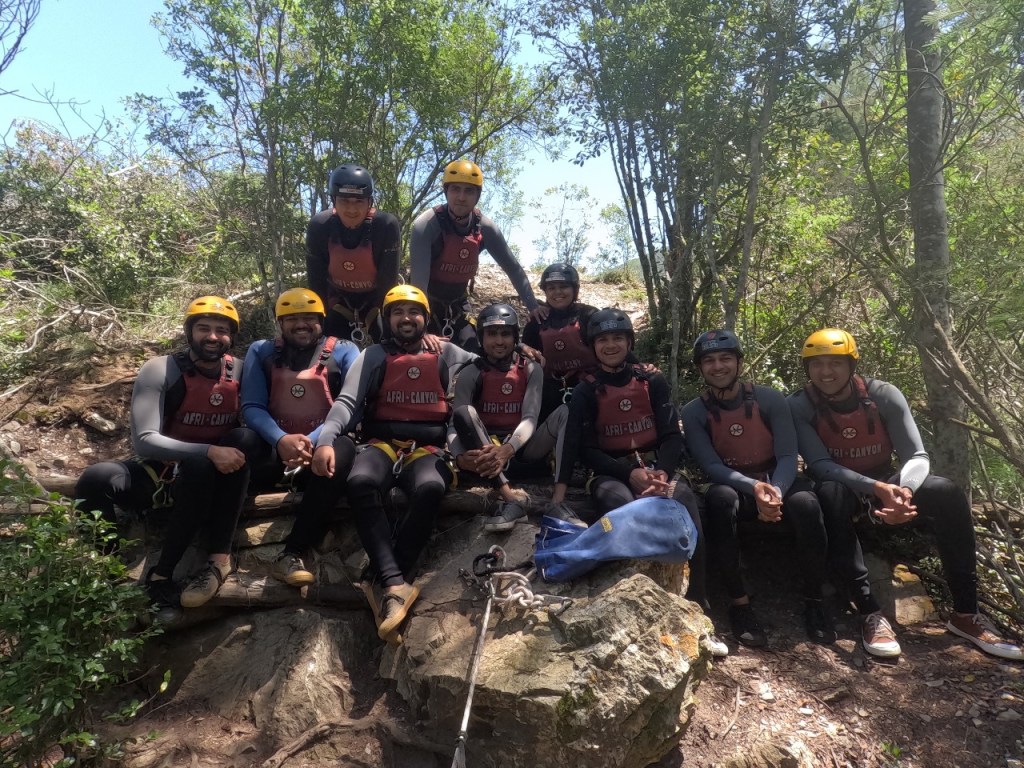
Abseiling involves descending from a height with a harness secured above and a rope to help control your fall. Canyoning involves traveling from point A to point B in a jungle with a water stream, often including activities like jumping into water pools, sliding down waterfalls, swimming, and zip-lining. This is a highly recommended experience, and our tour operators from Africanyon were exceptionally skilled. We enjoyed two ziplines, around six jumps from various heights, lots of swimming, and some walking. It was the best experience of any activity we had done in South Africa. The cost was around INR 5,000 per person, and it was well worth every penny.
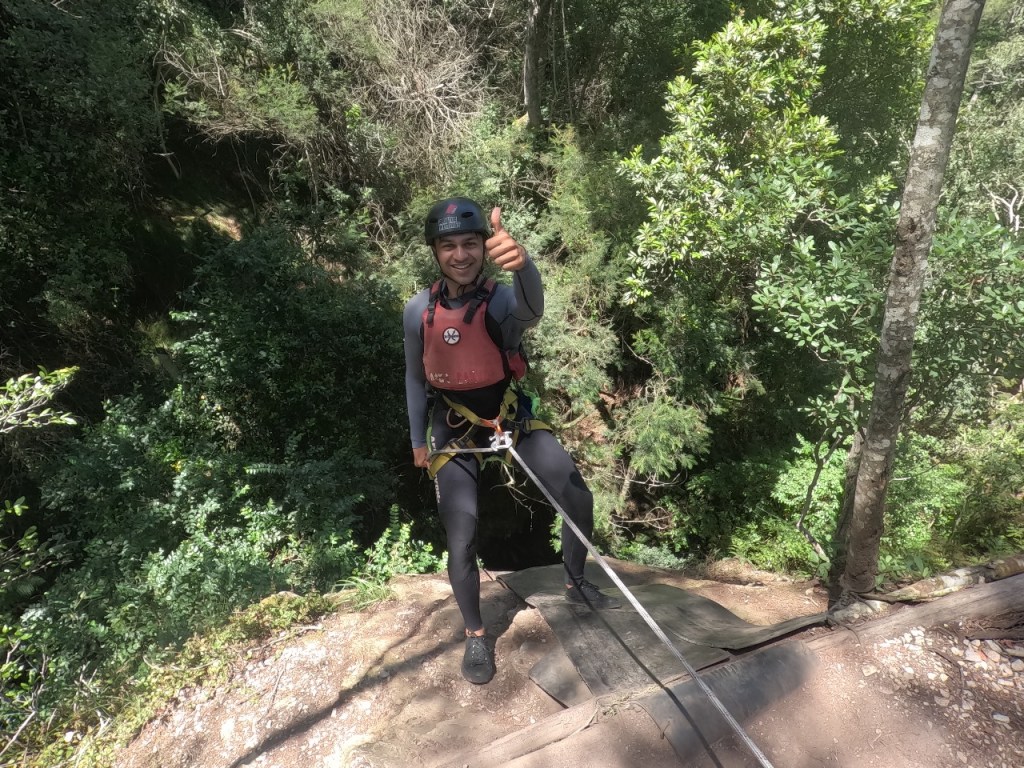

The tour ended around 2 PM. After taking showers and changing our clothes at the Africanyon shower facility, we headed to Bloukran’s Bridge for our next activity: bungee jumping from the world’s third-highest jump spot (Macau: 233m, Switzerland Dam: 220m, and Bloukran’s in South Africa: 216m). Although we hadn’t had lunch and were quite hungry, we couldn’t eat too much before the jump. As we neared the bungee location, fear overtook our hunger, and none of us felt particularly hungry anymore. Among us ten, one person had bungee jumped before (in Rishikesh) and chose not to do it again, while another was simply too scared. The remaining eight of us went through the process: registration (R8,000) and indemnity, weight check and markings, harness fitting, and receiving instructions before we were off.

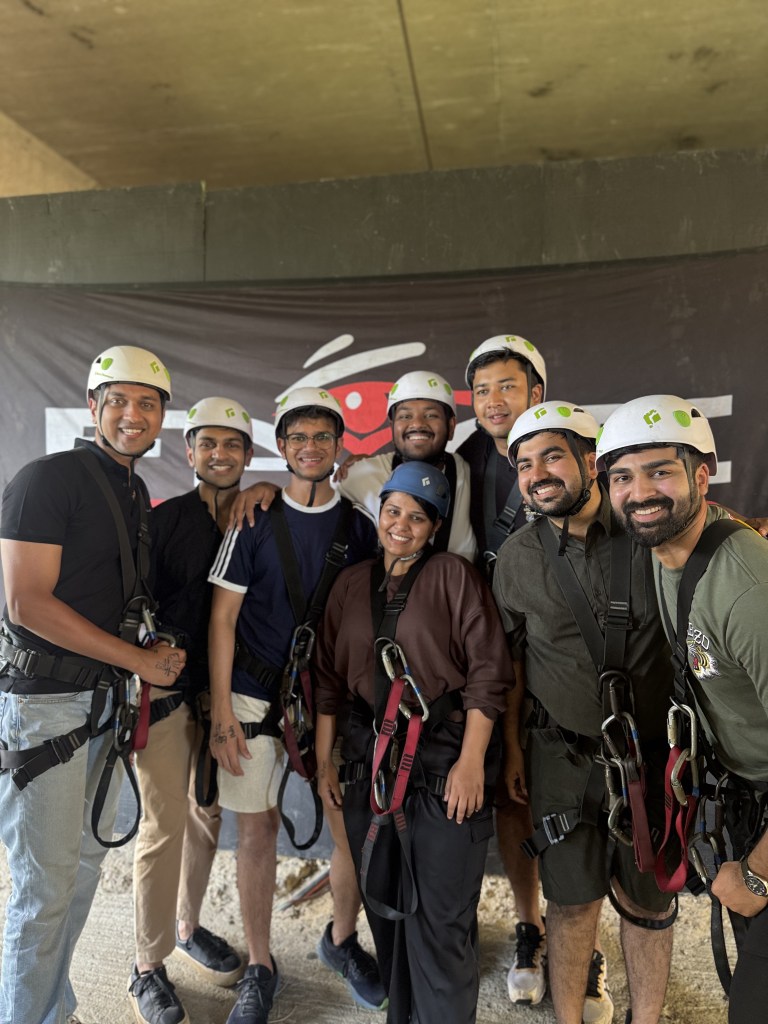
To reach the bungee station, you first zipline toward it, which is included in the bungee cost (no extra charge). Upon reaching the center of the bridge, we saw a sizeable flat surface where about 20 operators were doing their jobs. People before us jumped at a rate of one person per minute. No one backed out or cried, but everyone appeared serious and scared. There was a DJ station with upbeat music, and we tried to concentrate on the positive energy in the atmosphere. An operator was calling us over in an order we were unaware of, and most of us hoped we wouldn’t be the first. Thankfully, I was the seventh to go.
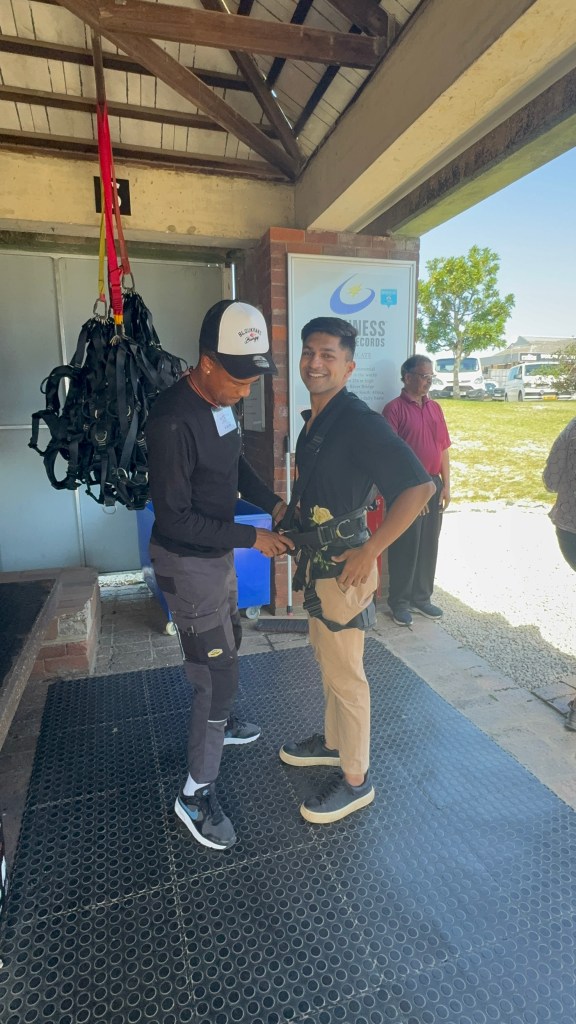
Once all the ropes and equipment were attached to my harness, my movements became quite limited. Both legs were tied together, so I could only hop or take very small steps. Baby steps felt necessary when the plunge was right in front of us. Two operators on either side helped me reach the edge of the platform. I kept my gaze straight ahead the entire time, not wanting to look down and risk getting cold feet at the last moment. Standing at the edge, as I concentrated straight ahead, a hundred random thoughts raced through my mind, and I couldn’t comprehend anything. The two guys said, “3, 2, 1, Bungee,” gave a gentle push, and I didn’t resist—I allowed my body to fall forward. That was it; there was no going back. An immense rush of air engulfed me as I fell down, down, down. Within 2-3 seconds, the rope stretched and recoiled, pulling me back up and swinging me a little. The oscillations lasted for about 10 seconds, after which I was left hanging upside down over a chasm.
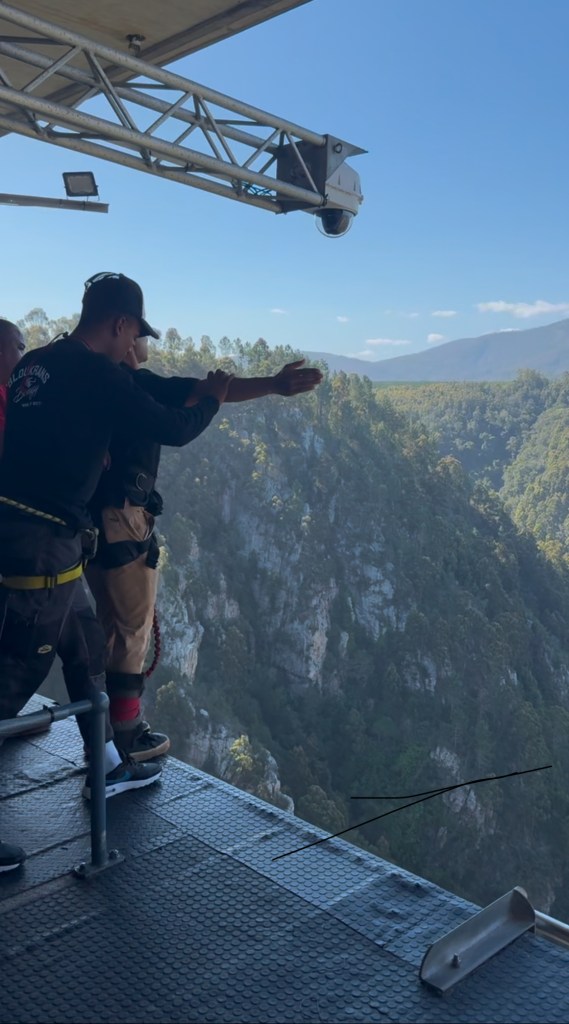
This part of the bungee is the scariest. The ropes holding you aren’t attached to your torso or waist; instead, they are tied to your calves. Something feels tightly wrapped around your calves, and it seems like it’s slipping from your legs. You hang there for about a minute, waiting for an operator to come down, attach his latch to your harness, and help you get upright. That minute feels like a nightmare. When the operator finally arrives, you realize nothing was slipping from your legs; it was all just paranoia. Once upright, the bungee was successful. The operators kept talking to us throughout the process and filmed the whole experience. You can later purchase an edited version from them for about INR 2,000 per person. We did, but in hindsight, I felt it was unnecessary since phones were allowed up until the end, and our friends had already recorded most of it. Once the whole group had completed the jump, we walked back across a bottomless steel bridge known as the Sky Walk. After the bungee jump, this walk didn’t feel adventurous at all.
We were all incredibly proud of ourselves for jumping, as all eight of us successfully took the plunge. I don’t think we would have been able to do this alone or as couples; the energy and positivity from our friends really encouraged us to go for it.
The bungee jump was at 4 PM. After our exhilarating experience, we grabbed some food before making the 2-hour journey back to George and our hotel. We reached George and headed straight to 101 Meade Restaurant, where we had made a reservation three days in advance. The food was good, and so were the drinks, though the place was more expensive than the others we had visited. After dinner, we returned to the hotel, enjoyed some drinks, played a few games, and then called it a night.
On a scale of -5 to +5, I would rate Peppermill Café a +1, the Africanyon experience a +5, the Bloukran’s Bridge bungee jump a +4.5, and 101 Meade Restaurant a +1.
30th Dec, Monday
We had a very fun night on the 29th, so everyone woke up quite late and hungover. Fortunately, we had no morning bookings, so there was nowhere we had to be. We booked two pickleball courts in George from 11 AM to 12 PM. Some of us arrived at a restaurant for a quick breakfast at 10 AM. We chose to eat at Nina’s Cafe. The food and vibe were good, but the waitress messed up our order twice, so we gave them a good earful.
We played pickleball from 11 AM to 12 PM and then returned to our hotel to take a shower and get ready for our next location. By around 2 PM, everyone was ready to go for lunch. We decided to have lunch at the Bayleaf Restaurant in George, as we were all very hungry. The food and decor were enjoyable.
In the last two days, we had traveled east toward Tsitsikamma, Plettenberg Bay, Knysna, and Wilderness. Today, we decided to head north toward Oudtshoorn, a place famous for its Cango Caves and ostrich farms. We decided to skip the caves, as they looked like any other limestone cave, and opted for the ostrich farms instead. It took us about an hour to reach Oudtshoorn. The drive was very scenic. Just five minutes north of George, we started ascending uphill, and before we knew it, it felt like we were in a hill station. The temperature dropped significantly, clouds surrounded us, a valley ran past us, and the roads were curvy yet well-maintained. We hadn’t expected this, so it was a pleasant surprise.
We had pre-booked our tickets for the ostrich farms online the very same day during lunch. We chose the Safari Ostrich Farm and booked the 4 PM tour, arriving just on time. We bought three food pellet jars from the reception for 20 rands each and quickly took front seats on the open bogey pulled by a tractor. The tour lasts about an hour, and the ostriches come very close to you. They are used to tourists and generally don’t harm anyone, but they approach in expectation of food. This is a guided tour, and the guide shares information about the ostriches—breeds, population, meat industry, life, family dynamics, and how to feed them, including leather production. During the tour, we also saw ostrich eggs and a group of emus.

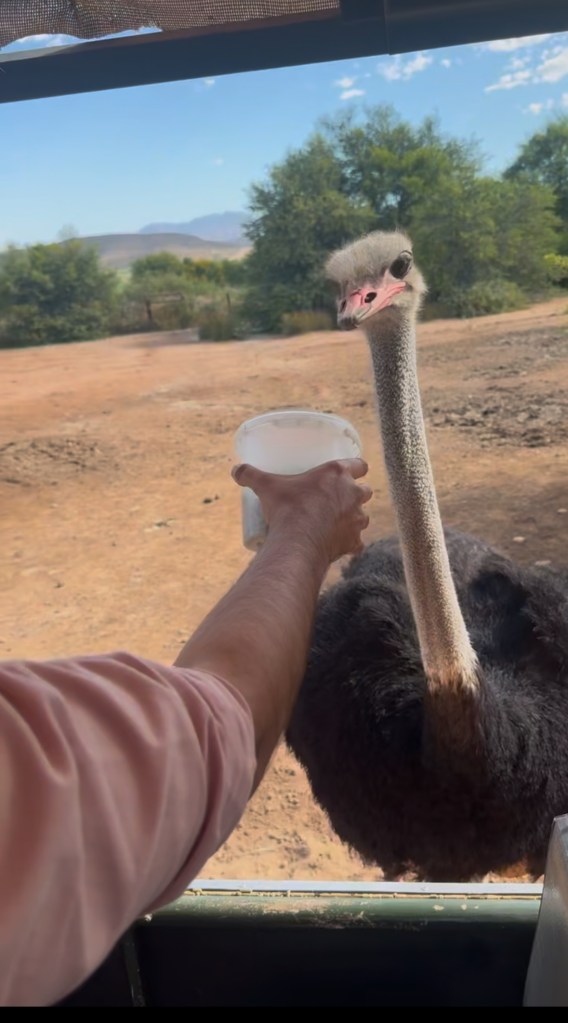

It was a short and sweet tour—nothing you would remember for years, but definitely something to experience if you’re on the Garden Route. The scenery along the route added to the overall enjoyment of the experience. We headed back to George and stopped at one of the viewpoints along the scenic hill route. We planned to go bowling in George, but to our dismay, the center was under repair and closed, and that was the only bowling center in town. Instead, we decided to find a place for dinner and headed to Osteria Tre Nonni. Once again, the food was good, and we returned to our hotel afterward.
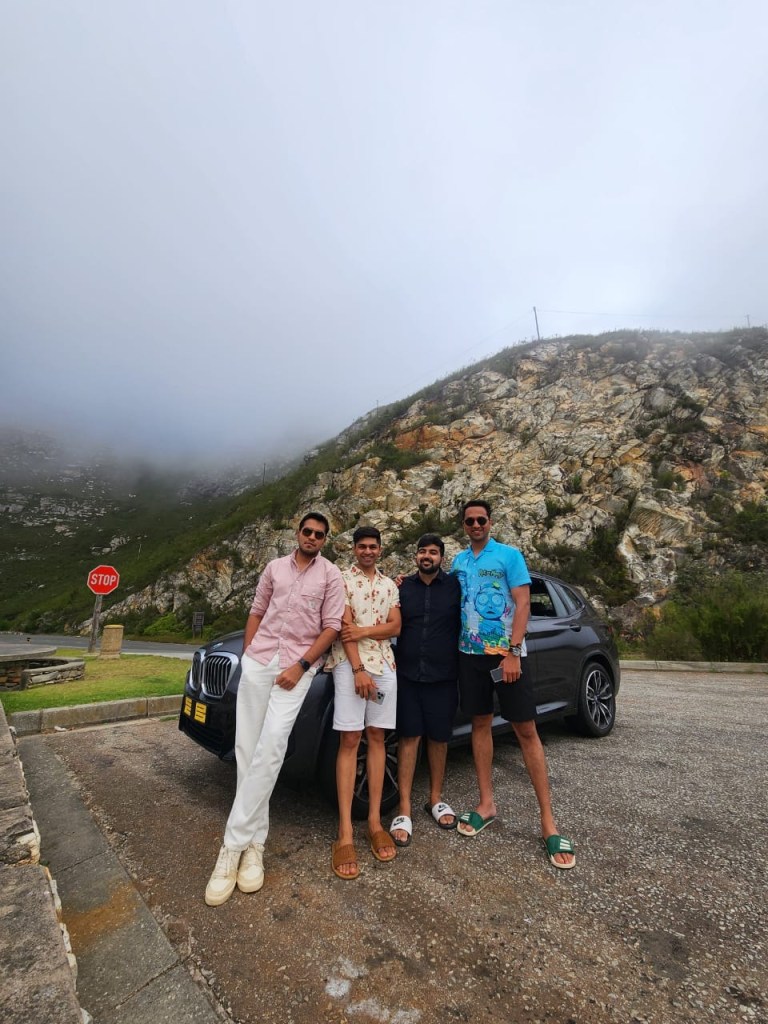
We had planned a Secret Santa night, which we hadn’t been able to do on Christmas since two of our friends joined on December 26th. We placed all the gifts with standard name tags in a bag and opened them one after the other. It was a lot of fun! We had received several complaints from the hotel about the noise we made the previous night, so we decided to sleep early.
On a scale of -5 to +5, I would rate Nina’s Cafe a +0, pickleball a +1.5, Bayleaf Restaurant a +1.5, Safari Ostrich Farm a +2.5, and Osteria Tre Nonni a +1.
31st Dec, Tuesday
We had planned to leave the hotel at 8:30 AM, as we needed to return the cars at Cape Town Airport by 5 PM. Otherwise, we could face late fees and be charged for an additional day of rental. The journey from George to Cape Town takes about 4.5 to 5 hours, plus we needed to stop for breakfast, lunch, and a visit to Betty’s Bay.
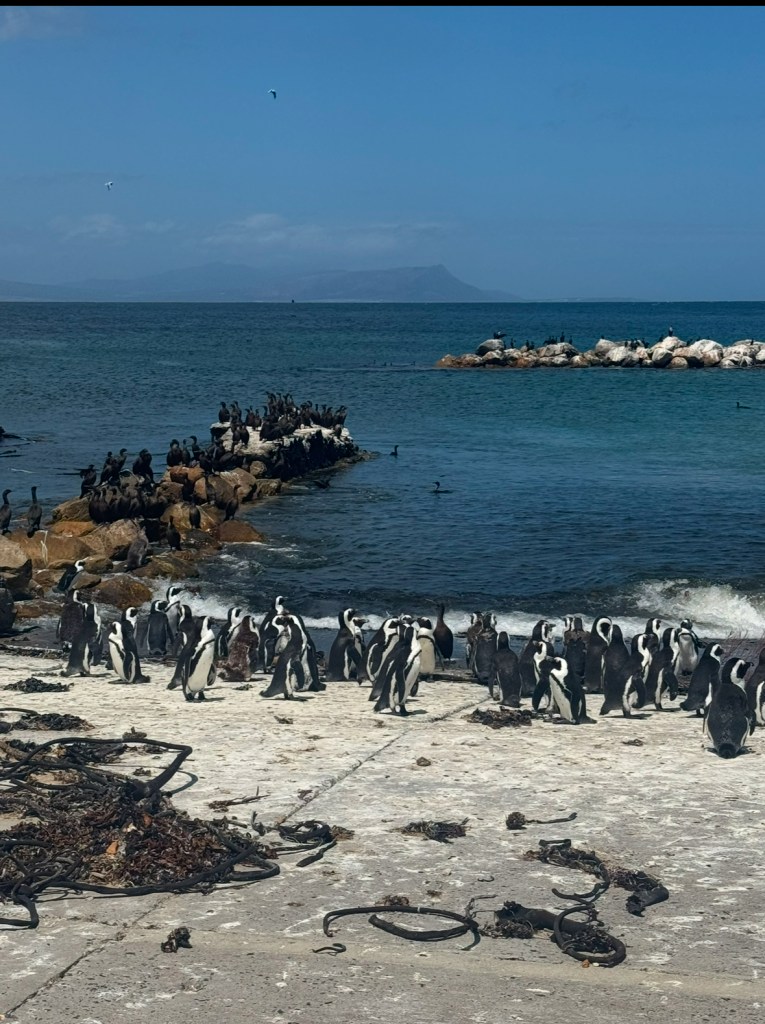
We made our first stop two hours later at 10:30 AM at Ikigai Café in Riversdale. After a quick brunch, we continued on our way to Betty’s Bay. Betty’s Bay is home to one of the two remaining colonies of African penguins. These penguins are endangered and at risk of extinction in the wild within the next couple of decades. At Betty’s Bay, we encountered wild colonies of African penguins, black cormorants, seagulls, and a certain type of ducks. We observed them quite closely, perhaps about 10 feet away, while a guide provided information. We were fortunate to witness a seal hunting a black cormorant as well; the way it captured the bird was a sight to behold. We reached Betty’s Bay at 2:30 PM and left the area around 3:15 PM.
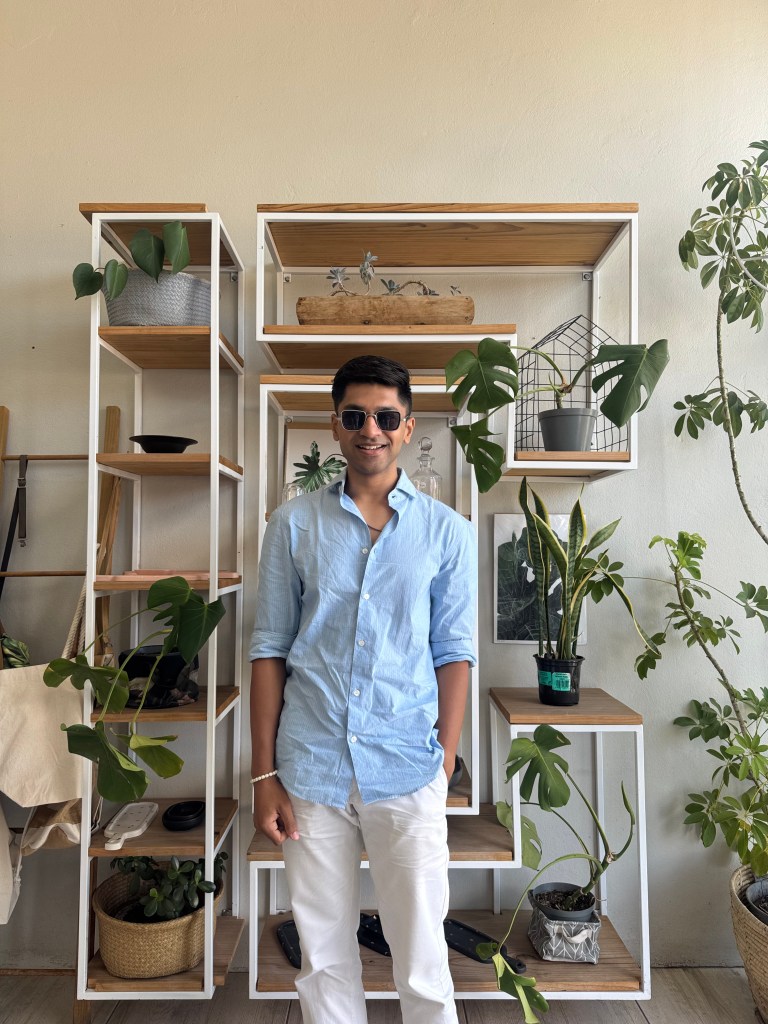
All three cars then headed to our accommodation in Cape Town—the Daddy Long Legs Art Hotel on Long Street. We had 20+ pieces of luggage among the ten of us. The seven of us unloaded the bags and checked into the hotel, while the three drivers, on whose names the cars were rented, took their cars to the airport to return them. The three of them reached the airport drop-off point before 5 PM, and we were able to return the cars without any scratches in time.
It was New Year’s Eve, and we hadn’t made any plans for the night. We were very hungry since the last meal we had eaten was at 10:30 AM, and now it was past 5 PM. One of us suggested going to an Indian restaurant nearby that had great ratings and pictures—it was called Bukhara. As soon as the boys returned, we headed to Bukhara. We sat, ordered, ate, paid, and left—all within just 45 minutes.
Next, we needed to find a place to party that night. With a group of ten, we had heard that even the more populated areas of Cape Town were crime-infested, but it appeared much more vibrant and inviting compared to Johannesburg. We decided to split into three groups of three, three, and four people to explore different directions. My group of three headed toward the V&A Waterfront, the most upscale area of Cape Town.
On our way to the V&A, we checked multiple venues, but the atmosphere seemed either private, dull, or non-existent. One of us spotted a group of young people walking nearby, and we realized it was the Australian Men’s Cricket Team along with some friends. He asked Aiden Markram for a picture, and he agreed. This was serendipitous. The amazing part was that these individuals were walking by and minding their own business, without anyone chasing or crowding around them—imagine if Virat Kohli or Sachin Tendulkar were casually strolling in Mumbai!
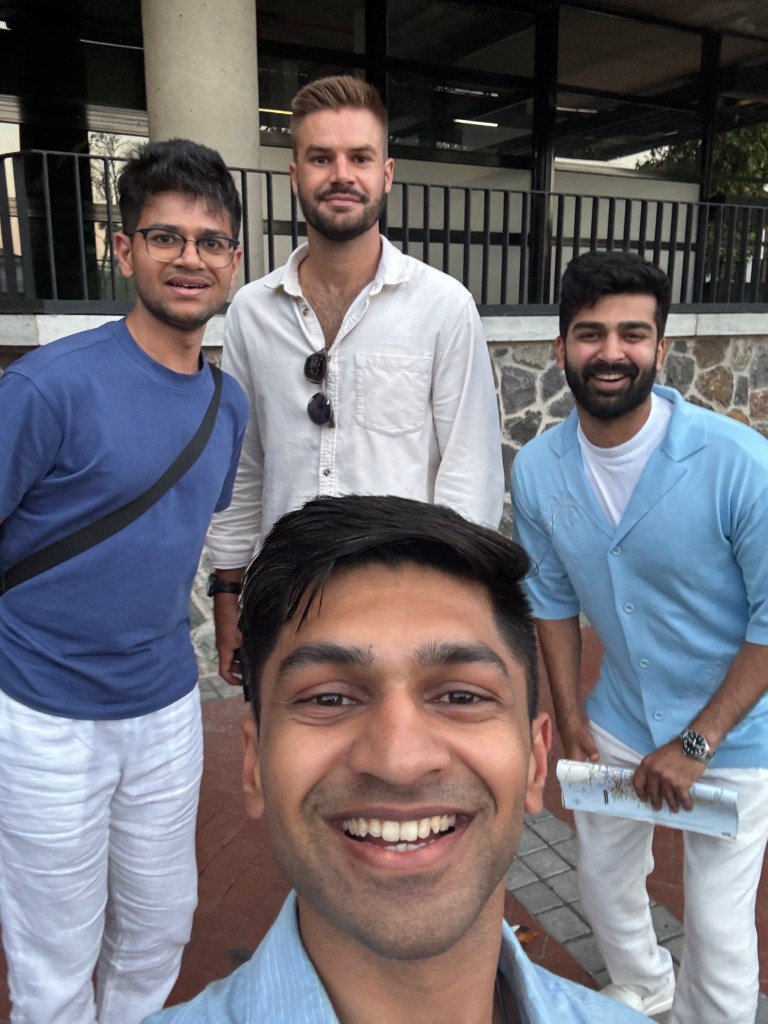
We headed to the two main clubs in Cape Town—Cabo and The Grand Café. Cabo appeared to have the best scene in town, but they were charging 2,000 rands per person just for entry, which is about Rs 10,000! The Grand Café was charging 750 rands per person, but the crowd seemed to be older and not as lively as Cabo. Meanwhile, the other two groups couldn’t find anything worthwhile. While we found places that were too premium for us, our friends ended up in spots that were too cheap.
As it approached 10 PM, we decided to regroup and figure things out. The traffic had become quite heavy, and it didn’t make much sense to spend 10,000 INR for just an hour at Cabo. We strolled through the lively streets; many people had come out to eat, drink, dance, and enjoy the New Year’s Eve festivities. We decided to bar hop. The alcohol was surprisingly affordable in South Africa—Jäger Bombs were only about Rs 95! We visited a couple of bars, and around 11:45 PM, we strolled tipsily toward the V&A Waterfront for the fireworks.
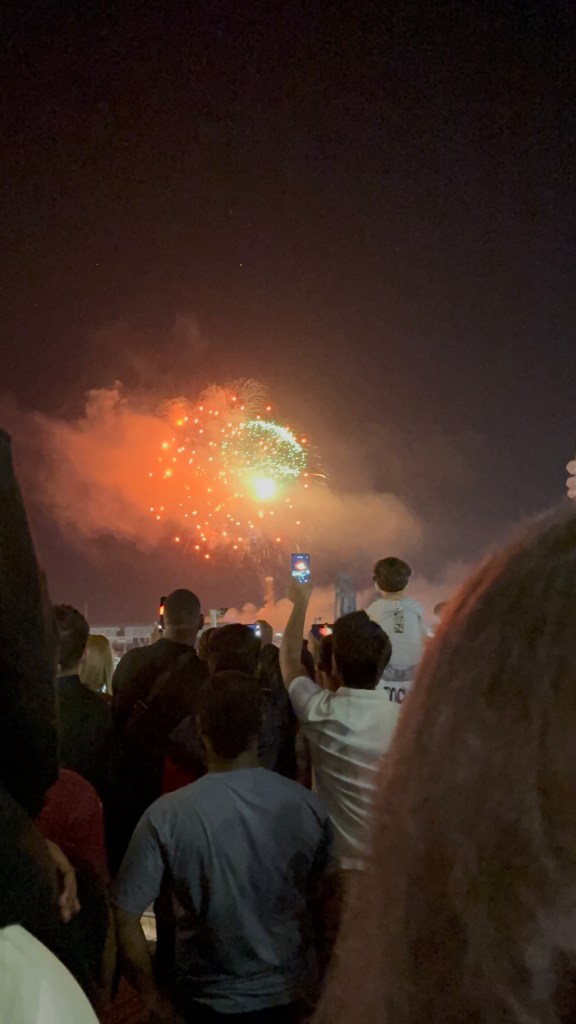
We made it in time, and the fireworks display was beautiful. There were so many people gathered, and we sat for a while to enjoy the view. Afterward, we returned to our hotel and called it a night.
On a scale of -5 to +5, I would rate the Ikigai Cafe a +0, Betty’s Bay a +2, Daddy Long Legs Art Hotel a +3, Bukhara a +2, the NYE scene a -1, Fireworks +1.5.
1st Jan, Wednesday
We woke up late without any appointments. We decided to visit an amazing breakfast spot called JARRYDS. It was somewhat expensive, but the food was great. From there, we took a stroll around the Camps Bay Beach area. “What a lovely place to have a house,” we thought.
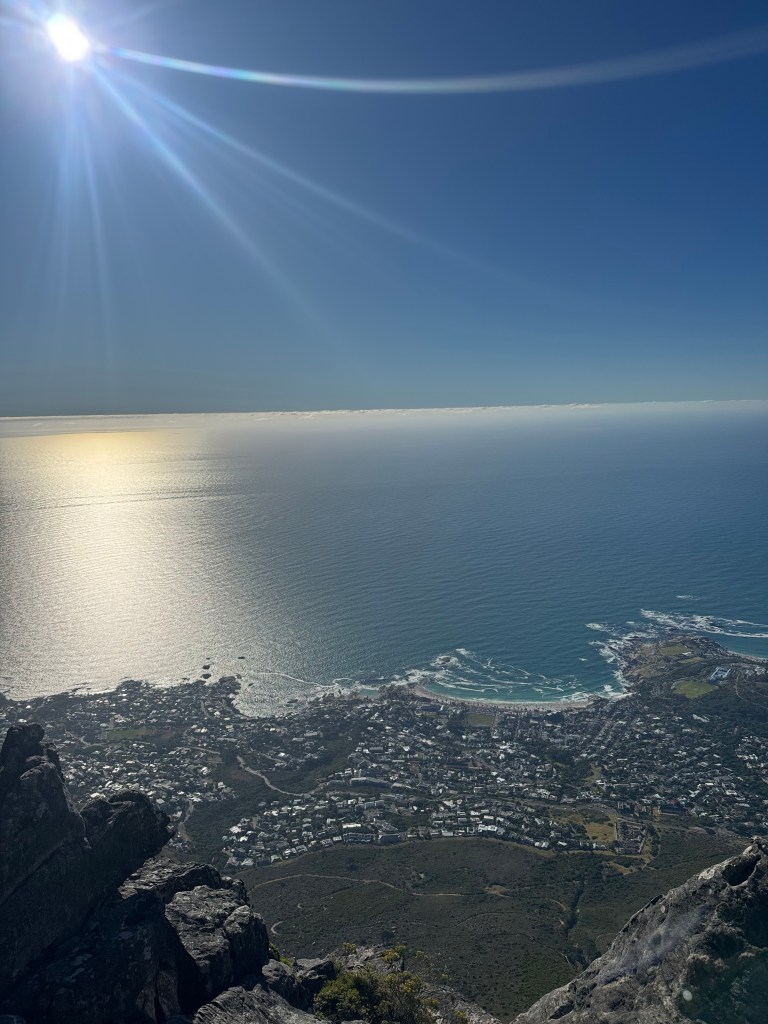
After returning, we took showers and headed toward Cape Town’s most famous tourist attraction—the Table Mountain. Unfortunately, it was poorly managed. We bought tickets online only to find ourselves facing a queue of over two hours to go up. Because we had purchased the tickets, we stood in line for over two hours before boarding the cable car. For those who want to climb or hike it, I wouldn’t recommend it; it’s too high and dangerous.
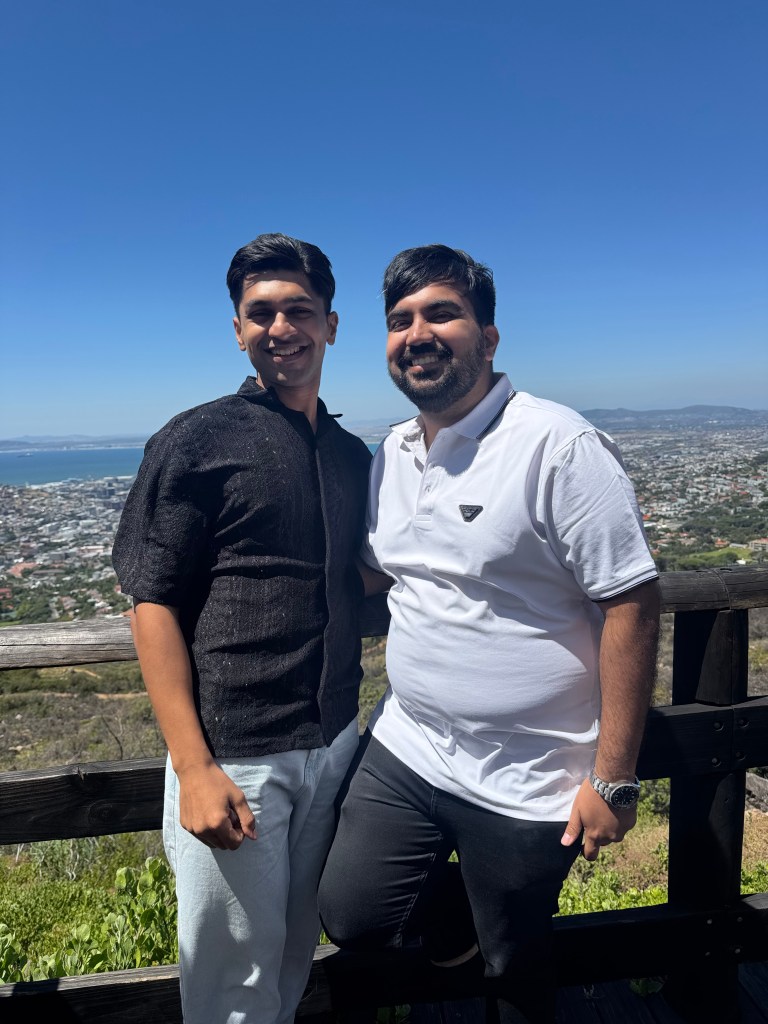
At the top of Table Mountain, as the name suggests, the surface is flat. The views from up there are exceptionally beautiful. After spending about 30 minutes enjoying the scenery, we decided to head back, only to discover a 1.5-hour return queue. We bought some wine and sipped it while waiting. We arrived at Table Mountain at 2:30 PM, reached the top at 4:30 PM, rejoined the queue at 5 PM, and came down at 6:30 PM. After descending, we realized that the cabs were 20 minutes away, so we finally left the place at 7 PM. The views were great, but the three-plus hours spent in queues didn’t feel worth it.

From there, we headed to GrandWest Casino & Entertainment World. It is a huge space with a casino, bowling alley, laser tag, ice skating rink, and many food eateries. Since it was January 1st—a holiday—the place was packed with visitors. The bowling alley had a two-hour wait, and given our Table Mountain experience, we decided against that. Instead, we booked a laser tag slot and went to grab a bite. This was the only place where we struggled somewhat to find vegetarian food; each eatery had just one or two vegetarian items. So, we scrambled and ended up getting ten items from ten different places.
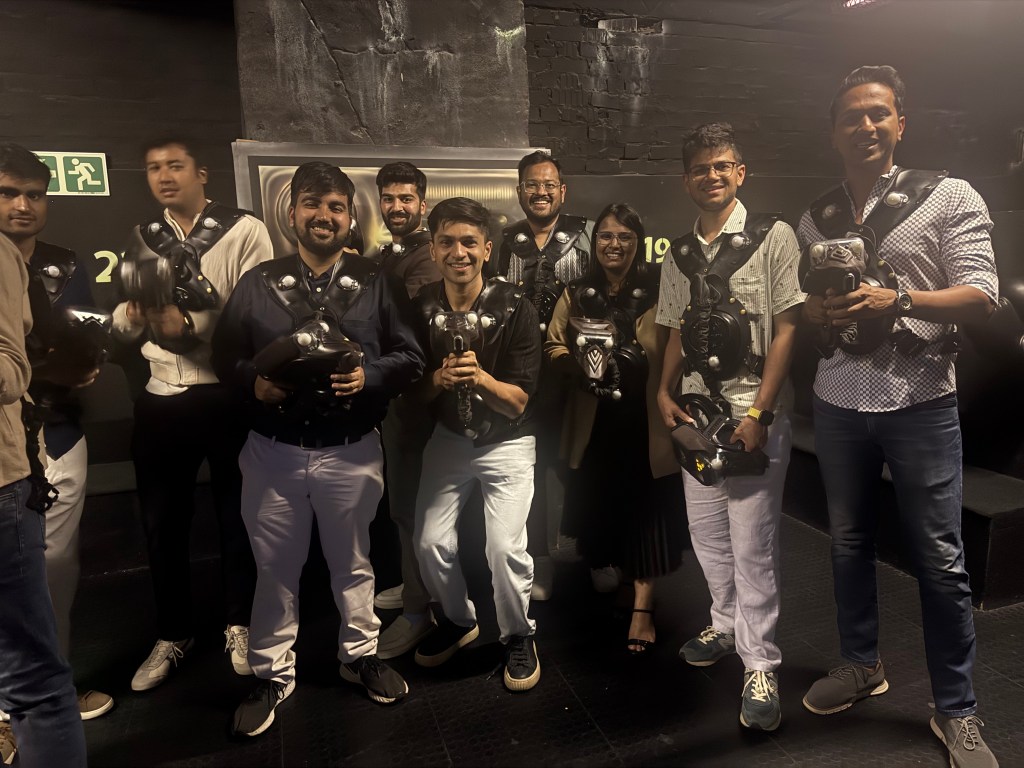
We had also pre-booked the ice skating experience for all of us. The laser tag was a lot of fun—great maze, gear, and format. After that, we headed to the ice skating rink. Ice skating requires some practice and is certainly a high-injury activity. Two of the most experienced among us took quite a bad fall as kids were running recklessly there. Afterward, we spent the next two hours at the casino before returning home and calling it a night.
On a scale of -5 to +5, I would rate JARRYDS a +2.5, Table Mountain a +0, GrandWest Casino a +1.5, GrandWest Laser Tag a +3, GrandWest Ice Skating a +1, and their eateries a -3.
2nd Jan, Thursday
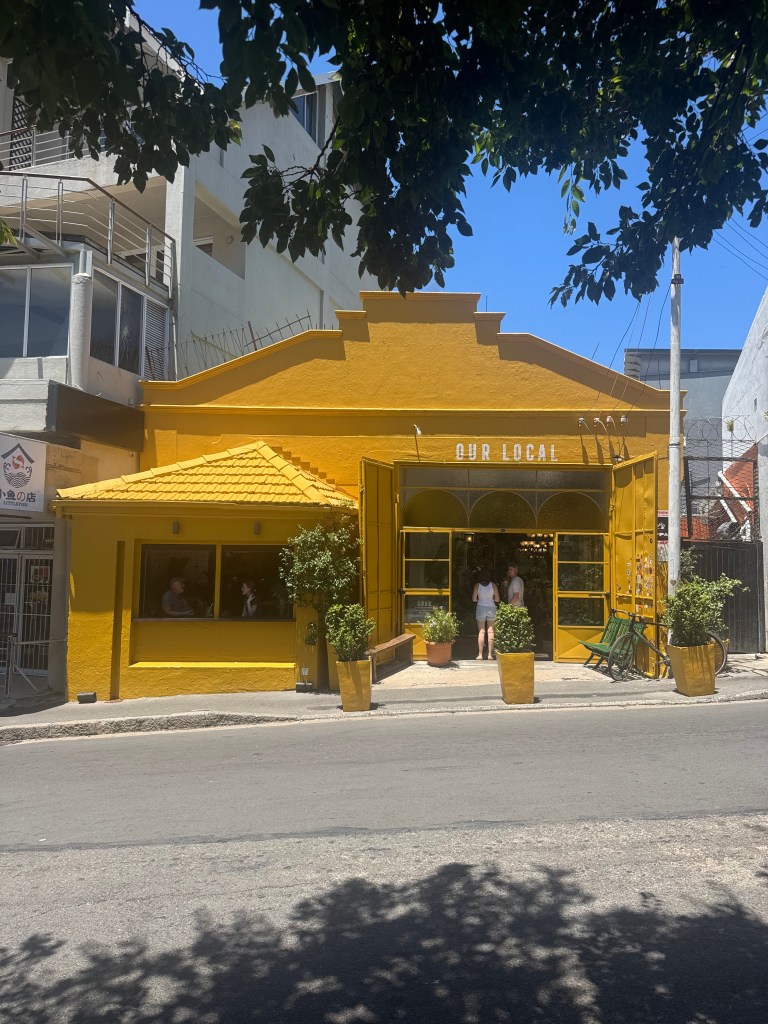
Once again, we woke up without any alarms. We all got ready and headed to Our Local for some breakfast. The food was excellent, and the interiors were great. Africa boasts huge malls, so we decided to visit Canal Walk, one of the largest malls on the continent. We spent some time shopping before returning to our hotel to relax for the evening.
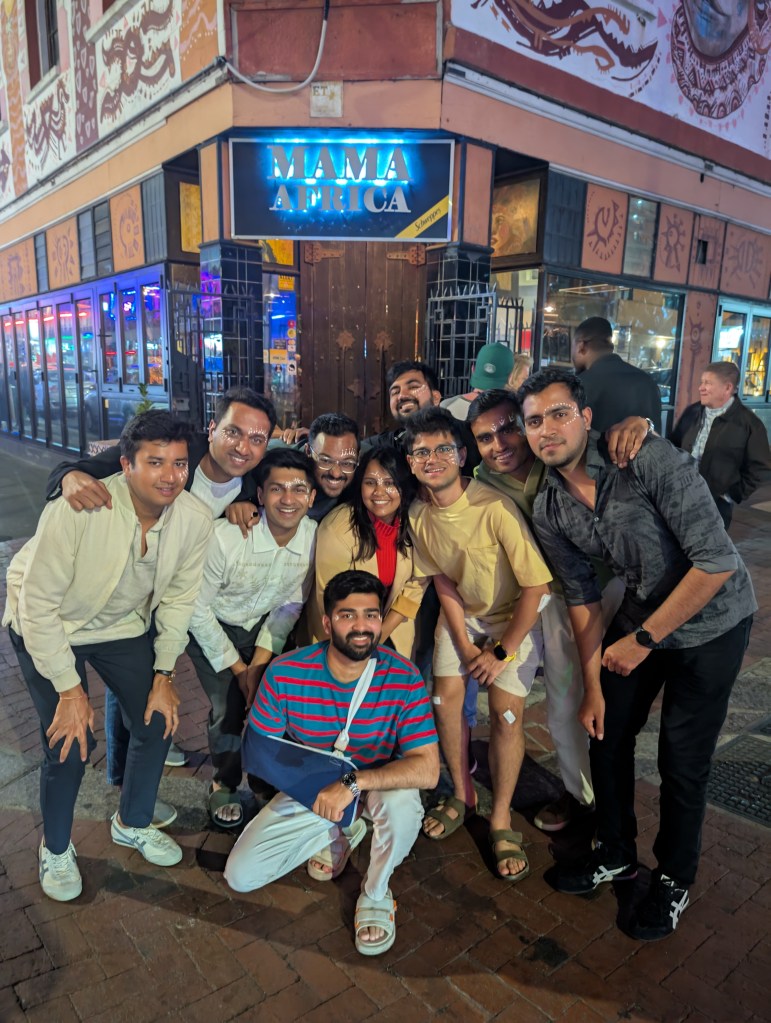
We had a reservation at Mama Africa, a popular restaurant known for its African cuisine. We had visited them earlier to inform them about our vegetarian dietary preferences, and they were kind enough to create a special menu for us. The place is quite pricey and features live music, face painting, and distinctly African decor. The food was decent; some items were good, while others were not as impressive.
Our hotel, Daddy Long Legs Art Hotel, had a common balcony overlooking the street, complete with good seating capacity. Guests can be as noisy as they want without any issues. We sat there late into the night and noticed that the streets in Cape Town were quite lively. We witnessed people shouting, singing, fighting, and arguing throughout the night, which somehow blended into the overall vibe of the city—strange!
On a scale of -5 to +5, I would rate Our Local a +2.5, Canal Walk Mall a +0.5, and Mama Africa a +2.5.
3rd Jan, Friday
Once again, we woke up with no alarms ringing. It was our last day in Cape Town. We headed to Poke Co. for some poke bowls and protein smoothies for breakfast. This was also our day for souvenir shopping, so we bought the usual tourist items for our friends and family back home. Afterward, we checked out of the hotel, leaving our luggage in the lobby.
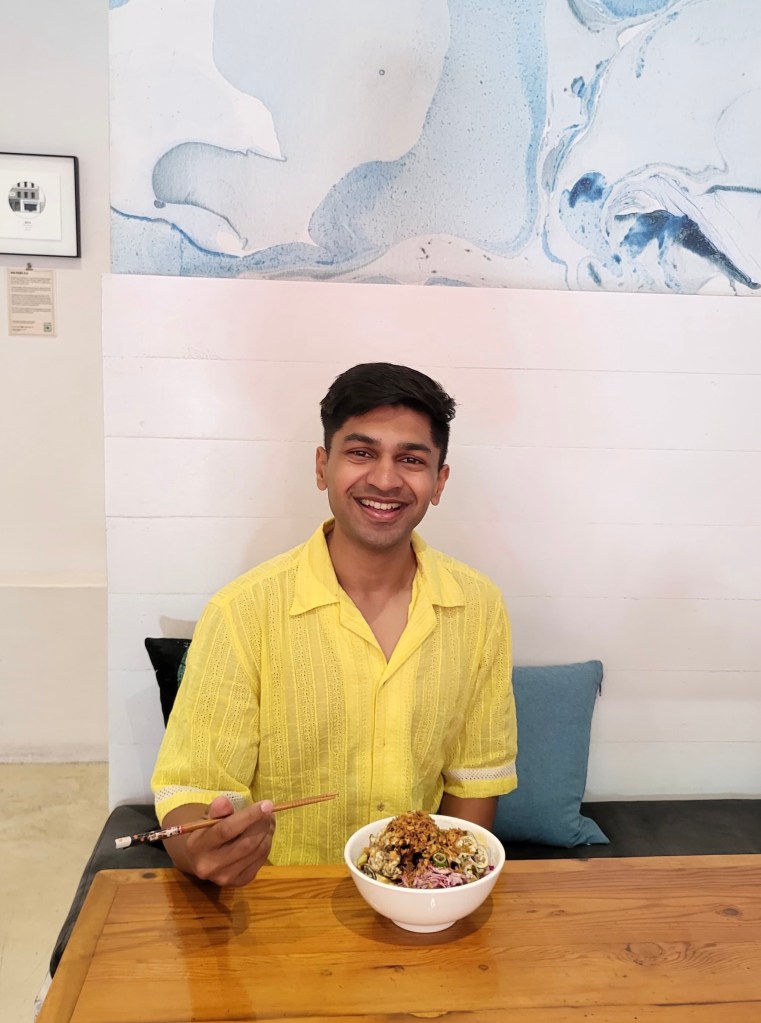
We finally decided to go to Lets Go Bowling after being unable to do so in George and at the GrandWest Casino. We had a great time bowling! It was our last lunch in Cape Town, and by now, we felt quite safe moving around even along the streets. People chose to eat at their own favorites—some went for Indian food, some for continental cuisine along the waterfront, while we opted for Ethiopian food. Cape Town offers a variety of restaurants; Vintage is great for Indian, and Addis is well-known for Ethiopian cuisine. Definitely try the sweet wines at Addis!
After lunch, we headed to the airport to catch our flight from Cape Town to Johannesburg for our return to India. We had booked with FlySafair, their low-cost airline, which we hadn’t researched thoroughly. We could have booked with South African Airways or Airlink, both of which are full-service airlines and available at the same price, but those options were full. We landed quite late at night. We had booked rooms at the Protea OR Tambo Hotel, which is right at the airport. We checked in for a few hours since we had to wake up early the next day for our international flight.
On a scale of -5 to +5, I would rate Poke Co. a +2, Lets Go Bowling a +1.5, and Addis a +1.5.
4th Jan, Saturday
Today was the day we returned to India. Our flight was from Johannesburg to Mumbai with a layover in Ethiopia, departing around 8 AM. The hotel provided a complimentary airport shuttle, and we all set off smoothly as planned.
 the 100 countries club
Leave a comment