Japan feels like it’s living in 2040. Everyday life is solved at scale — where Indians miss a bidet in Europe, Japanese toilets offer 10 jet settings. Where we grab quick Zomato meals, Japan stocks fresh food at convenience stores (always 2 minutes away). Where NFC payments are still rare back home, Japan runs entirely on IC cards. The list goes on.
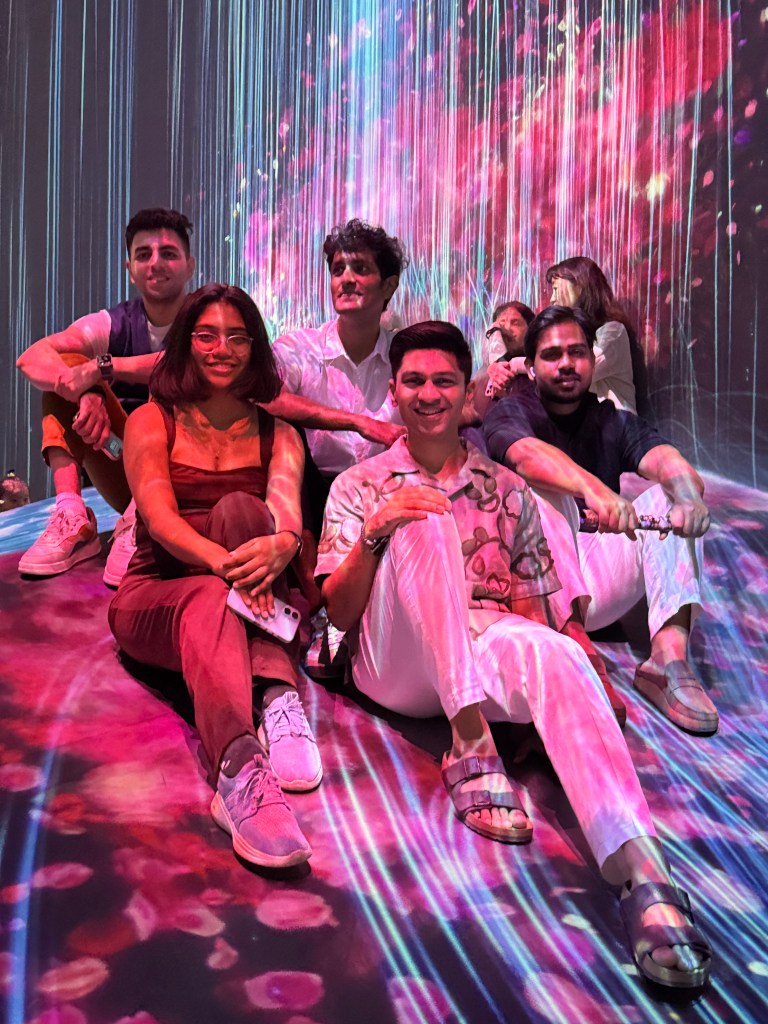
In August 2025, five friends took on a 10-day Japan adventure (Aug 22–31). Here’s how it unfolded, day by day.
| Date | Day | When Awake | Night At |
| 22nd Aug | Fri | Fly in & Ueno, Ginza | Tokyo |
| 23rd Aug | Sat | Team Labs, Shibuya | Tokyo |
| 24th Aug | Sun | Asakusa, Shinjuku | Tokyo |
| 25th Aug | Mon | Disney Sea, Shinjuku | Tokyo |
| 26th Aug | Tue | Akihabara, Travel to Kyoto | Kyoto |
| 27th Aug | Wed | Arashiyama & Higashiyama Ward | Kyoto |
| 28th Aug | Thu | Movie, Shopping, E-Cycling | Kyoto |
| 29th Aug | Fri | Nishiki Market, Fushimi Inari | Kyoto |
| 30th Aug | Sat | Nara, Dotonbori (Osaka) | Osaka |
| 31st Aug | Sun | Fly out |
Cost Breakup
| Amount (INR) | Comment | |
| International Flights | 53,000 | Singapore Airlines BLR-SIN-HND, KIX-SIN-BLR |
| Visa, SIM, Insurance | 4,400 | 1800 + 2200 + 400 |
| Stays | 29,000 | Rs 3200 pp/ night |
| Food & Drinks | 43,000 | 40:30:30 :: Meals: 7-11: Cocktails |
| Shinkansen | 9,200 | Tokyo to Kyoto (Bullet Train) |
| Experiences | 16,000 | 7k is DisneySea, 2k Cycle, 1.2k movie |
| Shopping | 7,400 | (This is on the lower side) |
| Internal Movement | 13,000 | IC Card Recharge & Lockers |
| Total | 1,75,000 |
Japan Basics
Currency: Yen (¥). When we went, 1 ¥ = ₹0.6. INR beats Yen nominally, but Japan is 2.5x pricier than India in PPP terms.
Cash Strategy: Buy Yen at a major forex back home, or use a low-fee forex card. Japan runs on domestic currency only (no USD accepted anywhere). Credit cards work widely, but cash is mandatory for IC card top-ups, small vendors, and temple entries. Airport or even otherwise: USD→¥ exchanges = poor rates
Language: 99% Japanese-only. English proficiency is poor. Japanese script (kanji/kana) is completely alien to the Latin alphabet — signage is unreadable without help. Google Translate saves lives.
Navigation: Google Maps + IC card = zero human interaction needed. Public transport (trains, buses, Shinkansen) runs like clockwork — be punctual. IC Cards Explained: NFC prepaid cards (Suica/Pasmo in Tokyo, ICOCA in Kansai). Tourists get “Welcome Suica” (28 days, no ID needed, balance non-recoverable if lost). Works everywhere: transport, vending machines, 7-Eleven, some restaurants
Visa for Indians: High approval rate. Great India-Japan ties = ₹500 fee + ₹1,300 VFS/courier = ~₹1,800 total. Book a VFS appointment yourself or via an agent (if you live in a non-VFS city). Documents mirror Schengen: flights, hotels, bank statements, payslips, ITR, leave letter, itinerary (full list on VFS site).
Pro Tips: Escalators: Tokyo = stand LEFT, walk RIGHT. Kyoto/Osaka = stand RIGHT, walk LEFT. Follow locals. Footwear: 15–25k steps daily. Comfortable shoes > fashion every time.
10D-9N Itinerary
Day 1: Landing in Tokyo – First Impressions of Japan
After nearly ten hours of travel via Singapore Airlines from Bangalore (with a short layover in Singapore), I finally touched down at Haneda Airport, Tokyo, around 4:30 p.m. The immigration process was fast and efficient — very Japan-like in its quiet precision. Within minutes, I was out of the airport building but still in the larger airport area.
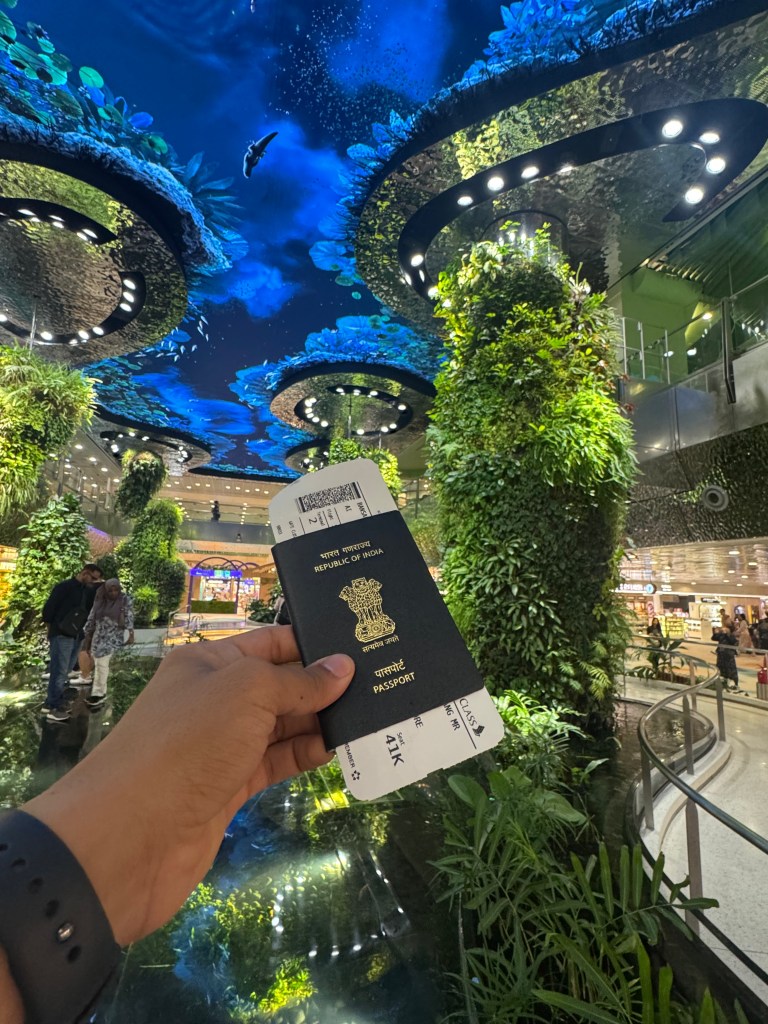
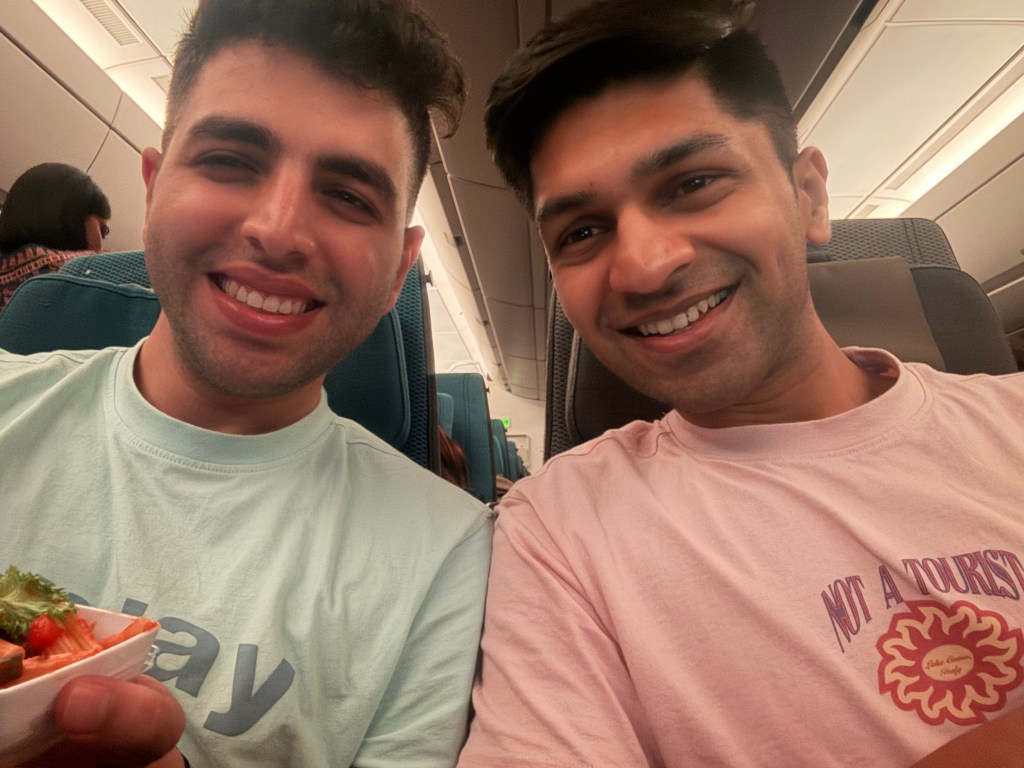
The immediate priority was getting a local SIM card, but unlike places like Vietnam or Bangkok, where you’re greeted by a dozen stalls shouting data deals, Haneda was more reserved. There were SIM options available, just somewhere in that airport periphery. We decided to take an E-SIM card later, as we were hungry and wanted to reach our accommodation as soon as possible.
But we still needed an IC Card (Suica/ Passmo) to reach home. Luckily, there are Welcome Suica card vending machines just outside the arrivals area — a lifesaver, since the Suica card is your golden ticket to Japan’s metro, buses, and even convenience stores. One quick swipe and you are set to explore Tokyo’s impeccable public transport system, which truly has no match anywhere I’ve been. The trains are spotless, punctual to the second, and eerily quiet — people speak in hushed tones, if at all. It’s a surreal contrast to the chaos of metros elsewhere.
Taxis, on the other hand, are shockingly expensive. A friend of mine once travelled about 50 kilometres and ended up paying nearly ₹15,000 — that’s around ₹300 per kilometre! No wonder locals and tourists alike rely almost entirely on the metro.
Now, after collecting my Welcome Suica card (the rechargeable metro pass), we decided to skip the airport errands for now — hunger was taking over. Our accommodation was near Ueno, in northeast Tokyo. The metro journey there took about an hour and a half, involving three smooth transfers. What really struck me was how impeccably clean and silent the trains were. No chatter, no phone calls — just an almost meditative calm that felt worlds apart from the bustling metros I was used to.
Once we reached our stay, we freshened up, grabbed the Wi‑Fi, and bought eSIMs online from Go Nomad. Their 10 GB plan worked perfectly across our 10 days in Japan — and the best part, Japan maintains strong net neutrality. Like India, you can freely use your data on any app or website without restrictions, unlike some European countries that sell app-wise data plans. The e-SIM was for Rs 2200.
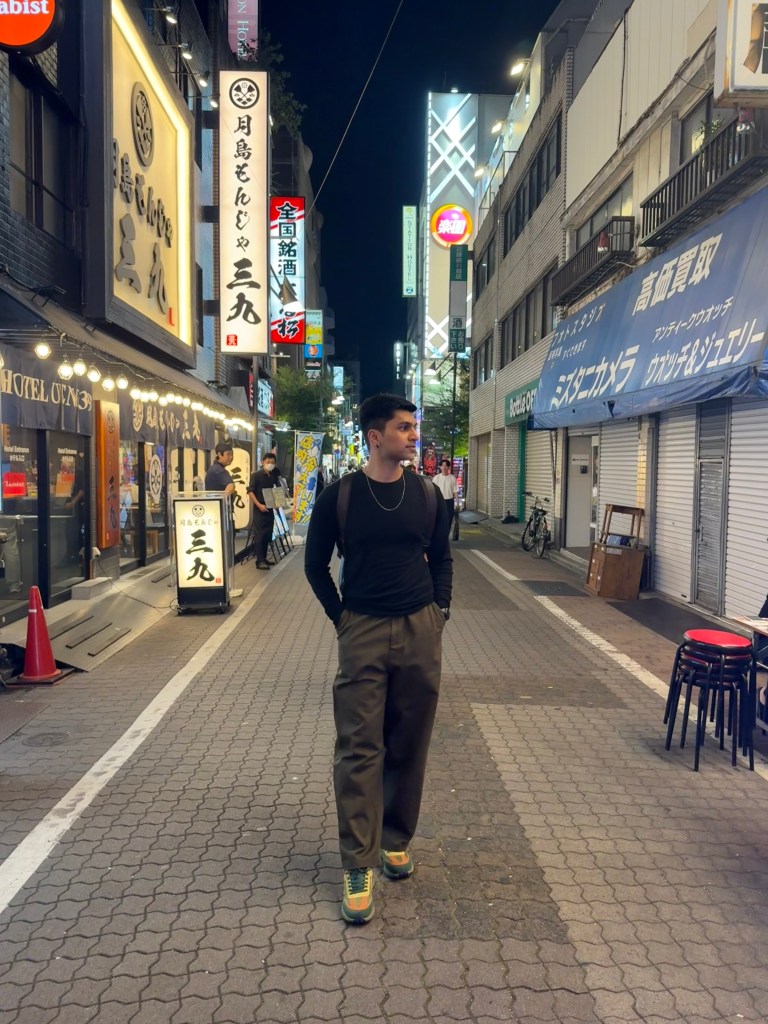
Our hunger brought us next to Ginza, Tokyo’s modern upscale district. Stepping out of the metro, we were instantly surrounded by towering glass buildings, glowing signboards, and wide polished streets. But tucked between all the sleek stores was a narrow tourist lane that felt quintessentially Japanese — paper lanterns, hanging fabric signs with kanji, and cosy restaurants spilling delicious aromas into the cool air.
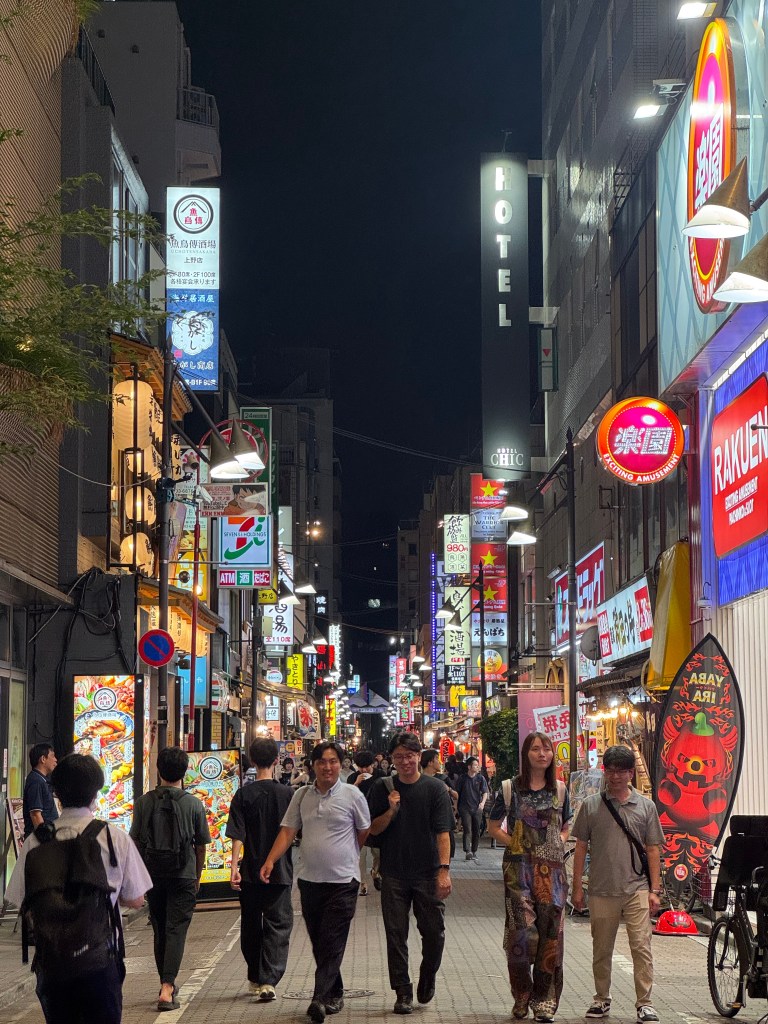
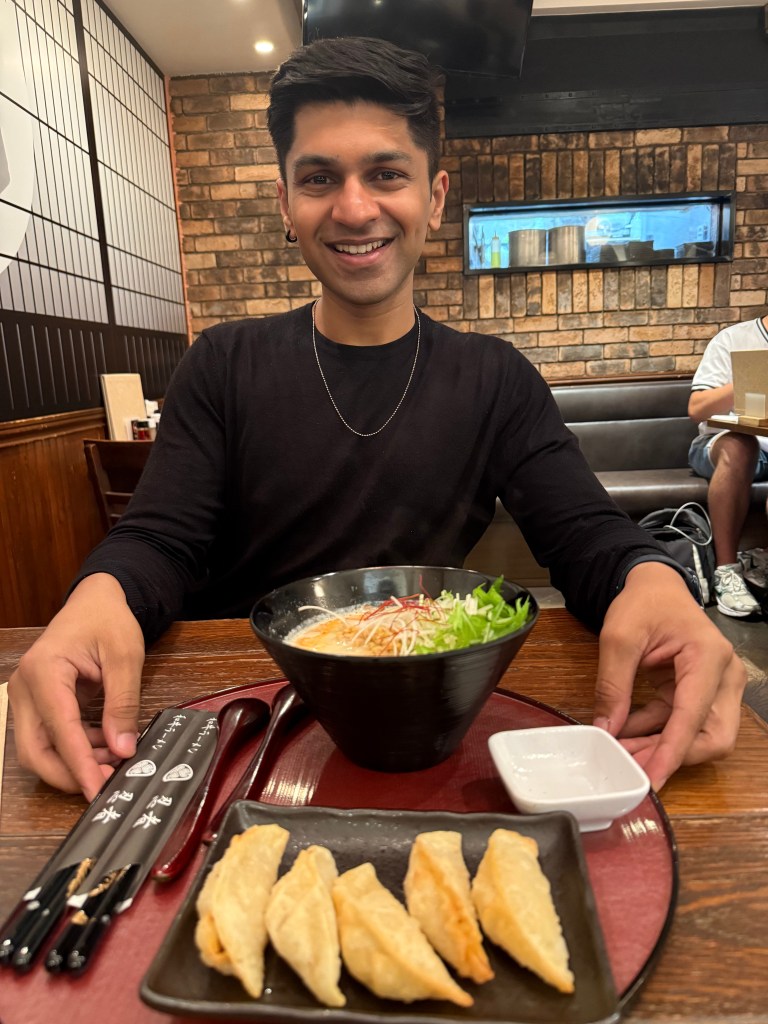
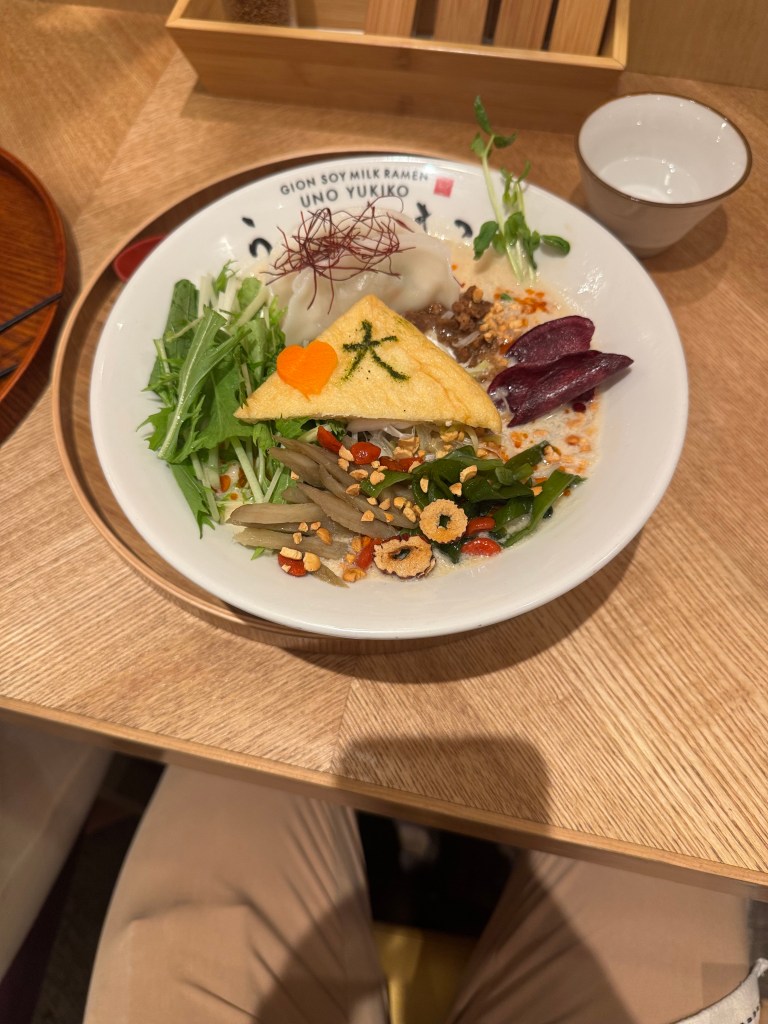
Finding vegetarian food, however, was a challenge. Most menus offered only meat — beef, chicken, or pork. “Niku Iranai”, which translates to “I don’t want meat”, became our greeting at each restaurant during our whole trip. But after a persistent search, we finally stumbled upon a place serving vegetarian ramen. We’re big ramen lovers, and it turned out to be a satisfying bowl — in fact, probably the best one we’d have on the entire trip (though at that point, we didn’t know it!).
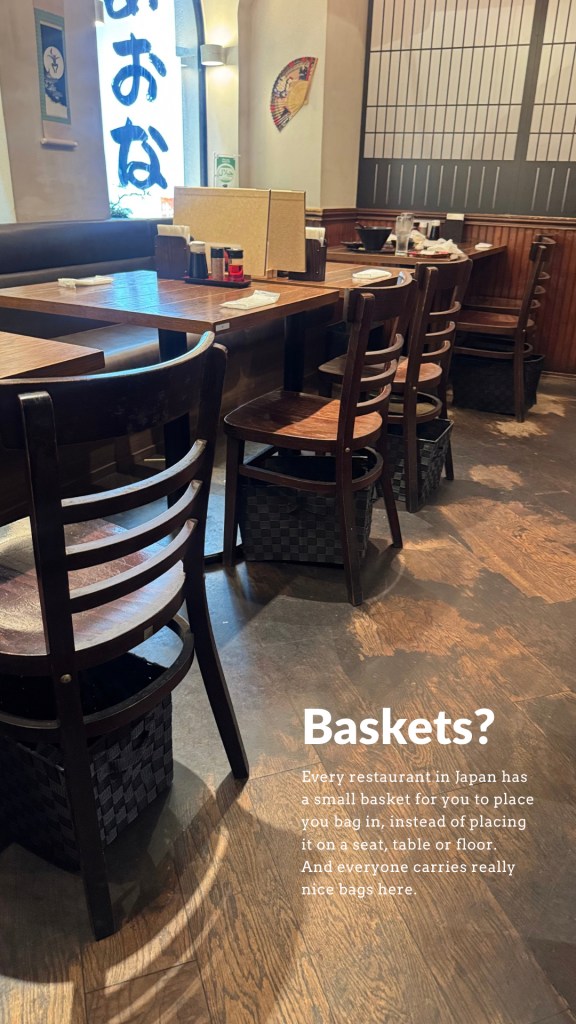
One delightful detail: every Japanese restaurant has a small basket under your seat to keep your bag or jacket. You never place things on the floor or table — a small gesture, but so thoughtful and uniquely Japanese.
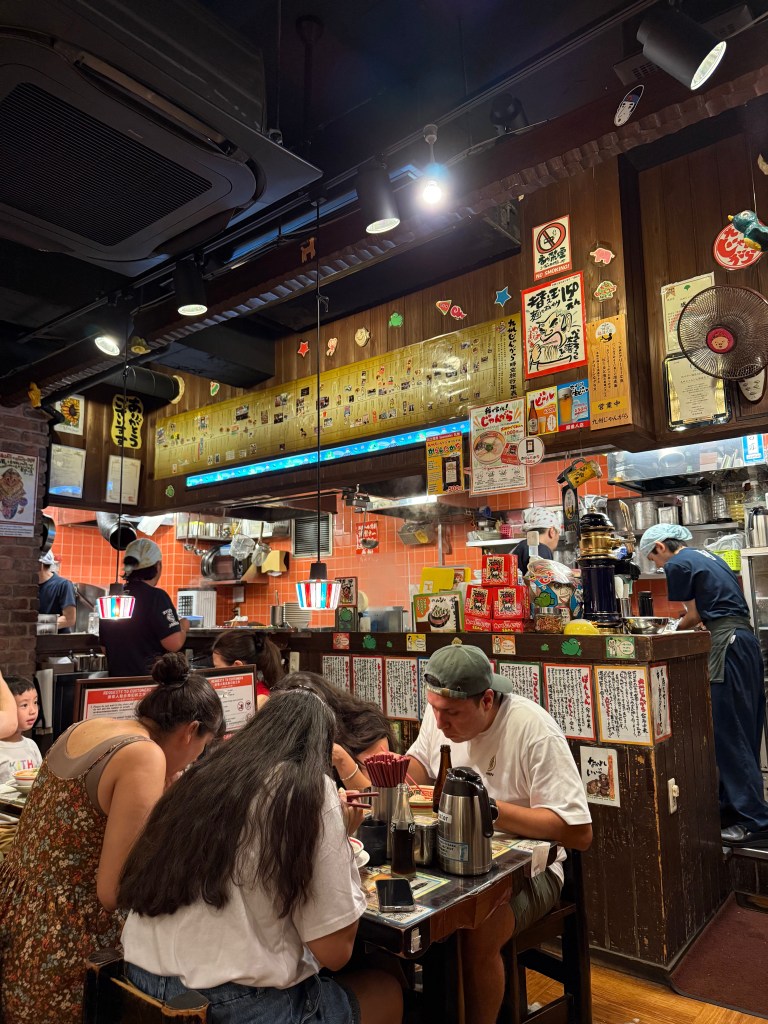
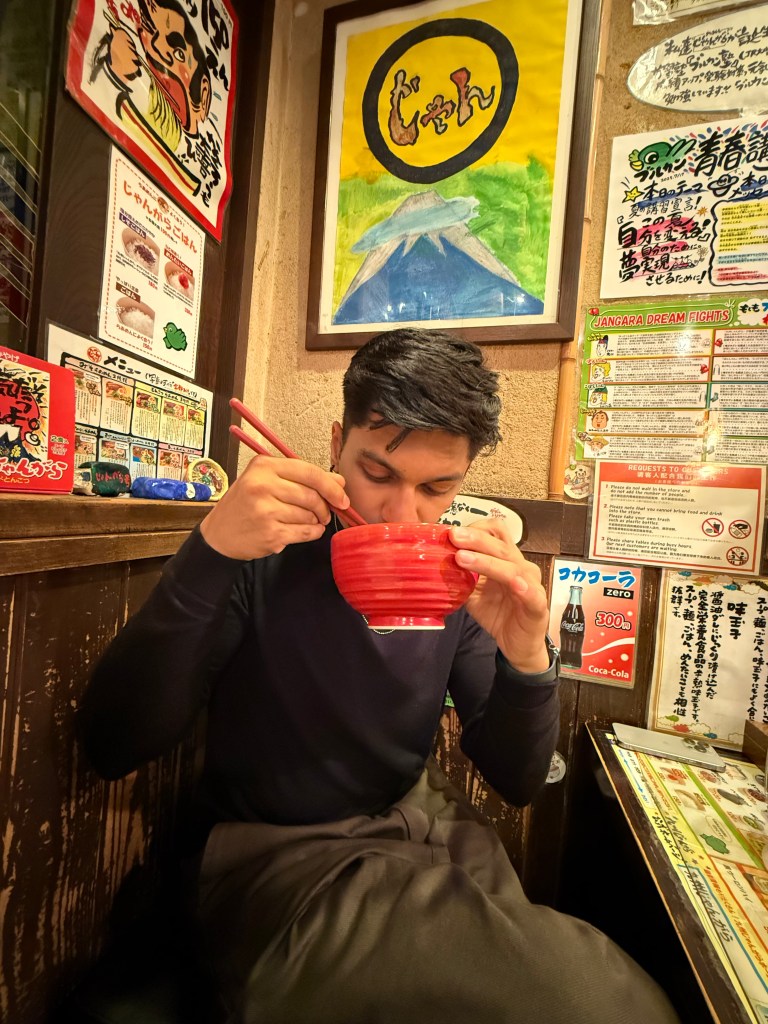
Still hungry, but too tired for shopping, we stopped by another eatery famous for vegan ramen — Kyushu Jangara (it is very popular) — before heading back to our stay. Right opposite our accommodation stood a 7‑Eleven, one of thousands scattered across Japan. We couldn’t resist stepping in for a quick browse, and I instantly knew that these convenience stores were about to become my favourite part of daily life in Japan.
Day 2: Art, Coffee, and Shibuya Nights
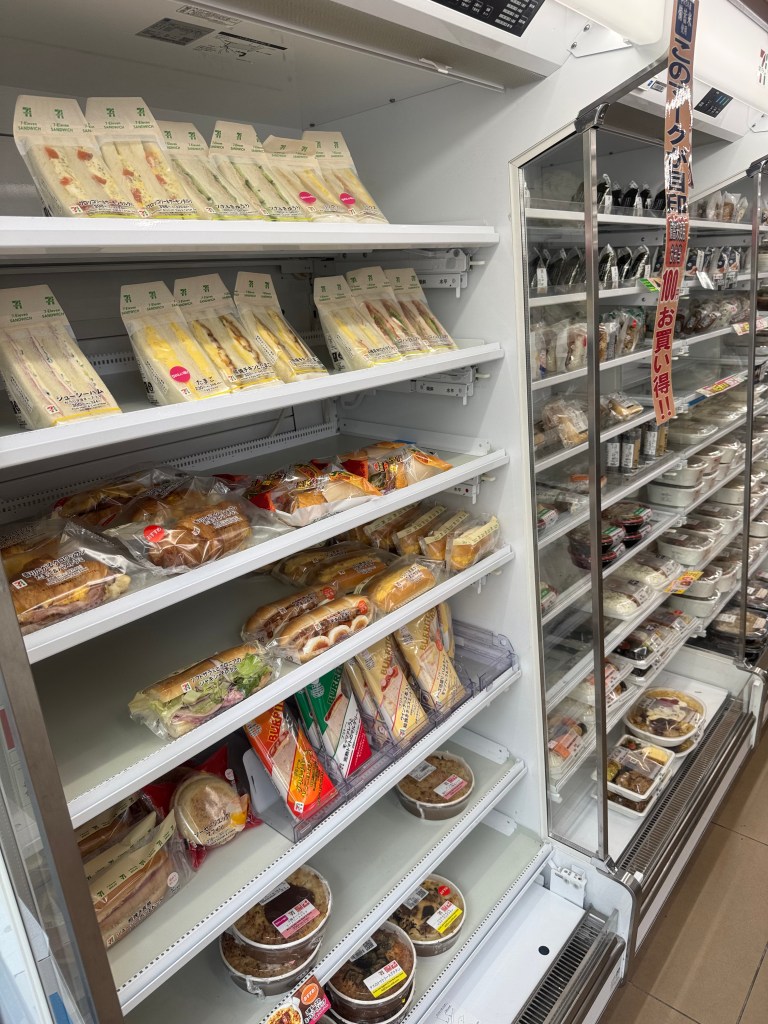
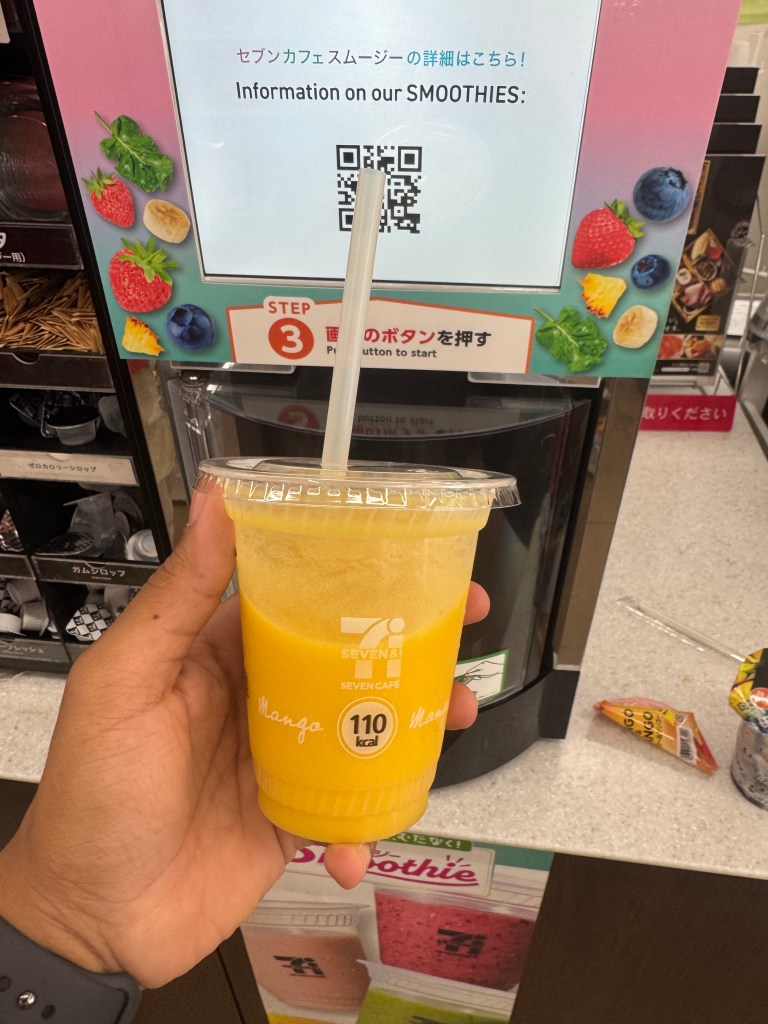
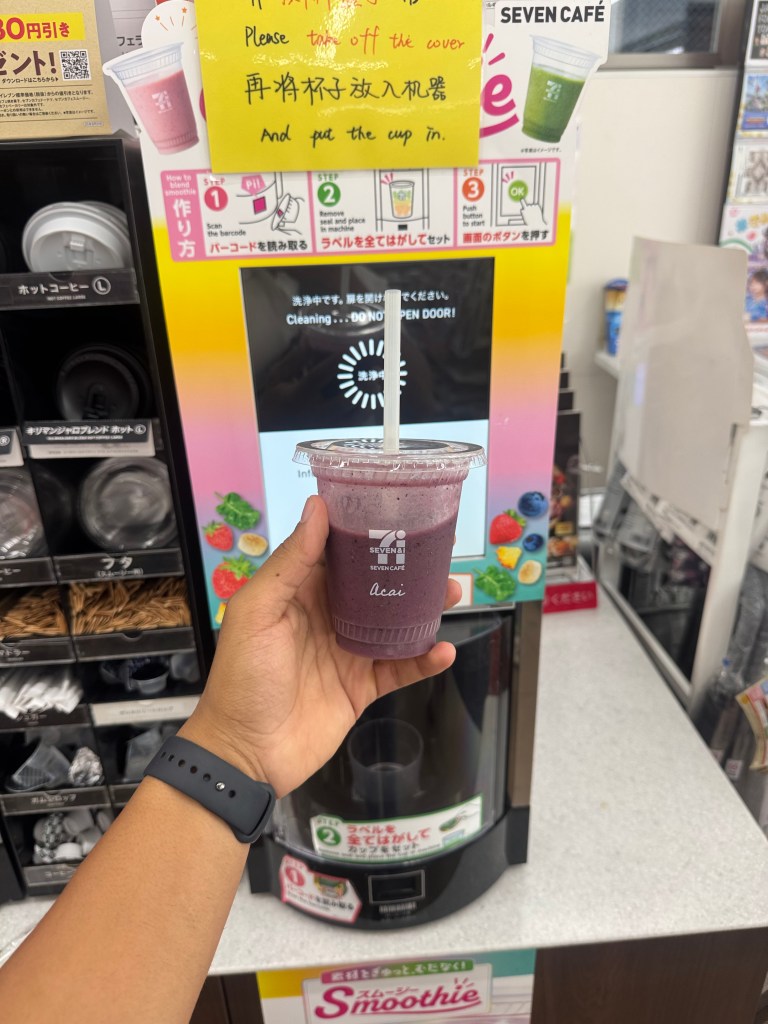
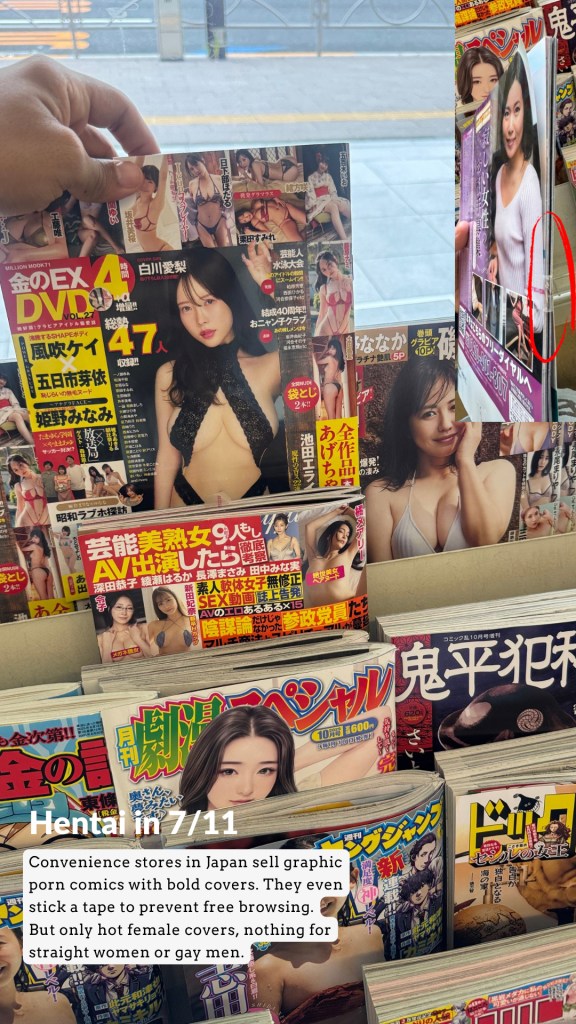
We started our morning at the 7‑Eleven right below our stay — a ritual that quickly became a daily part of Japan. These stores are nothing like the convenience shops elsewhere. Every morning, shelves are stocked with fresh food, some meant to be eaten cold. As a vegetarian, I grabbed a few sandwiches and discovered their ready‑to‑make smoothies, which are genius. You simply pick a frozen cup of fruit from the freezer, place it in the blender machine near the counter, and within 90 seconds it becomes a thick, tasty smoothie — all for a few hundred yen. I also tried their mac & cheese, and while I didn’t check too much about the ingredients (as eggs sneak their way into many things abroad), it turned out delicious.
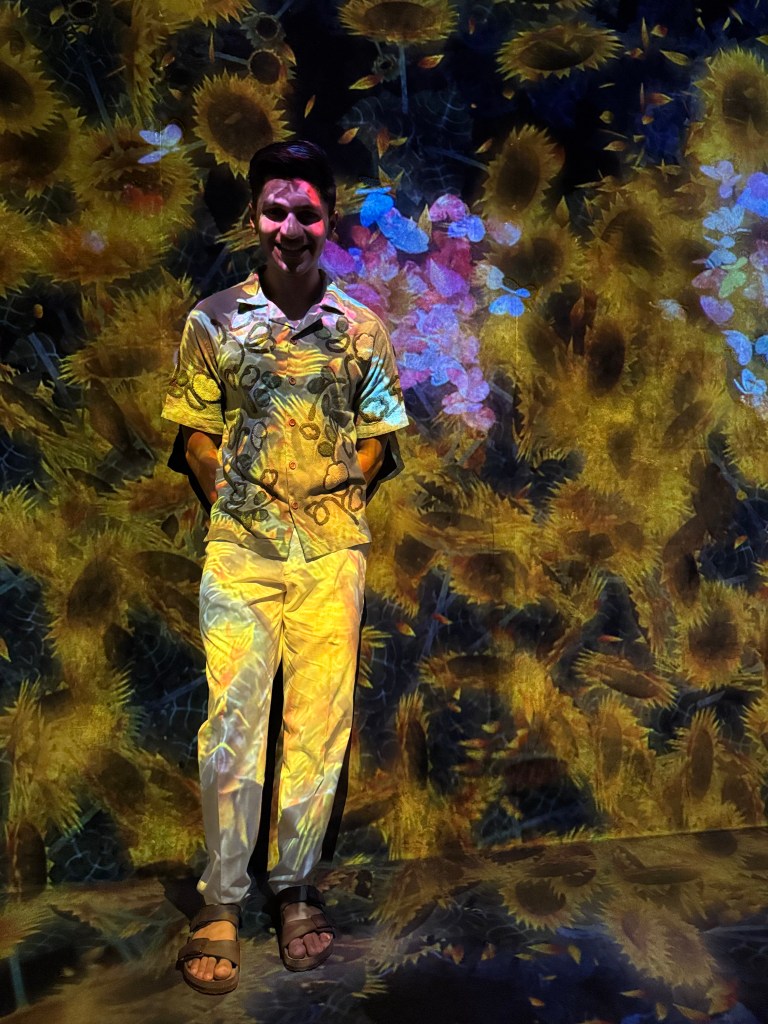
After breakfast, we headed to teamLabs Borderless, one of Tokyo’s most famous digital art museums. (There are two teamLabs in Tokyo — Borderless and Planets.) Borderless features around 15–20 rooms of interactive digital art, where animated projections respond to your movement. It’s immersive, surreal, and endlessly changing. Some of my friends loved it so much that they said they could’ve stayed for hours just watching the rooms evolve — and I agree. It’s a must‑do experience if you’re in Tokyo.
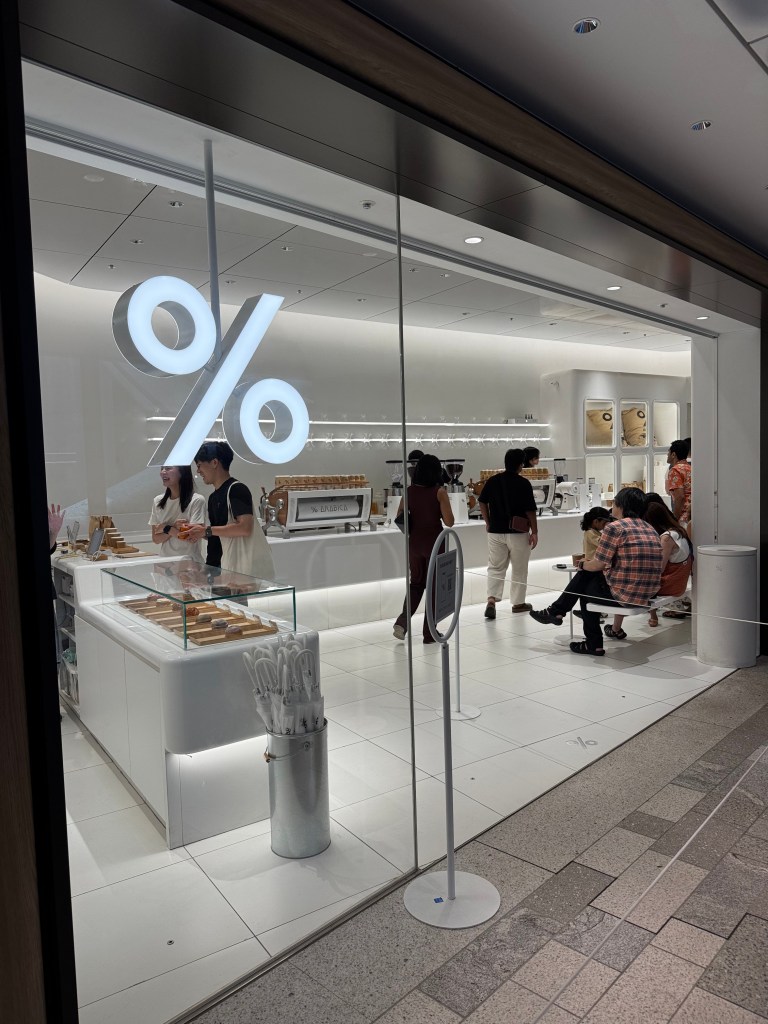
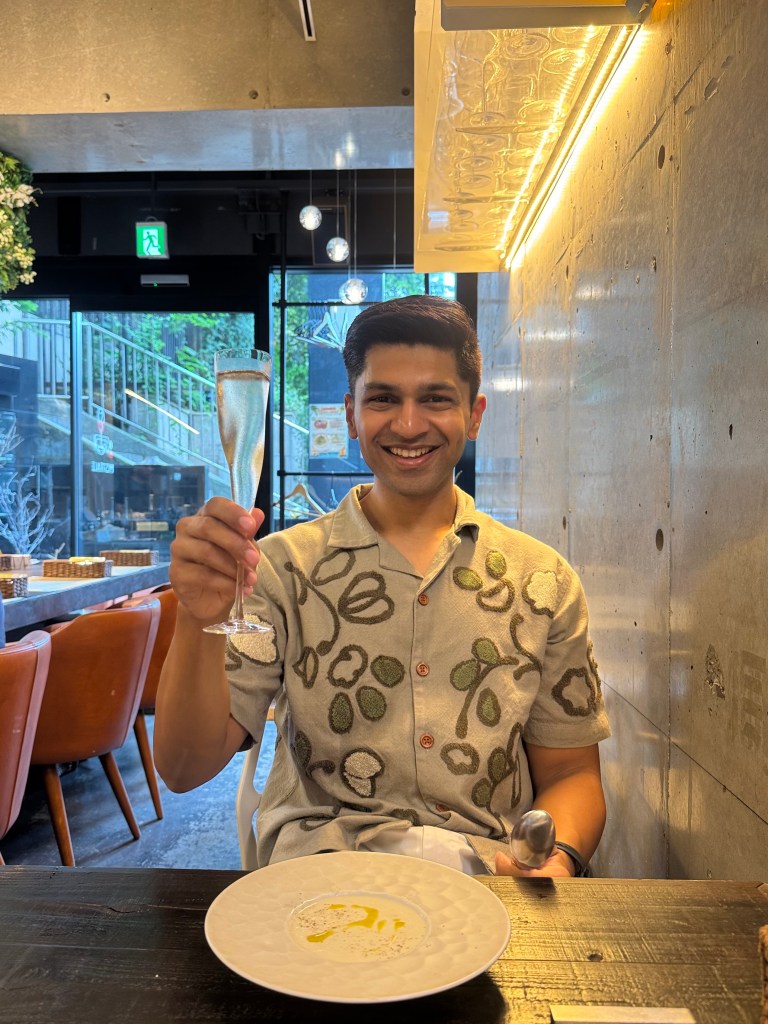
Next stop was a caffeine fix at the stylish % Arabica Coffee. The rest of my group are serious coffee lovers, and this place lived up to the hype — smooth, aromatic, and beautifully served. Lunch followed at a nearby pizza place, a reliable choice for vegetarians.
And of course, another 7‑Eleven stop after that, honestly, discovering new things in 7‑Elevens became part of our daily joy in Japan.
By afternoon, we made our way to Shibuya, one of Tokyo’s busiest and most vibrant neighbourhoods. Bright screens, fashion stores, and constant motion — classic urban Japan. We visited the Onitsuka Tiger flagship store, where the sneakers are significantly cheaper than anywhere else in the world, and wandered through Don Quijote and other mega‑stores packed with quirky souvenirs. Then came the iconic moment — standing amid hundreds of people and crossing the Shibuya Scramble with our phones out, capturing that bucket‑list clip every traveller dreams about. There is a Starbucks at the junction on the 2nd floor; it’s a good viewpoint of the Scramble from above.
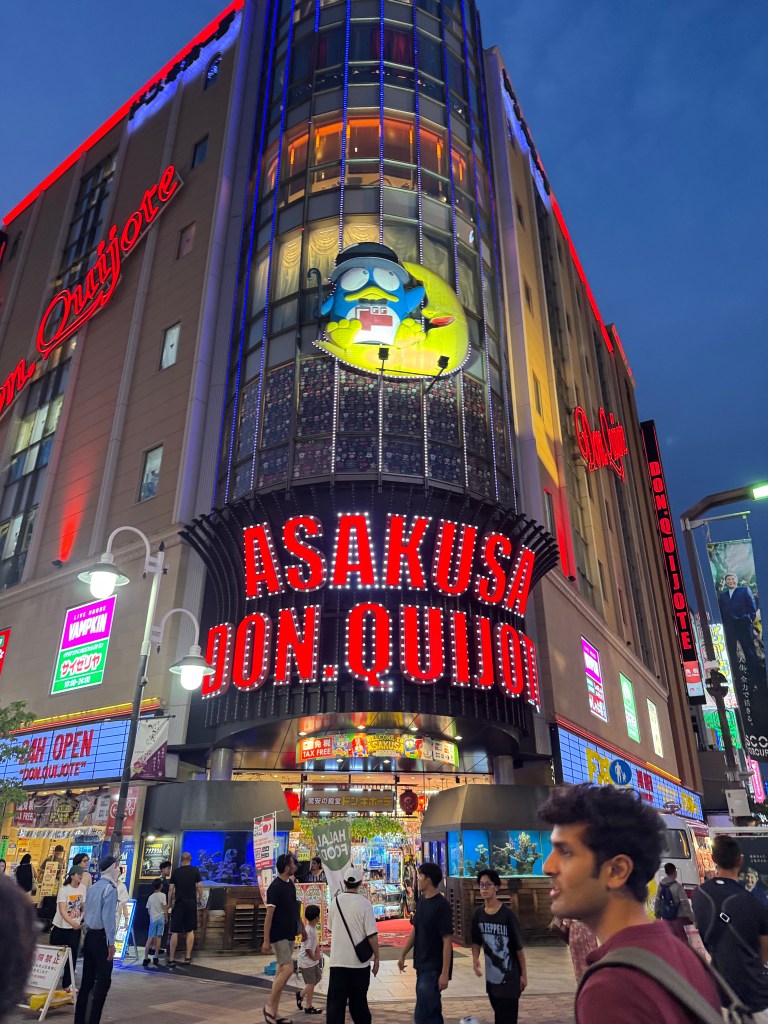
As the evening set in, we had dinner at vegan izakaya masaka (hated it), followed by a round of bar‑hopping — three or four cosy cocktail bars in the streets of Shibuya. We tried the Sake. It appears like a white spirit, so we thought that it would be very strong like Vodka or Gin but to our pleasant surprise, it was quite palatable, stronger than wine, but much weaker than spirits. Sake usually has 13-20% ABV.
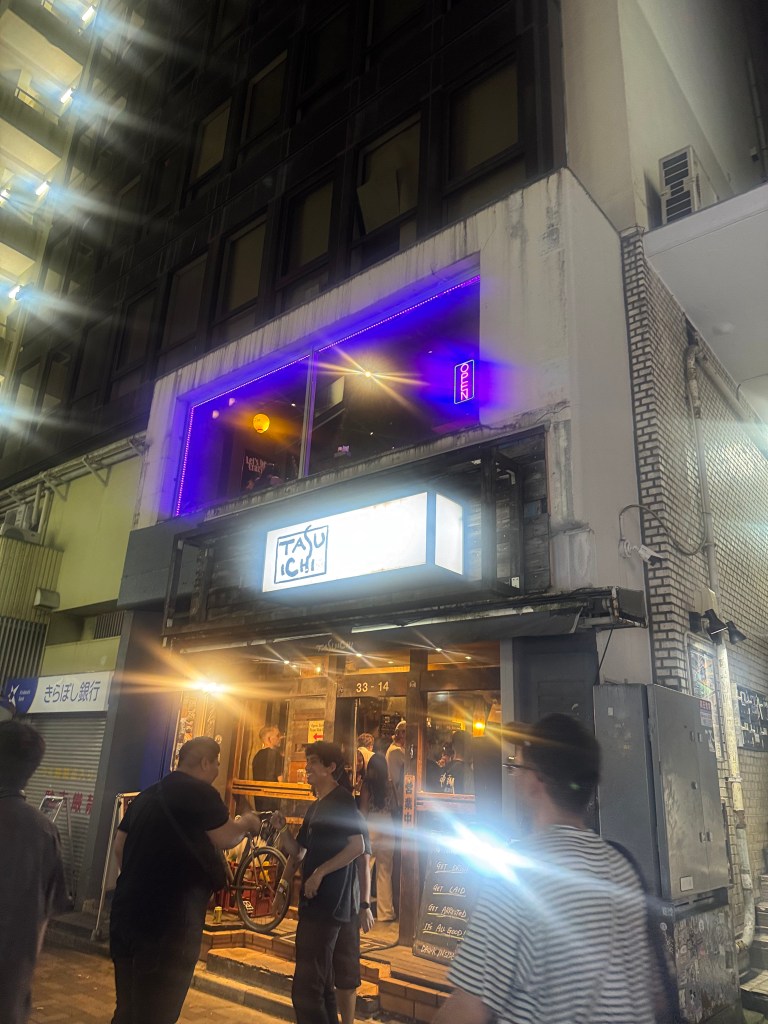
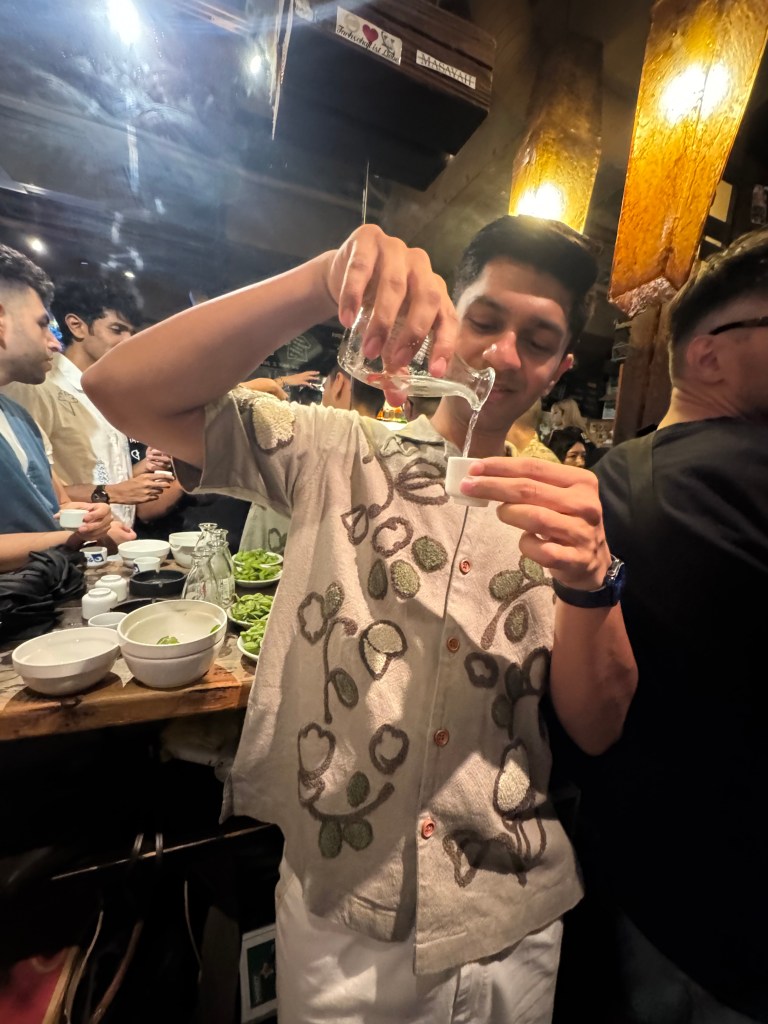
Now comes my biggest complaint with Japan. Public transport shuts down between 12 a.m. and 5 a.m. Since cabs in Japan cost a fortune, we kept one eye on the clock, racing through the neon‑lit streets to catch the last metro back to Ueno (our accommodation). Luckily, we made it, but completely drunk.
Travel Tip:
Public transport in Tokyo stops around midnight. If you’re staying far from nightlife districts like Shibuya, Roppongi or Shinjuku, plan your return trip in advance — or be ready to pay a small fortune for a late‑night cab. This also applies to coming back or heading to airports. The Narita airport in Tokyo is 80 kms away from the city, the Haneda airport is some 25 kms from Tokyo. At the same time, the Kansai Airport in Osaka is 50 kms away from the city. Just do Rs 300/ km and calculate the cost. So, while booking flights, ensure that you don’t land in Japan after 10 pm and don’t have a flight from Japan before 8 am. When I say public transport stops at 12 am, I mean the last train would leave around 11:15 pm.
Day 3: Surviving Tokyo’s Summer, Asakusa Heritage & Arcade Nights
We visited Japan in August, and I can say this with full confidence: I would never go back in summer, even if someone gave me a free ticket. The temperatures hover around 35–36 °C, but what really kills you is the humidity and the amount of walking you end up doing every day. In India, even if it’s 40 °C, you’re mostly indoors — in AC rooms, cars, or at least under a fan. In Japan, you’re out all day, walking 20,000 steps, changing trains, exploring open neighbourhoods. The heat just clings to you.
We stepped out into another blazing morning, did our usual 7‑Eleven breakfast run, and this time immediately bought umbrellas — an absolute must between June and September. Not just for rain, but for shade. From Ueno, we took a short bus ride to Asakusa, one of Tokyo’s most traditional and historic districts, known for its temples and old‑school atmosphere.
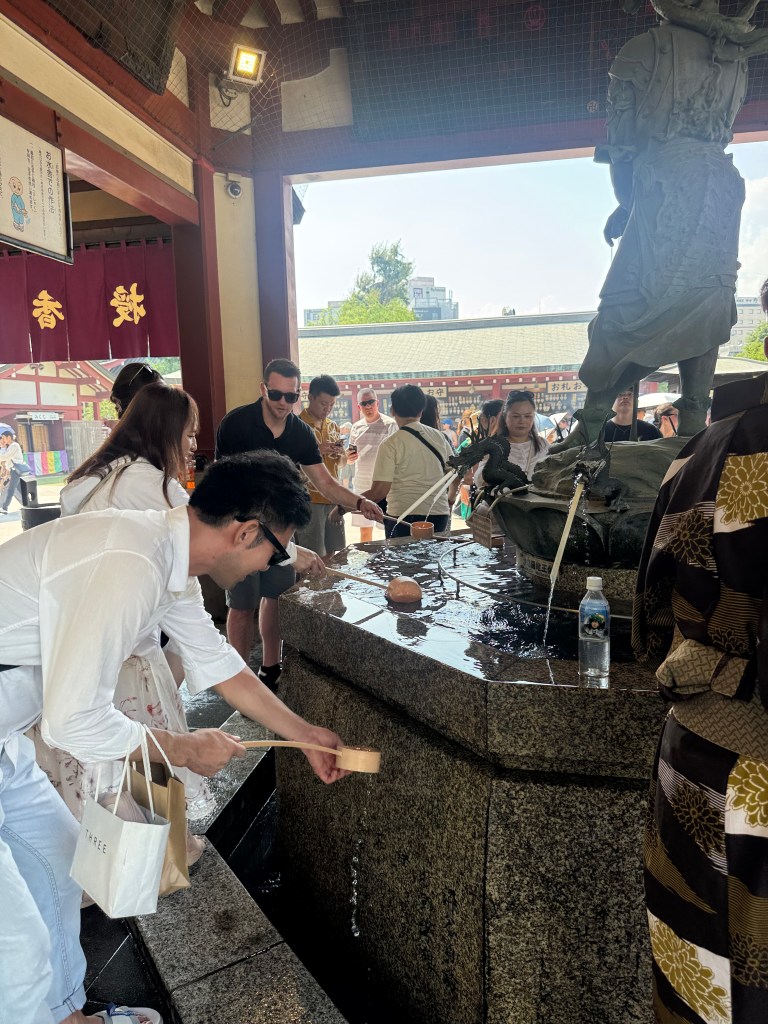
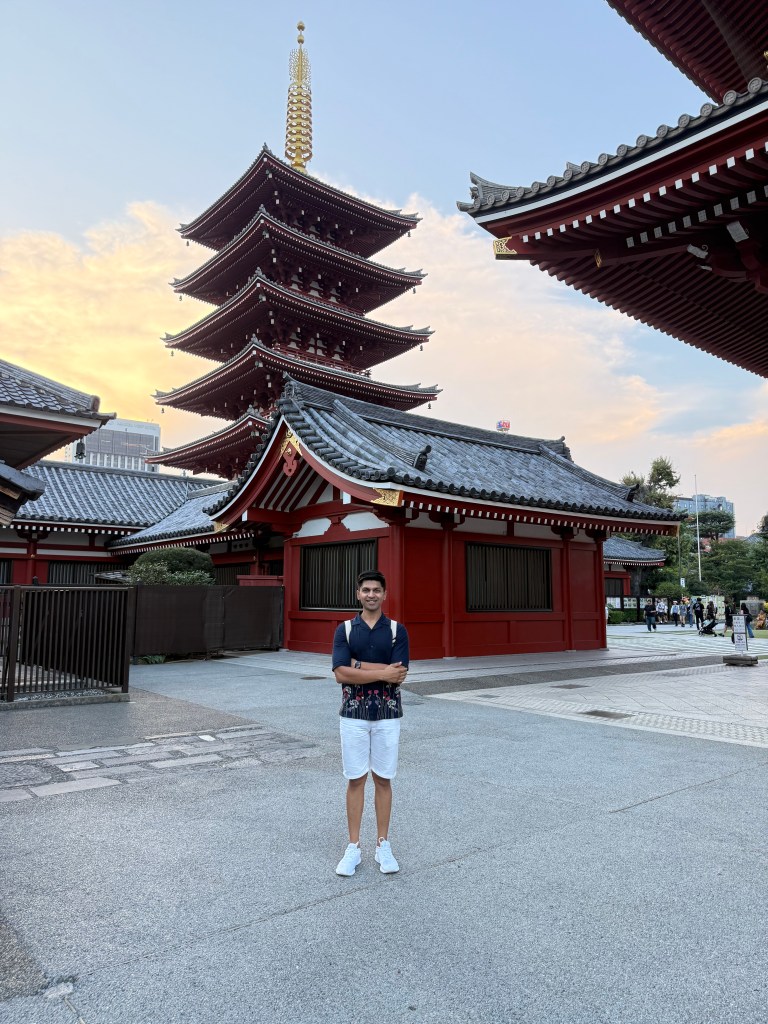
At Asakusa, we spent time exploring the ancient temple complex and surrounding heritage sites, soaking in that “old Tokyo” feel that contrasts so sharply with places like Shibuya.
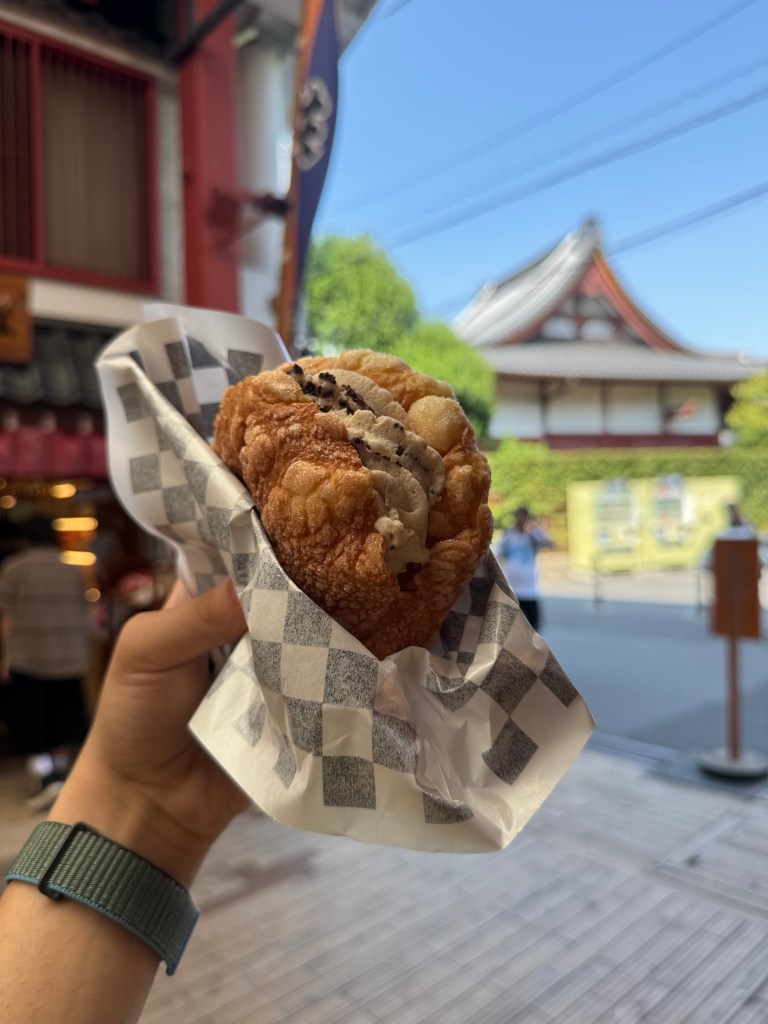
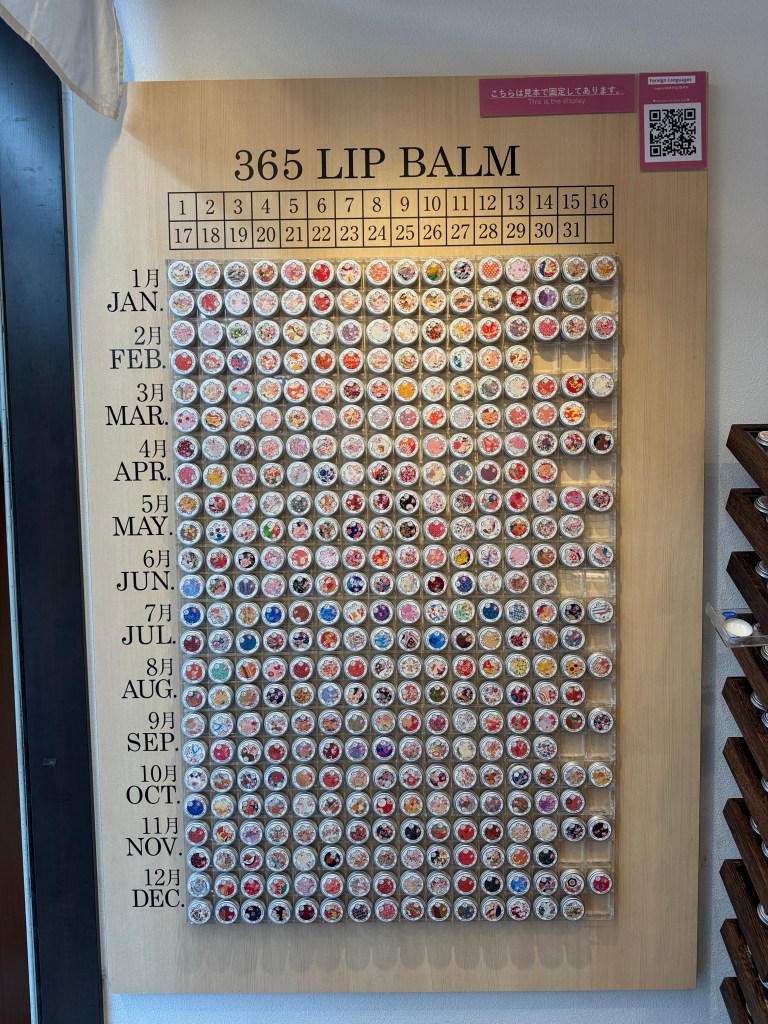
The adjacent market streets were full of food stalls, home decor, souvenirs, and clothing — the kind of place where you can lose an hour just browsing handcrafted items and traditional snacks. After a simple lunch, we wandered through the nearby shopping lanes.
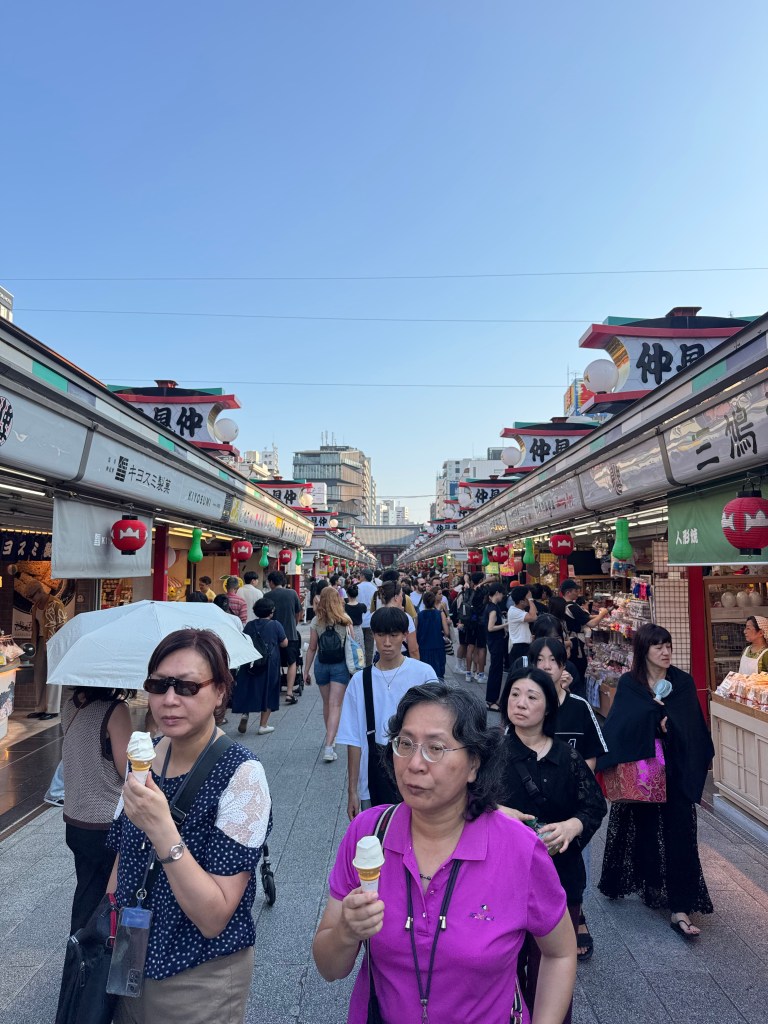
This was also where I really noticed Japan’s everyday fashion sense. Brands like Uniqlo, Muji, and GU, which are originally from Japan, seem to have dressed the entire country. Almost everyone wears simple, monochrome outfits in neutral tones — clean, minimal, and very appropriate. It’s like walking through a live catalogue of basic but extremely well‑fitted clothes. Also, everyone carries a small functional bag that is both stylish and useful. Most of these bags are black, so obsession with the colour.
By evening, we made our way to Ueno Park, which had turned quite dark by the time we arrived. Like 7‑Eleven, Starbucks outlets are also everywhere in Japan, and many of them are uniquely designed, in beautiful locations like parks, heritage zones, or overlooking water. Even if you’re not a coffee person, I’d highly recommend stepping into a few just to see how thoughtfully they’re done. Some of them feel more like galleries than cafés.
Dinner was at T’s Tantan, a popular vegan ramen place (above average ramen- you get better veg ramen in India). After eating, we headed to the Shinjuku area, one of Tokyo’s busiest nightlife and entertainment districts.
Japan is full of karaoke bars and gaming centres. Karaoke is huge, but mostly in Japanese, so we skipped that. The arcades, though, are an experience in themselves. Many of them have money‑based games where you earn points that you can exchange for gifts or prizes (including silver & gold) instead of cash, which keeps it legal as an amusement activity. The most popular games are the pachinko‑style machines (similar to pinball) and slot machines, both with their own complex rules and a heavy reliance on luck. We tried a few, felt mostly confused, and then shifted to the fun stuff — Mario Kart racing and classic arcade games, many with anime‑themed prizes and characters.
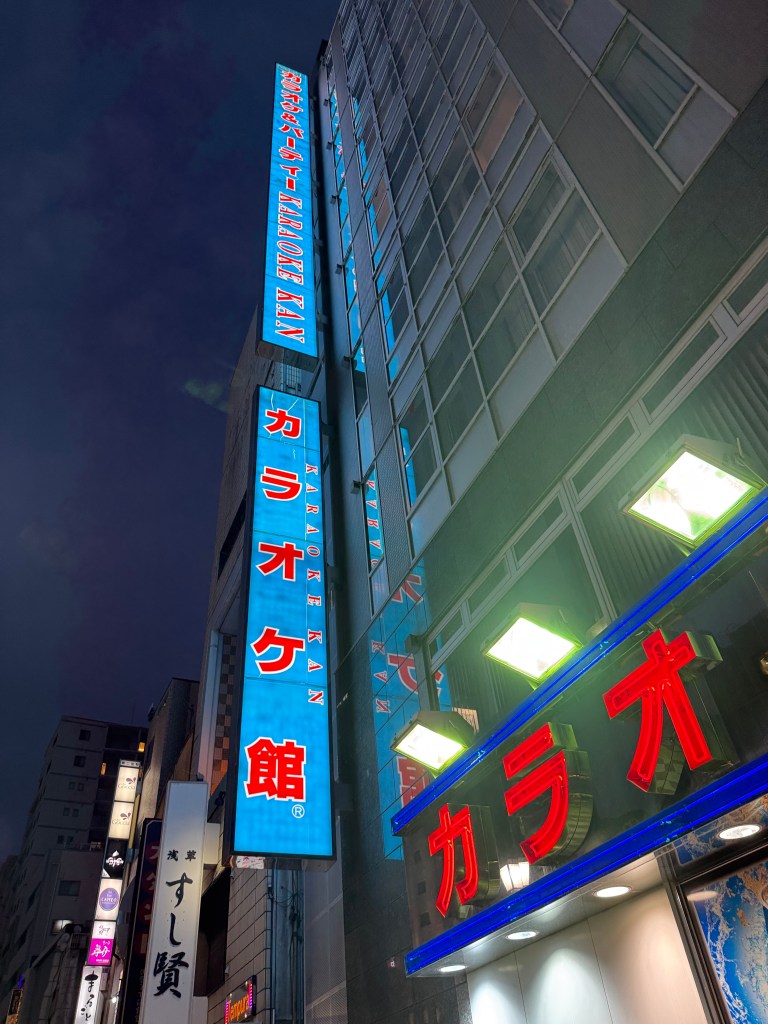
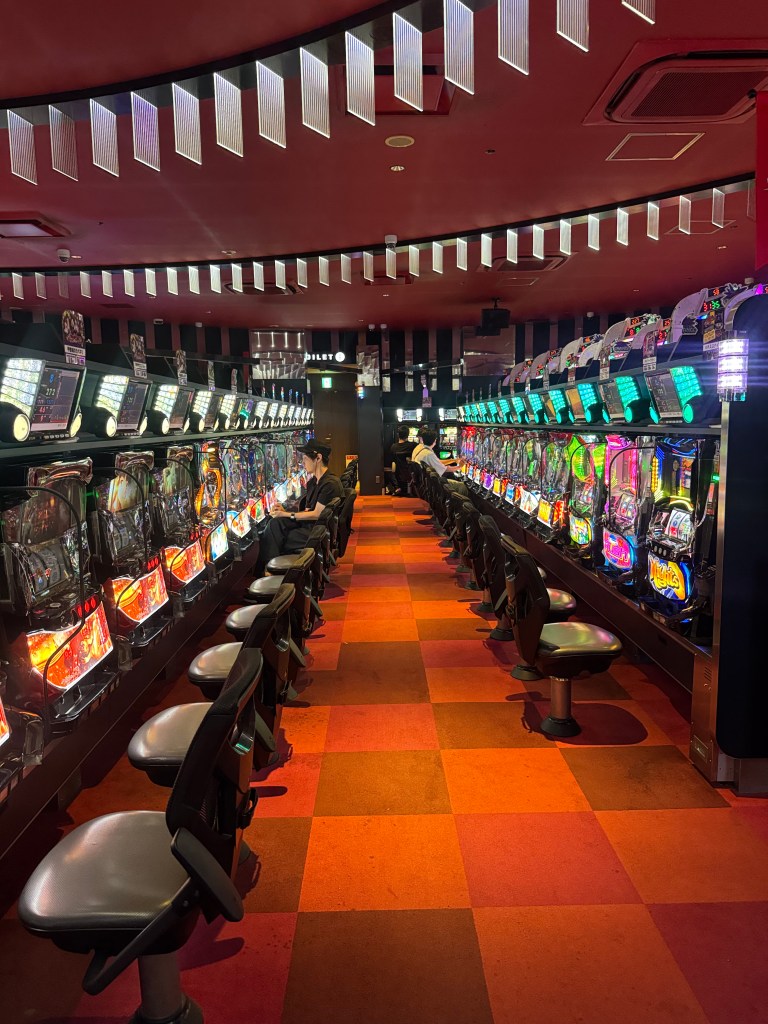
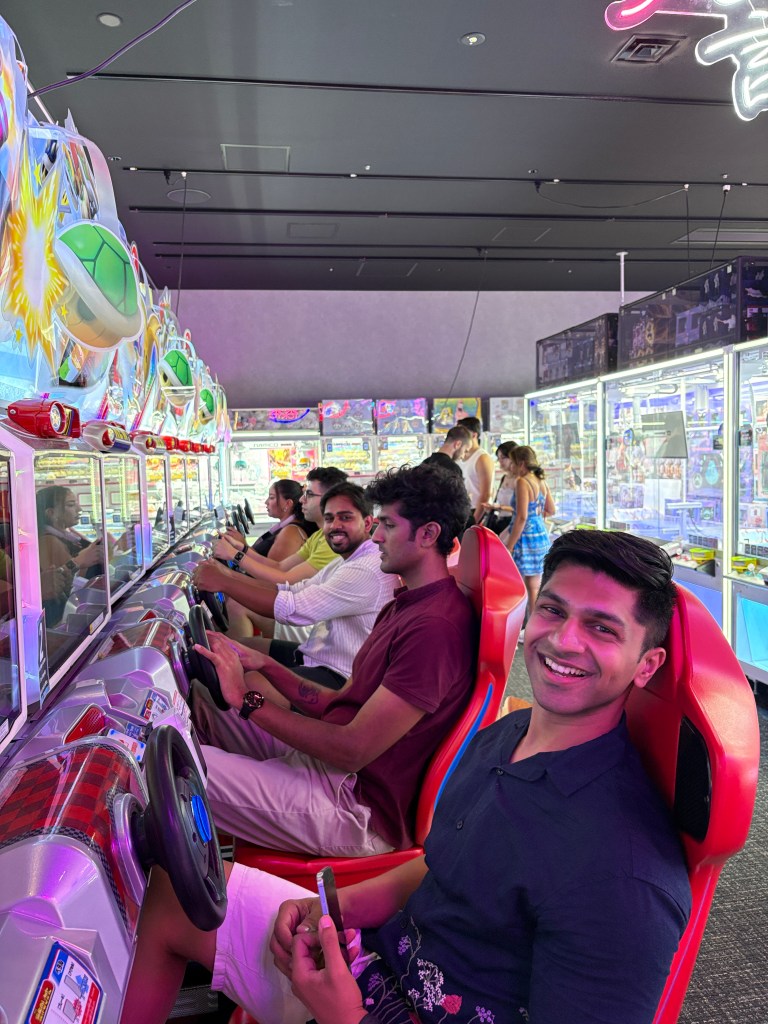
After a couple of rounds, we finally called it a night and headed back to our stay in Ueno, exhausted from the heat but happy with how much of “old” and “new” Tokyo we had managed to fit into a single day.
Travel Tips for Summer in Tokyo:
Avoid visiting between June and September, even if you’re not sensitive to heat and humidity. If you do go, buy an umbrella on Day 1 — it doubles as sun protection and rain cover.
Day 4: DisneySea Regret & The Dark Side of Tokyo
We had planned Day 4 as our big theme park day and chose Tokyo DisneySea over Disneyland. Tokyo has the only DisneySea in the world, while Disneyland exists in places like Hong Kong, Orlando, Paris, and others. So our thinking was simple: if I’m going to do a Disney park for the first time, let it be the unique one, and supposedly the more “mature,” adult‑oriented version.
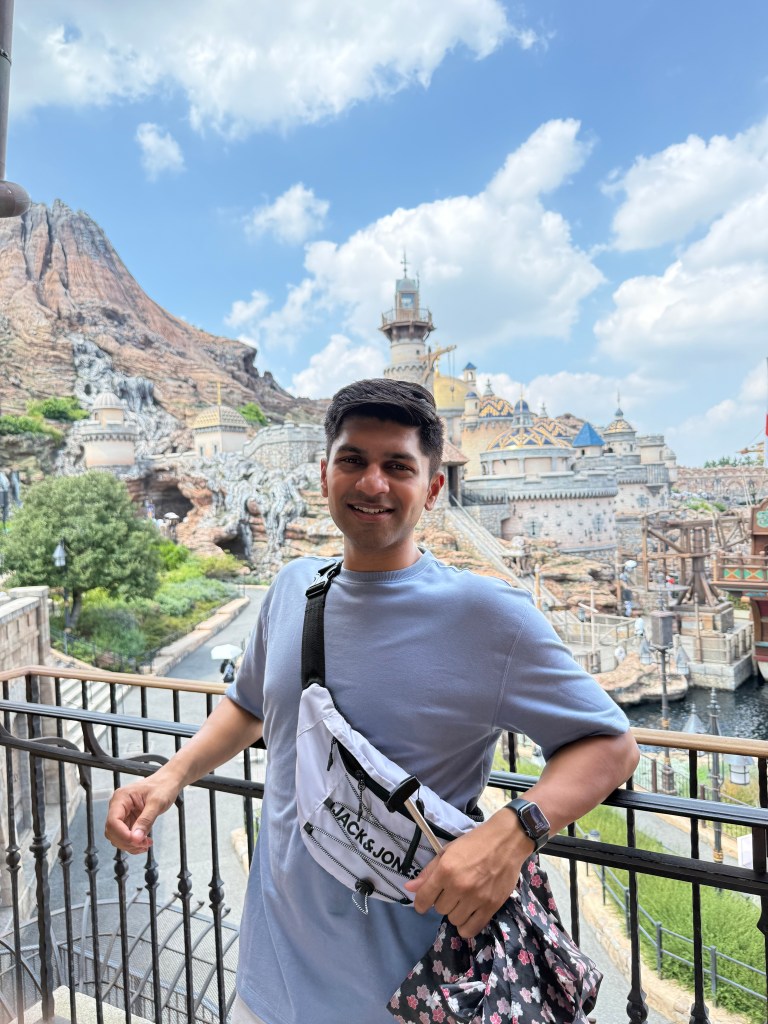
We had pre‑booked our DisneySea tickets online, paying around ₹5,000 per person. There is no traditional express pass system like some other parks; there’s just a standard entry ticket, and everything else is managed through their app. Most of the journey to the DisneySea is covered by regular public transport using the Suica card, but the final leg is on a special Disney Resort Line monorail. You buy that separate ticket from a machine, and the train itself is done up in cute Disney designs, with themed windows and interiors. It’s charming, and it briefly raises your expectations for the day.
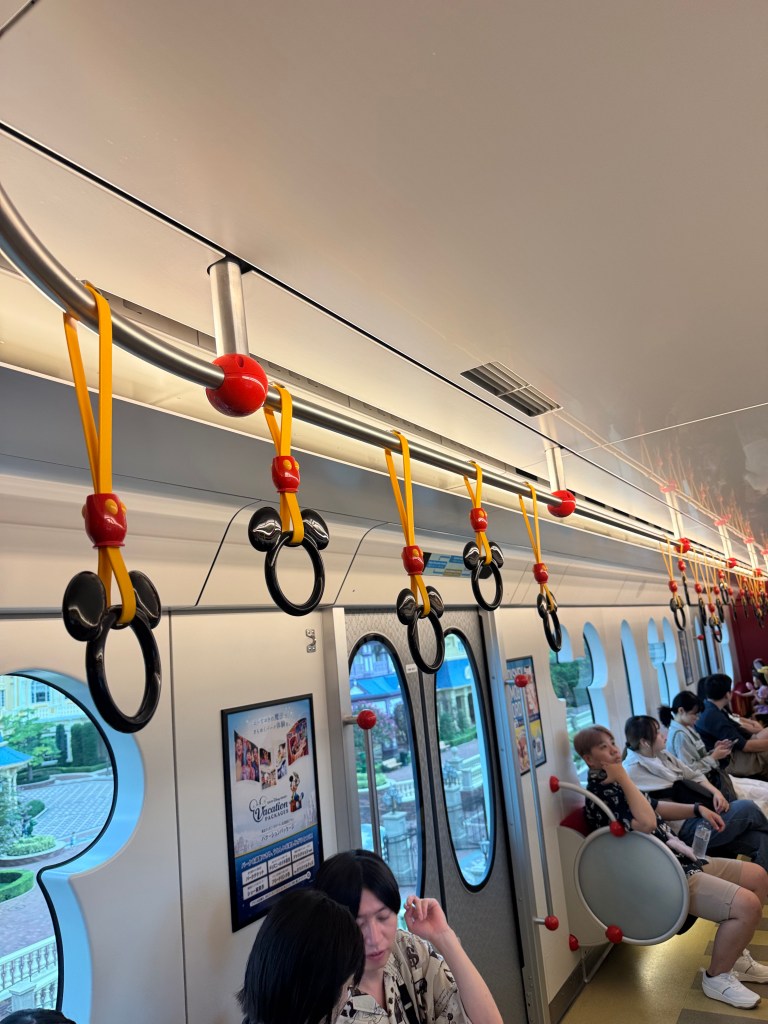
Everyone had warned us that the queues would be insane and that we should reach as early as 8 a.m. We ended up getting there later, around 9:30–10 a.m., expecting a nightmare at the entrance, but getting in was actually smooth and quick. The real chaos starts inside.
DisneySea has a very well‑designed official app, which is basically compulsory. Once all five of us logged in as a group, we could see ride details together and manage bookings for faster queues for each ride. The app shows live waiting times for every ride. Some of the popular ones already showed 180‑minute waits — three hours for a single ride! Some rides were so full that queuing itself was temporarily closed.
On top of that, you can pay extra — roughly ₹1,000–₹1,500 per person per ride — to enter a kind of “express” or priority queue. It’s not a separate pass you use all day; you pay per ride. Since we had come all this way, we decided to bite the bullet and pay for at least a few premium rides. Even in the paid queue, we still waited around 30–45 minutes. After paying a hefty amount over and above the ticket, we finally got on the ride… and it was over in 20 seconds! That’s when the frustration really hit. It felt like an expensive, over‑engineered scam.
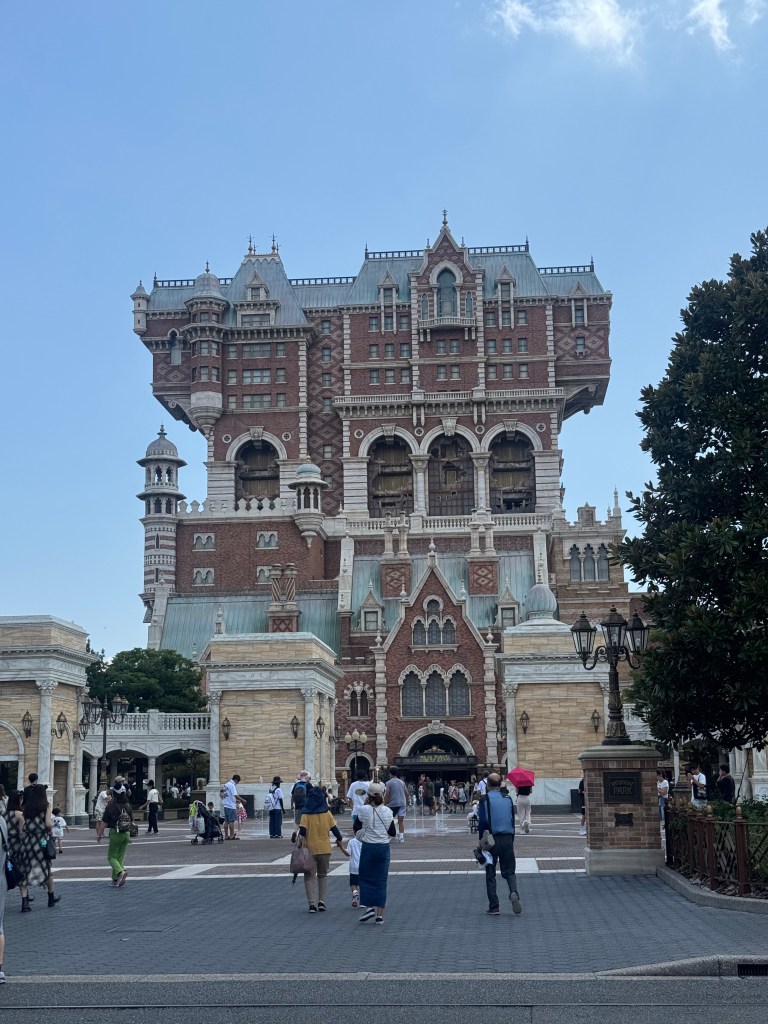
For me, Disney has never been about meeting characters. I don’t have any emotional connection to Mickey Mouse, Disney princesses, or that universe, the way some lifelong fans do. I enjoy a beautifully designed theme park, but I’m not there to “meet my childhood heroes.” So if the ride experience itself doesn’t deliver, there’s very little left for someone like me. On top of that, the system has more quirks: Many rides had priority payment closed because even that quota hit a limit. You cannot hold two paid priority bookings at once. Until one is used, all five accounts in our group were locked from booking another.
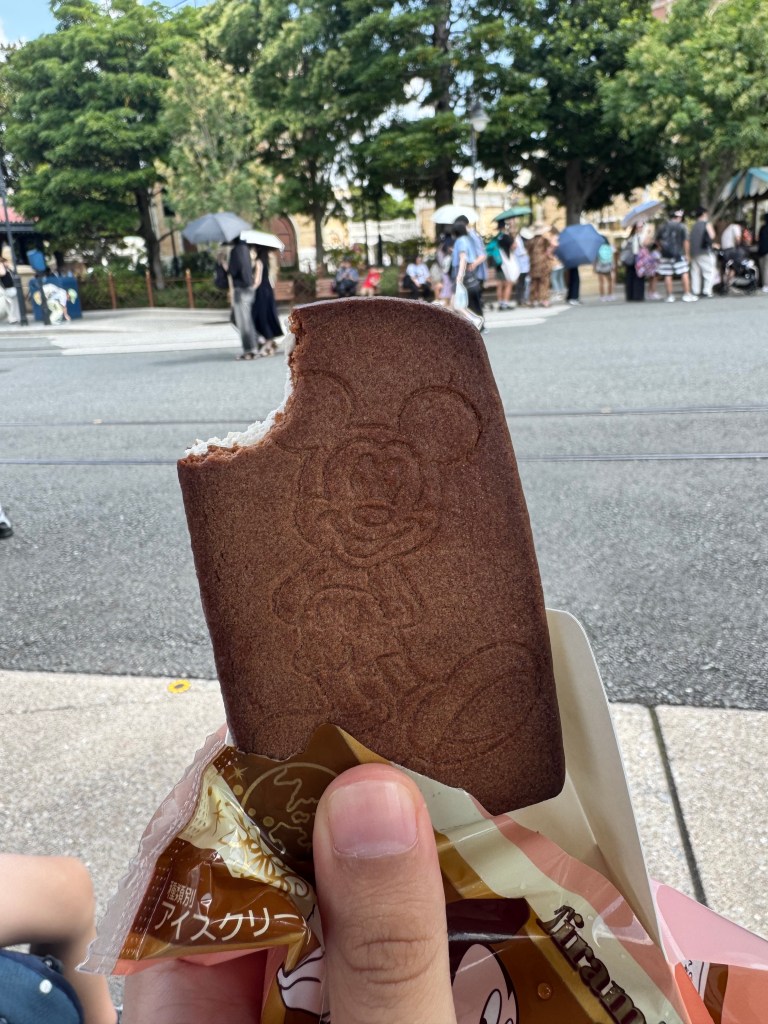
By 5 pm, I was done. The park itself is huge and visually impressive — you can take a lot of good photos — but operationally, I found it overcrowded, overpriced, and underwhelming. In my honest opinion, unless you are a die‑hard Disney fan or visiting with kids who will get emotional joy from just being there, DisneySea is not worth it. I genuinely disliked the experience and would not recommend it.
My friends stayed back till night and later said the fireworks show around 8:30–9 p.m. was stunning — so good that, for them, it compensated for the rest of the day. But I was too frustrated by then and had left.
From Disney, I took the long journey back west to Shinjuku, where I had booked a walking tour through Viator called “The Dark Side of Tokyo.” It turned out to be one of the most fascinating evenings of the trip.
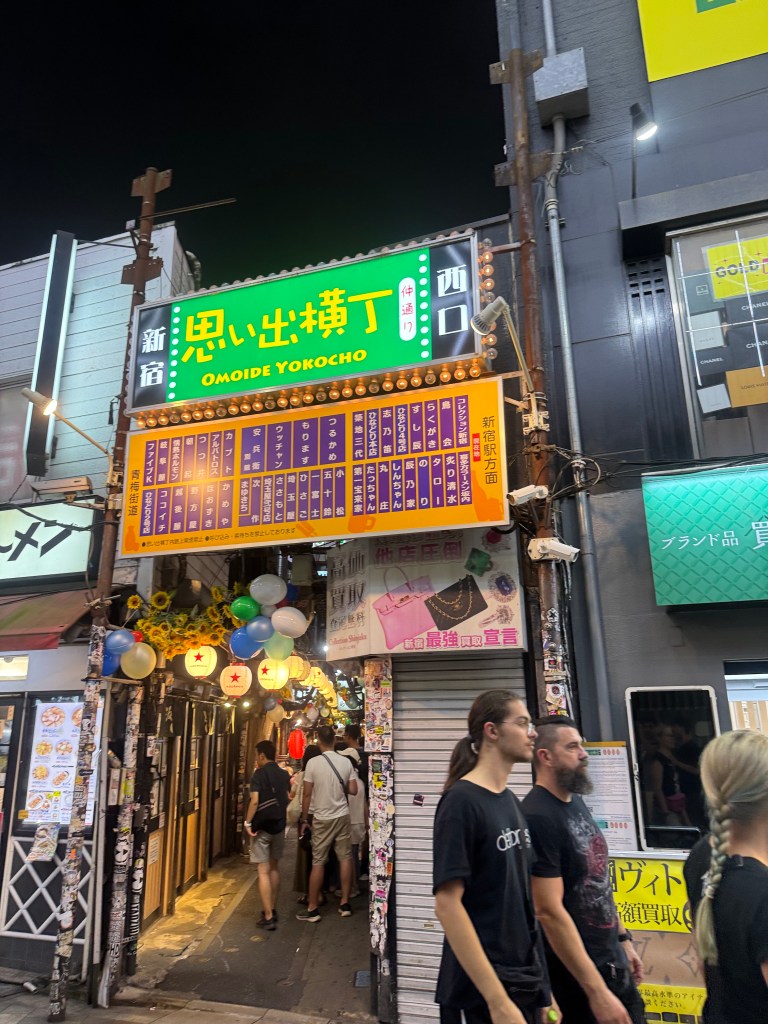
My guide walked me through different pockets of Shinjuku, unpacking the city’s hidden social and nightlife layers that most tourists never see. He showed me:
Areas associated with “comfort women”–style hostess bars, where young women (often from other towns) work in bars to entertain male clients, mostly through conversation and companionship. The idea is that men come to share their joys and sorrows, form emotional bonds, and sometimes those relationships cross into a paid, intimate setup. It’s a very blurred line — not framed as straightforward prostitution, but the reality can slide into that zone, and ethical questions are obvious, especially when some of the girls are under 20, which is the local age‑of‑consent.
Neighbourhoods where male sex work is prominent, with clients equally split between men and women. The guide explained how certain streets and clubs cater to very specific preferences and how discreetly the system is structured.
The influence of kawaii culture, where effeminate or “cute” men are seen as attractive even by straight women, and “cute” or “cat” like girls are often the eyecandy of pedophiles, and how that shapes fashion, mannerisms, and even some nightlife spaces.
He also took me to several Buddhist and Taoist temples, explaining key differences in architecture and symbolism, and how these belief systems quietly coexist in Tokyo’s hyper‑modern landscape. He explained how all Japanese people are both Buddhists and Taoists. Taoism is all about the living, while Buddhism starts at death and continues in the afterlife. We walked through Shinjuku’s famous alcohol district- Golden Gai, filled with tiny izakayas stacked on top of each other, and he pointed out some well‑known vegetarian soba spots and popular local bars.
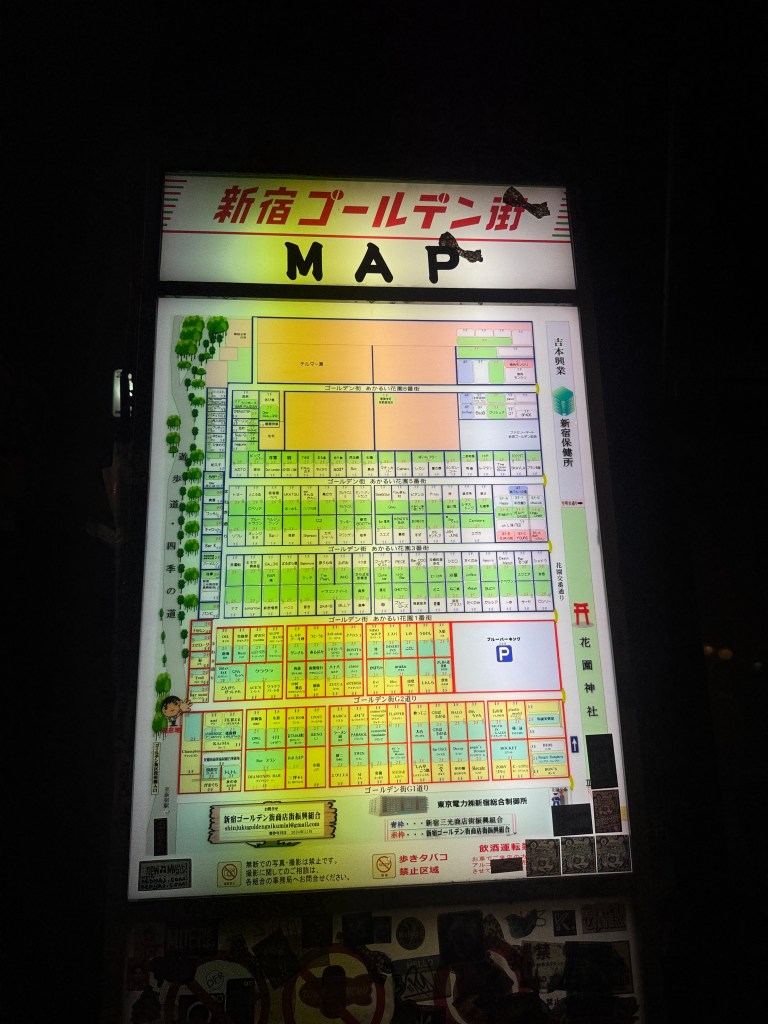
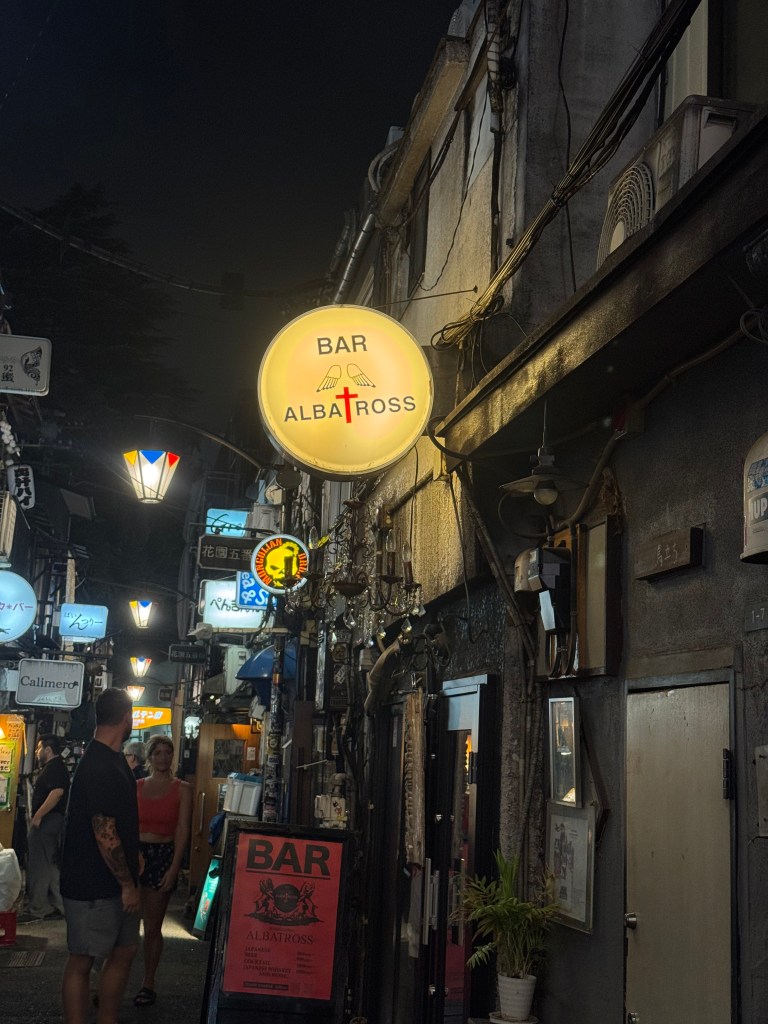
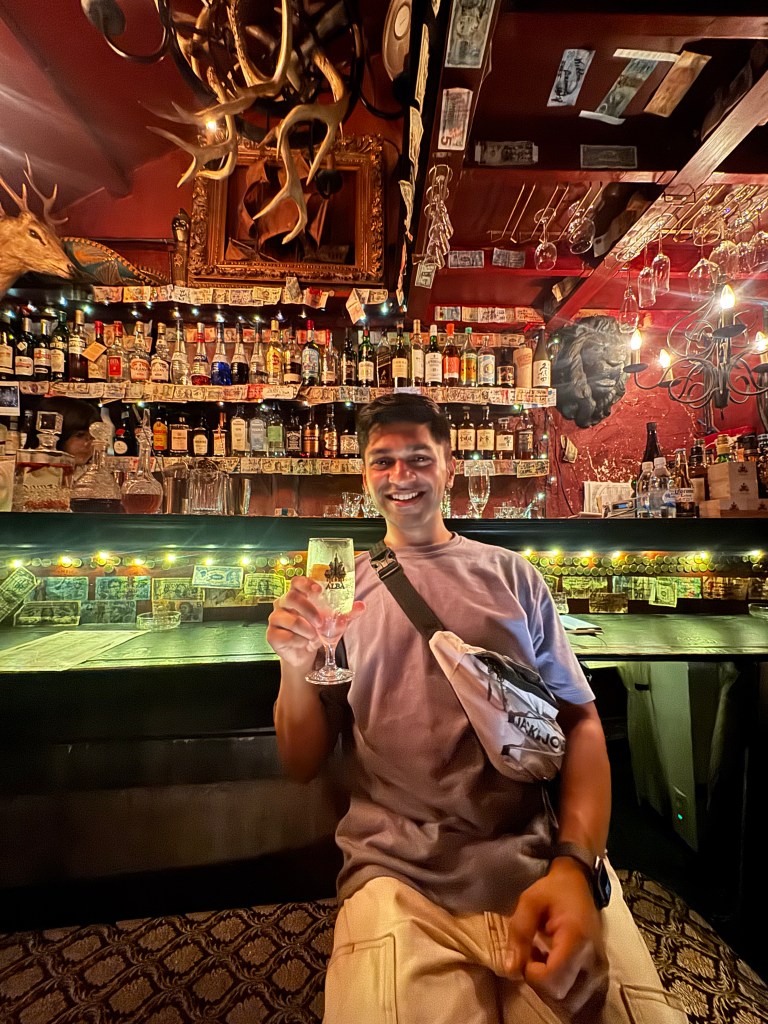
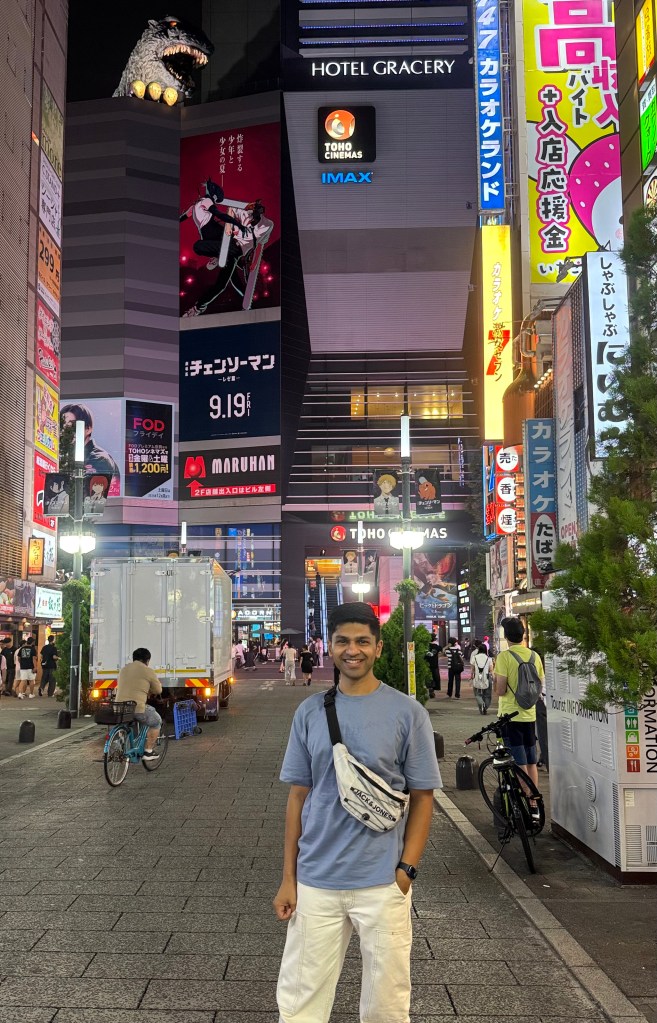
Along the way, he showed me the iconic Godzilla‑themed street, with the giant Godzilla head looming over a cinema building.
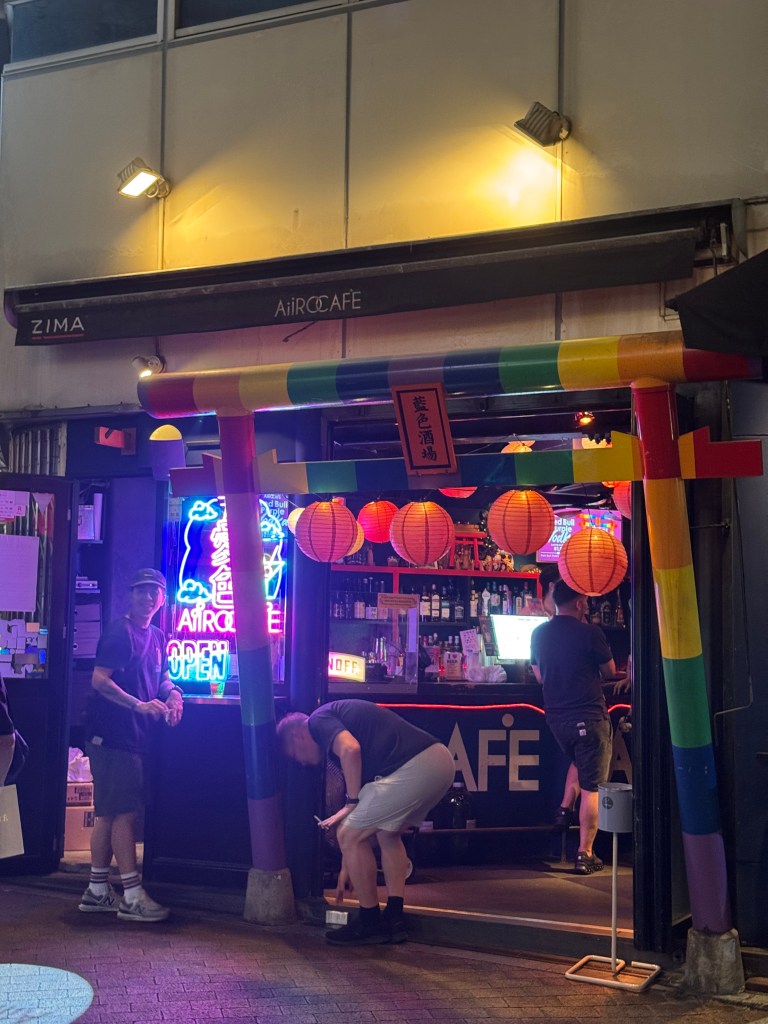
A small LGBTQ+ neighbourhood in Shinjuku — much smaller than queer districts in some Western cities, but an important, visible community space in an otherwise conservative society.
Various “massage” or “handjob” parlors operating under coded names, adding yet another layer to Tokyo’s complex adult entertainment industry.
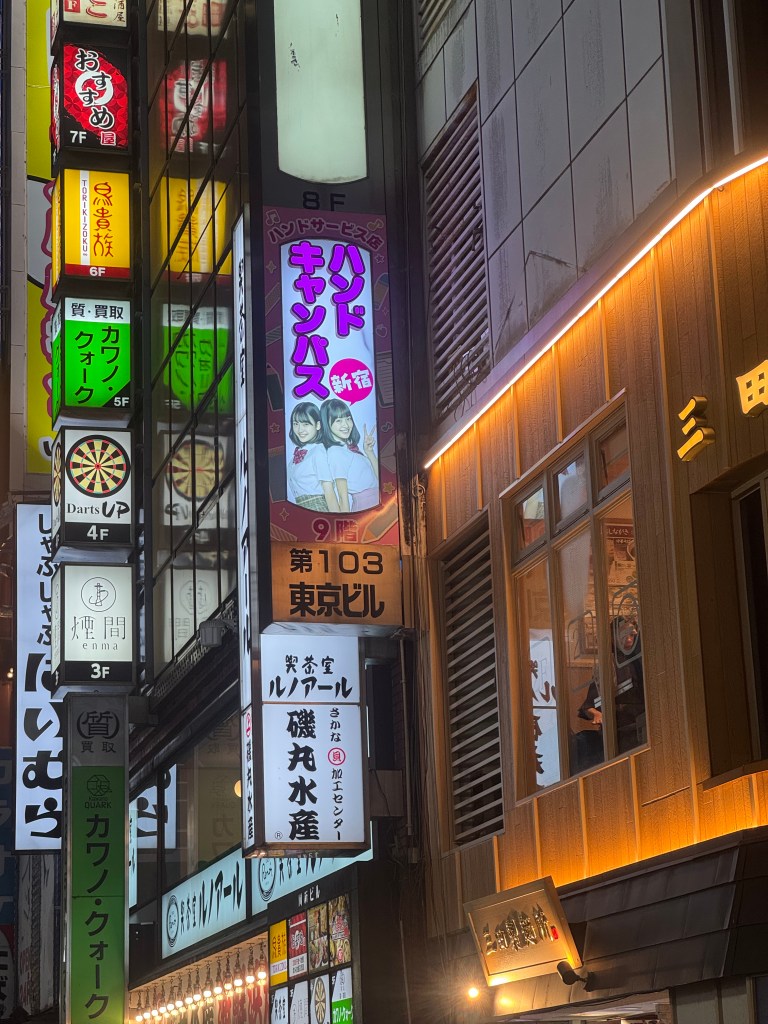
It was a dense, eye‑opening tour — sometimes uncomfortable, often fascinating, and always nuanced. By the end of the night, I felt like I had seen a side of Tokyo that sits far away from the glossy Disney magic: a city of contradictions, where rigid social norms, loneliness, fantasy, and commerce all intersect in neon‑lit alleys.
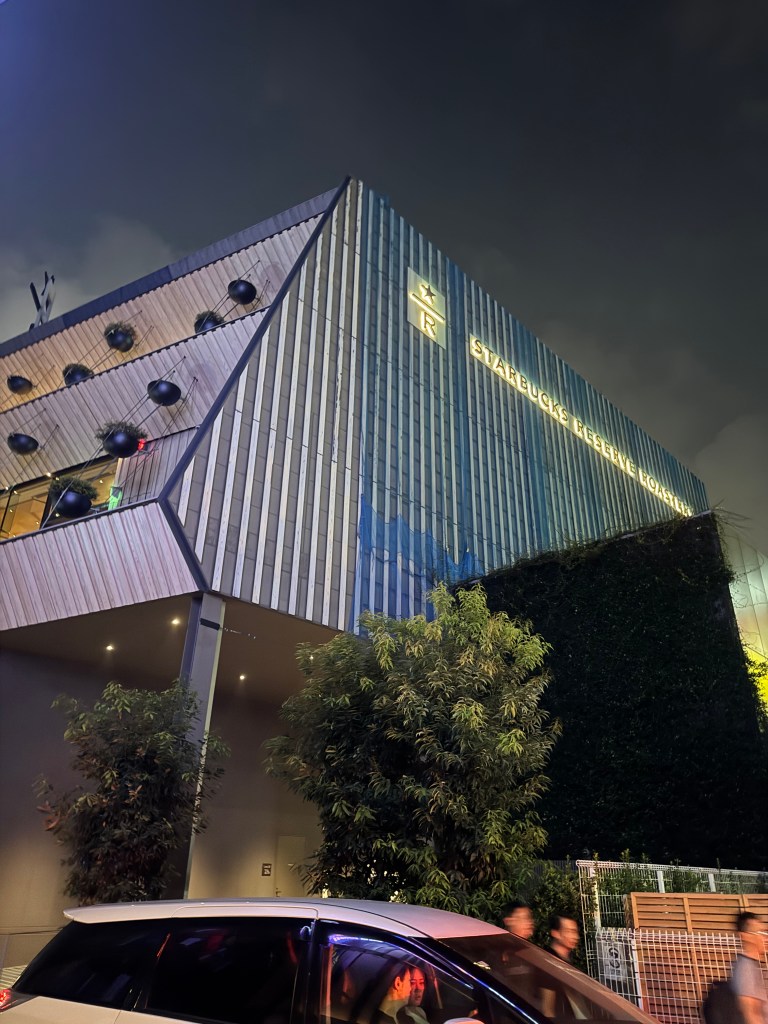
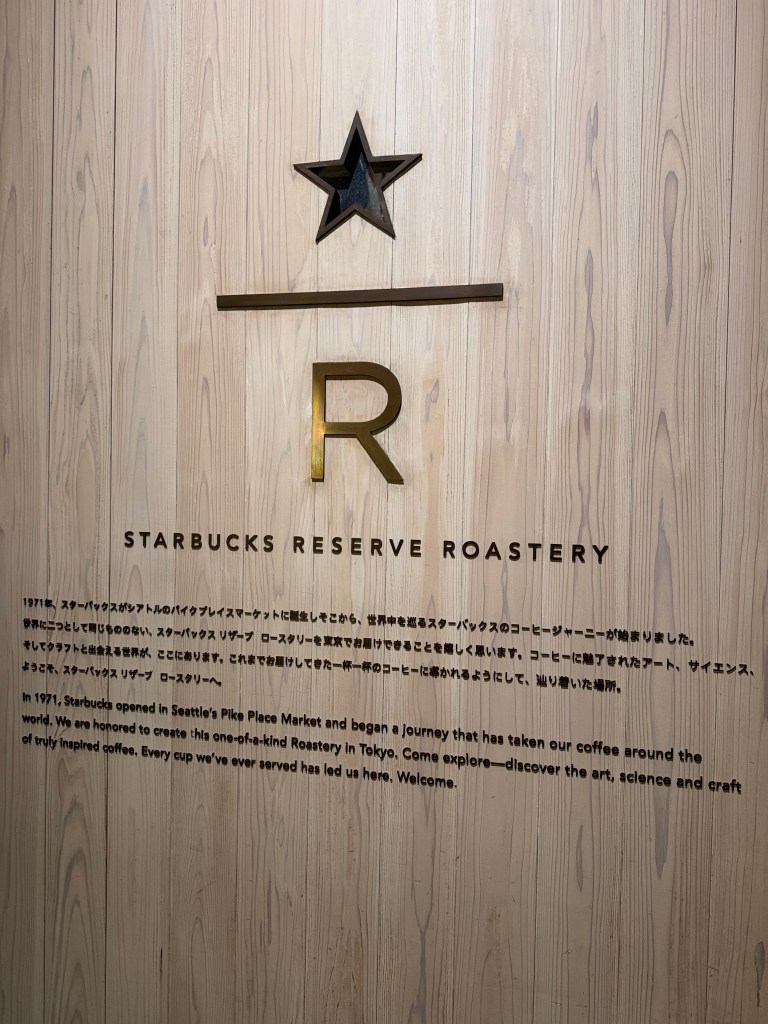
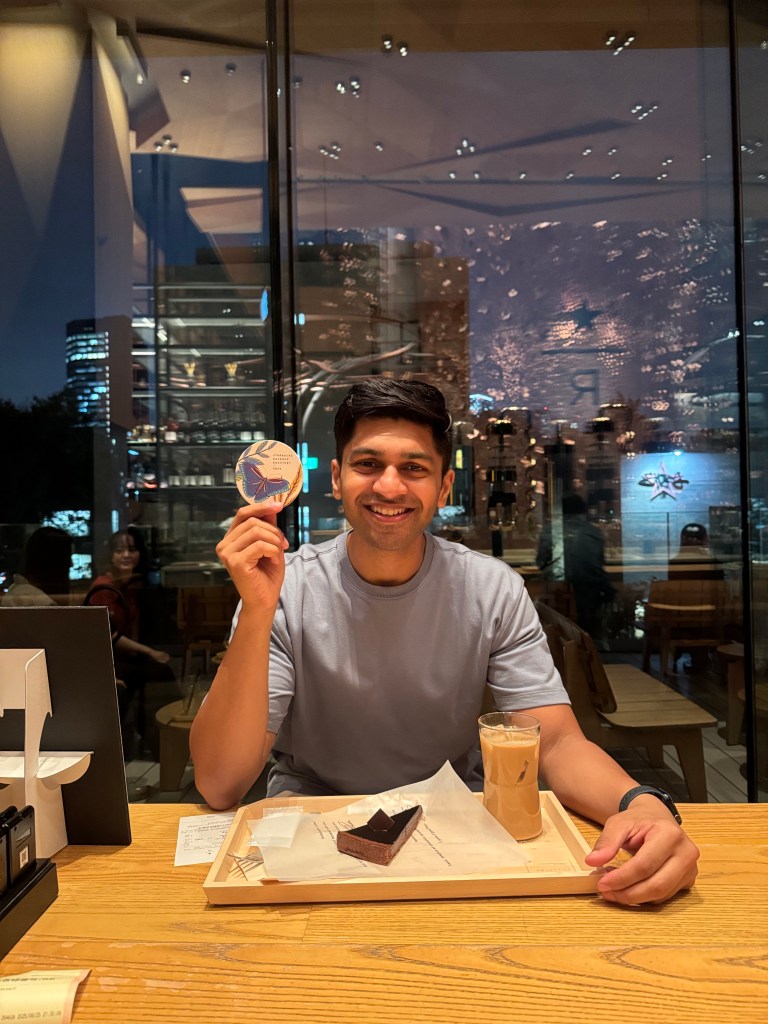
I followed this up with a quick visit to the Starbucks Reserve Roastery. There are only 6 of these in the world as of now- Chicago, Seattle, New York, Shanghai, Milan and Tokyo. It was huge and so well made.
I ended Day 4 with a very clear thought:
If you have limited time in Tokyo, skip DisneySea and spend that day diving deeper into neighbourhoods like Shinjuku instead. The real stories of Tokyo live in its streets, not its branded theme parks
Day 5: Akihabara Arcades, Shinkansen Magic & Kyoto Arrival
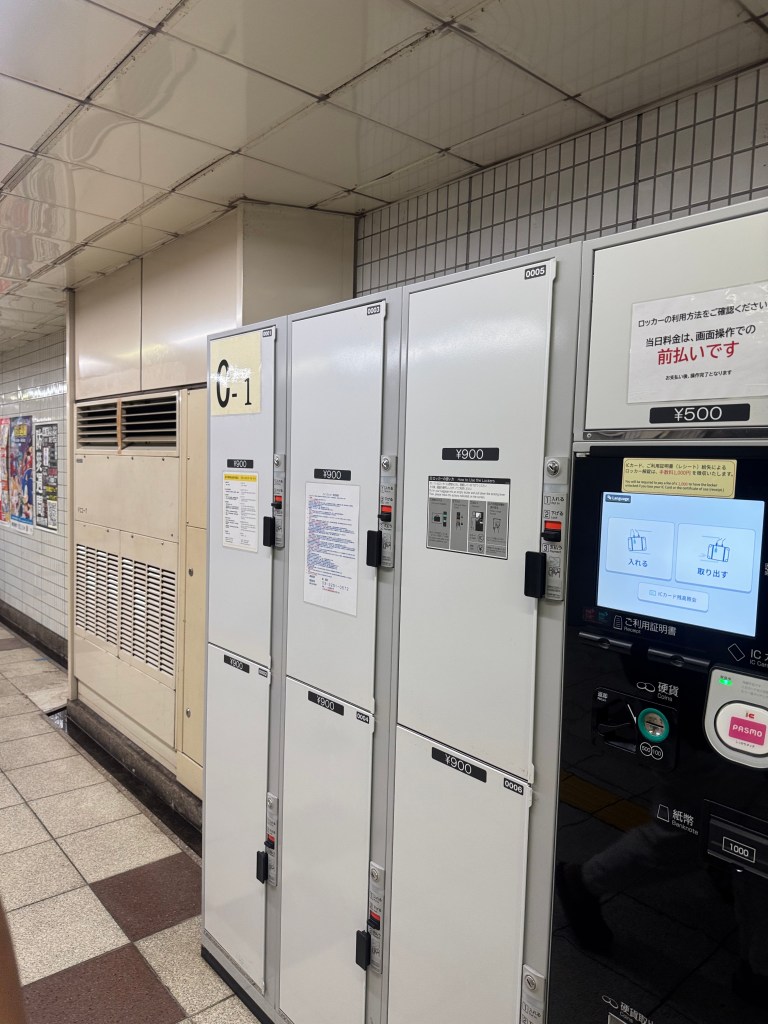
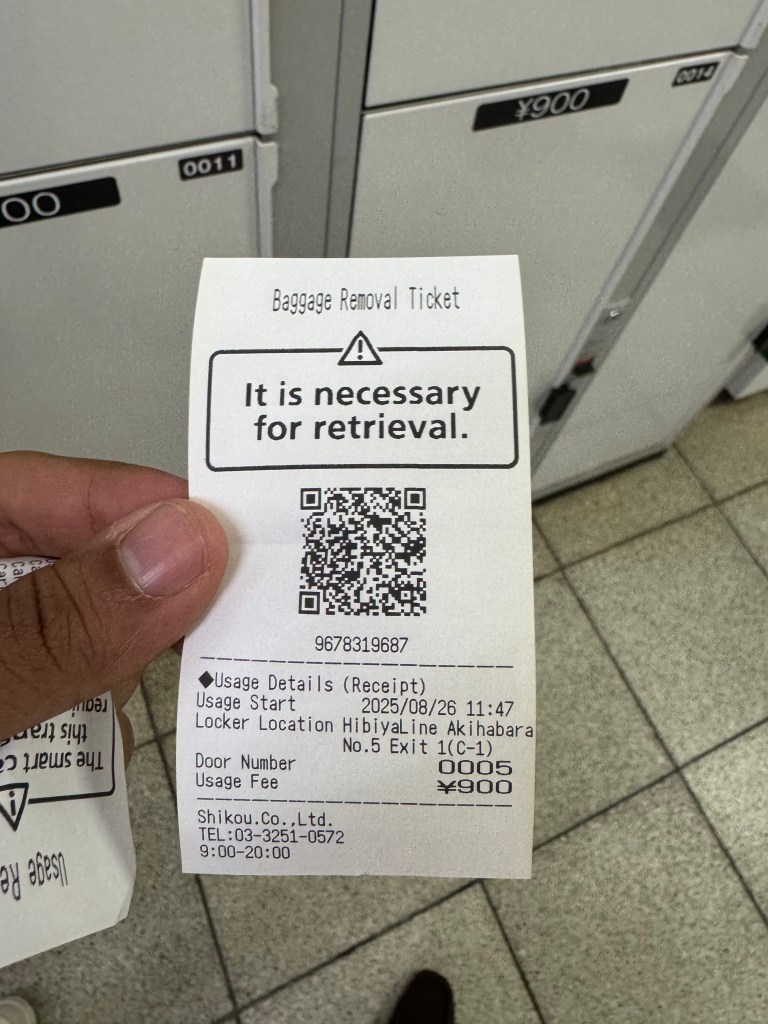
We checked out of our Tokyo stay and grabbed breakfast at a nearby café before heading to the Akihabara Station. With luggage in tow, our first stop was the coin lockers — a staple at every metro station in Japan, big or small. They accept both Suica Cards and Cash, Akihabara’s massive station had rows of them in different sizes and prices for bags, small to oversized. We stashed everything securely and set off to explore Akihabara, Tokyo’s legendary “Electric Town” and gaming paradise.
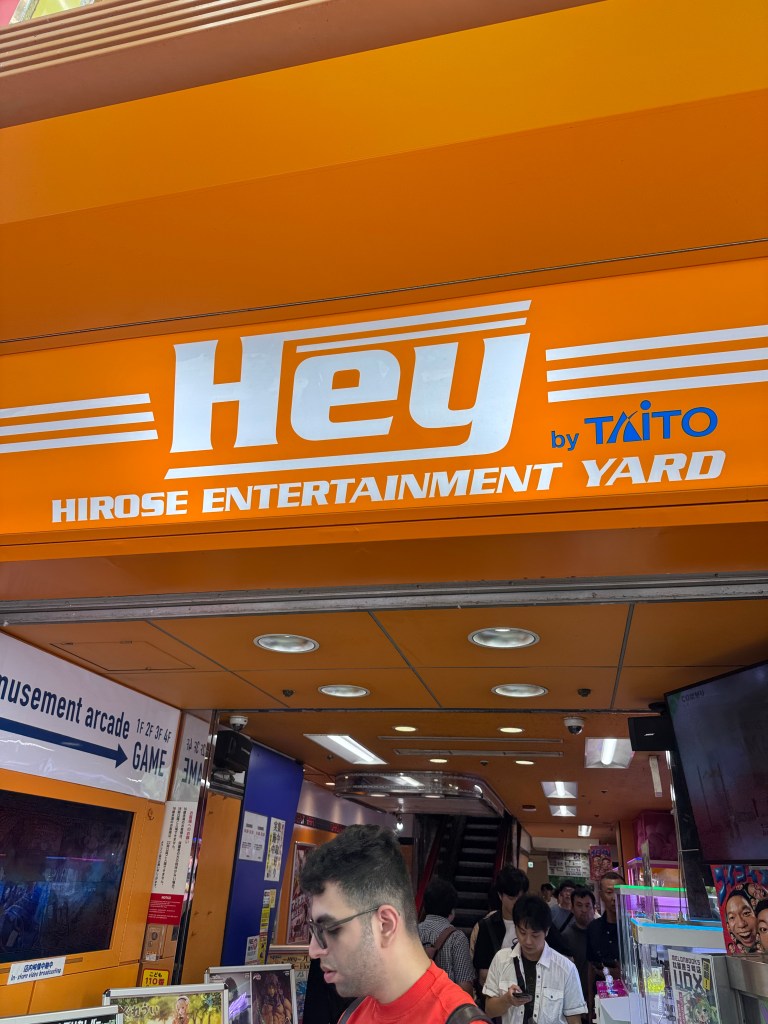
We dove straight into the arcade scene, playing multiplayer games where we could compete head-to-head — races, fighting games like King of Fighters, Mario Kart, Twinkle Star Sprites, and more. It was pure, chaotic fun, with flashing lights, claw machines everywhere.
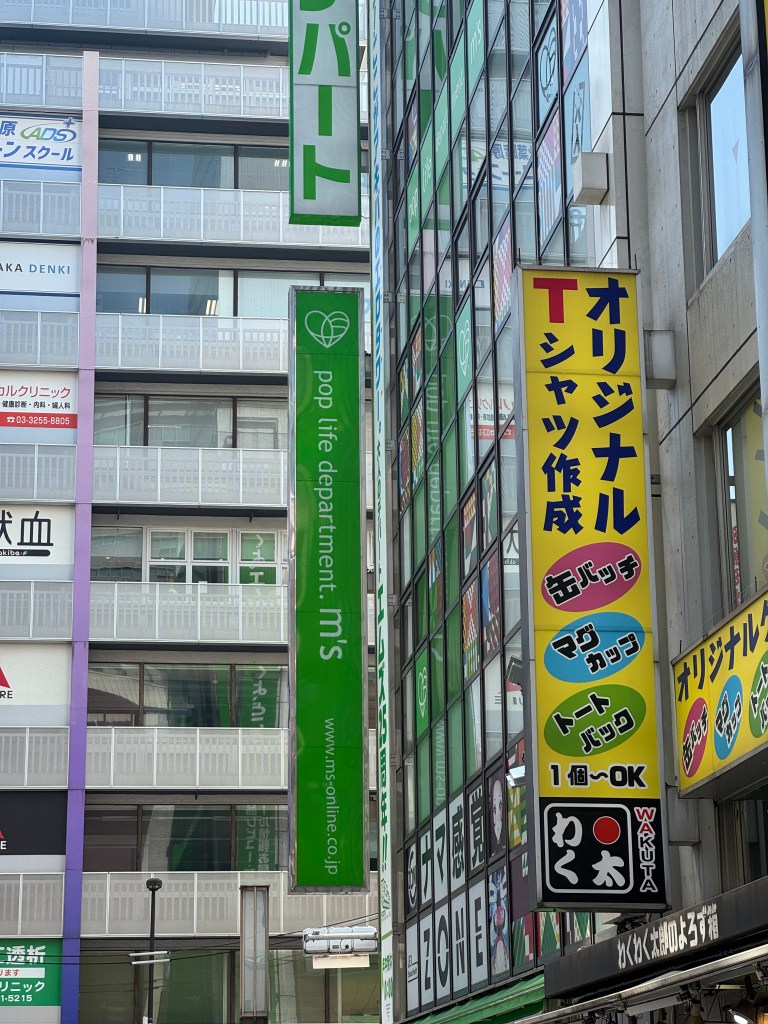
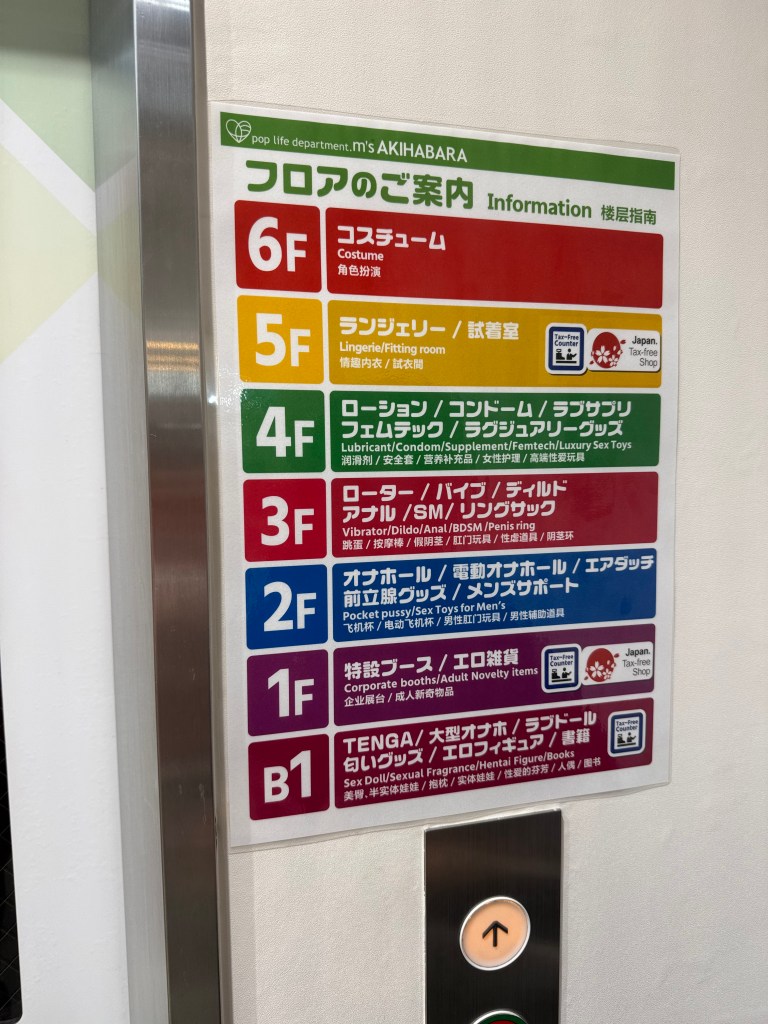
Curiosity led us to the world’s largest sex store- M’s Pop Store- a seven-story behemoth where each floor specialises in different products for men, women, and every niche imaginable. It was equal parts fascinating and surreal; we even picked up a few quirky souvenirs.
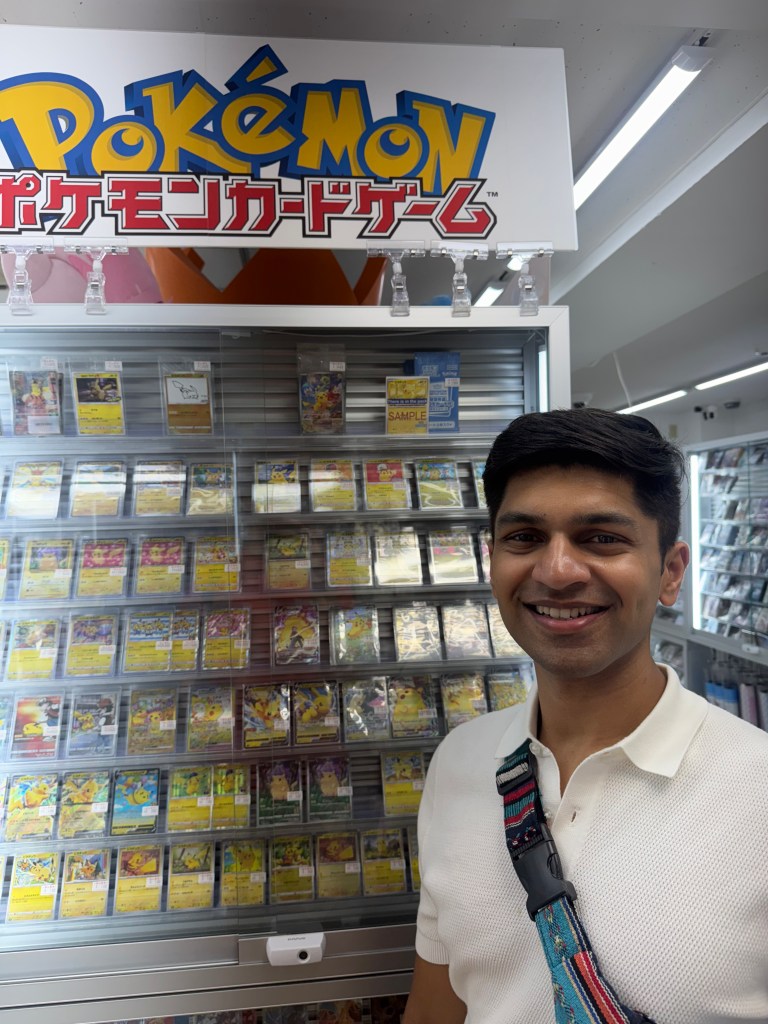
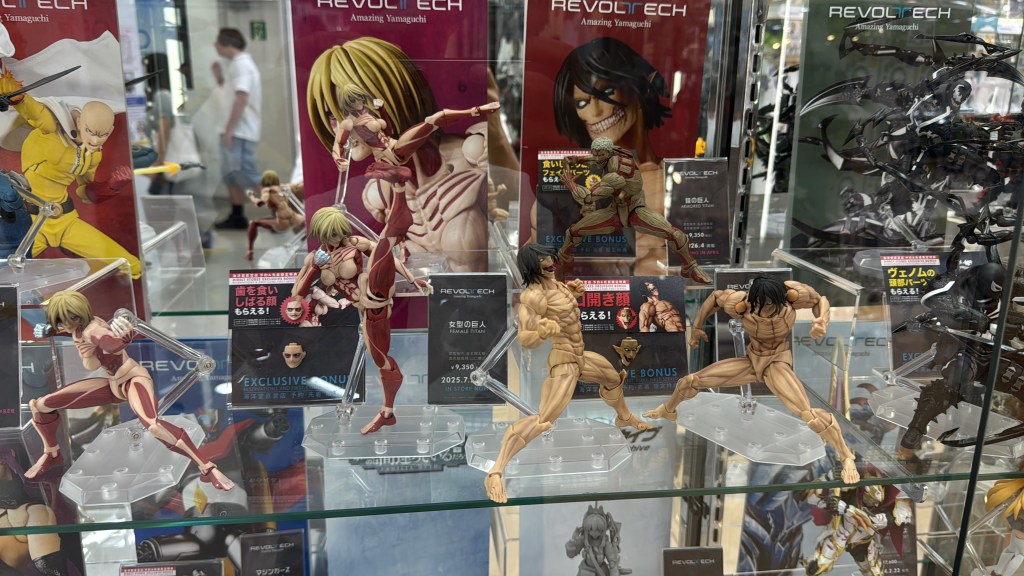
Lunch was at Kyushu Jangara Ramen (the same vegan-friendly chain we’d hit in Ginza), then we browsed a 10-story building dedicated entirely to gaming collectables. Floors packed with limited-edition anime figurines, trading cards, stickers, and memorabilia from hundreds of series. I personally think it’s a complete waste of money, but the sheer demand shows how massive otaku culture is here — glad someone’s built an empire out of it.
By late afternoon, it was time to head to Tokyo Station for our Shinkansen to Kyoto (not Osaka — a common mix-up). Key facts: Trains run every 10 minutes on this super-popular route. Journey time: just a little over 2 hours. One-way cost: around ₹9,300 per person (pre-booked).
We retrieved our bags from the Akihabara lockers, took a quick subway to Tokyo Station, and found our exact platform based on the Shinkansen ticket. Platforms even have marked queuing zones by door and seat number. When the Shinkansen pulled in: The onboard passengers got off in less than a minute. A staff member locks the doors, quickly checks cleanliness, and rotates all seats to face forward (to prevent nausea). Doors reopen after 2 minutes; you board in another 2 minutes. Everything is calm, efficient, and on rails — literally.
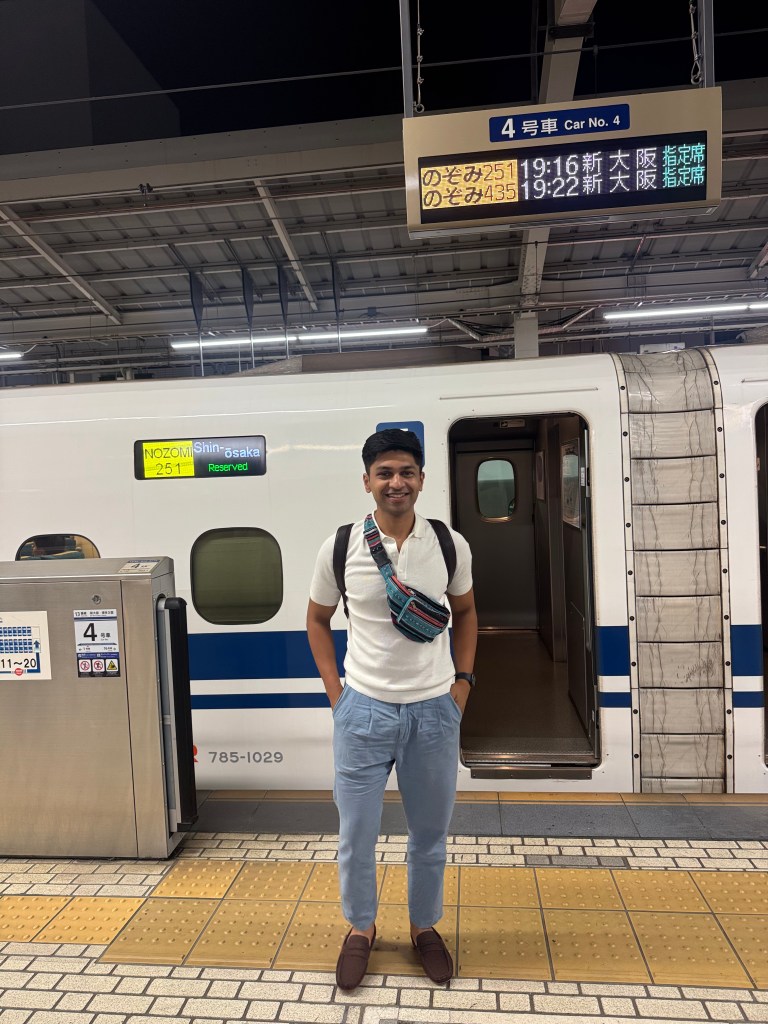
Luggage rules: overhead racks fit most 20–25 kg suitcases (there is enough space on the racks), and there’s space behind seats for oversized bags. Many passengers carry nothing, as it’s a daily commute route for work or family visits. The train itself? Spotless toilets, diaper-changing areas for moms, smooth as silk — you barely feel the speed until you stand and walk around. It departed and arrived exactly on time, as expected.
We pulled into Kyoto in the evening. Unlike Tokyo’s flawless metro web, Kyoto’s public transport is more limited — buses run infrequently, so it took a while to reach our B&B, a stunning ryokan-style wooden house that we had entirely to ourselves. Beautiful traditional design, tatami mats, the works.
Dinner nearby started at a Mexican place (honest tip: vegetarians, skip Mexican food — it’s usually disappointing). We pivoted to an Indian restaurant run by super-friendly Nepalese folks. It was cheaper than most options and hit the spot perfectly.
Quick Kansai region observations: IC cards: Suica still works, but locals use ICOCA (interchangeable with Suica). Convenience stores: Tokyo was 7-Eleven central; Kyoto favours Lawson and FamilyMart — equally excellent, with their own fresh-food universes to explore.
Travel Tip:
Book Shinkansen tickets in advance via the official app or site — platforms have precise queuing lines by seat/door, making boarding stress-free. Use station lockers for day luggage (check sizes/prices first).
Day 6: Arashiyama Temples, Bamboo Grove & Gion Speakeasy
We woke up ready to explore Arashiyama in northwest Kyoto, home to the famous bamboo grove and dozens of Buddhist temples. If you’re staying in Kyoto, Gion or Higashiyama Ward is the ideal spot — traditional, walkable, full of ryokans like ours. Arashiyama is quite far from there, so we took a combo of bus and subway to get across town.
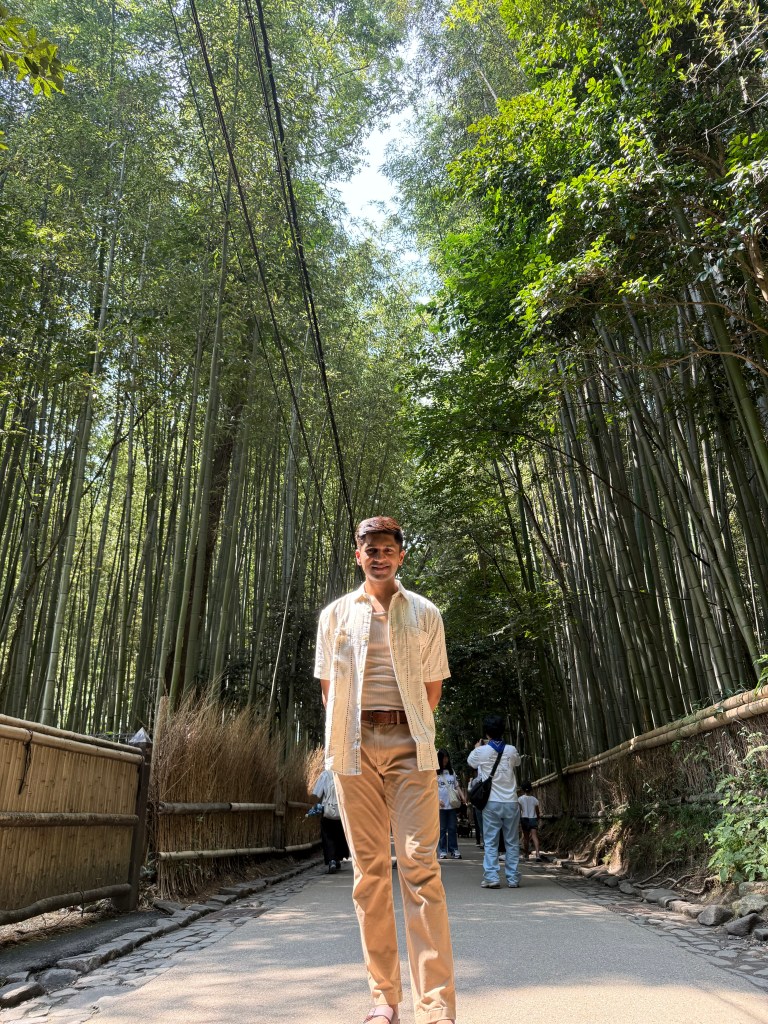
Arashiyama is massive — easily 50+ temples and monasteries scattered around, from small shrines to big ones like Kinkaku-ji (the Golden Pavilion, though we didn’t hit that exact one today). We started with the iconic 500m–1km bamboo grove. Even though it’s crowded year‑round, arriving mid‑morning (the “early hack” doesn’t work easily due to distance) still gave us spots for those tall, ethereal bamboo tunnel photos.
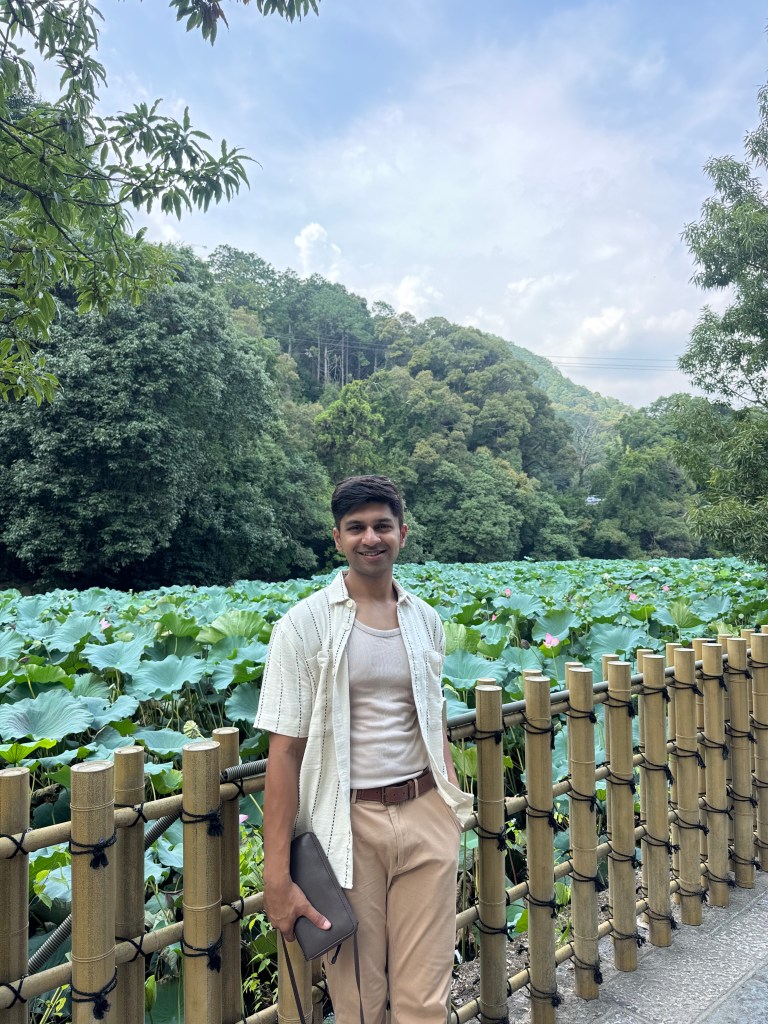
Lunch was nearby — small restaurants and shops even inside the grove. They’re intimate, low‑capacity spots, so don’t linger too long.
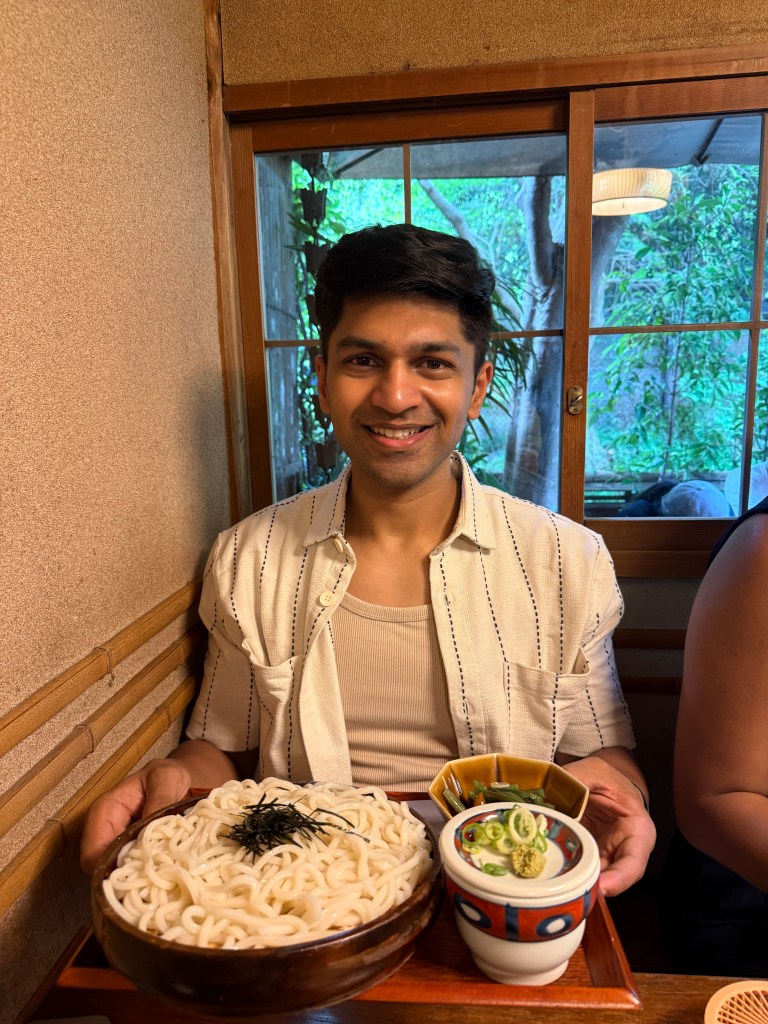
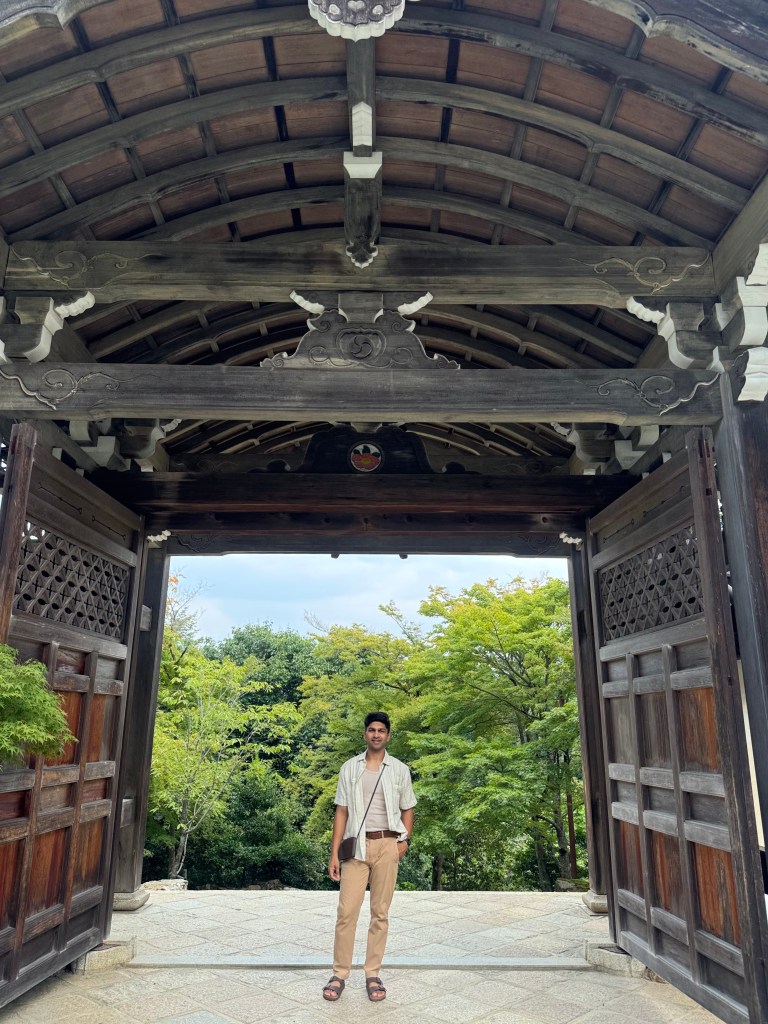
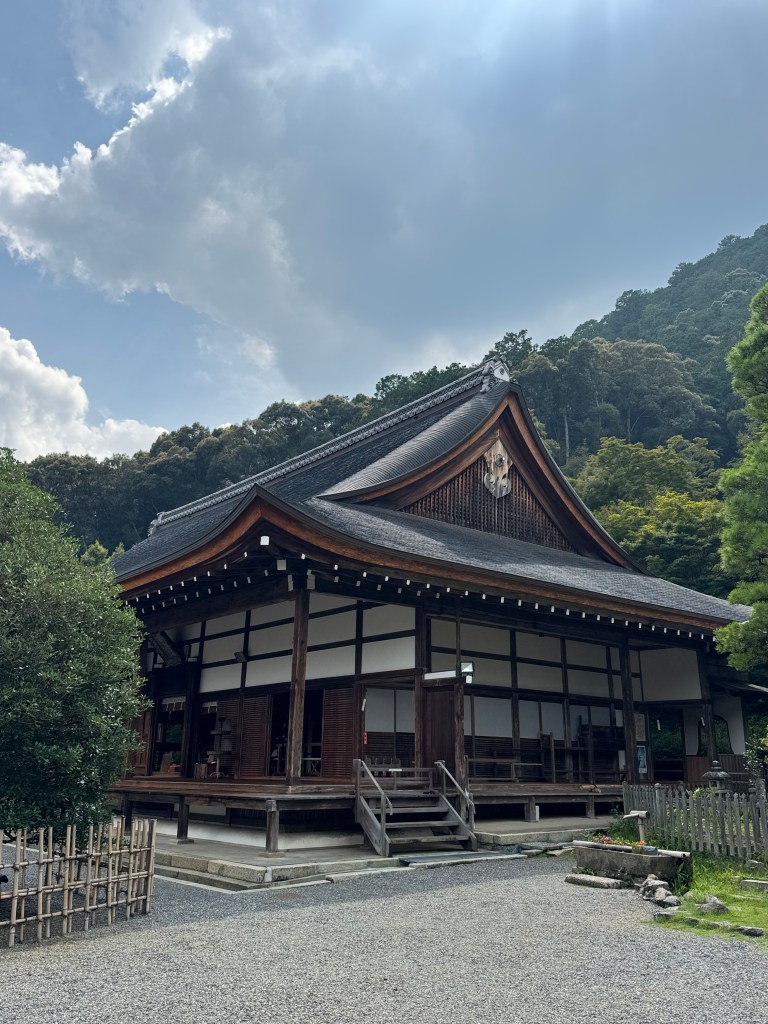
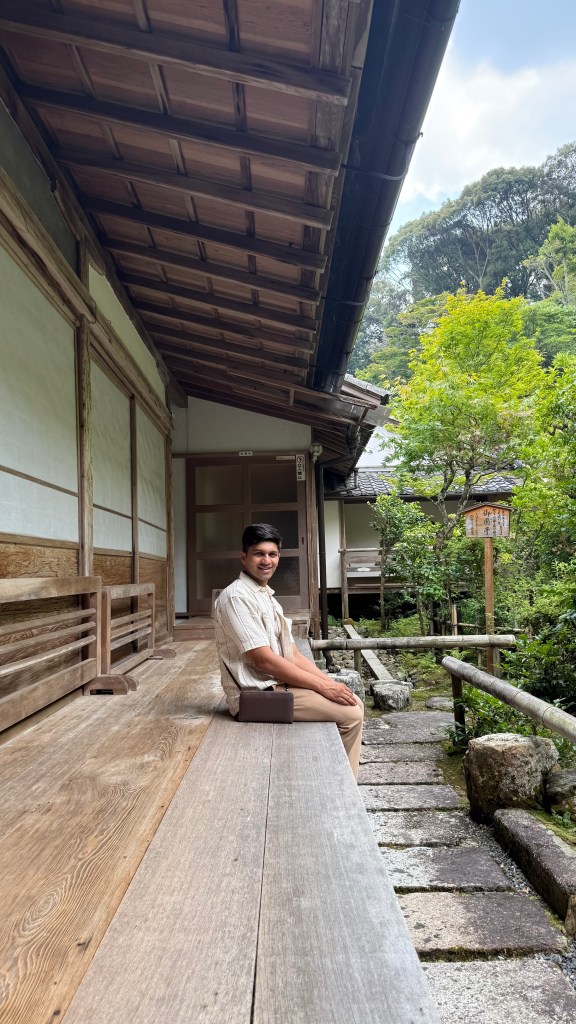
Pro tip: Spend the next 3–4 hours wandering the area. Pop into a few temples (each has a modest entry fee). Inside, you’ll find meticulously manicured gardens, peaceful courtyards, and intricate wooden architecture that feels timeless. We sat quietly in one monastery for 40–50 minutes, just absorbing the calm.
A fun ritual: the “draw your luck” omikuji. Drop a 100‑yen coin (~₹60), pull a numbered stick, then match it to a drawer for your fortune chit. Simple, mystical, and quintessentially Japanese.
After hours of peaceful exploration, we headed back toward central Kyoto and stopped at a 100‑yen store chain (everything ~₹60) – Seria. We loaded up on souvenirs — shot glasses, cute cutlery, bags, and all sorts of tiny, thoughtful gifts.
Evening took us to one of Kyoto’s hidden gems: the ryokan‑style Starbucks in Gion/Higashiyama. Like I’ve said before, Japan’s Starbucks are architectural art — this one feels like stepping into a traditional tea house. Even non‑coffee drinkers should visit just for the vibe.
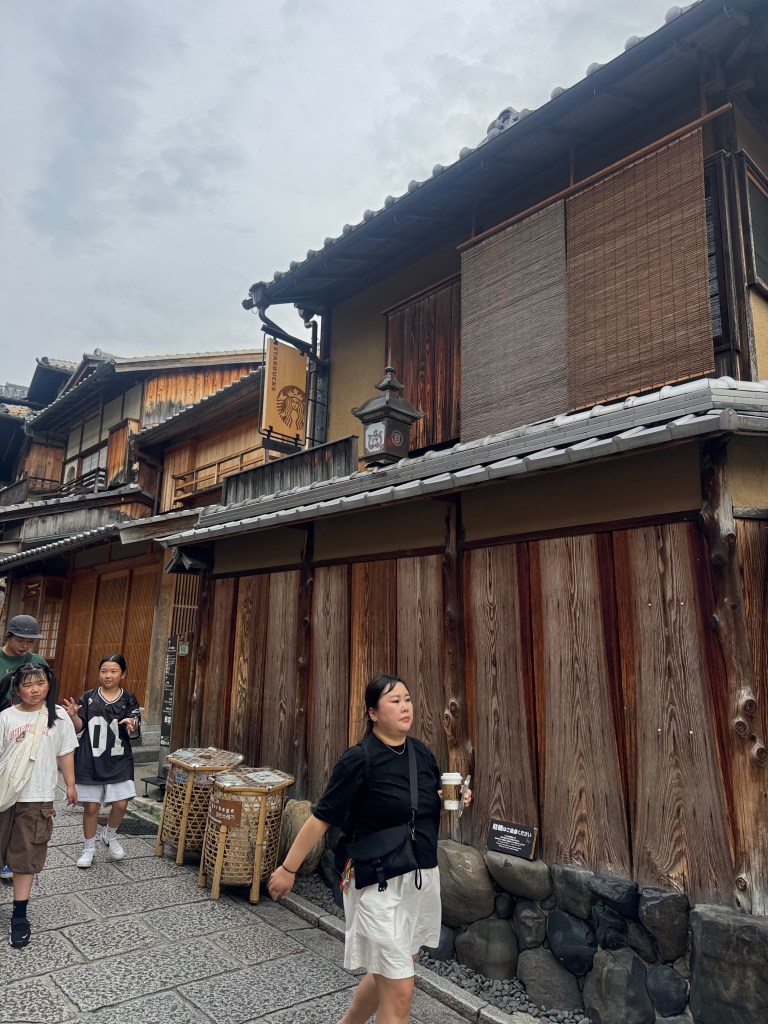
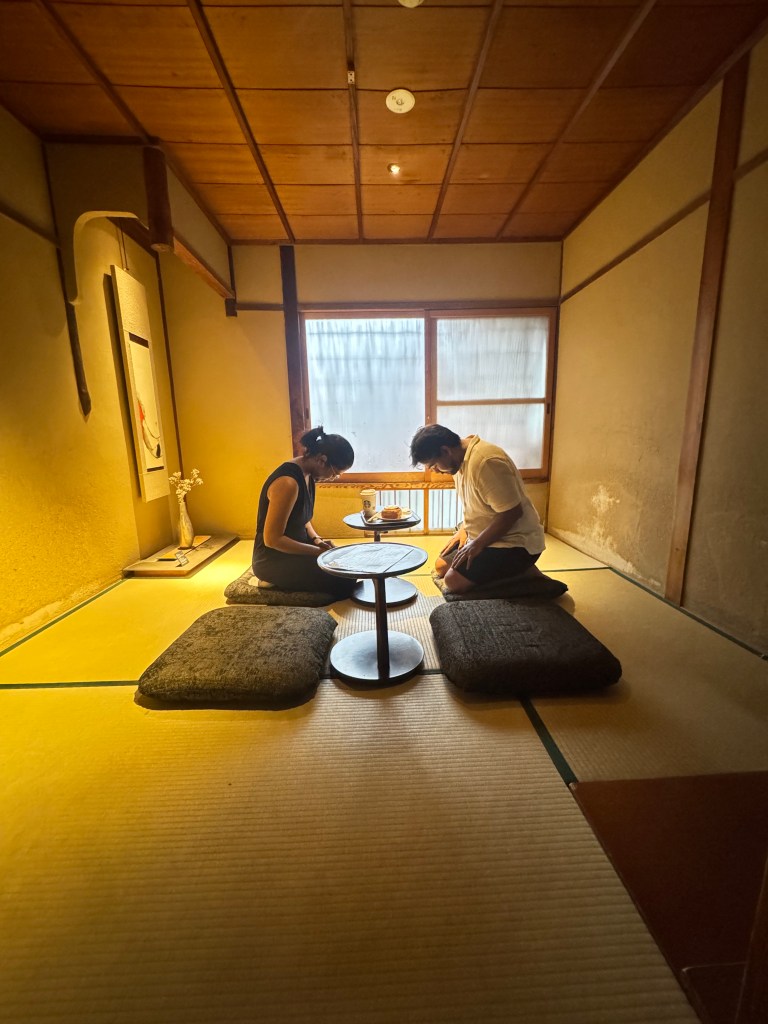
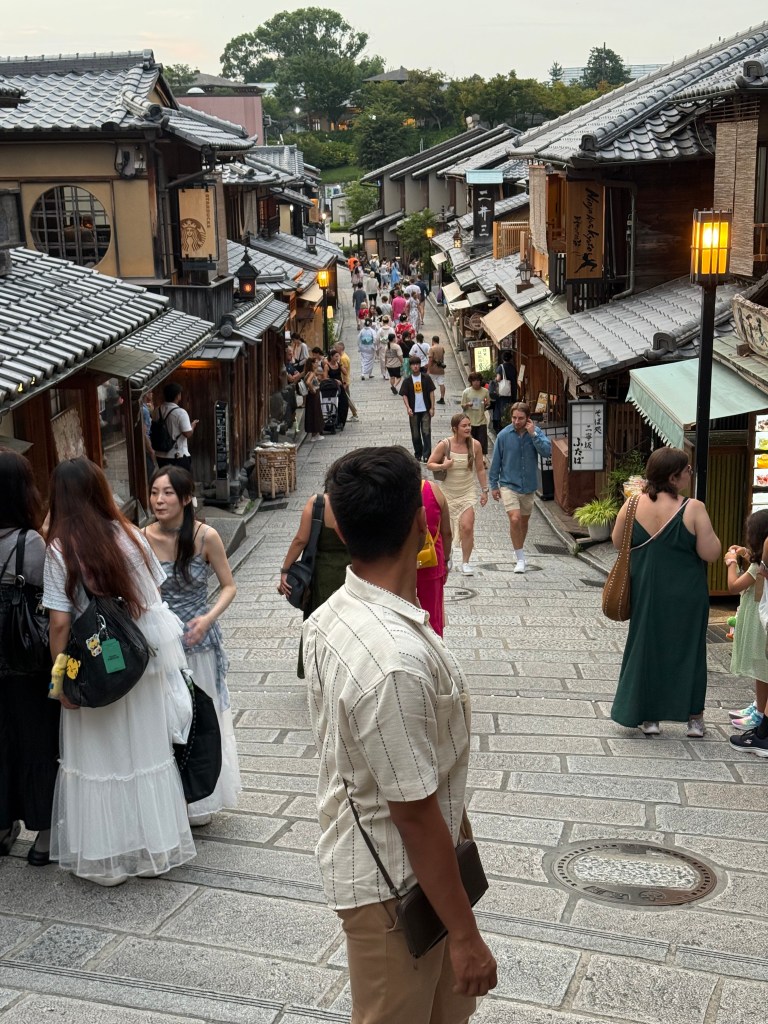
From there, we walked the streets of Gion, Kyoto’s geisha district. It’s vast, photogenic, and atmospheric — allocate half a day minimum to wander the lantern‑lit alleys, wooden machiya houses, and hidden gardens.
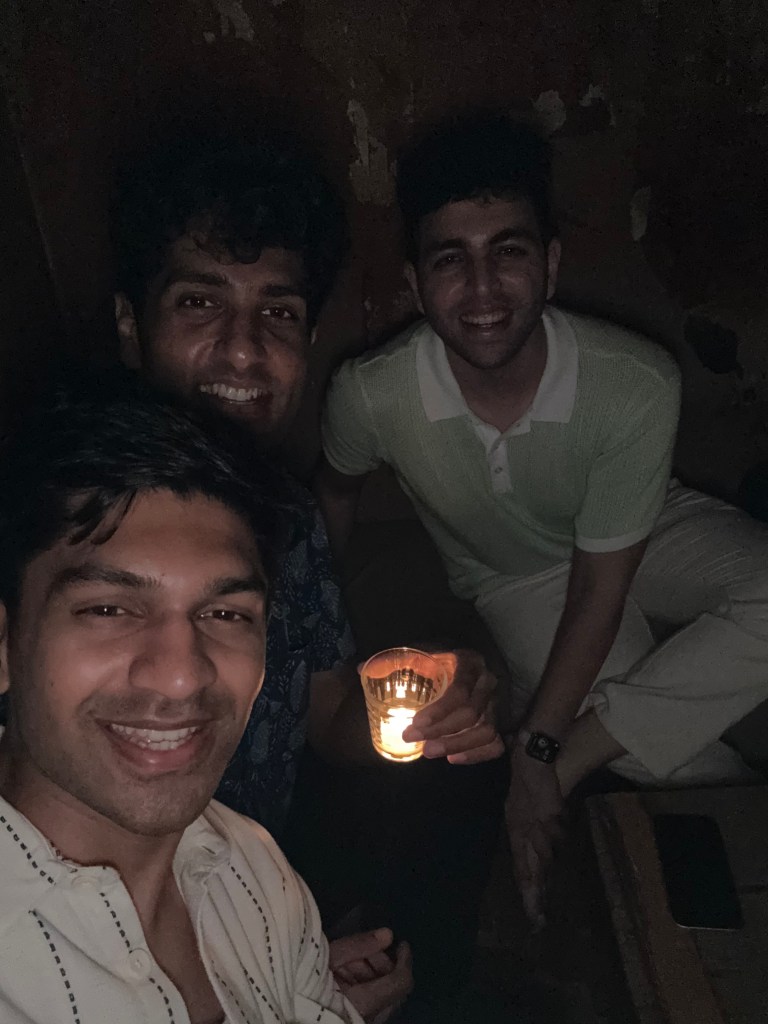
Dinner was average ramen (Japan’s ramen isn’t India‑level), but the nightcap made up for it: a hidden speakeasy bar. No signboard, no menu, buried in an alley within an alley. Google Maps gets you close, but even locals nearby had no clue (Japanese individualism at its finest — people mind their own business). We climbed two flights of unmarked stairs, pushed open a plain door, and entered a tiny room lit by just five tea lights. No AC blast, no neon — pure intimacy. The bartender asks what you’re in the mood for. Be as descriptive: “Floral, vodka‑based, sippable, fresh fruits, no chocolate or heavy flavours” or as broad “Sweet-Vodka based drink”. He crafts a masterpiece for 800 yen (~₹500) — delicious, creative, and worth every sip. We had an unforgettable time in that candlelit cave. It is called Kazubar.
We walked back to our ryokan, calling it a night with Kyoto’s magic fully sunk in.
Travel Tip: Reach Arashiyama early if possible, but budget 4–5 hours total — it’s spread out with 50+ sites. Gion is best on foot at dusk; hunt for speakeasies via Google Maps, but trust your instincts on unmarked doors.
Day 7: Demon Slayer, E-Bikes & Wild Boar Night Ride
We kicked off with a fantastic vegan breakfast at a canal-side café — fresh, flavorful, and the perfect Kyoto morning. From there, we headed to catch the Demon Slayer movie, which hadn’t even released in India yet. As fans of the series, we were excited… until we realised there were no English subtitles. Even with live Google Translate, we caught only fragments. The movie itself was fine, and they gave every ticket holder a cool Demon Slayer souvenir, but the language barrier made it a miss.
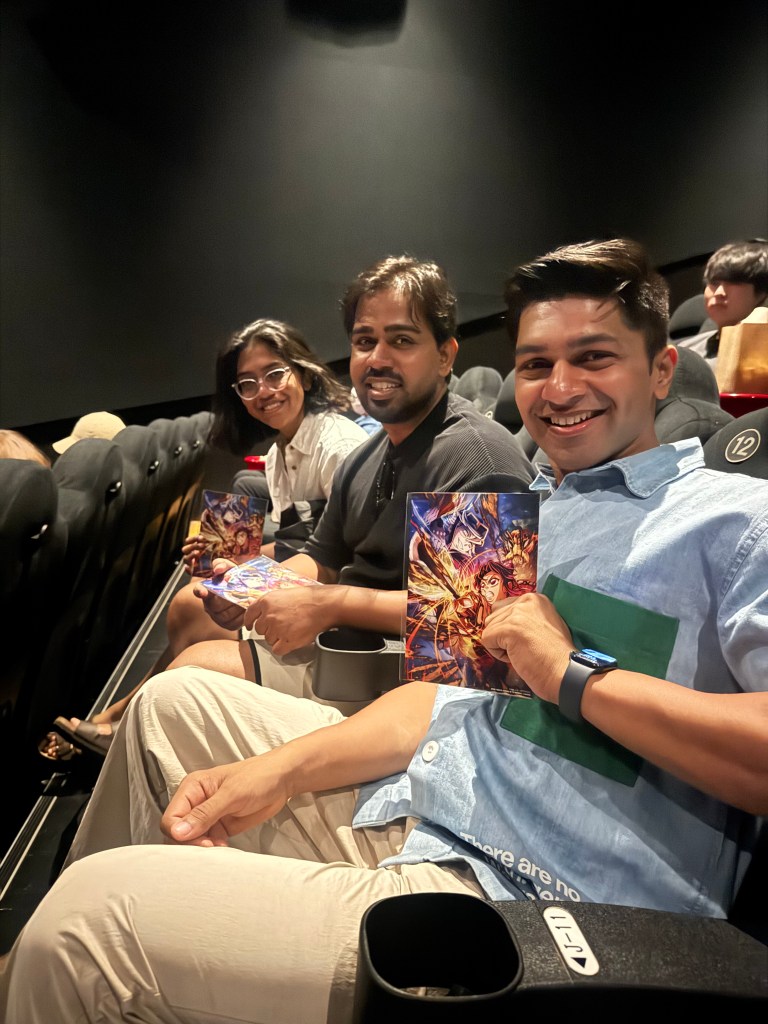
Afterwards, we shopped for an hour in the same mall — mostly Japanese brands with clean designs and great quality. Lunch followed, then came the day’s highlight: renting e-bikes. Hands down, one of the best experiences of the entire Japan trip and a must-do anywhere in the country. Japan is insanely cycle-friendly — smooth roads, dedicated paths, bike parking everywhere. You could navigate most cities in an electric wheelchair without ever needing help.
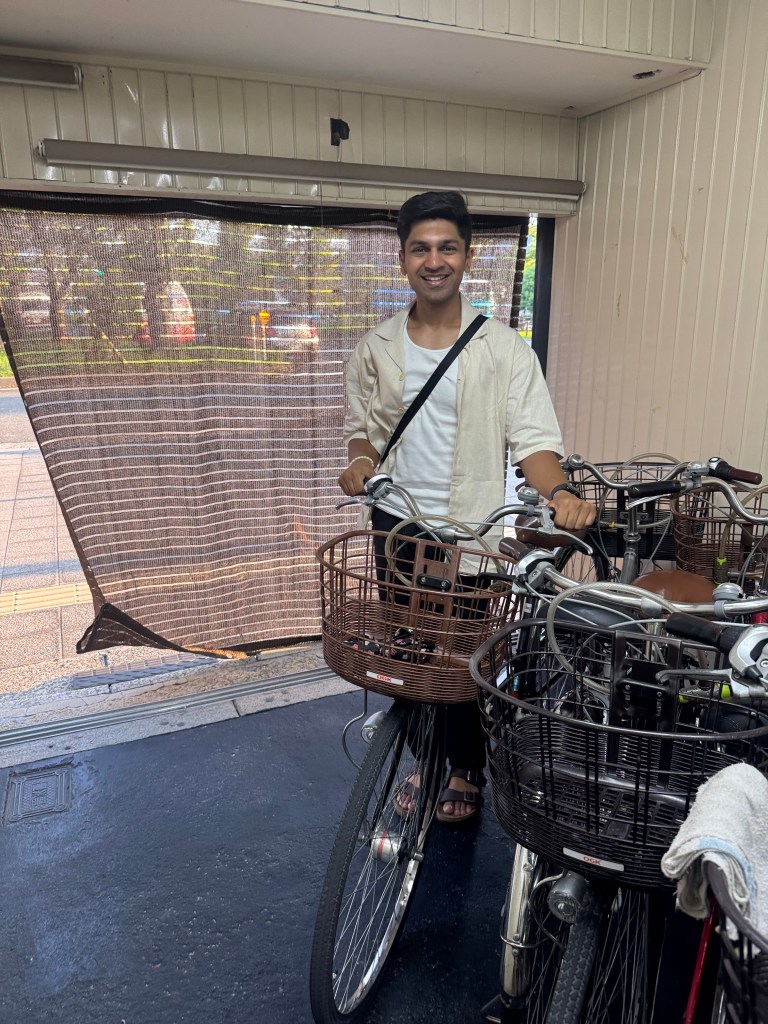
Skip apps for rentals; go to a physical shop instead. Better bike quality, clearer communication, and actual human interaction. The station closed at 6:30 p.m., so we grabbed five e-bikes right at 6 p.m., complete with phone mounts and baskets. Pro tip: Unless you’re a professional cyclist, always get electric bikes. You still pedal, but the motor makes hills and distance effortless.
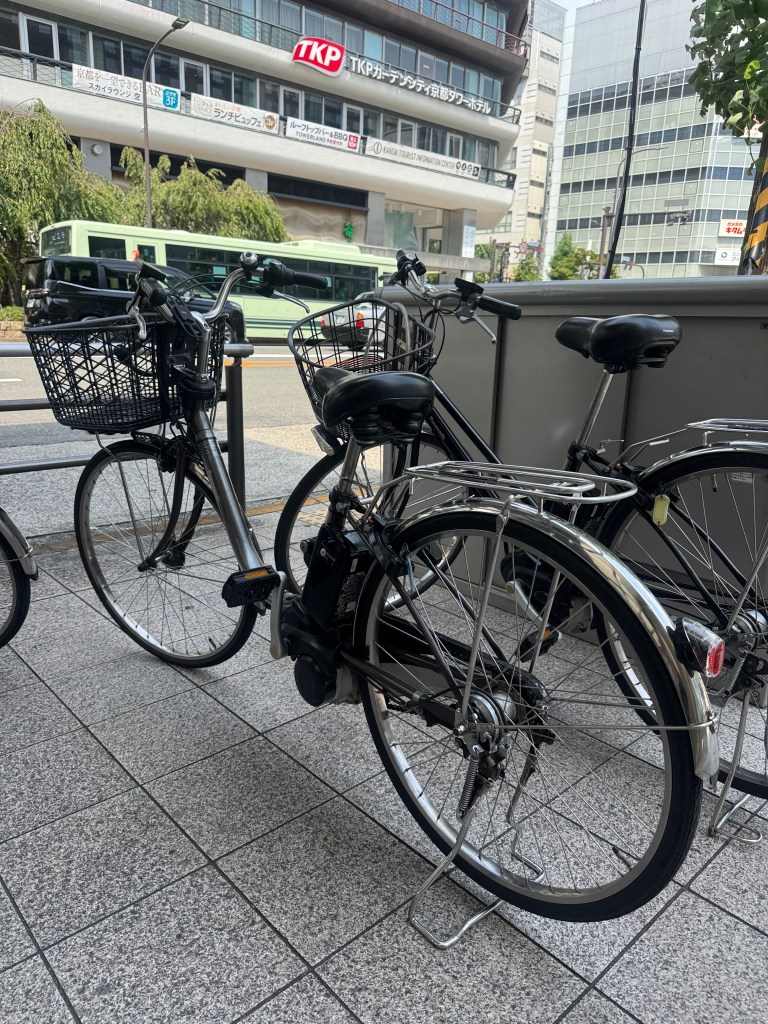
We decided on a 14 km ride to Otsu, a lakeside town. What sounded manageable turned epic — highways, small villages, and pitch-black forests known to have black bears, wild boars, deer, and monkeys. By the time we hit the wooded sections, it was fully dark, with only our bike headlights cutting through.
Otsu was worth it. We caught a local baseball game — Japan loves baseball, and watching school/college kids play with their moms cheering was pure joy. Dinner was conveyor-belt sushi (only 4 vegetarian options out of 200 dishes), followed by a cheese pizza at Domino’s. Classic backup plan.
The return 14 km ride was even wilder. A 1-km pure forest stretch — perfect roads, no potholes, but zero streetlights and 12 am at night. Suddenly, rustling in the woods. I swung my headlight… and there was a wild boar, eyes glowing, just meters away. Heart pounding, it bolted back into the trees (away from us, thank our luck). That was just the start of the forest patch. The rest was uphill, exhausting even with e-bike assist, forcing periodic breaks. Luckily, no more animals appeared, but adrenaline carried us back to Kyoto safely.
Exhausted but buzzing, we called it a night. Rent e-bikes. Go somewhere. Anywhere. It’s Japan at its rawest and most memorable.
Travel Tips:
E-bikes only — non-electric bikes will destroy you on longer rides. Rent from shops, not apps. Kyoto forests get pitch black after sunset. Carry powerful headlights and ride in groups. Anime fans: Check subtitle availability before booking.
Day 8: Nishiki Market, Ginkakuji, Fushimi Inari & Canal Nights
We slept in late after the previous night’s epic cycle adventure, finally emerging for a light brunch at Nishiki Market — Kyoto’s famous covered food street. It’s a vibrant arcade packed with stalls selling fresh pickles, sweets, souvenirs, clothes, and endless street snacks. We grazed as we wandered, soaking in the bustle. Matcha is big everywhere in Japan. I am not a fan.
From there, we hopped on our e-bikes for a scenic ride to Ginkakuji (the Silver Pavilion), a stunning Zen temple with manicured gardens and mossy paths. The ride itself was lovely — Kyoto’s bike lanes make it effortless. We returned the bikes afterwards (around ₹2,000 per bike for the full day — a steal for Japan and 100% worth it).
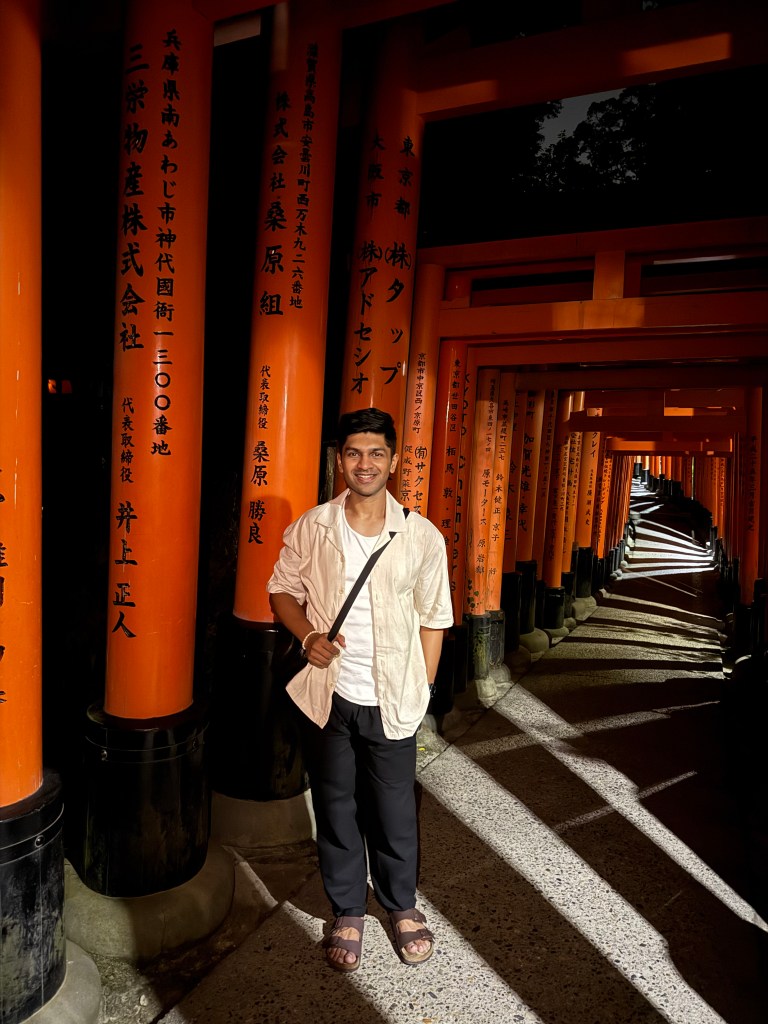
Next up: Fushimi Inari Taisha in southeast Kyoto, famous for its thousands of vermilion torii gates forming endless tunnels up the mountain. Like Arashiyama, it’s on the city’s edge, so we took the subway (short walk from the station to the base). Start with the lower, shorter route — it’s less crowded, and a longer route would be just more of the same thing. Every single torii gate is donated by a company or individual for good fortune, gratitude, or business luck. Each one lists the donor’s name, erection year, and more. The gates have a recurring sponsorship rate (revised annually). Big corporations sponsor entire stretches — you could even donate one to get your name etched there in a few crores.
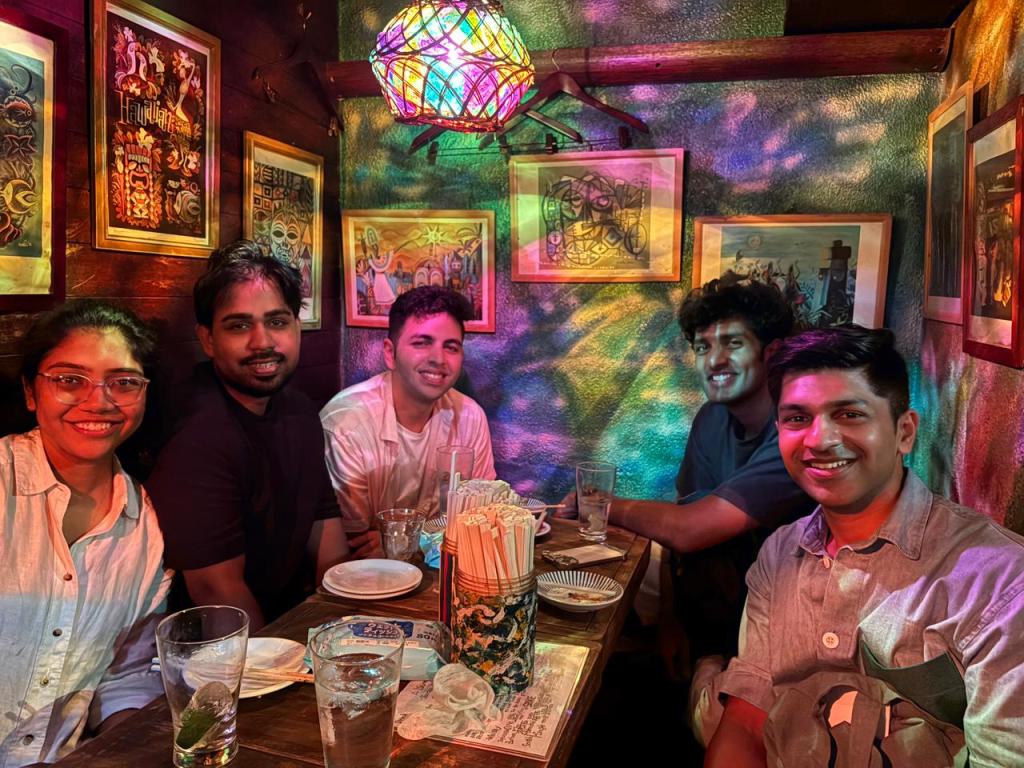
After mountains of gates and fox statues (Inari’s messengers), we headed back to central Kyoto for bar hopping in Higashiyama Ward. We hit LGBTQ+-friendly spots, speakeasies, themed cafés, and even a so-called “white man’s bar” — places where Japanese women seek out Western men for dating (it’s a point of pride here, unlike in India). Honestly, it wasn’t our vibe — neither the crowd nor the energy clicked — so we moved on quickly.
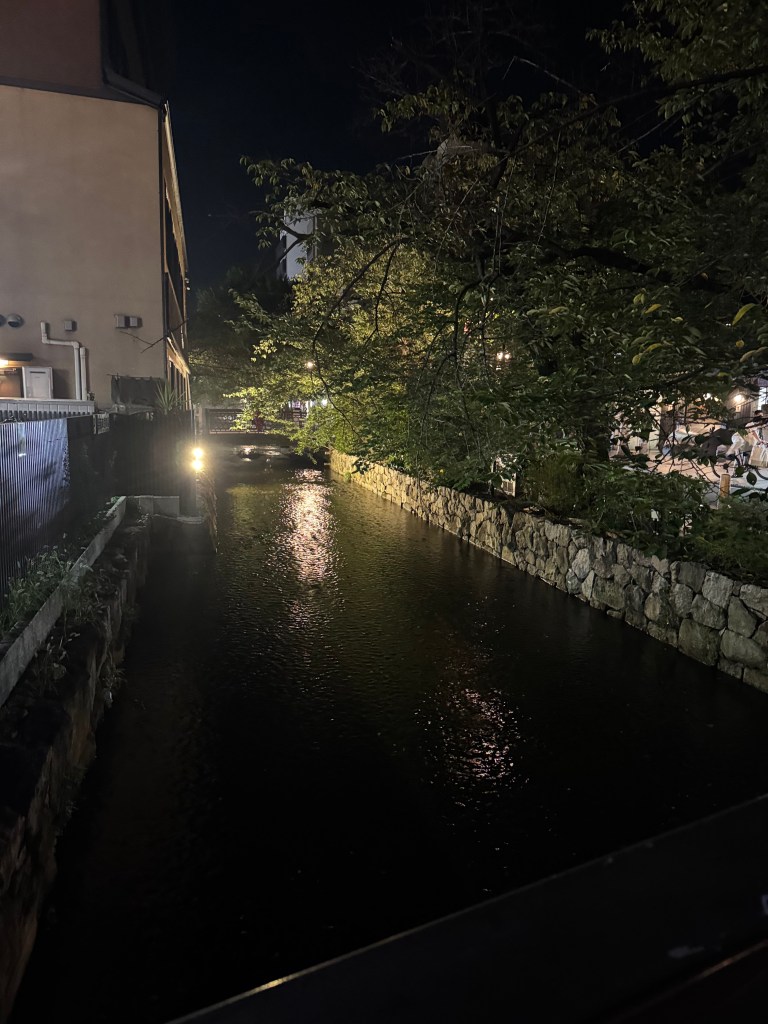
Kyoto’s Higashiyama canal is magical. A shallow, crystal-clear waterway runs right through the heart of the ward, with sloping stone paths on both sides perfect for sitting. Grab a beer, street food, or just chill — it feels like Amsterdam or Melbourne’s iconic canals, but cleaner and more serene. Locals and visitors linger here into the night, chatting or doing nothing. Pure bliss.
Travel Tip: Fushimi Inari: Stick to lower trails to avoid crowds; notice the corporate donor plaques on every torii. E-bike rentals: Full-day at ~₹2,000 — ideal for temple-hopping without fatigue. Nishiki Market: Best for brunch grazing; arrive hungry.
Day 9: Nara Deer, Todaiji & Osaka Nightlife
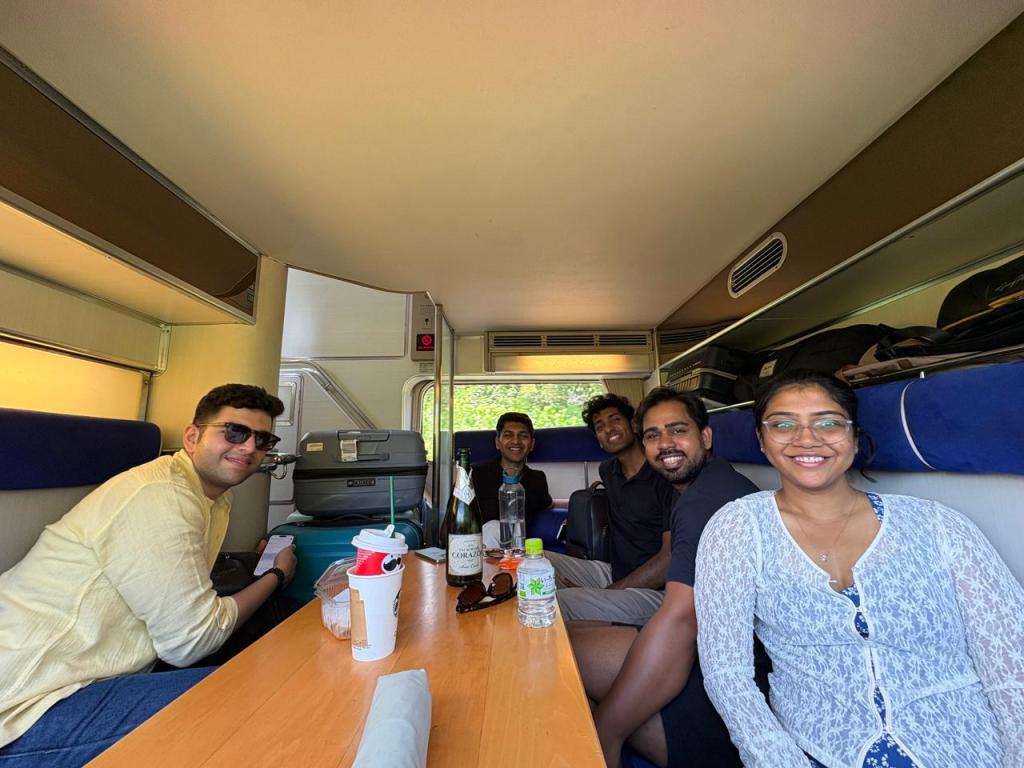
We checked out of our Kyoto ryokan, packed up, and headed to Nara. Note: Scenic or themed trains between Kyoto and Nara (or Kyoto and Osaka) require advance booking and run on fixed schedules. Regular trains take the same time (~45 minutes) and run all day without reservations- that’s what we chose for flexibility.
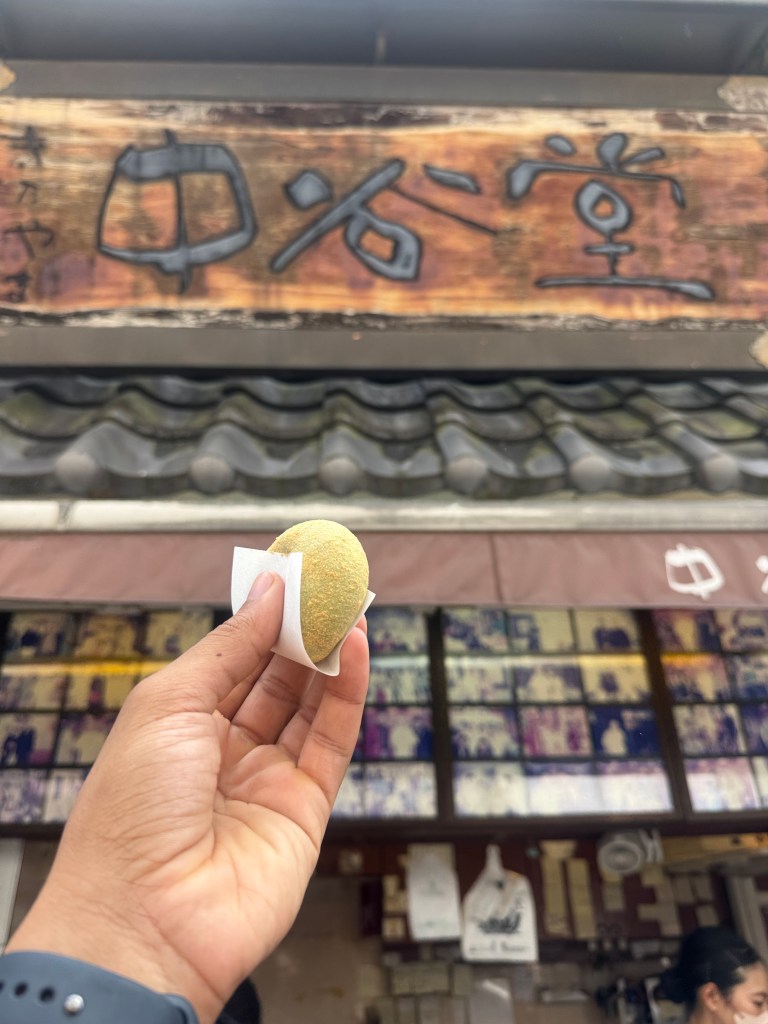
Quick breakfast in Nara, then coin lockers at the station for our bags (easy and everywhere). We found the OG Mochi place at Nara- it sucked big time. The 5 us couldn’t finish one.
We walked straight into Nara Park, home to Tōdai-ji Temple and its famous free-roaming deer. Nara’s deer are everywhere — hundreds of them, big and small, antlered or not, mingling like street dogs or crows. They’re super tourist-savvy: bow to them, and many bow back, expecting a deer cracker treat (sold by vendors everywhere for ~₹100/pack). It’s adorable chaos.
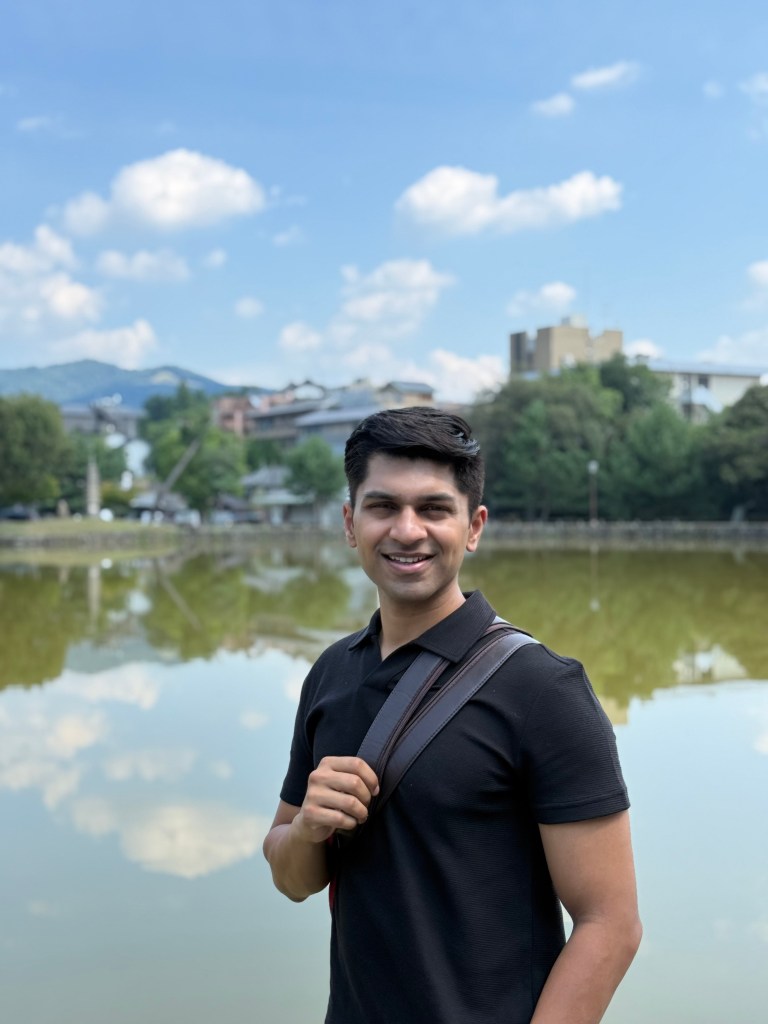
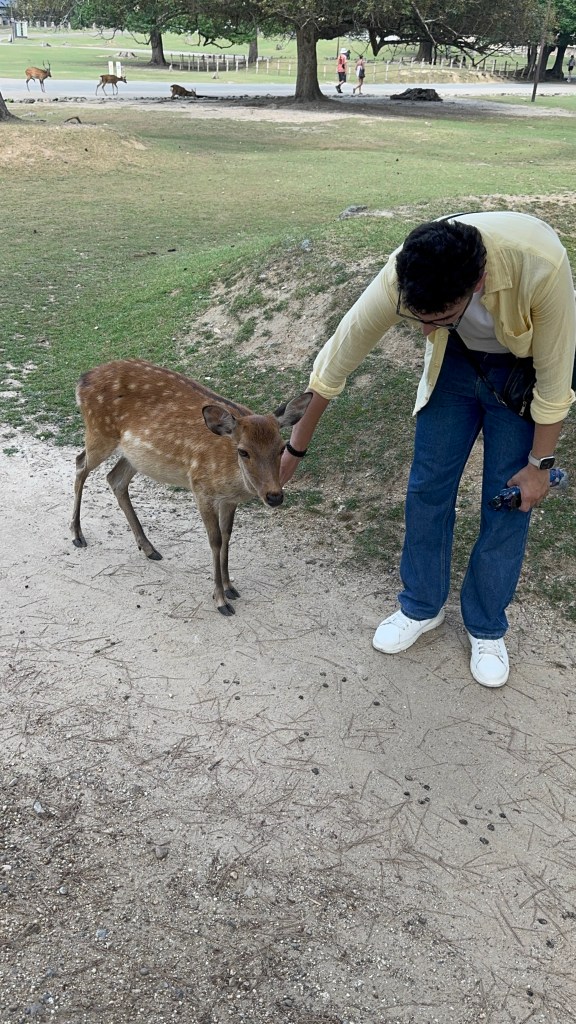
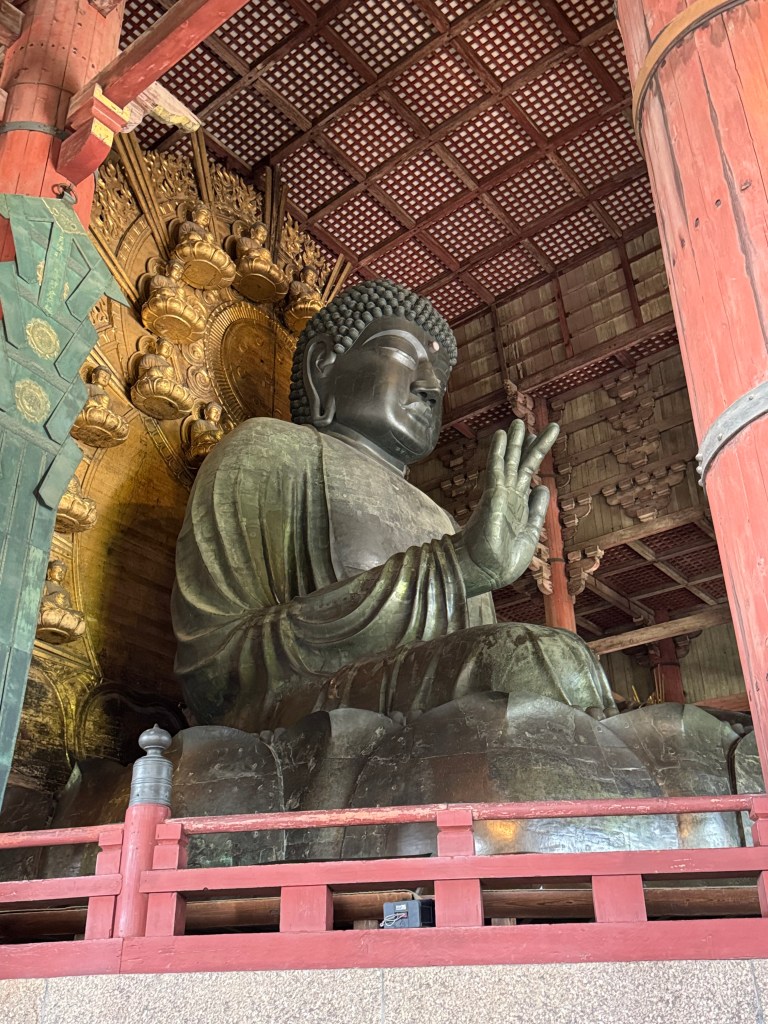
The deer park stretches about 1 km to Tōdai-ji’s grand gates (park is free; temple has a small entry fee). Inside, Tōdai-ji is jaw-dropping — one of Japan’s largest wooden structures, housing a massive Great Buddha statue (one of the world’s biggest bronze Buddhas). We looped back through the deer park, grabbed our luggage, and hopped a quick train to Osaka.
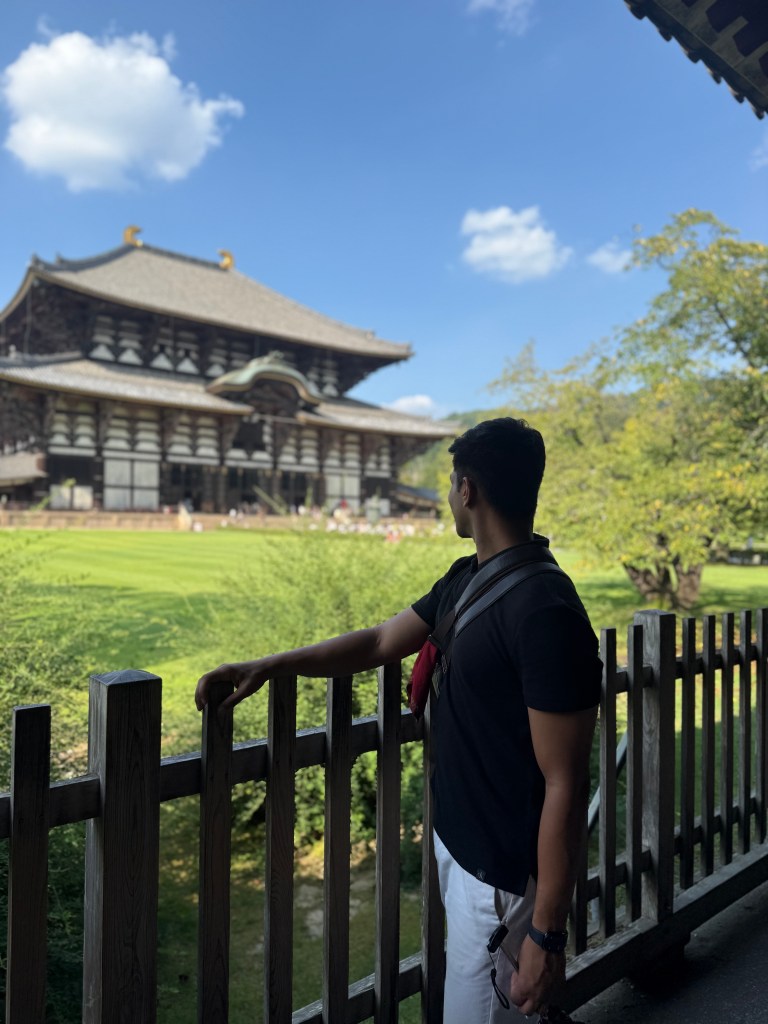
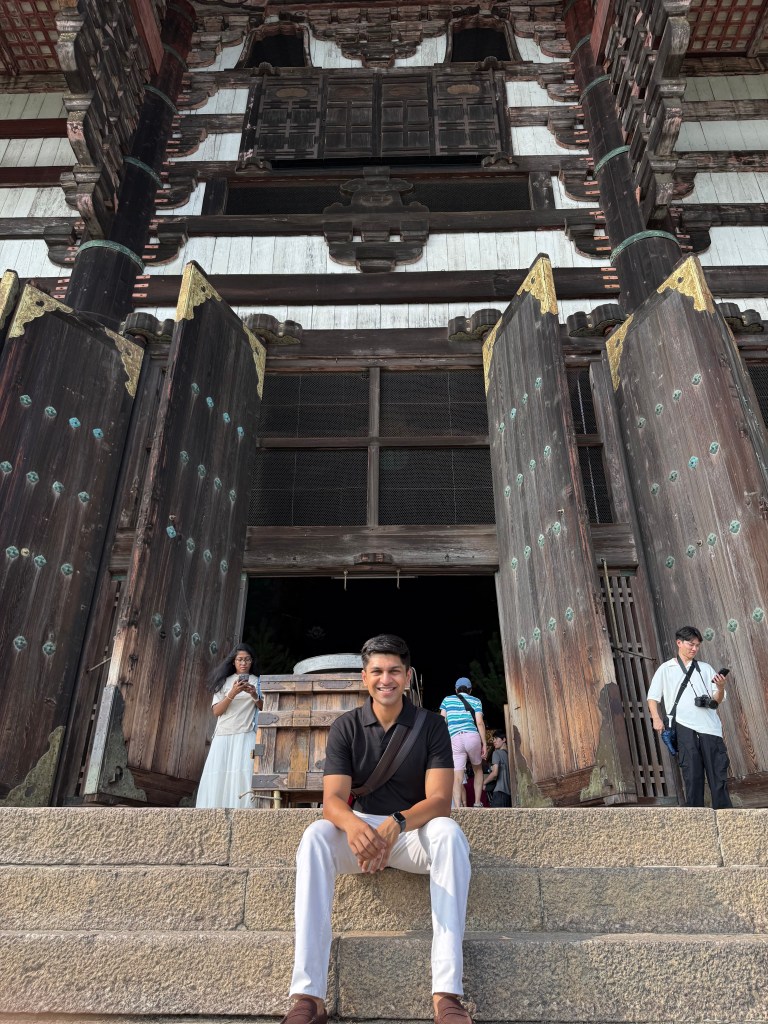
Pro tip on baggage: Japan’s 7-Eleven luggage forwarding service is genius — drop bags at one store in Kyoto, pick up same/next day at your Osaka hotel 7-Eleven (cheap and secure). We skipped it this time due to our tight flight schedule the next day, but it’s perfect for most trips.
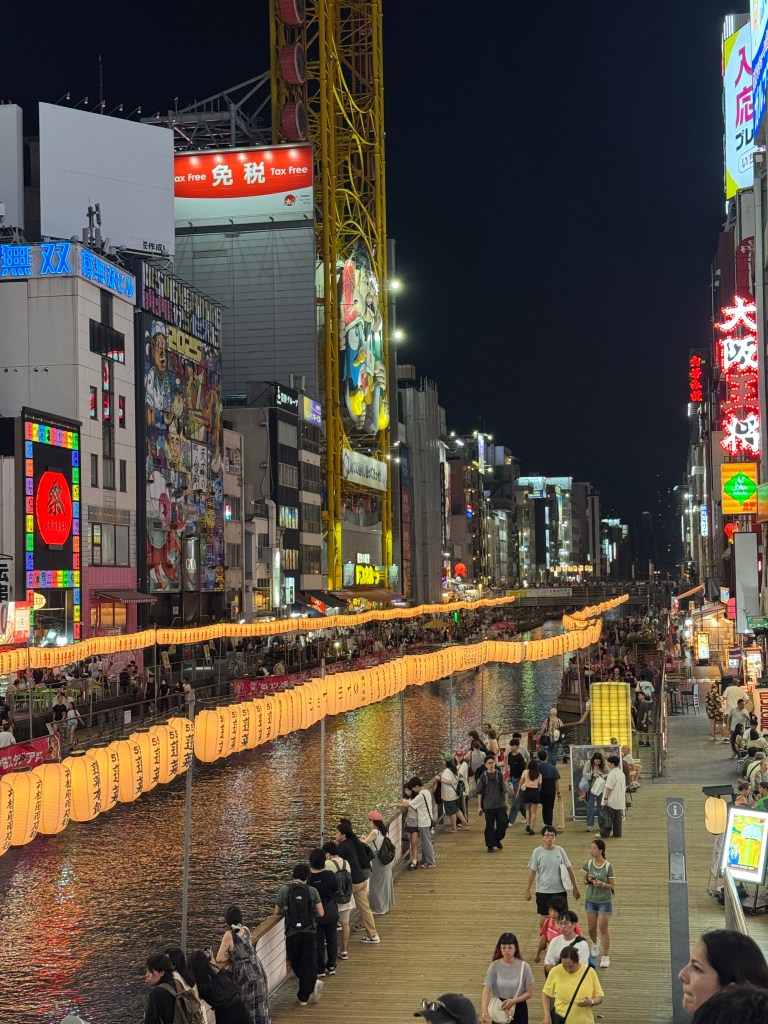
We reached Osaka, checked into our stay, showered off the travel, and ventured to Dotonbori — the neon heart of Osaka’s nightlife. Famous for seafood (not for us vegetarians, though), it’s still electric: glowing signs, street food stalls, and crowds. We grabbed some veggie bites, did last-minute souvenir shopping, but it was our last night, and we wanted to do something new.
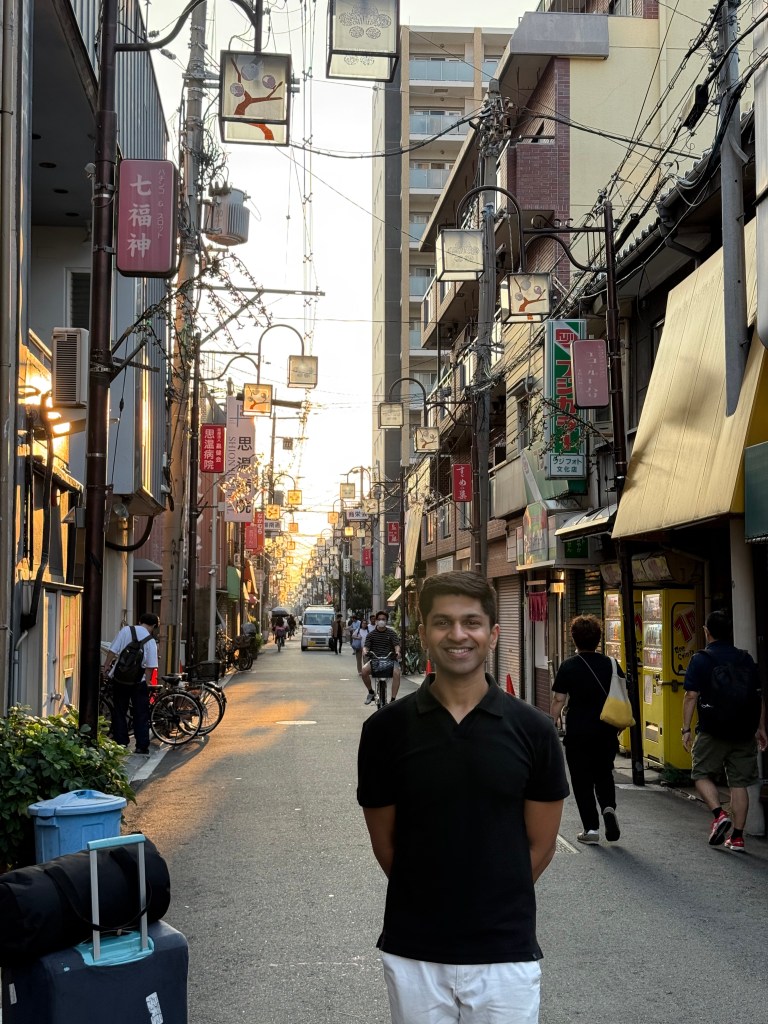
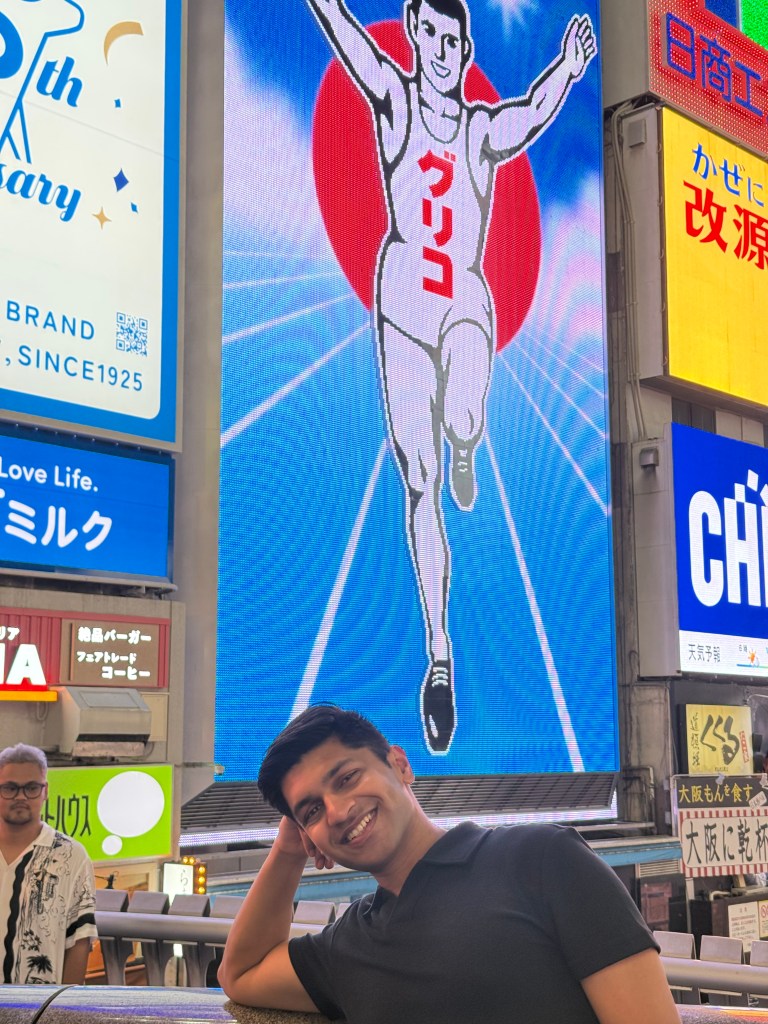
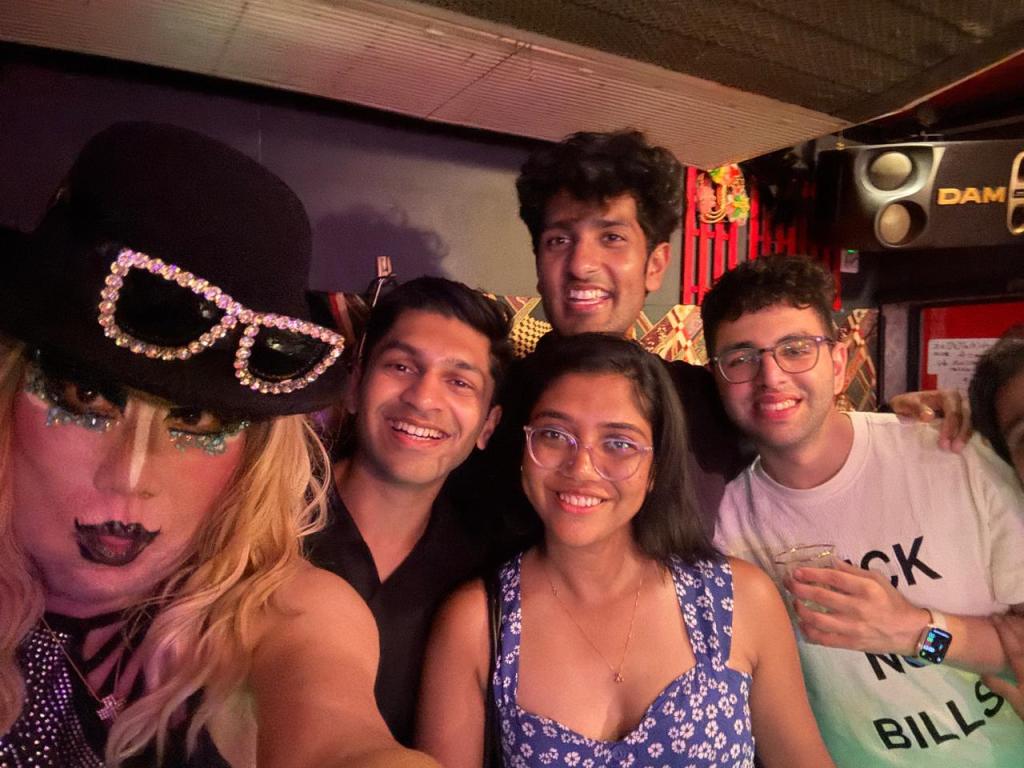
So, we decided to head to a drag bar. It was a small place that could have accommodated only 10 people with a very fun drag host who sang on a karaoke along with us. Then it was time for her to close the bar, which is when we found out that she accepts only cash. Since it was our last day, we had very little. The lady did a grand gesture; she asked us how much we had. We gave her all we had, which would have been 30% of the total bill amount. We offered to go to an ATM and withdraw more to pay her. But she said something in Japanese, which meant, the rest is on the house, kids. She was just happy that we had a great time. We were so moved by her gesture. I so want to write the name of the place, but it was all in Japanese and just happened to have ended up there, looking for another place. By now, exhaustion had won — we had a morning international flight.
Travel Tips: Nara: Bow to deer for bows back; buy crackers to feed them. Tōdai-ji entry ~₹400/adult. Skip themed trains unless you love the aesthetics — regular ones are identical speed/cost. Luggage forwarding via 7-Eleven/Lawson: ~₹500–1,000/bag, same-day possible.
Day 10: Farewell, Osaka & Kansai Airport Run
Our flight home was at 10:30–11:00 a.m. from Kansai International Airport (KIX), about 50 km from Osaka. Japan’s public transport made it stress-free: we checked out early, reached the station by 8 a.m., and took a direct train for just ₹600–700 per person. A cab for the same distance? Easily ₹15,000. The train, like everything else in Japan, arrived and departed exactly on schedule.
Kansai Airport felt familiar — standard international procedures: check-in, immigration, security. No surprises, just efficiency. We boarded our flight to Singapore, caught our connection, and finally touched down in Bangalore — back home after 10 days.
 the 100 countries club
Leave a comment