The Philippines gave me the best experience of my life after having been to 38 countries. The people are incredibly sweet, helpful, and honest (no cheats or scams anywhere!). It’s all about water: island hopping, kayaking, lakes, endless beaches, more! For Indians, now visa-free with direct flights, and surprisingly not very expensive.
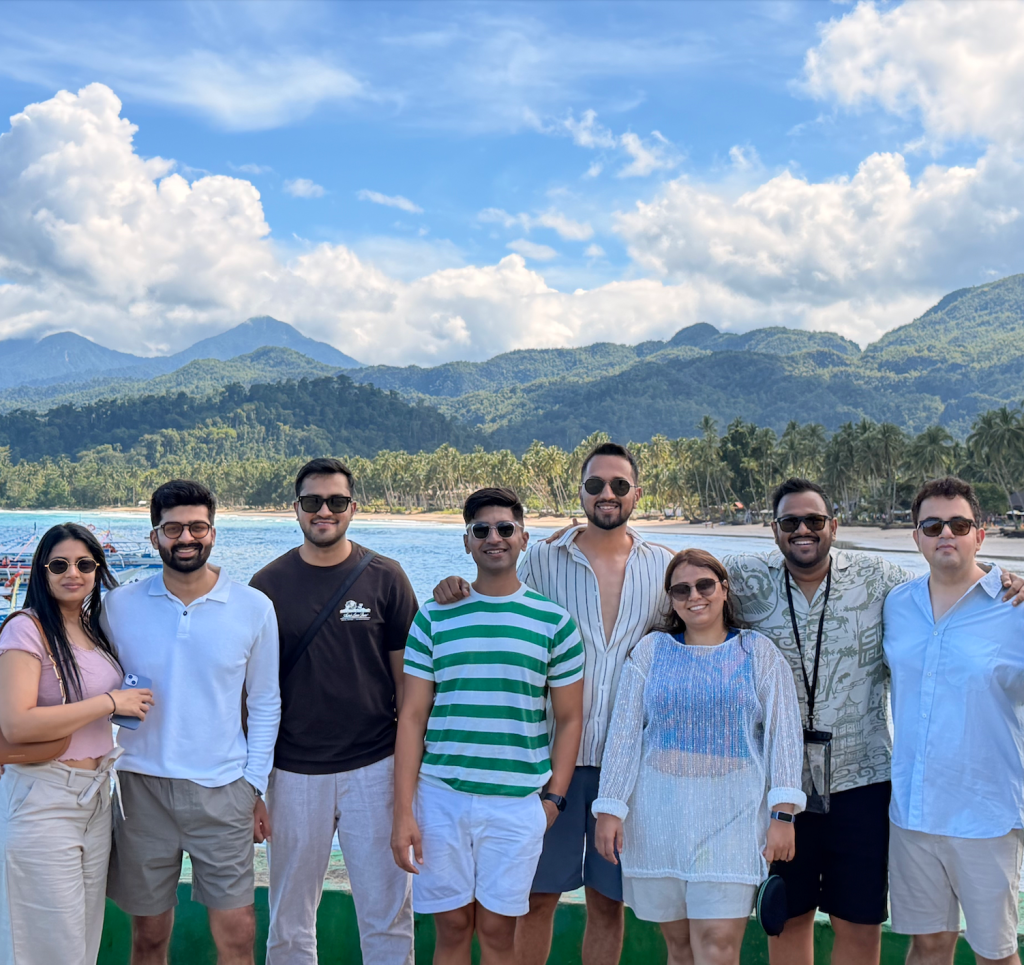
We were a group of 12 friends who explored Palawan, Cebu, Manila, and Boracay over Christmas & New Year’s, and it was pure magic. Here is how our itinerary looked-
| Date | Day | When Awake | Night At |
| 20th Dec | Sat | Fly to Manila, Head to Puerto Princesa | Puerto Princesa |
| 21st Dec | Sun | Underground River, Head to El Nido | El Nido |
| 22nd Dec | Mon | Tour C El Nido | El Nido |
| 23rd Dec | Tue | Tour A El Nido | El Nido |
| 24th Dec | Wed | Ferry to Coron | Coron |
| 25th Dec | Thu | Ultimate Island Tour | Coron |
| 26th Dec | Fri | Coron SS & Head to Cebu | Cebu |
| 27th Dec | Sat | Moalboal Sardines & Canyoneering | Cebu |
| 28th Dec | Sun | Cebu City SS | Cebu |
| 29th Dec | Mon | Head to Boracary, Boracay SS | Boracay |
| 30th Dec | Tue | Boracay SS | Boracay |
| 31st Dec | Wed | Head to Manila, NYE | Manila |
| 1st Jan | Thu | Intramuros & Bar Hopping | Manila |
| 2nd Jan | Fri | SM Mall & Cocktail Bars | Manila |
| 3rd Jan | Sat | Fly back to India |
Cost Breakup for 15D, 14N
| Amount (INR) | Comment | |
| International Flights | 46,000 | Thai Airways BLR-BKK-MNL-BKK-BLR |
| Visa, SIM, Insurance | 2,000 | 0, 1600, 400 |
| Stays | 64,000 | ~5.5k/pax/night on islands ~3.5k/pax/night in cities |
| Food & Drinks | 47,000 | Meals- 35k, Alco- 5k, Snacks- 7k |
| Experiences | 30,000 | Canyoning- 4k, Moalboal Sardines- 3k El Nido- 3k x 2, PPS & Coron – 5k x 2 |
| Intra-City Movement | 10,000 | Grab in cities, 2-wheeler rental Ferry from El Nido to Coron |
| Domestic Flights | 36,000 | MNL-PPS, USU-CEB, CEB-MPH, MPH-MNL |
| Total | 2,35,000 |
Philippines Basics
The Philippines is a stunning archipelago in Southeast Asia with over 7,000 islands, shaped by Spanish occupation for centuries and later Japanese influence during WWII. Manila and Cebu are the major entry ports. Manila is the bustling capital. Here’s the practical scoop:
Connectivity from India: Super easy! Air India now flies Delhi-Manila daily direct. All major Indian cities connect via one hop through KL, Singapore, Vietnam, or Thailand to Manila/Cebu — cheap options galore with AirAsia, Vietjet, Lion Air etc.
Money: Filipino Peso (PHP) only — no USD/EUR legally. Exchange shops take USD (better rates than INR), cards work in cities/ bigger entities on islands, but cash is king at most smaller places. ~₹1 = 0.75 PHP (so 1 PHP ≈ ₹1.6), but real costs feel ~1.3x India.
SIM: Globe and Smart are the two main telecom providers. We chose Smart, and it worked perfectly well island-wide.
Safety & Vibe: Felt super safe everywhere. People are genuine, quote fair prices upfront (no haggling), simple lives.
FoodL Meat-heavy (pork/beef/fish/chicken staples) — veg options exist but are basic.
Visa: 14 days free for Indians; 30 days with a US visa. Manila/Cebu are the main international airports.
15D 14N Itinerary
Day 1- 20th Dec, Saturday- Landing in Manila & First Impressions of the Philippines
A bunch of us flew into the Philippines from different cities in India — Bengaluru, Ahmedabad, Hyderabad, and Delhi — and met in Bangkok before catching a Thai Airways flight to Manila. We landed around noon local time at Terminal 3, while another friend flying via Malaysia Airlines landed at Terminal 1. Manila has multiple international terminals, so if you’re meeting friends, coordinate which terminal everyone is arriving at, or you’ll waste time shuttling around.
Immigration was a breeze. As Indians, we had visa-free entry, and the queues were short. Those with a valid US visa got a 30-day stamp, while the rest received 14 days. Baggage also came quickly. One cool feature at Manila airport: there’s a live monitoring camera where bags are loaded onto the belt, so you can literally see how your luggage is handled — and staff also know they’re being watched, so no wild throwing of bags.
Since our onward domestic flight to Puerto Princesa (PPS) was only at around 10 pm, we had the whole afternoon to kill in Manila. First order of business: SIM cards. The two main telecom players are Globe and Smart. After comparing plans, Smart clearly had the better, more affordable data options, so we chose their unlimited data pack for about 15–20 days, roughly ₹1,500–₹2,000 per person. Both physical SIM and eSIM were available, though eSIM was slightly more expensive. Once everyone was connected, we could finally think about food and a shower.
We found a small, budget hostel near the airport just to freshen up. All of us took quick showers, changed, and some of us ordered food using Grab (their food delivery app). We went for Subway — safe and easy, especially for us vegetarians. After that, we headed out towards the SM Mall of Asia area, not for shopping but to walk along the coastal promenade. Manila is also a coastal city, and that stretch has a nice, developed seafront.
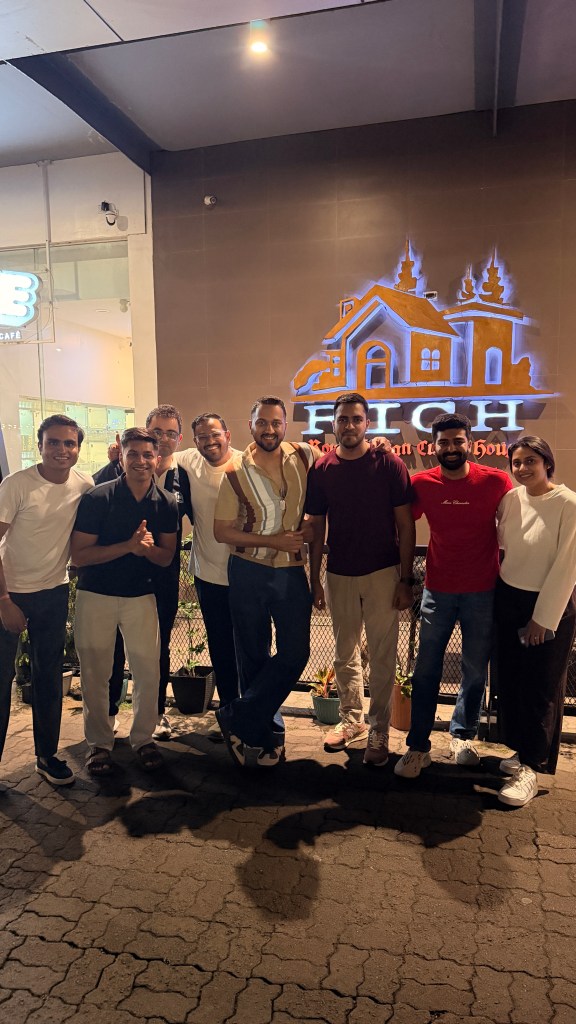
For an early dinner, we chose RICH, a North Indian restaurant in the area. On day one of an international trip, I usually prefer local food, but we went with what worked for the group. The food was very average in my opinion — not something I’d specifically recommend.
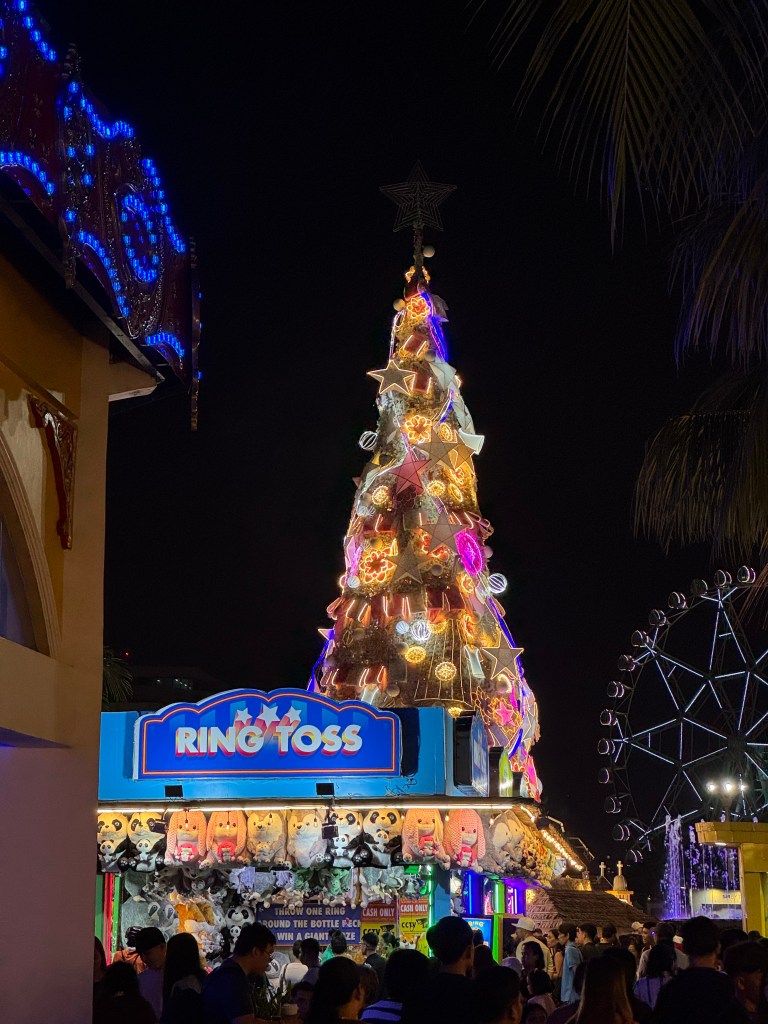
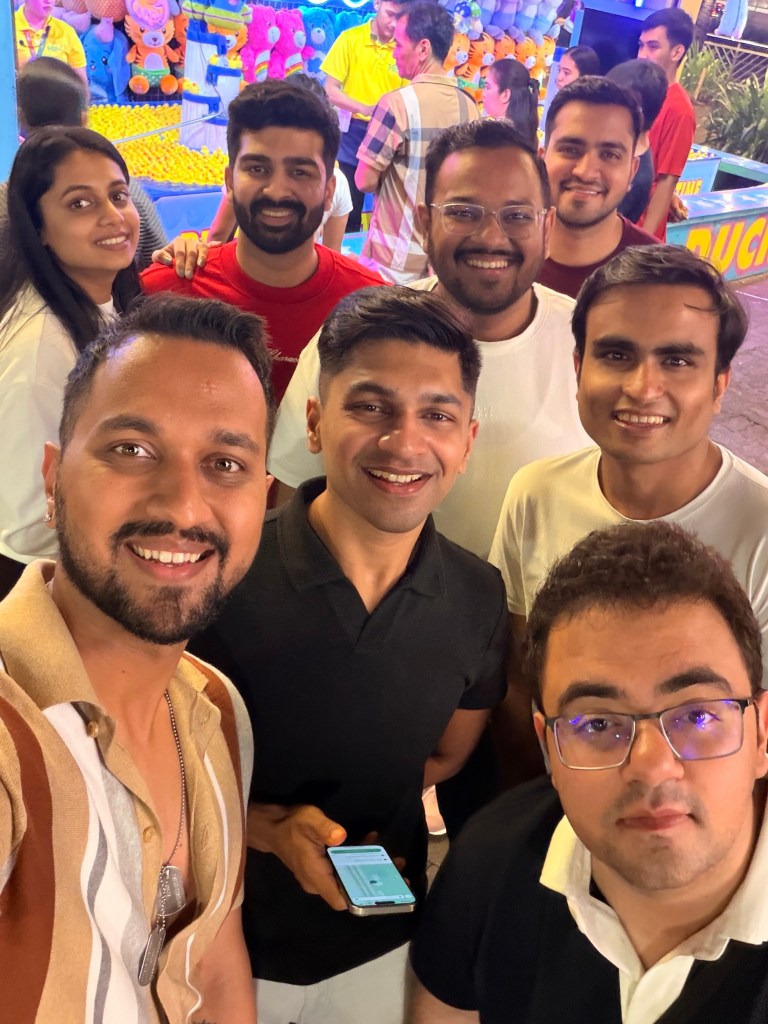
What really stood out, though, was the festive vibe. Since it was just before Christmas, the entire area was lit up and decorated — stalls with games, food counters, fairy lights, Christmas installations, and even fireworks. Being a largely Catholic country, Christmas is big in the Philippines, and you can feel that energy. We spent a little over an hour walking around this clean, well-developed, and safe part of Manila.
Later, we returned to the hostel, picked up our luggage, and headed to the domestic terminal for our flight to Puerto Princesa. The domestic section of Manila airport is quite basic — small, limited coffee shops, and no proper lounge — but it wasn’t too crowded, and we managed to find a comfortable corner to sit. Our flight got delayed, which meant an even later arrival in Puerto Princesa, but the flight duration itself was normal.
At Puerto Princesa, we got our first taste of local transport: tuk-tuks that are essentially motorbikes with side attachments where about three people can sit. These run all day and are very convenient. The best part: no haggling required — everyone quotes the same fair rate. We took a few tuk-tuks, reached our stay, and pretty much crashed immediately. We had an early start the next morning, and Day 1 was all about just arriving, settling in, and getting our first feel of the Philippines.
On a scale from -5 to +5, I will rate the coastal promenade in front of SM Mall +2 and +3 with Christmas decor & RICH +0.5.
Day 2 – 21st Dec, Sunday- Underground River Wonder & First Evening in El Nido
One thing I love about my group: if we say “ready by 8 am,” everyone somehow manages to wake up, rotate bathroom slots, and actually be ready by 8. So despite the late-night arrival, all of us were showered, packed, and done with a light breakfast at our stay (Summer Days in Puerto Princesa, which had a small in-house café) by around 8:10–8:15. We had pre-booked a combined Underground River Tour + transfer to El Nido, and right on time, our guide and driver arrived in a big van. With all our luggage, it was a bit of a Tetris game, but we squeezed everything in and set off.
The Puerto Princesa Underground River is often listed among the “new seven wonders of nature,” and we were quite excited to tick it off, especially since we were anyway in Palawan. From the main pier, a small traditional boat takes you to the protected area. Our guide handled all the permits and tickets we’d booked online beforehand, so we just followed along. Once you land at the conservation area, there’s a short 10-minute walk through a forest trail to reach the cave entrance. Here, everyone is given helmets and a small audio device with a pre-recorded guide that hangs around your neck.
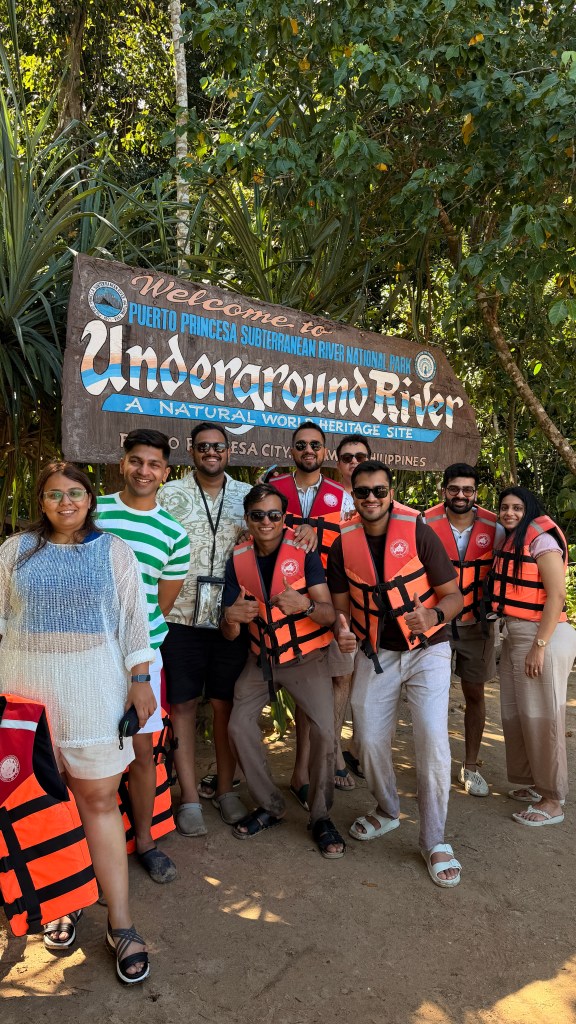
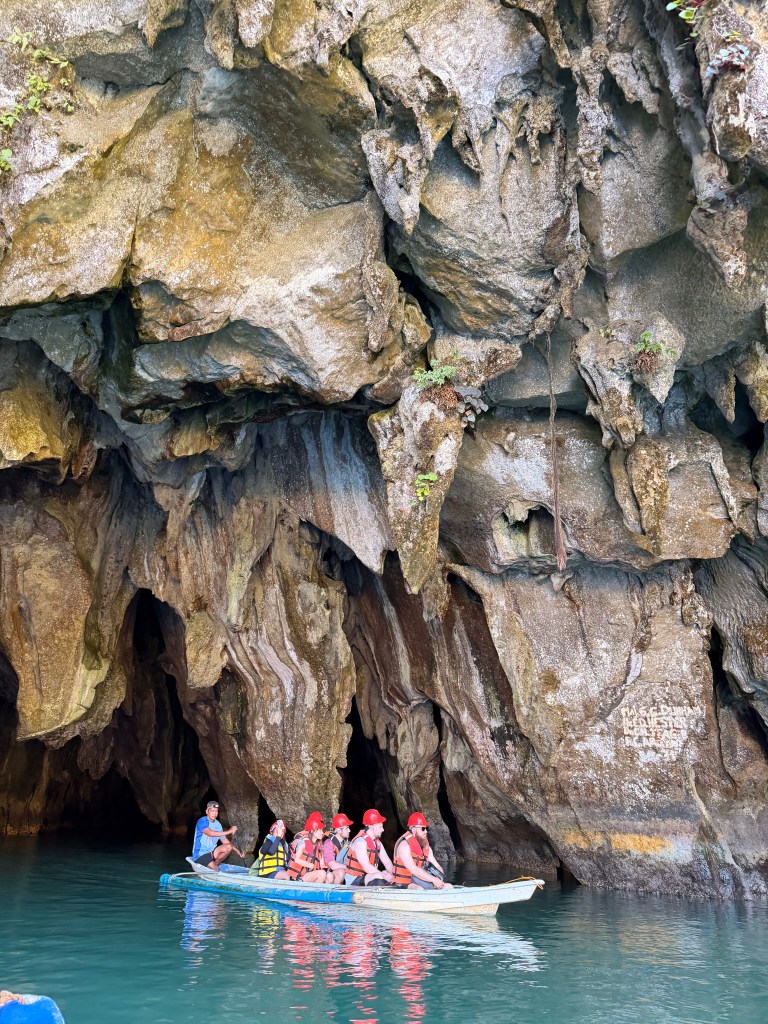
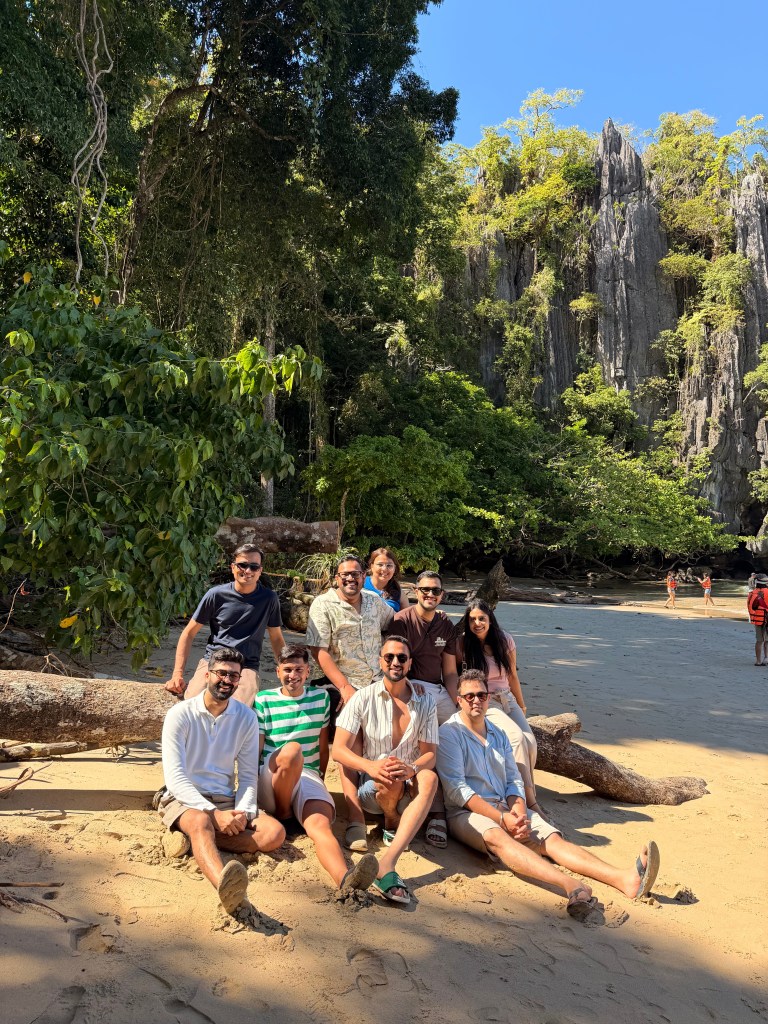
When your turn comes, you sit in a manually rowed boat with a boatman at the back handling the paddle and spotlight. Just as the boats push off, all the audio guides start in sync, so what you’re hearing matches what you’re seeing inside. The underground river itself is about 8 km long, making it one of the largest cave-river systems in the world, but the standard tourist route covers roughly 1 km inside. It’s pitch dark except for the boatman’s torch, which he points at different rock formations, stalactites, stalagmites, and bat colonies while the audio guide explains what you’re looking at. Sometimes he even switches the light off completely for a few seconds, and you’re just floating in deep silence and darkness.
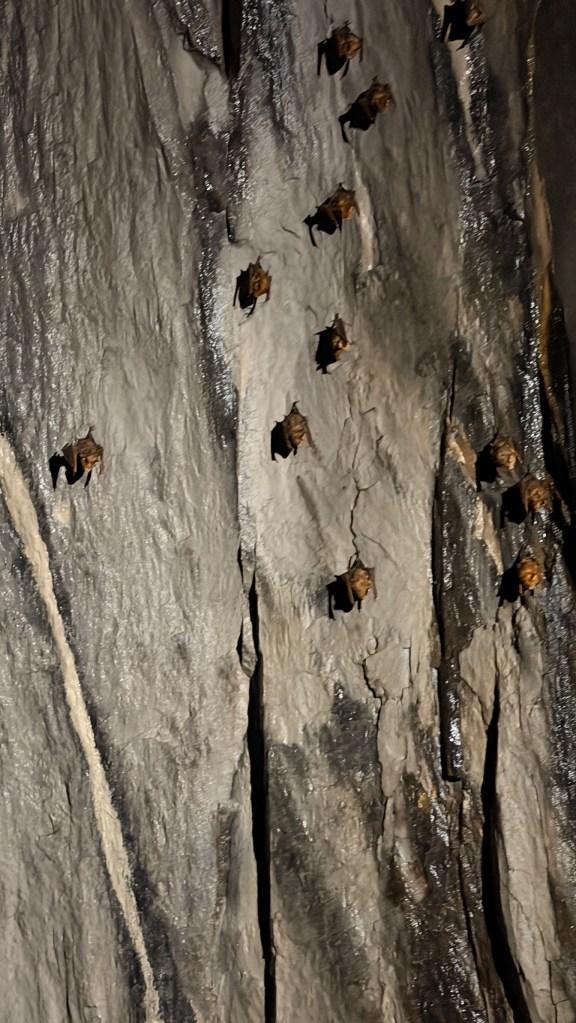
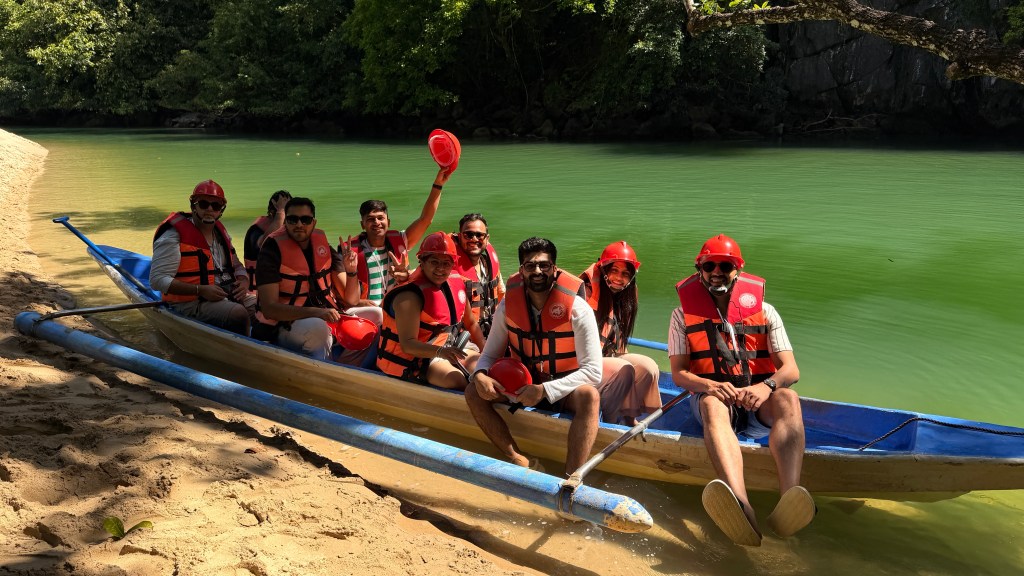
The entire in-and-out experience takes around 45–60 minutes and feels very calm and smooth, not at all claustrophobic. There is a longer 4 km version of the tour which takes around three hours, but honestly, I felt the 1 km route was more than enough. The cave formations and experience would have just felt repetitive beyond a point. When we came out, all of us were so relaxed we were almost sleepy — that kind of gentle, meditative experience. We clicked a few photos near the beach and then took the same boat back to the main area. But I don’t think the experience deserves to be mentioned in the 7 wonders of nature. It felt like a pretty basic experience. It was good but not worth visiting Puerto Princesa especially for this.
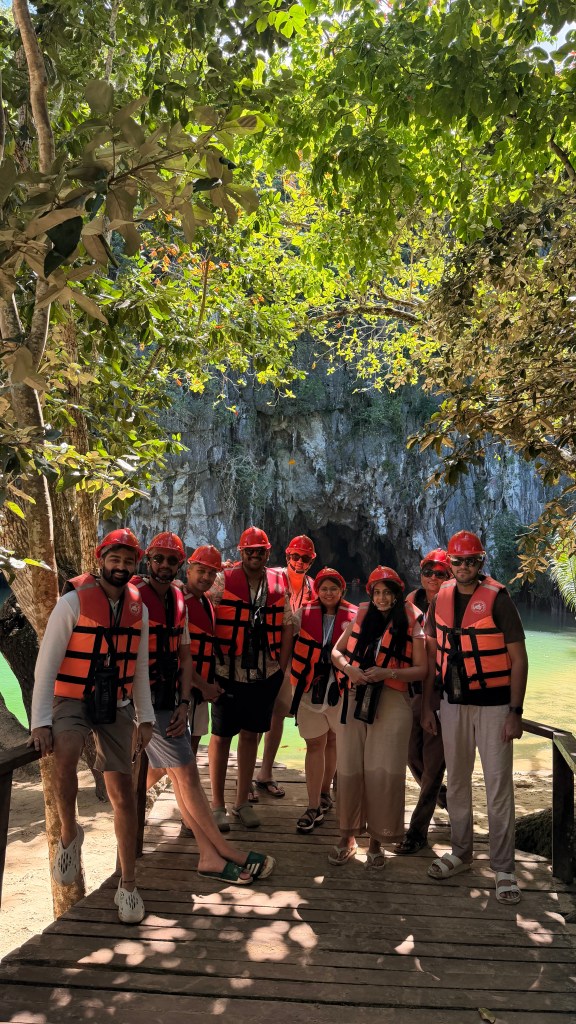
Lunch was included in our tour cost, like most tours in the Philippines. You don’t choose your own restaurant; the tour partner has a tie-up with a local buffet place. So we were taken to a nearby restaurant that had an unlimited buffet spread. As with almost everywhere in the Philippines, about 90% of the dishes were non-vegetarian — lots of chicken, pork, and fish curries, plus rice, some cut fruits, and usually one basic potato or vegetable-based curry. The flavours and smell are quite different from Indian food, and some vegetarians in our group really struggled to eat anything beyond fruits. You’ll generally find a few juice and smoothie counters around, so that’s another backup if the buffet doesn’t work for you.
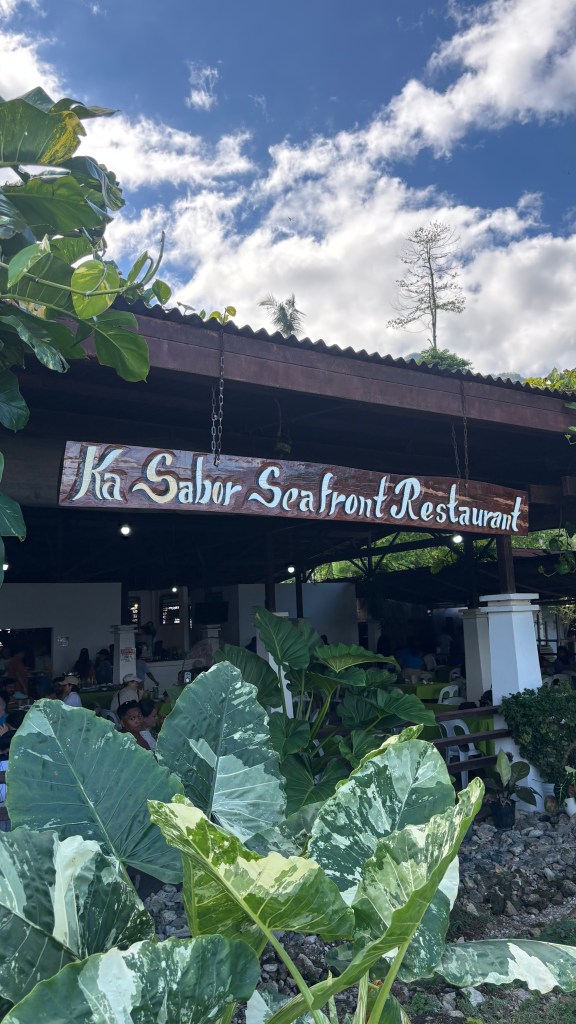
The best part of this particular booking was that we didn’t have to go back to Puerto Princesa city. From the Underground River area itself, we directly continued our five-hour road journey to El Nido. We stopped midway for a short snack and a washroom break. The roads are well-maintained throughout, but it’s a long, tiring drive, so it helps to have music system in the car, like we did.
We reached El Nido by evening and checked into Diwatu Villas, about 2 km away from the main beach. We had picked a villa-style property instead of a regular hotel because we wanted a common living space to hang out together. Hotels usually just give you individual rooms and maybe a small lobby, which doesn’t work for a big group. After a quick freshen-up, we took tuk-tuks to the beach area for dinner. Cafes in El Nido are right at the beach. The waves often crash at cafe walls. It’s a vibe.
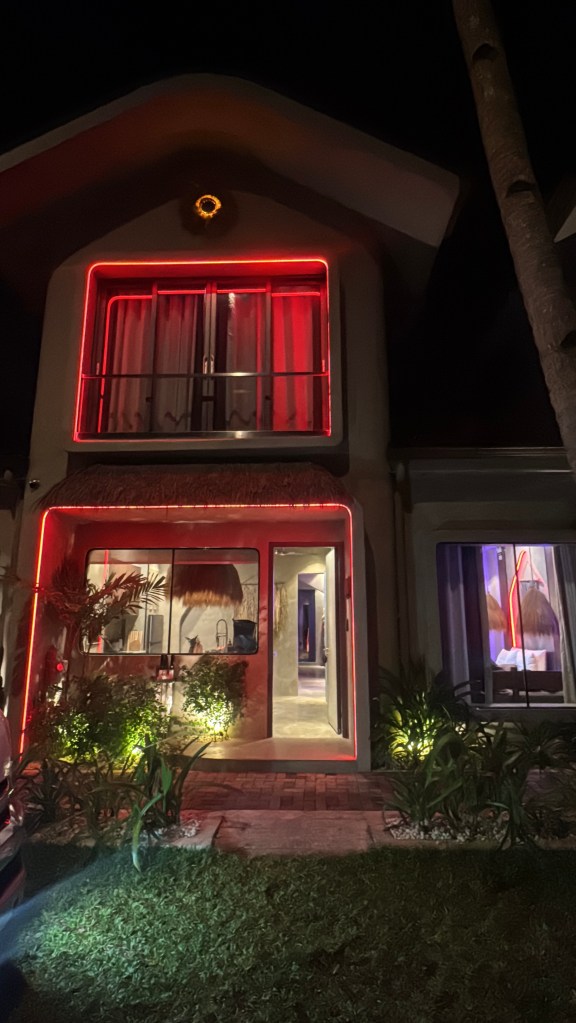
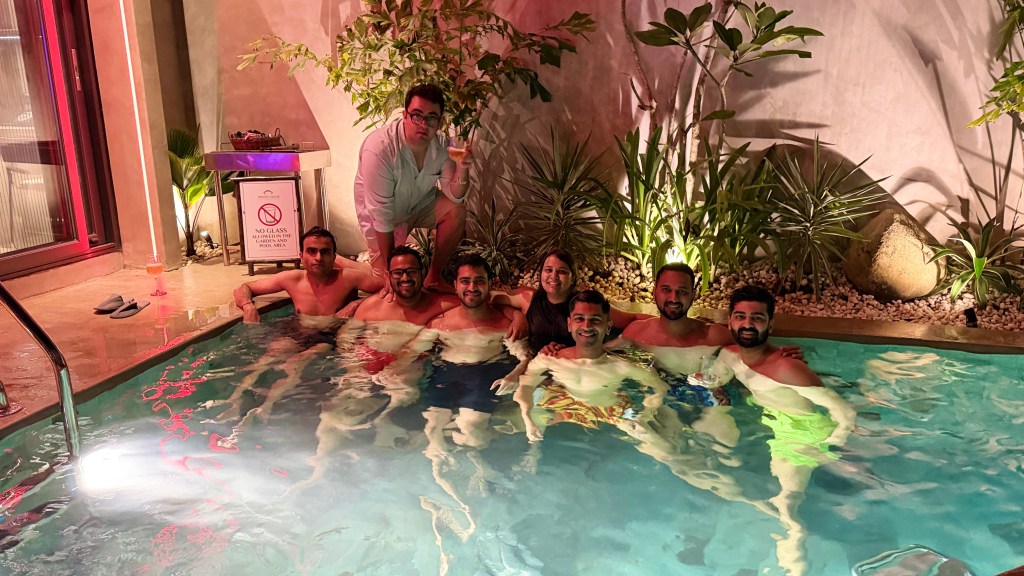
Somewhere between ordering and waiting for our food, a few of us sneaked out to arrange two-wheelers for the next few days. Rentals usually offer different scooter options based cc, and as far as I remember, we paid around ₹800 per day per vehicle, plus fuel (priced similar to India). We got scooters with two helmets each so we could double-seat. After dinner, the early start and long travel caught up with us. We rode back to the villa, parked our scooters, and crashed — ready for our first proper El Nido island-hopping day next.
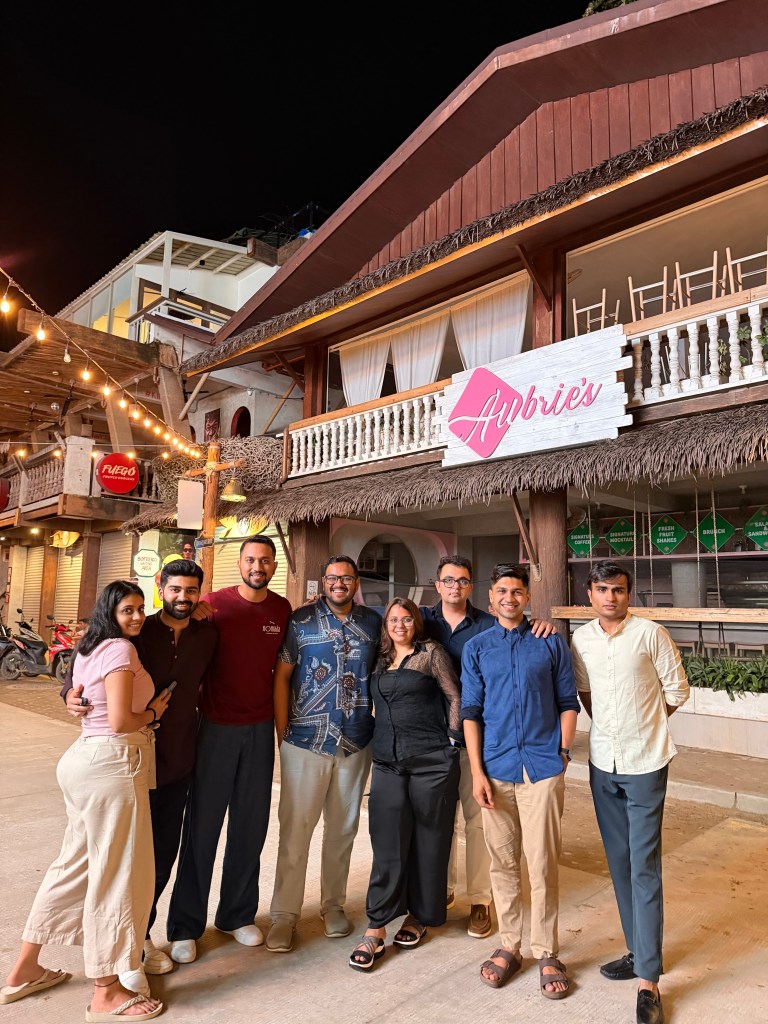
On a scale from -5 to +5, I will rate the Underground River Tour +2, transfer to El Nido +1.5, Diwatu Villas +4, and riding two wheelers in El Nido +3.
Day 3 – 22nd Dec, Monday- Island Hopping in El Nido (Tour C)
El Nido has a very structured island-hopping system: there are 4 standard group tours — A, B, C, and D — each covering a different cluster of lagoons, reefs, and beaches around the bay. In total, the area has around 20–25 “spots,” and these are divided among the four tours. After a lot of online research, we chose Tour C, which is often hyped as the “best overall mix” of lagoons, snorkelling, and beaches. We booked everything in advance with “El Nido Paradise”, though one can book these even after reaching El Nido. There must be like a 100 tour providers, everyone quoting the same price and the same experience.
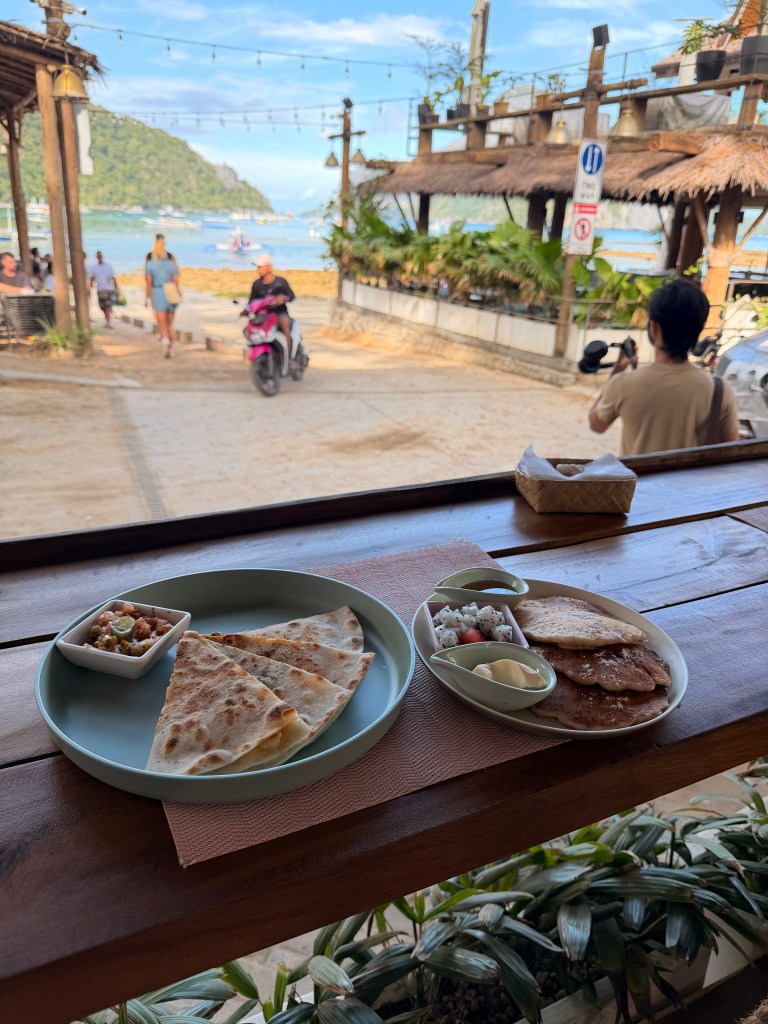
Because we were a big group, our “group tour” effectively became a private tour, which meant we weren’t under pressure to report sharply at 9 am like other groups. We had a relaxed breakfast, rode our scooters to the El Nido Paradise office around 10–10:30 am, and the crew was ready and waiting for us. Each boat comes with 4–6 staff members — a captain, assistants, and guides who get into the water with you for snorkelling and safety. Since bigger boats can’t come right up to the main El Nido beach, they stay anchored a bit away, and you’re ferried to them in a small kayak.
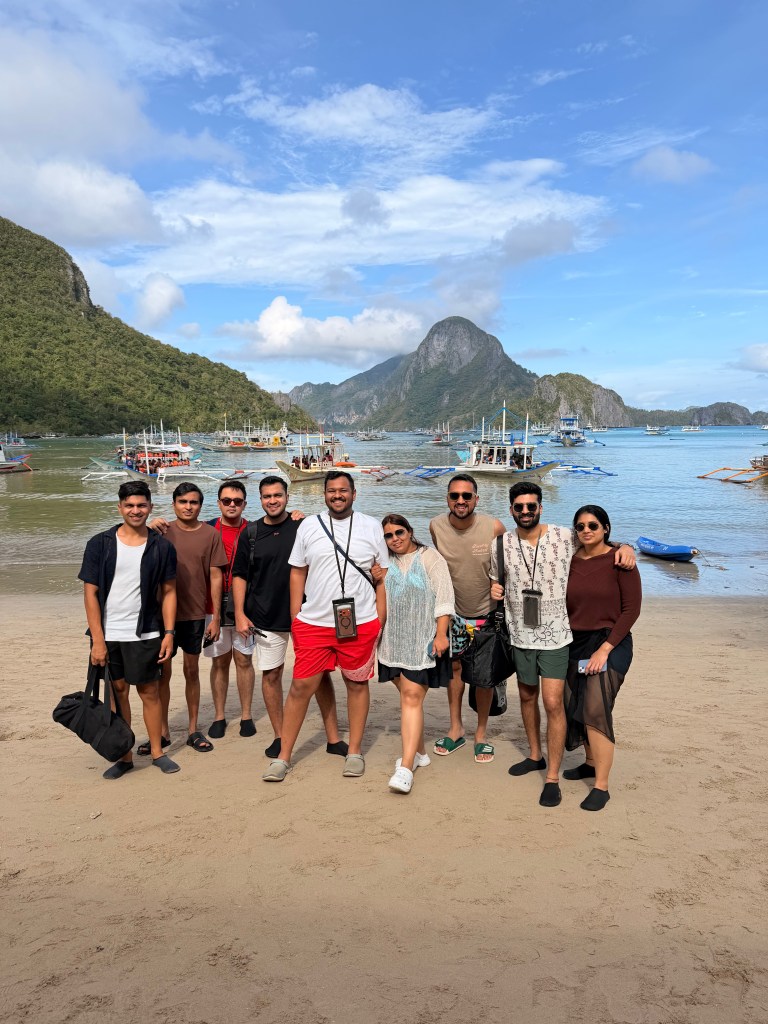
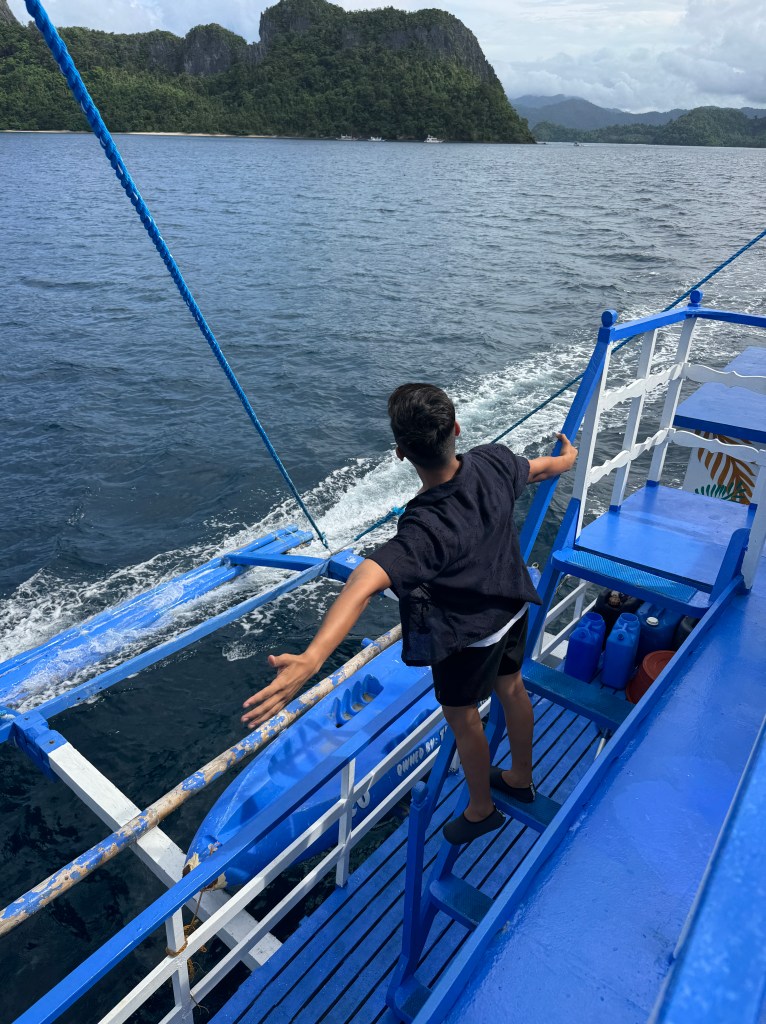
We carried the basics: phones, power banks, a Bluetooth speaker, towels, extra clothes, and a few snorkel masks from home. Honestly, you don’t need to bring gear — they provide life jackets and snorkel masks on board. You can also rent fins and GoPros easily if you want. Swimming is technically not required; you can stay on the boat or float with a life jacket. But if you can swim, your experience in the Philippines easily becomes twice as fun — you can free-dive a little, jump from the boat, and explore more freely in the water.
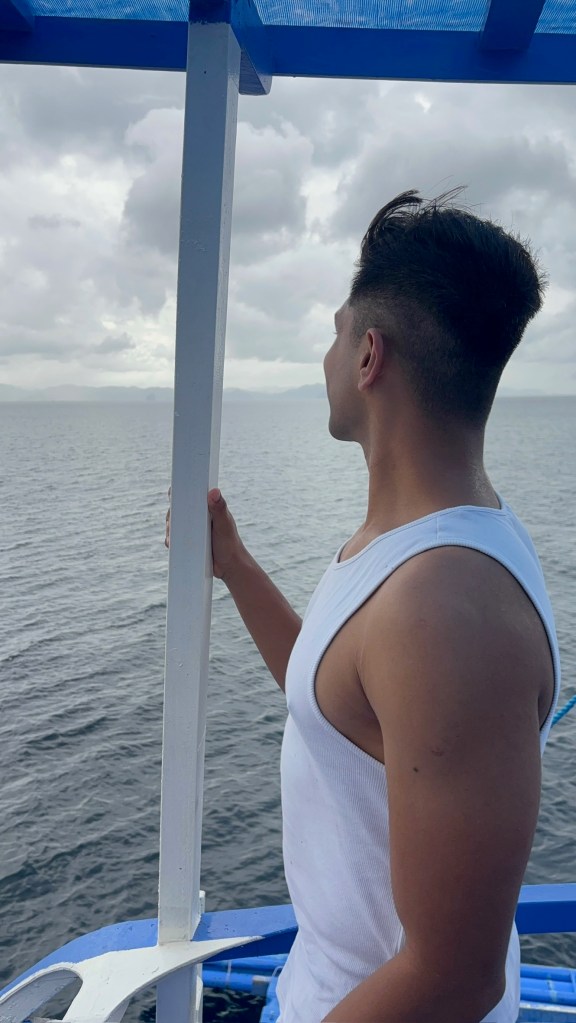
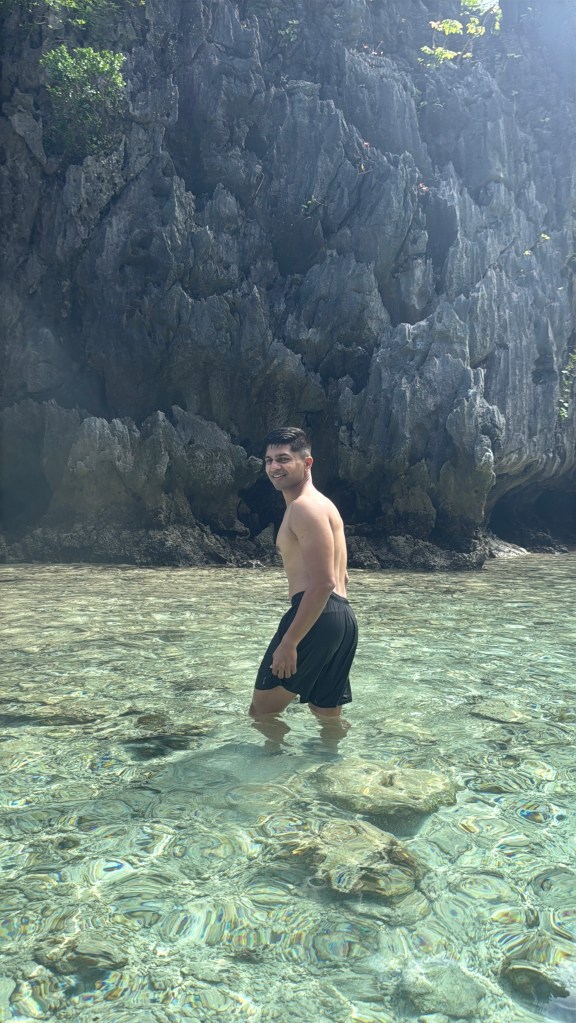
Since we’d started late, our guide asked us which spots we absolutely didn’t want to miss. Based on that, we agreed on a route and began with the Secret Lagoon. The lagoon is tucked behind limestone rocks; you walk through a narrow opening in the reef to enter a calm, enclosed pool. It was nice, but for me, not mind-blowing — especially if you’ve seen similar lagoons in Thailand or Vietnam. After that, we went to a snorkelling spot, then another lagoon, and finally a beach stop where we could relax and swim.
Lunch was pre-cooked earlier in the day by the crew and served on the boat itself. This time, they had managed to put together a fully vegetarian spread for us — two veggie curries, white rice, cut fruits, and drinking water. Some people in our group still skipped lunch because the look and smell of the food wasn’t what they’re used to as vegetarians, but it was quite decent if you’re not too picky.
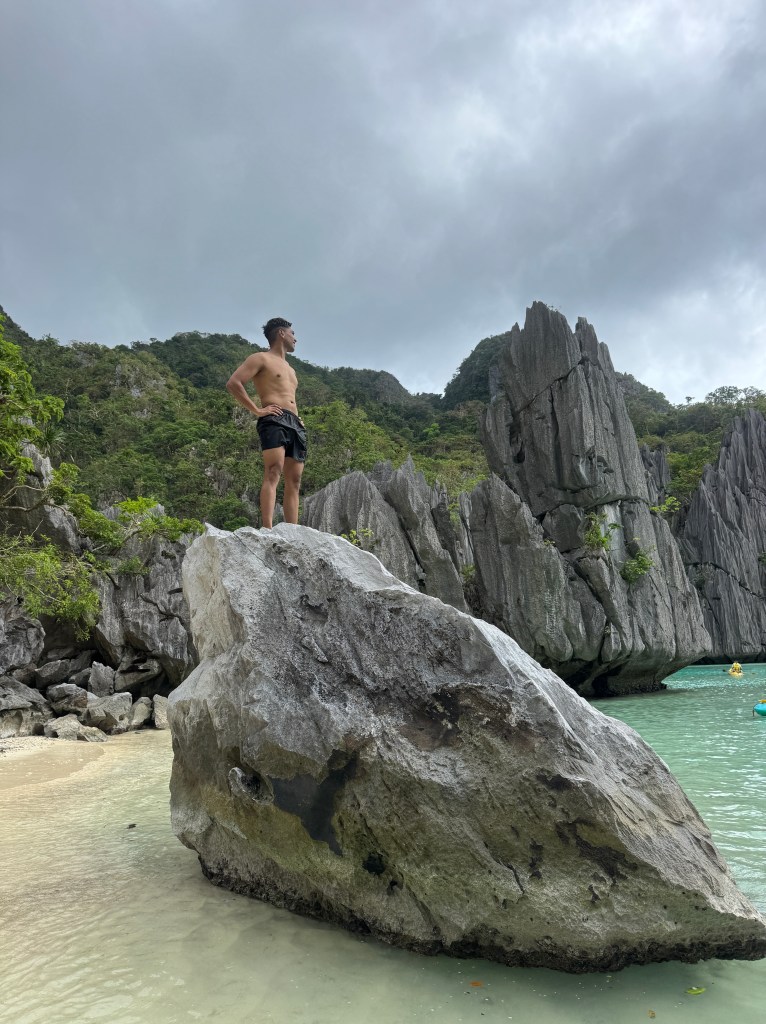
All island-hopping tours in El Nido wrap up by around 4 pm, because boats don’t operate in the dark. By late afternoon, tired from all the swimming and sun, we headed back, kayaked to shore, picked up our scooters, and rode back to our villas. To be honest, even though Tour C is widely rated as “the best,” I personally found it a bit underwhelming. The limestone landscapes are beautiful, but if you’ve already seen similar islands, it doesn’t feel that unique. The coral we saw at our stops was mostly dead or dull, and the fish life was quite sparse, so it wasn’t a standout snorkelling day either.
Back at Diwatu Villas, we showered, rested for a bit, grabbed some takeaway for dinner, and decided to stay in. The night turned into a super fun house evening — drinks, silly drinking games, strategy games, and social deduction games that went on for hours. It was one of those cozy group nights that make a trip memorable for reasons beyond just the “famous spots.” That’s how we wrapped up Day 3 in El Nido.
On a scale from -5 to +5, I will rate Tour C +1.
Day 4 – 23rd Dec, Tuesday- El Nido Tour A, Lagoon Magic & A Big Night Out
For Day 4 in El Nido, we’d booked Tour A, which is the most popular island-hopping tour in the area by number of travellers. The routine was now familiar: we rode our two-wheelers into town, grabbed a relaxed breakfast at one of the many cafés (El Nido is full of vegan and international options thanks to its global backpacker crowd), and reached the El Nido Paradise office around 10:30 am. From there, just like the previous day, we kayaked out to our bigger boat, where the same style of crew and setup was waiting for us.
Since we already knew how the system worked, we spent a few minutes with the boat leader discussing which spots we wanted to focus on. Tour A also revolves around lagoons, beaches, and snorkelling points, but the highlight for us was one huge lagoon where we decided to take kayaks (we had to pay extra for kayaks). This lagoon genuinely felt special — vast, enclosed by limestone cliffs, with deep blue-green water and quieter corners you can explore if you paddle away from the main crowd. Putting on life jackets is mandatory here. I haven’t really seen a lagoon like this elsewhere, and it instantly became the standout moment from our two days of island hopping in El Nido.
However, this day also came with some expensive lessons. Even though I had a waterproof pouch for my phone, I made the classic “it’ll be fine” mistake. Two of us were sharing a kayak in the lagoon, and at one point we decided to get into the water for better photos. The lagoon is quite deep, and in all the excitement, our kayak flipped. We were suddenly in the water, and my phone, which was briefly outside its pouch, dipped straight into the sea. Saltwater killed the display; back in India I ended up paying around ₹30,000 for a screen replacement, and even now some parts of the phone don’t work properly. I still regret that moment. The lagoon is beautiful and kayaking there is amazing, but the proper way is to stay strapped, be mindful, and only get into the water in shallower sections where you can stand.
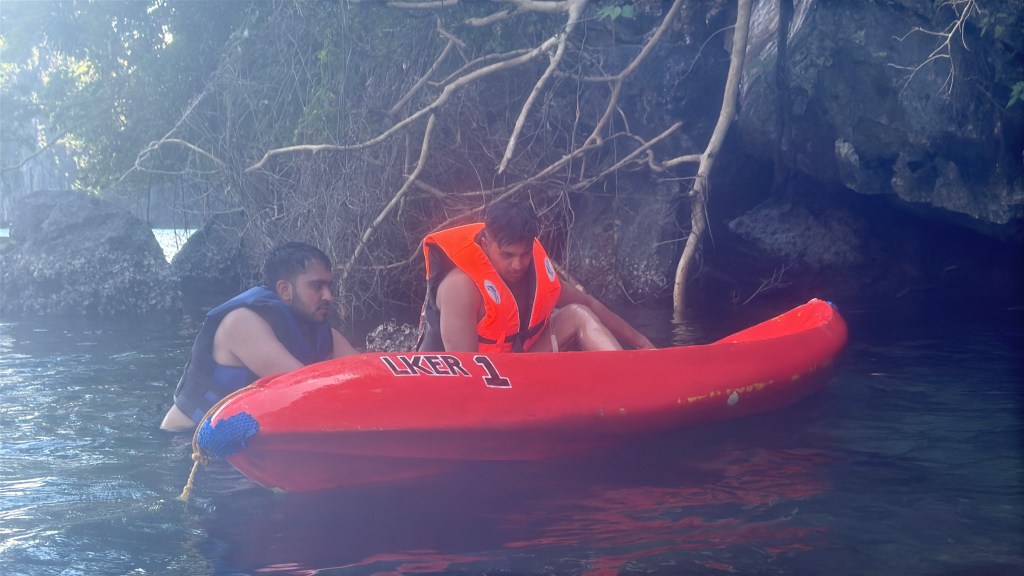
The second mishap was smaller but still annoying. At one of the snorkelling stops, I jumped off the boat for fun with the snorkel mask resting on my head. It slipped, sank in a deeper patch, and vanished. Since the equipment belongs to the tour operator, losing a mask meant paying a penalty of 1,500 pesos. So between the phone and the mask, this turned into a costly day. If you’re doing these tours, my strong advice: secure your gear properly, keep valuables in proper waterproof pouches at all times, and don’t underestimate how quickly stuff can disappear in deep water.
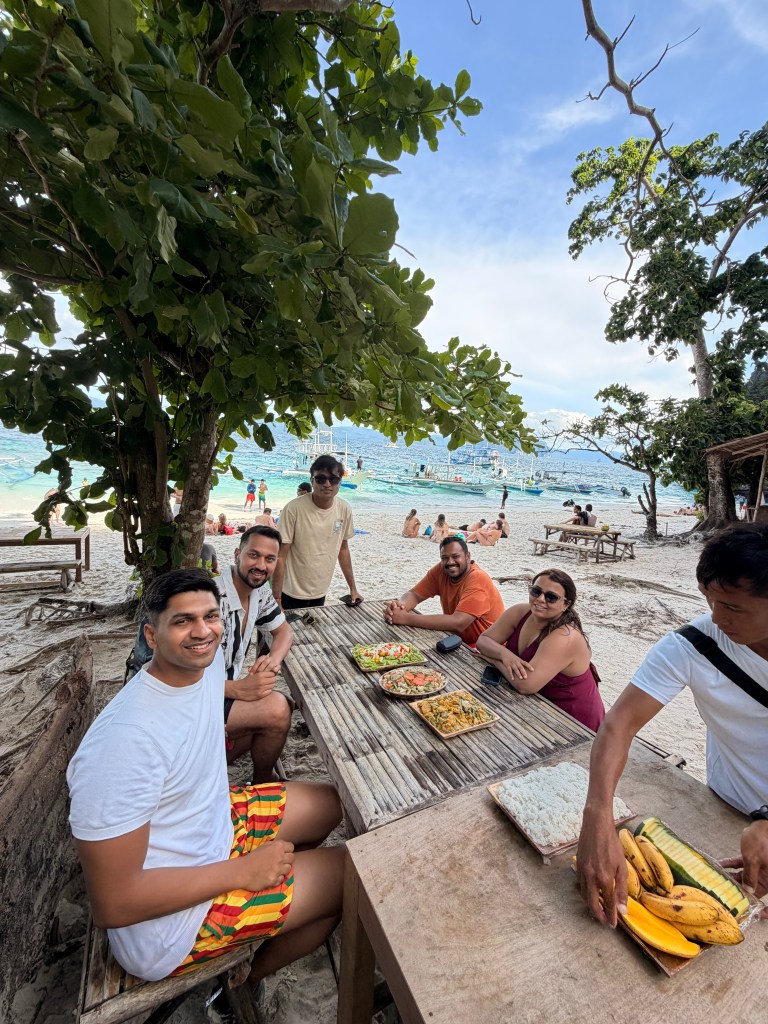
Lunch that day was served at a beach stop, and this setup felt nicer than the previous day. The beach itself was very clean, with basic shacks and rental tables. Nothing in the Philippines felt overpriced — table rentals were quite reasonable, around 100–120 pesos for large tables that easily fit 4–8 people. Lunch was again part of the tour: similar buffet-style food as the previous day, with rice, vegetable curries, and fruits, but with a slightly different veg curry this time. You can either bring your own snacks or buy drinks and extras from the beach shacks.
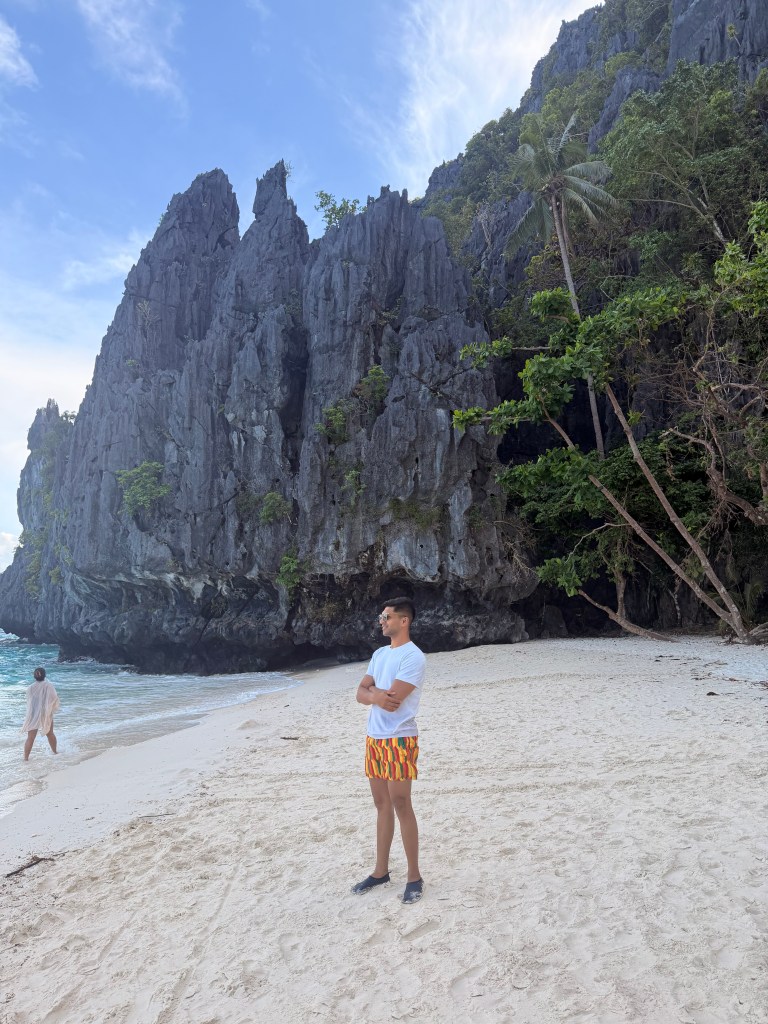
Like all tours, we were back in El Nido town by around 4 pm. We rode back to our villas, rested for a bit, and then got ready to properly explore El Nido town in the evening. This night was dedicated to café-hopping and bar-hopping. We wandered through the lanes, tried coffee at Grounded (a nice coffee bar), had a great vegan meal at Verde (highly recommended), and also checked out Happiness Café, another spot with good vegan options and a fun, social atmosphere. Over the night, we hopped between 4–5 places, drank quite a bit, and got nicely tipsy — in the best way.
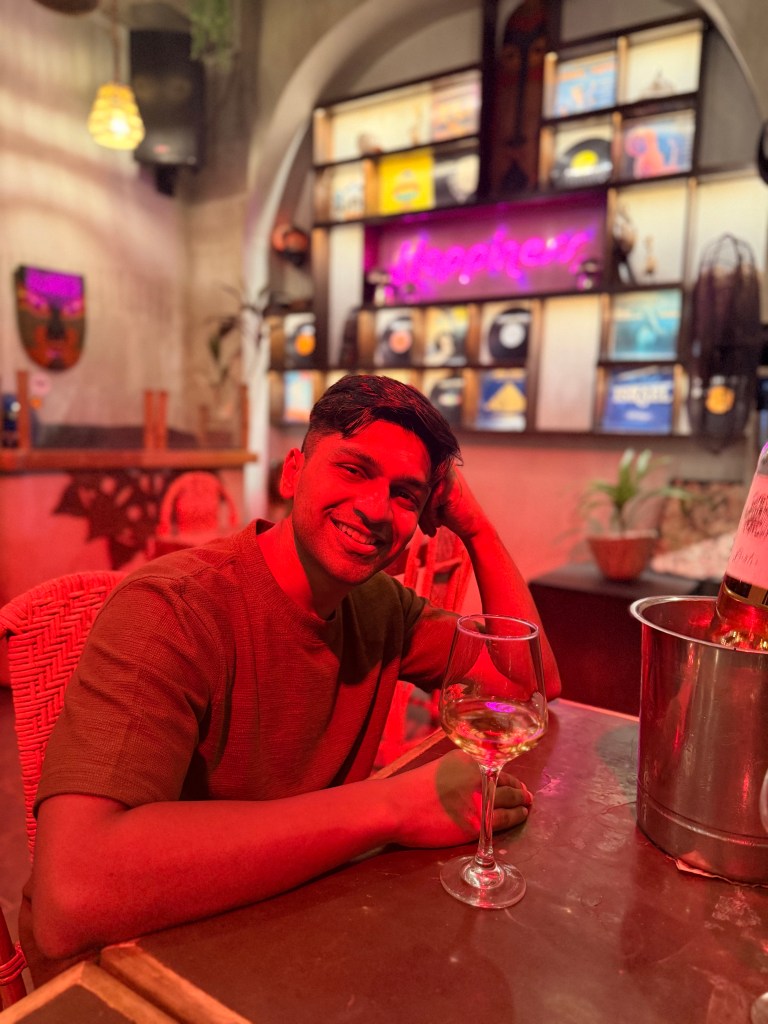
It turned into one of those easy, happy evenings where you just walk, eat, drink, and chat with your group and random travellers. Late at night, we rode our scooters back to the villa and crashed. That wrapped up Day 4: a mix of a stunning lagoon, a couple of painful mistakes, and a really fun night out in El Nido.
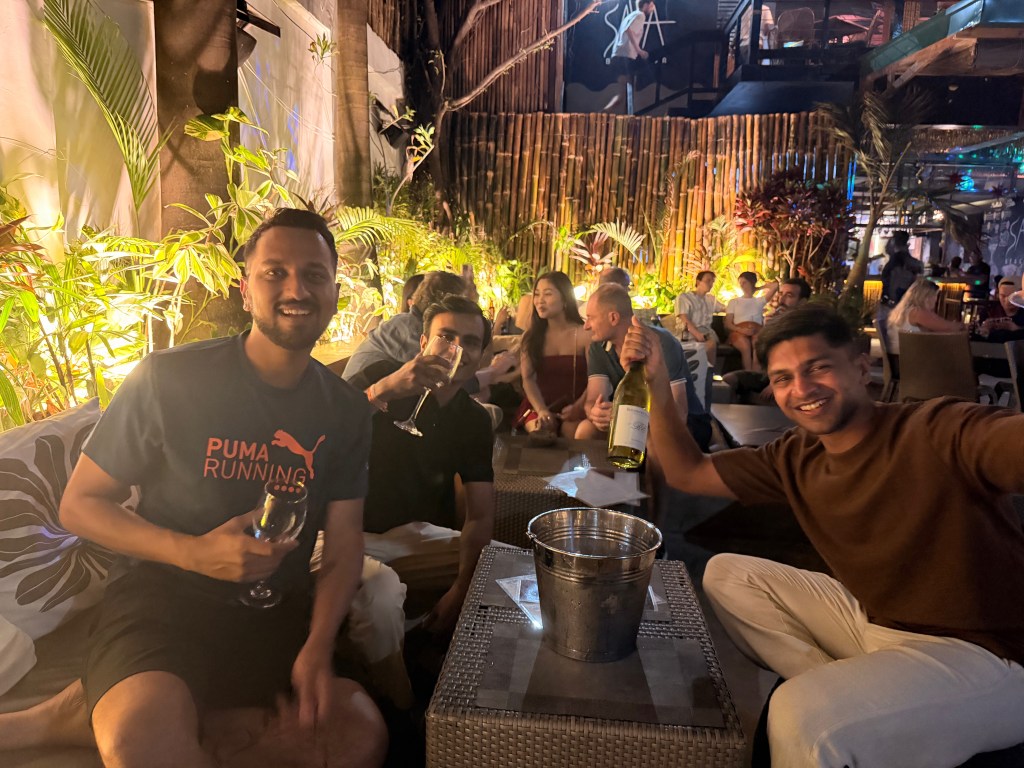
On a scale from -5 to +5, I will rate Tour A +3, Grounded +2, Verde +3.5, Happiness Cafe +3, and the El Nido town vibe a +3.5.
Day 5- 24th Dec, Wednesday – The Rough Sea Crossing from El Nido to Coron
Day 5 was our big transit day: moving from El Nido to Coron, both in the Palawan region (with Puerto Princesa as the capital). El Nido and Coron do have airports, but they’re tiny and not well-connected. There is a direct El Nido–Coron flight, but during peak season the prices had shot up to around ₹25,000 one way per person, and most flights were sold out anyway. For last-minute planners, they almost don’t exist. The practical option for us was the ferry, which takes about five hours and costs roughly ₹4,000–₹5,000 per person.
The ferry usually departs El Nido around noon and reaches Coron in the evening, so we took it slow that morning: woke up late, had breakfast, packed our bags, and headed to the port. We’d pre-booked our tickets on 12Go, my go-to website for ferry bookings across Asia. Once you board, your luggage is handled by the crew; no one weighs bags or counts how many items you have, which is a relief when you’re travelling heavy. But that’s where the comfort ends.
As the boat started moving, it became clear this wasn’t going to be a pleasant ride. There were maybe 200 people on board, and it felt like at least 150 were getting seasick. Staff kept running around handing out vomit bags. A lot of passengers escaped to the upper deck to sit in the open air, hoping the wind would help. Based on that experience, here’s what I’d advise for any long boat journey:
Sit facing the direction of the boat’s movement. Don’t read, scroll, or talk too much — just close your eyes and keep your head still. If possible, sit where you get fresh air. Take anti-nausea medication in advance if you’re prone to motion sickness.
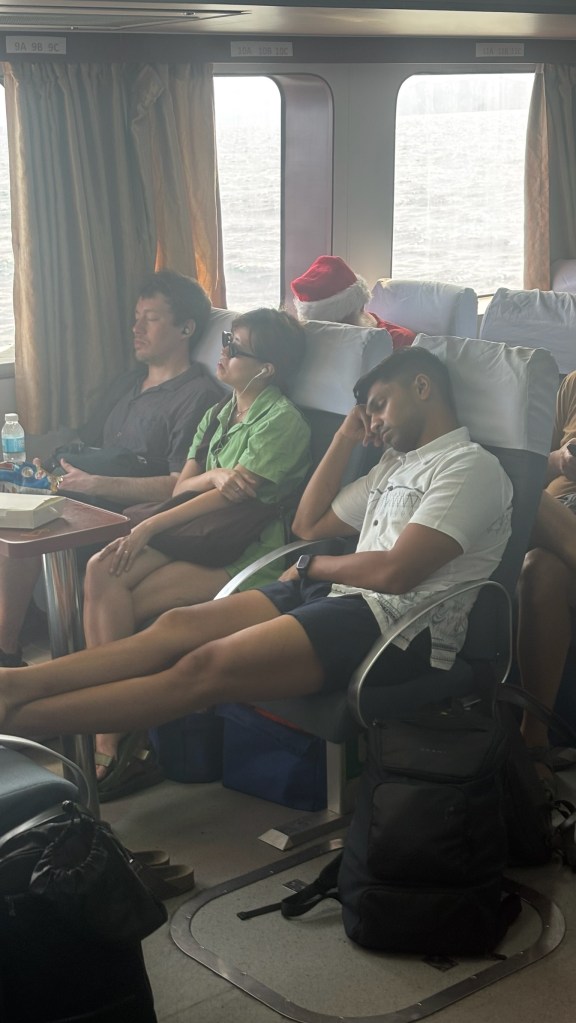
Even with all that, one of our friends threw up throughout the journey. Medication didn’t help, sitting outside didn’t help — he eventually just lay down on the upper deck for the full five hours, completely wiped out. Personally, I spent most of the ride with my eyes shut, not wanting to talk or even move. It was honestly a terrible journey, and it made me decide that I wouldn’t recommend boats as a means of transit for anything over an hour unless you absolutely have to. Large multi-day cruises are fine, but these point-to-point ferries can be brutal even without rough seas.
After five long hours, we finally reached Coron. As you exit the port, there’s a small harbour fee you need to pay — around 200 pesos per person. From there, we had two choices for accommodation: stay near the port in a simpler place, or go about 20 minutes out to one of the nicer resorts like Coron Westown Resort or similar. Tuk-tuks are frequent and cost about 70 pesos per person per way, so commuting wasn’t a big issue. We chose comfort and checked into Coron Westown Resort.
First impressions: El Nido town vs Coron town are very different. El Nido has that buzzy backpacker vibe with a beach right at the town centre, waves crashing, lots of cafés and bars, and a generally lively atmosphere. Coron town, on the other hand, has no beach at the centre. It feels quieter, more subdued, with fewer vegetarian options and less of that “evening stroll” charm. You can still find restaurants and some veg food, but it’s clearly a level duller than El Nido on the vibe scale.
We reached Westown Resort tired and a bit battered from the ferry. After checking into our rooms, we headed out for a nice dinner at Gavin’s (one of the better options in town), ate well, and then returned to the hotel to hang out together in one of the rooms. No late-night adventures this day — we needed the rest after that five-hour rollercoaster on water.
On a scale from -5 to +5, I will rate the ferry between El Nido and Coron -5, Coron town +0, Gavin’s +1.5.
Day 6 – 25th Dec, Thursday- Coron “Ultimate Islands” Tour
For our first full day in Coron, we booked the Ultimate Islands Tour — basically a greatest-hits combo of the usual Coron routes, bundling the best lagoons, snorkelling spots, and lakes into one day. Like El Nido, Coron’s island hopping is usually done as fixed Tours, but because our group had grown even bigger here, our “shared tour” effectively became a private boat again.
The scenery around Coron looks similar to El Nido at first glance — dramatic limestone cliffs, emerald water, small beaches — but the experiences felt quite different. One key difference: kayak rentals are much more expensive in Coron. In El Nido, kayaks are stationed at specific lagoons and rented out repeatedly all day, so the cost per person stays low. In Coron, you usually rent kayaks from the port itself and keep them for the entire day, so each kayak vendor gets only one client per day and charges accordingly.
We still went for it and hired a mix of regular kayaks and those transparent “glass-bottom” ones. Honestly, the transparent ones are more of a gimmick — they look cool in photos but are slightly uncomfortable because the paddle keeps hitting the sides, whereas regular kayaks are shaped better and easier to row. If you want practicality over aesthetics, go for the normal ones.
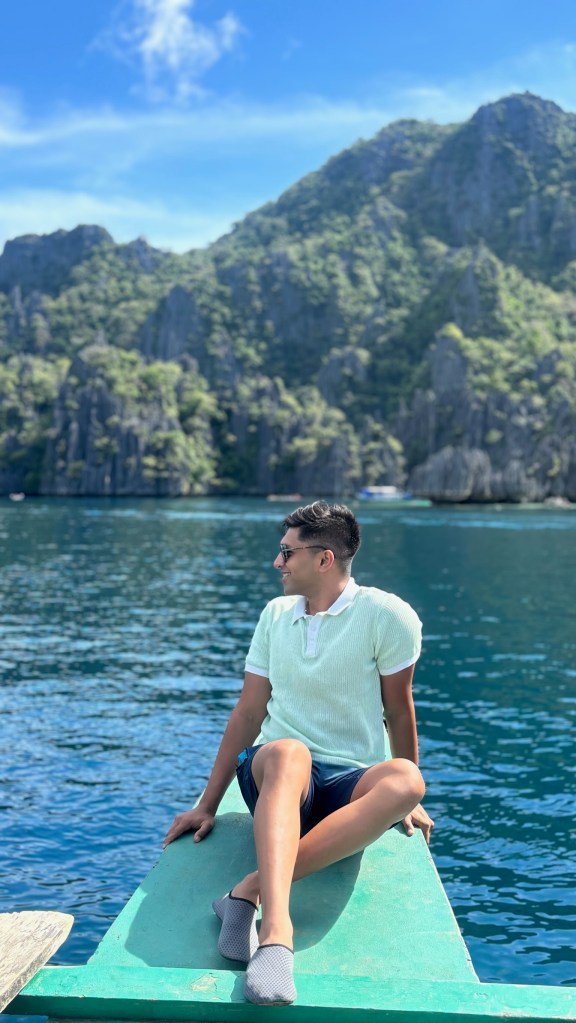
We talked to our boat crew about which spots we wanted to prioritise and started the day at the Twin Lagoon, one of Coron’s signature sights with teal water surrounded by towering limestone walls. With our kayaks, we could explore much deeper into the lagoon, away from the clusters of boats. We paddled around for a long time, swimming and just taking in the views.
From there, we moved on to a snorkelling spot, and this is where Coron really overtook El Nido for me. The marine life here is significantly better — more fish, more colour, and reefs that still feel alive. Where El Nido’s coral had looked quite dull and dead, Coron gave us proper underwater scenes with schools of fish and vibrant patches of coral. We ended up snorkelling for a long time because it was easily 3x better than what we’d experienced in El Nido.
Lunch was again a buffet on a small island, similar in structure to El Nido but in a much prettier setting. Tables were set up right next to the shore under shade, and the whole place genuinely felt like a private resort beach. Same basic format — rice, dips, a veg curry or two, fruits — but the location made it feel like a far more premium experience.
After lunch, we headed to one of Coron’s famous shipwrecks — in our case, the Skeleton / Skull Wreck, a shallow WWII Japanese wreck that you can see just a few metres below the surface. To get close, you really need to free-dive down. The guide ties a rope to the wreck so you can pull yourself down while holding your breath, then come back up along the same rope. Three of us in the group were comfortable enough in the water to try this, including me. It was an amazing feeling: equalising your ears as the pressure changes, watching the wreck slowly appear, and then floating above this ghostly structure from history. We kept our life jackets on when moving between spots because of the overall exertion, but took them off when actually diving down. The only downer: one of our life jackets got lost in the chaos here, and we had to pay another 1,000 pesos as a penalty.
Our last stop — and my absolute highlight of Coron — was Barracuda Lake. Imagine a lake in the middle of the sea, enclosed by sheer limestone cliffs, with water that feels almost fresh instead of salty. The lake is actually a mix of fresh and saltwater (brackish) fed by rainwater that seeps through the surrounding limestone, creating unique layers of temperature and salinity. The result is surreal: you don’t float as easily as in the sea, the water feels different, and it’s also a popular diving spot where you can go down to 10–15 metres and experience crazy thermoclines.
Even just swimming and free-diving a bit is incredible here. The backdrop of sharp grey cliffs plunging straight into impossibly clear water makes every photo and video look unreal. Some of us in the group managed to free-dive to around 8 metres, and the combination of depth, clarity, and the rocky underwater walls made it one of the most memorable swims of the trip. There’s another famous spot, Kayangan Lake, which we skipped due to time, but we were fully satisfied with the four places we did: Twin Lagoon, snorkelling reef, shipwreck, and Barracuda Lake.
Overall, if El Nido and Coron are in the same “genre” of destinations, I’d say Coron wins easily on water and nature experiences — especially for snorkelling, wrecks, and unique lakes. We returned to Coron town by late afternoon, showered, and rested at the resort for a bit.
This day was also Christmas Day (25th December). Since the Philippines is a largely Catholic country, we had initially wondered if tours would even operate, but they did. In the evening, despite it being Christmas, most restaurants and shops in Coron were open, similar to how many places in India stay open on Diwali.
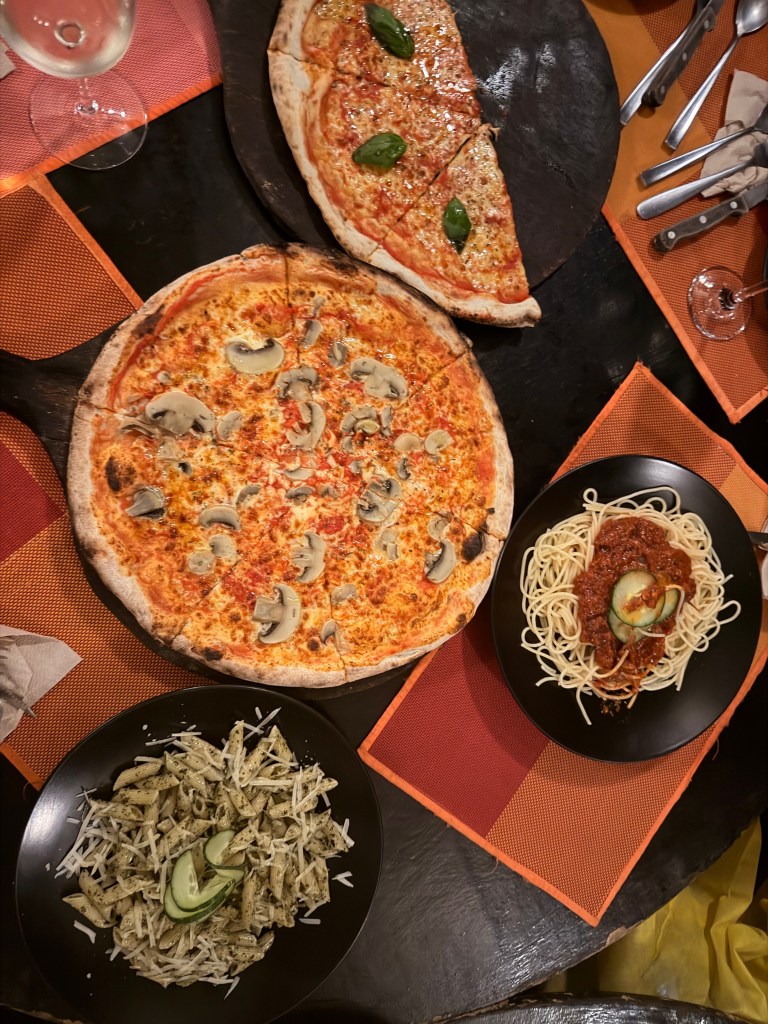
To mark Christmas, our group decided on a dress code — white and red outfits — and went out for dinner at Trattoria Altrove, a wine-pizza place (a popular Italian-style restaurant in Coron). We ordered a mix of pizzas, pastas, and a lot of wine. The food was excellent, and after dinner, since Coron doesn’t really have a buzzing walking street or nightlife stretch, we headed back to our resort.
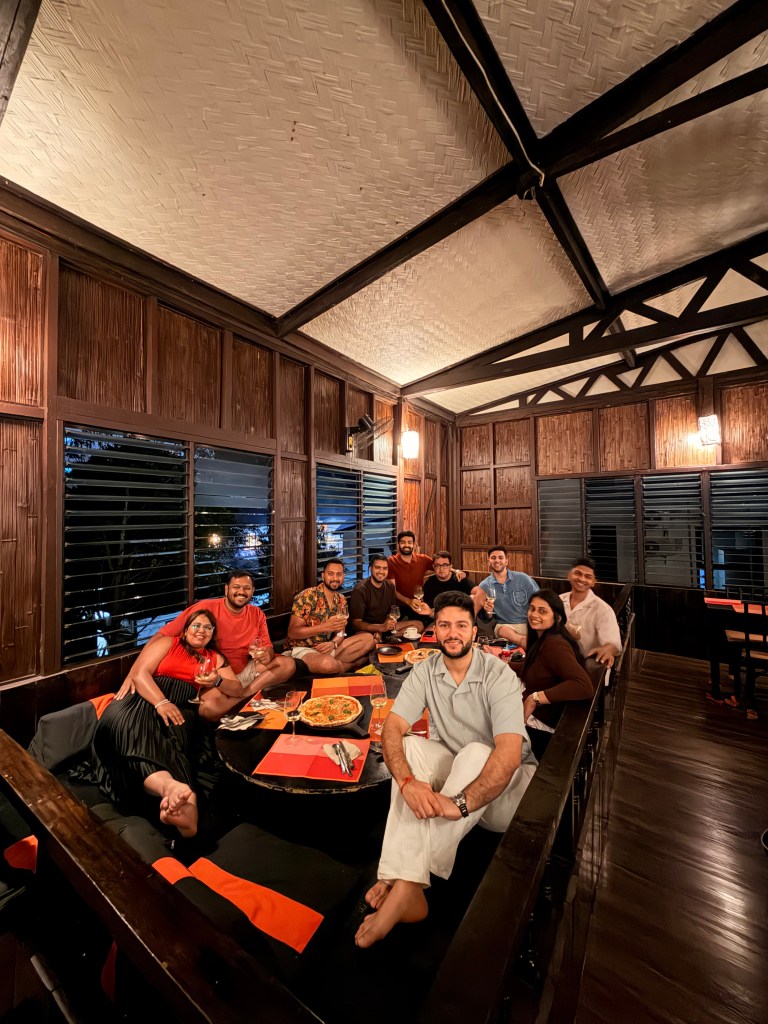
The night turned into another long game night — social deduction games, card games, lots of laughter and arguments, the works. It was one of those travel evenings that you remember just as fondly as the big “sightseeing days.” After hours of playing and talking, we finally crashed, with Coron firmly cemented as a favourite for its water experiences.
On a scale from -5 to +5, I will rate Ultimate Coron Islands’ Tour +4 and the Trattoria Altrove +3.
Day 7 – 26th Dec, Friday- A Slow Day in Coron & Flight to Cebu
After 4 heavy island days across El Nido & Coron, plus a late Christmas games night, we deliberately kept 26th December plan-free. Coron has a popular viewpoint hike and the Maquinit hot springs, but we weren’t sure our bodies (or brains) wanted more water activity, so we left the day open. Everyone woke up at their own pace, and by late morning, we headed into Coron town in smaller groups for breakfast. I ended up having some decent Thai food, followed by a pretty bad massage — nothing I’d recommend strongly.
Our flight to Cebu was at 6:30 pm, and Coron airport is about 20–30 minutes from Coron town. The resort helped us arrange a shuttle, so the airport transfer was painless. What wasn’t painless was the baggage experience. Filipino domestic check-in counters are extremely strict about weight. If your allowance is 20 kg, they won’t allow even 20.1. As a group of about ten, we had a combined limit of 200 kg and were over by just 6 kg total — roughly 600 grams per person — but still got pulled up. This isn’t just a Coron thing; we saw the same attitude at Manila domestic, Cebu, and later Boracay as well.
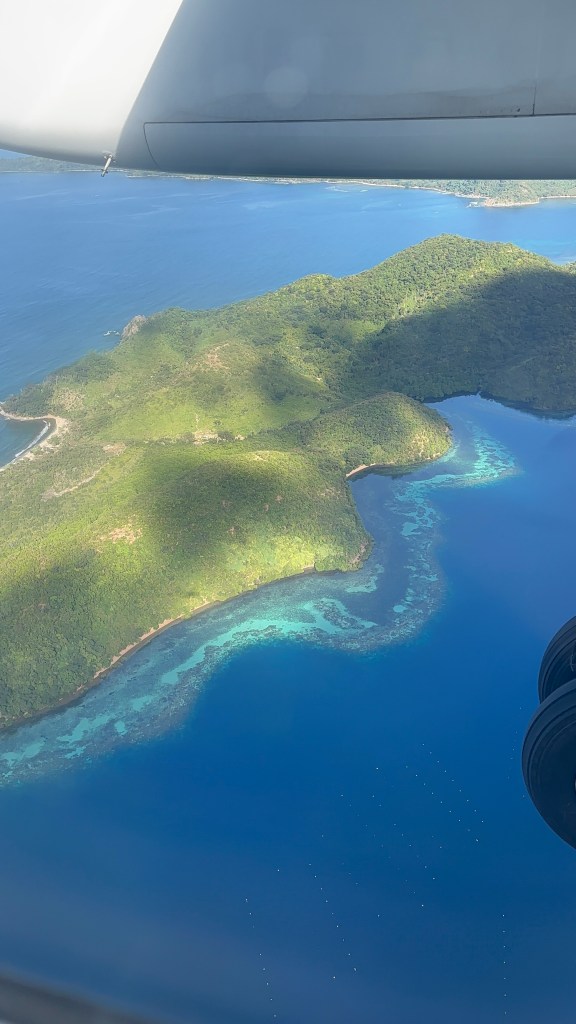
Another important thing: most Philippines domestic airlines do not include checked baggage by default, unlike many Indian flights. You usually have to add and pay for check-in luggage separately while booking. Only Philippine Airlines, the national carrier, includes some checked baggage as standard, and even that is usually 10 kg, not 15 kg. So if you’re travelling with big bags, make sure you pre-book enough baggage allowance and stay under it. However, no one weighed hand bags, so can go heavy there.
We landed in Cebu at night, and because it was still the Christmas–New Year week plus a weekend, many locals were still on holiday. That meant a shortage of cabs. The airport is on Macatan Island, while we were staying in Cebu City, across the bridge. Grab (their Uber equivalent) wasn’t showing enough cars, and wait times were long. Eventually, we gave up on app rides and booked two large private vans to take the entire group to our stay.
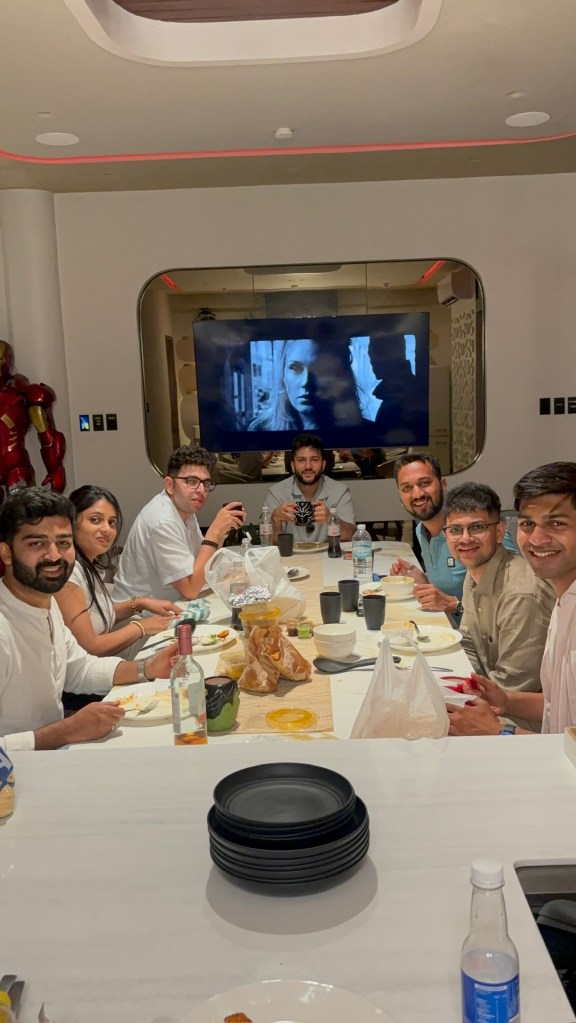
Our accommodation in Cebu turned out to be the coolest stay of the trip — a huge Marvel-themed mansion. Every room was based on a different superhero, spread across four floors, with tons of fun details. It genuinely felt like a massive, themed party house and was easily the best “pad” of our entire Philippines trip.
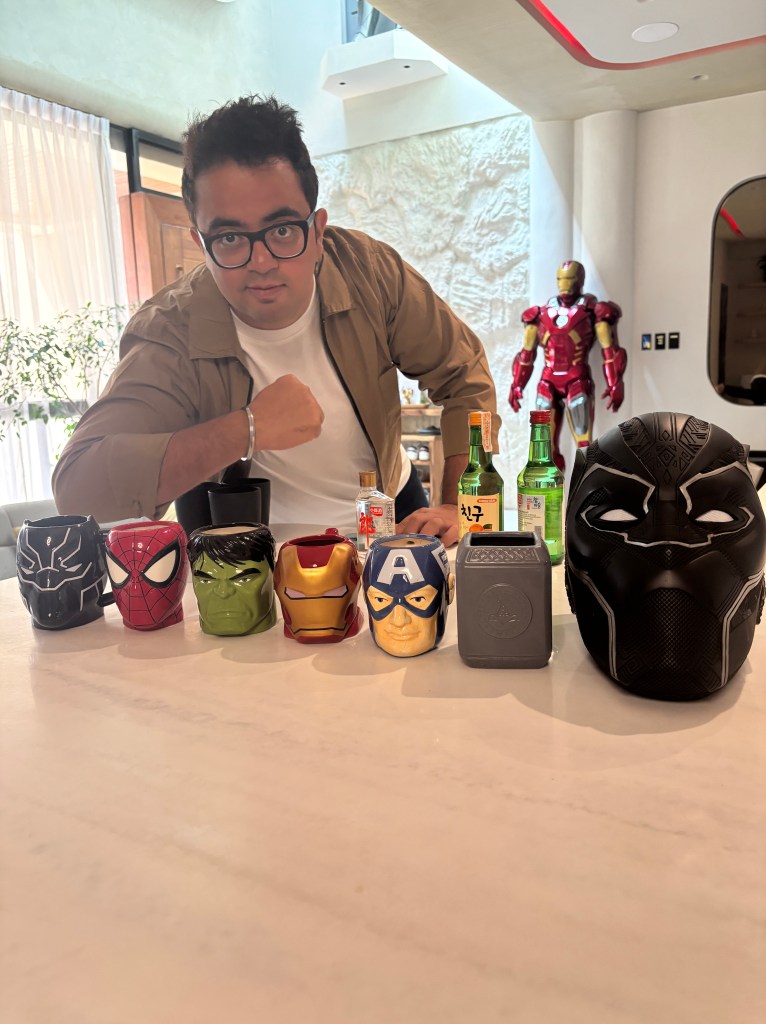
That first night, we just dropped our bags, freshened up, and stepped out for a simple dinner and drinks at Maya Mexicana. After that, it was straight back to our Marvel mansion to sleep — we had a brutally early start planned for the next morning.
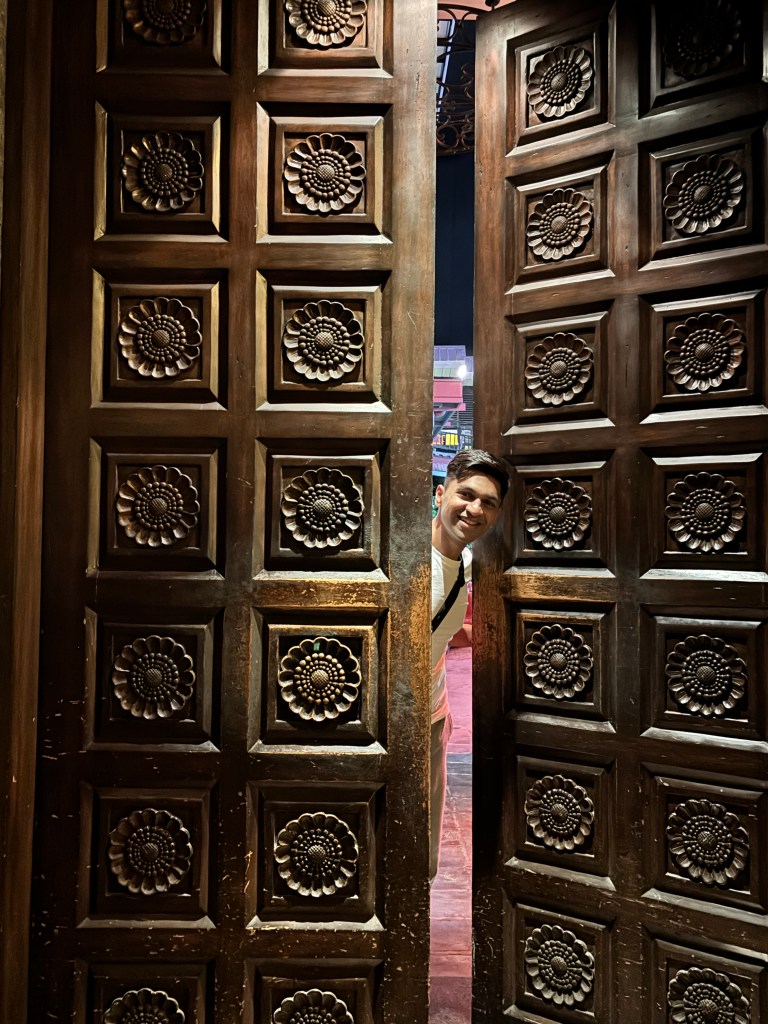
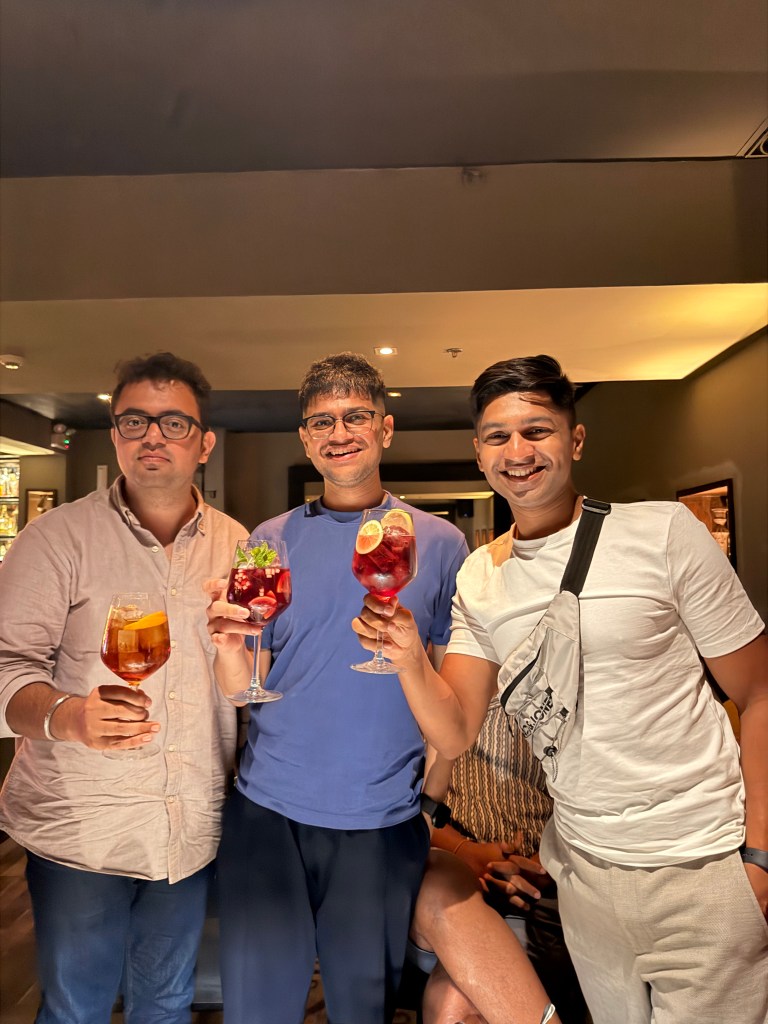
On a scale from -5 to +5, I will rate the foot massage a -2 and the Maya Mexicana a +1.
Day 8 – 27th Dec, Saturday- Sardine Run at Moalboal & Kawasan Canyoneering (My Best Day in the Philippines)
27th December was my favourite day of the entire trip — the kind of day that makes you feel, “Okay, this is why I travel.” We had a painfully early 4 am pickup from our Marvel mansion in Cebu City for a tour we’d pre-booked. None of us bothered with showers or getting ready properly; we just rolled out of bed, grabbed our stuff, and got into the van. It’s about a 2.5-hour drive to Moalboal, a small coastal town that feels nothing like a city — cute, laid-back, with a few cafés and enough vegetarian options, but full of dive shops and ocean energy.
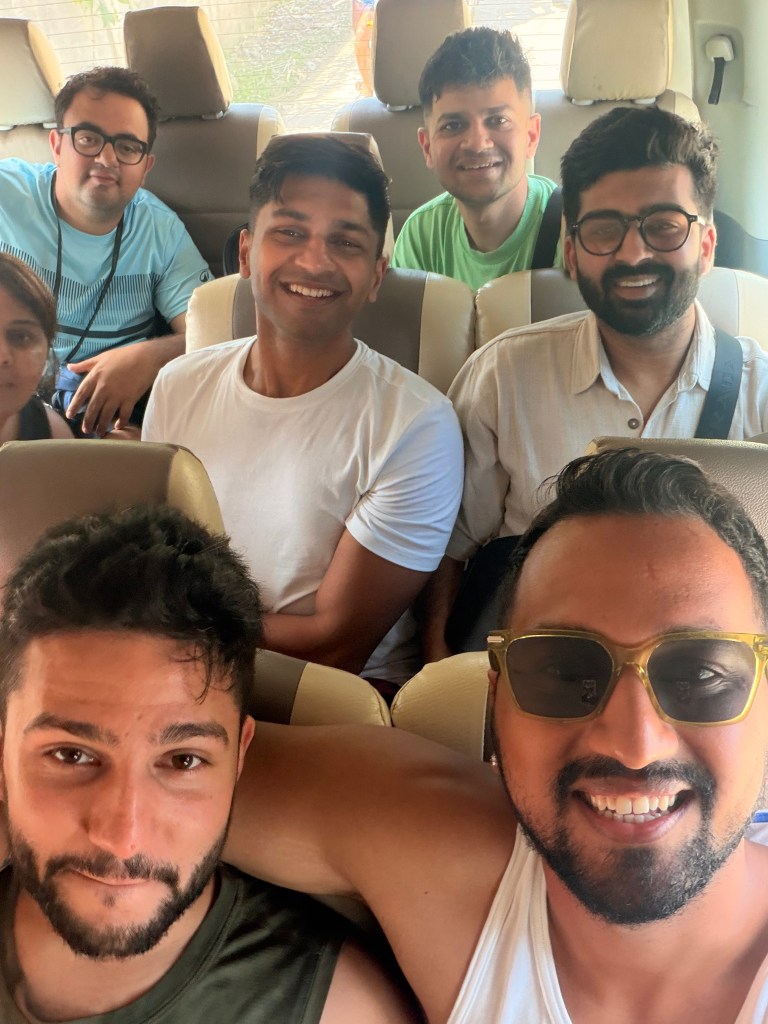
The first part of the tour started with a quick briefing on dos and don’ts in the water, and then we headed out to our first snorkelling stop, just off Pescador Island. The marine life here blew my mind — even better than Coron in my opinion. There were so many fish and colourful corals that it felt like swimming inside a live aquarium. From there, we went to the legendary sardine run and turtle reef zone.
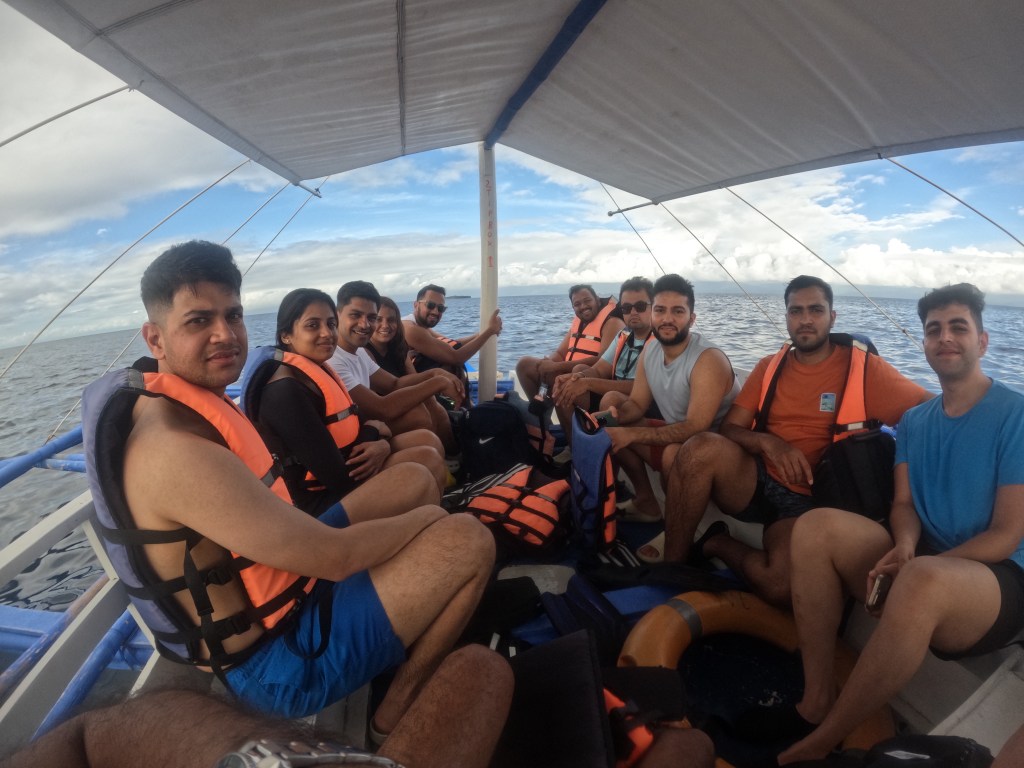
The Moalboal sardine run is unreal. Millions of sardines swim in dense, shifting formations just a few metres below the surface, and they’re surprisingly close to shore. You don’t need to know how to swim; with a life jacket and snorkel, you can just float and look down to see the entire spectacle happening 4–5 metres below you. For those of us who could free-dive, it was next-level. We kept diving down into the middle of the sardine schools, watching them ripple and part around us like liquid silver. There are also turtles around the reef; some people in our group spotted them, though I personally wasn’t that lucky. We spent a good 45–60 minutes here, taking endless GoPro videos and just trying to process how insane it all looked.
After this, we went back into Moalboal town for brunch at a veg/vegan-friendly café (I’ve forgotten the exact name, but it had lots of plant-based options). Once we’d refuelled, we drove about an hour to Badian, where the famous Kawasan Falls canyoneering starts. This, for me, was the single best experience of my life so far. On arrival, everyone signs a waiver, puts on helmets and compulsory life jackets, and gets ready to be in the water for a few hours.
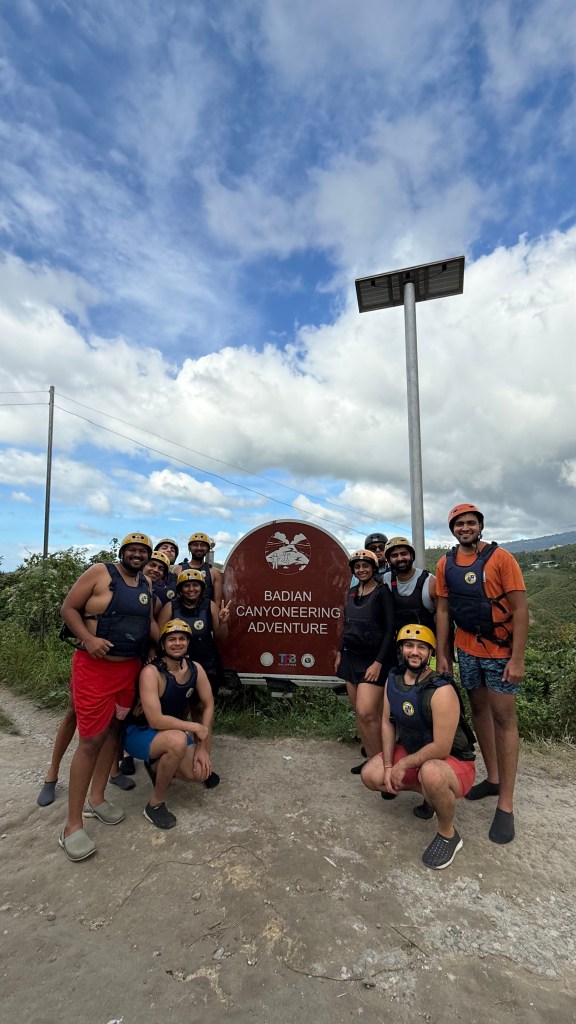
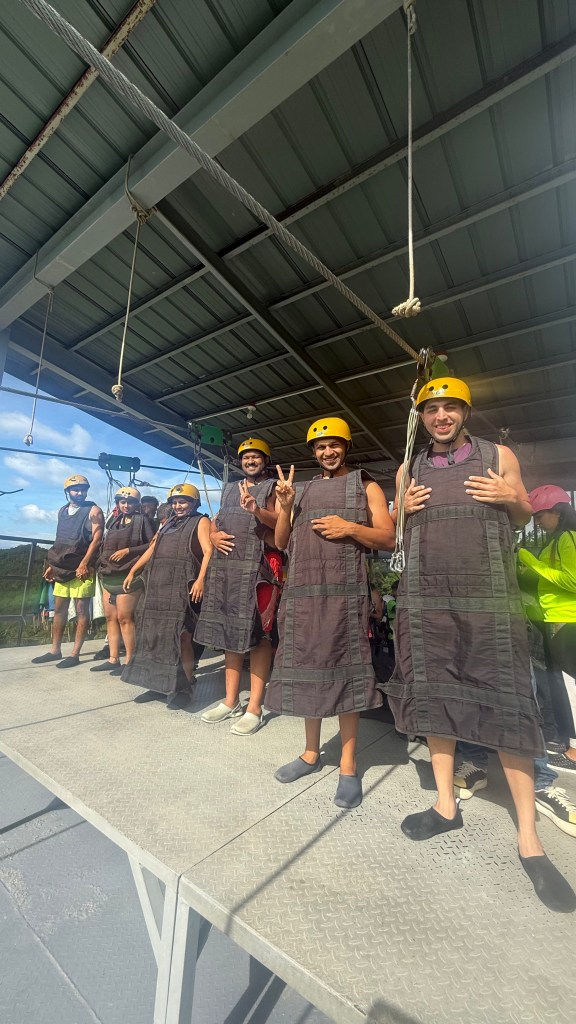
There’s a walk to the starting point, but we chose to take the zipline instead — and I highly recommend it. It costs around 650 pesos per person, is decently long, and saves almost an hour of trekking. It’s not a seated zipline; you lie face-down “Superman style” and go in pairs, with three lines running side by side so six people can go at once. You fly above the forest and river, and it’s a thrilling, but very safe, way to kick off the adventure. From the zipline landing, there’s a 20–30 minute walk down to where the actual canyoning begins.
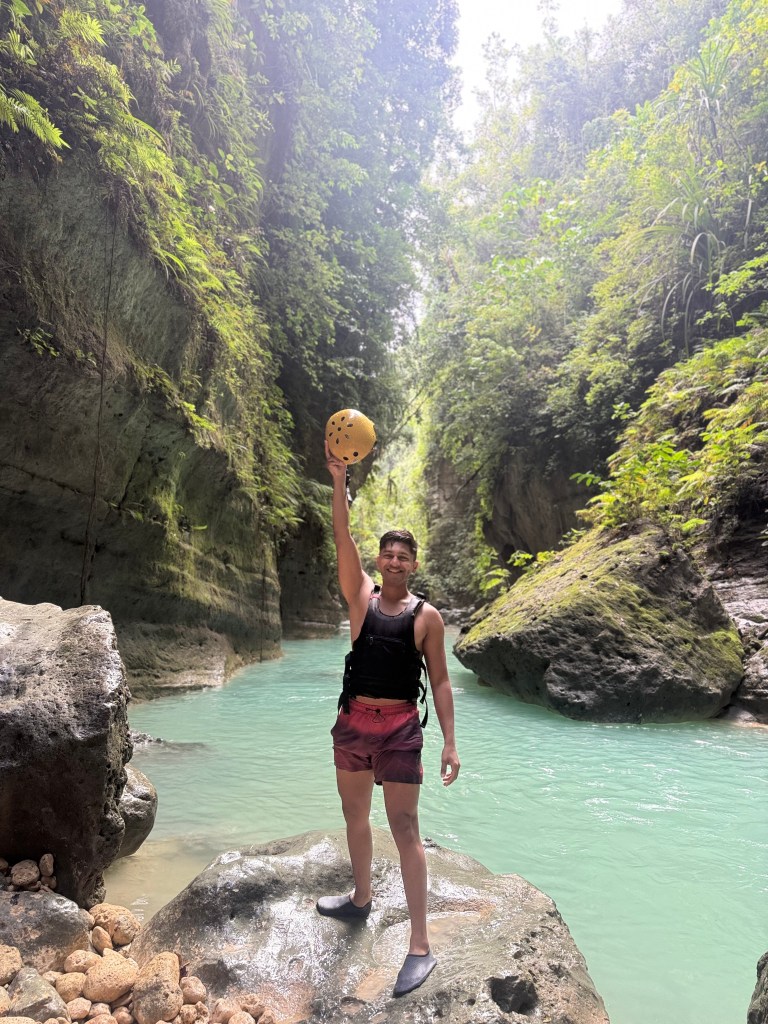
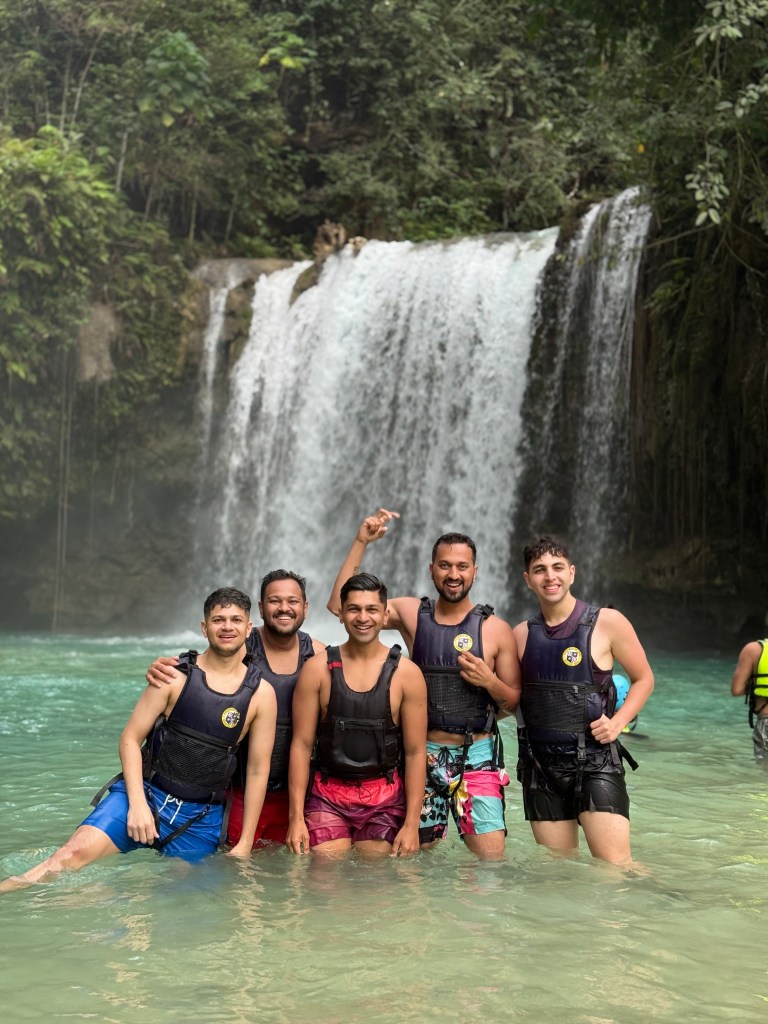
The moment you see the water, you question if it’s even real. It’s this unreal light aquamarine blue, completely clear, with no trash or debris — just pure, glowing water framed by rocks and jungle. The temperature is cool but not freezing, and once you’re in, you never want to come out. The route includes a series of cliff jumps (starting around 5 metres, with options later at 3, 5, and 7 metres), natural rock slides where you shoot down smooth stone chutes into pools, lazy sections where you just float along in your life jacket, and countless photo spots under waterfalls and in narrow canyons.
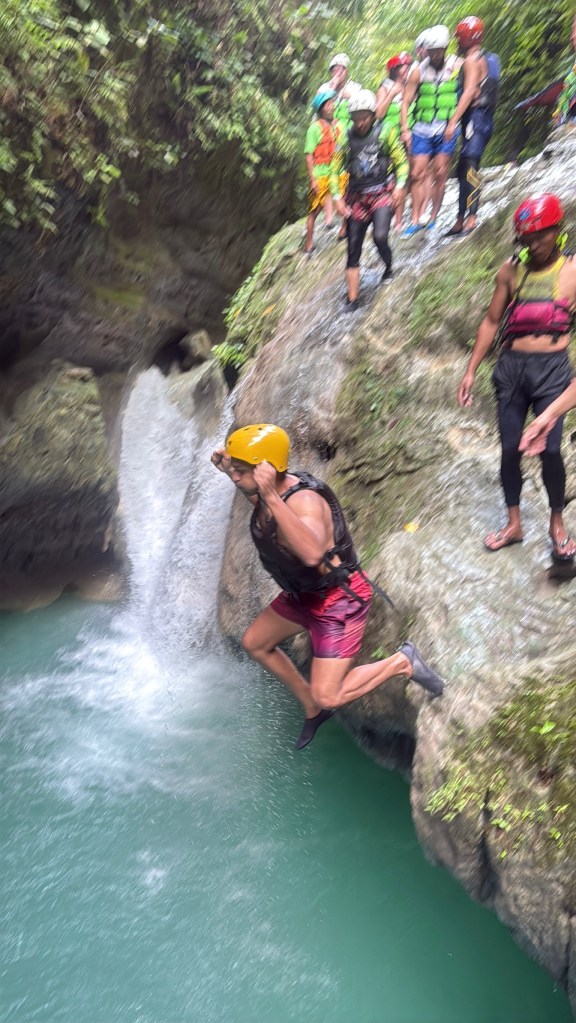
What makes this experience stand out is how guided and safe it is. Unlike most other places in the world, here each person gets their own guide. There are even female guides, which was nice to see. Your guide literally holds your hand on slippery rocks, tells you exactly how to jump or sit, and makes sure you cover the whole route confidently, even if you’re scared of heights or not a strong swimmer. On top of that, one extra guide per small group carries your phone safely without a waterproof case and becomes your dedicated photographer for the day. You don’t have to worry about clicking anything — he captures everything: jumps, slides, group shots under waterfalls, candid moments.
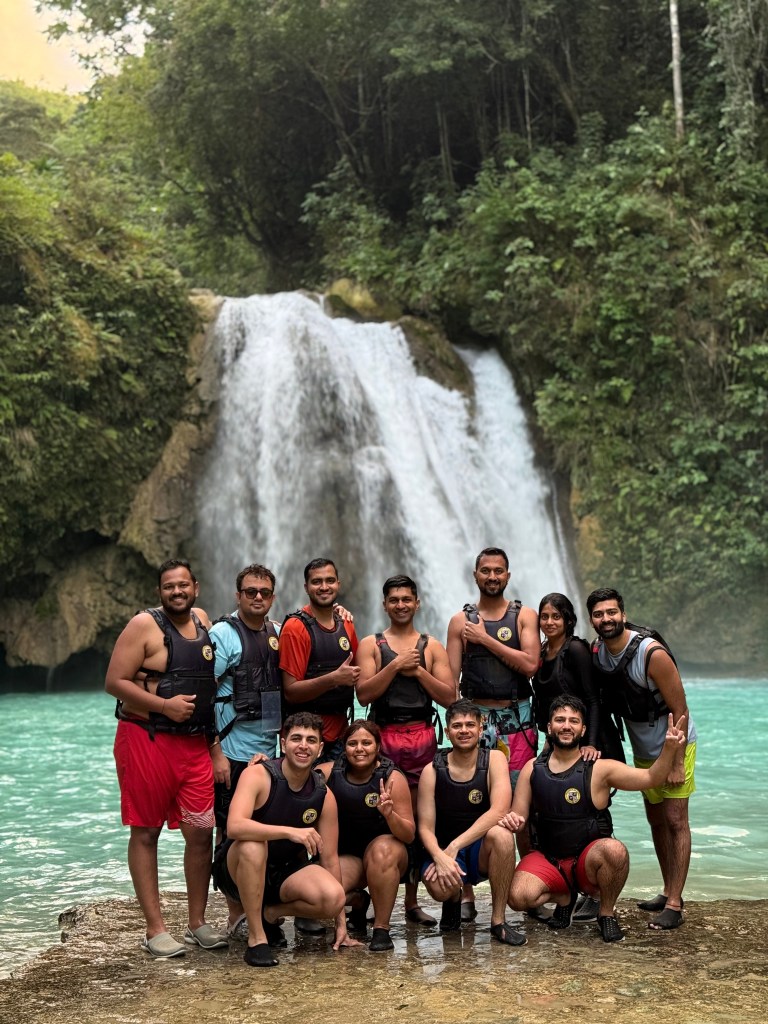
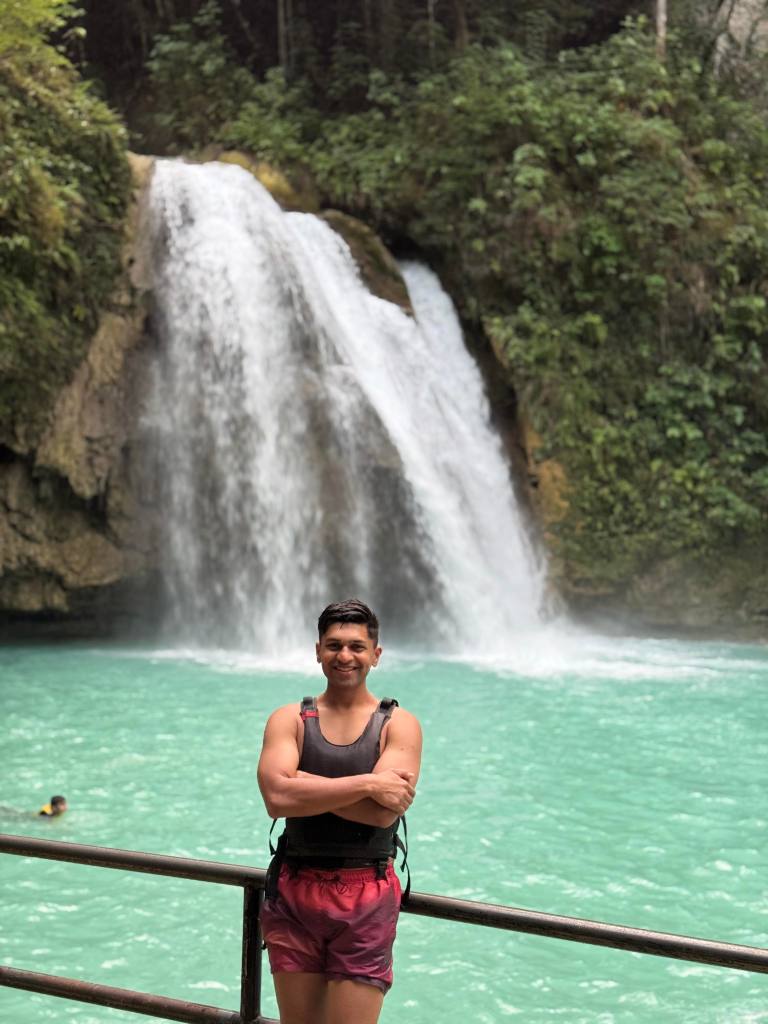
Midway through the canyon, local vendors are selling packaged snacks, fruits, and drinks — basically whatever you’d expect at a 7-Eleven — and you can pay later since you obviously don’t have cash on you in the water. There was also a 10-metre jump on the route, but it was closed when we went because the water level wasn’t high enough. My personal favourites were the two rope swings towards the end. For about 10 pesos per swing per time, you swing out over a deep blue pool and drop in. Because I’ve done some callisthenics, I ended up doing backflips and frontflips off the swing.
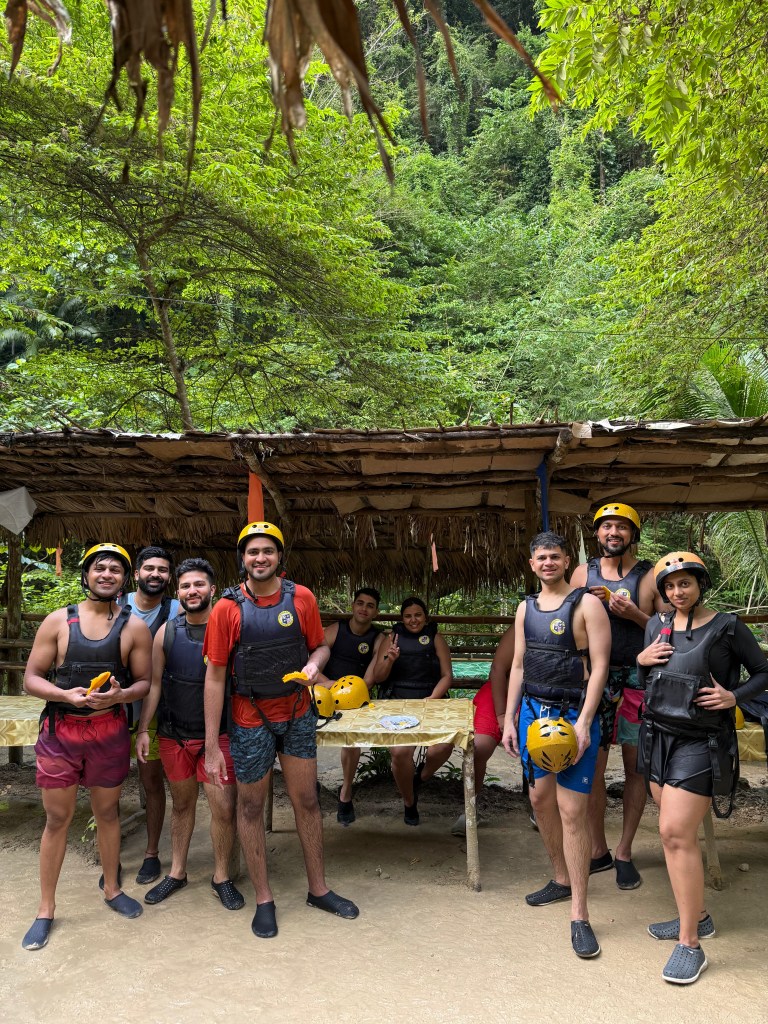
By the time we reached the end of the canyon and walked back to the base, it was evening, and we were exhausted in the best possible way. The tour operator knew we were mostly vegetarians, and they had kindly arranged veg food for us — cheese-and-pineapple pizzas (I usually hate pineapple on pizza, but it somehow worked after that day), and some vegetarian sandwiches. It felt like a well-earned, hearty meal after hours of being in the water.
Then began the long ride back: about 3.5 hours from Badian to Cebu City. We reached our Marvel mansion around 9:30 pm. It was a Saturday night, and even though we’d been up since 4 am and had spent the whole day swimming, jumping, hiking, and travelling, we somehow still had energy left. A few of us decided to explore Cebu’s cocktail side, so we checked out a few bars, including one of Cebu’s speakeasies: The Lost Unicorn, a tiny, hidden cocktail bar tucked behind a café-style front. It’s intimate, cosy, and all about well-made drinks rather than loud music — a nice contrast to the usual tourist bars. After a couple of other regular bars and cocktails, we wrapped up and headed back.
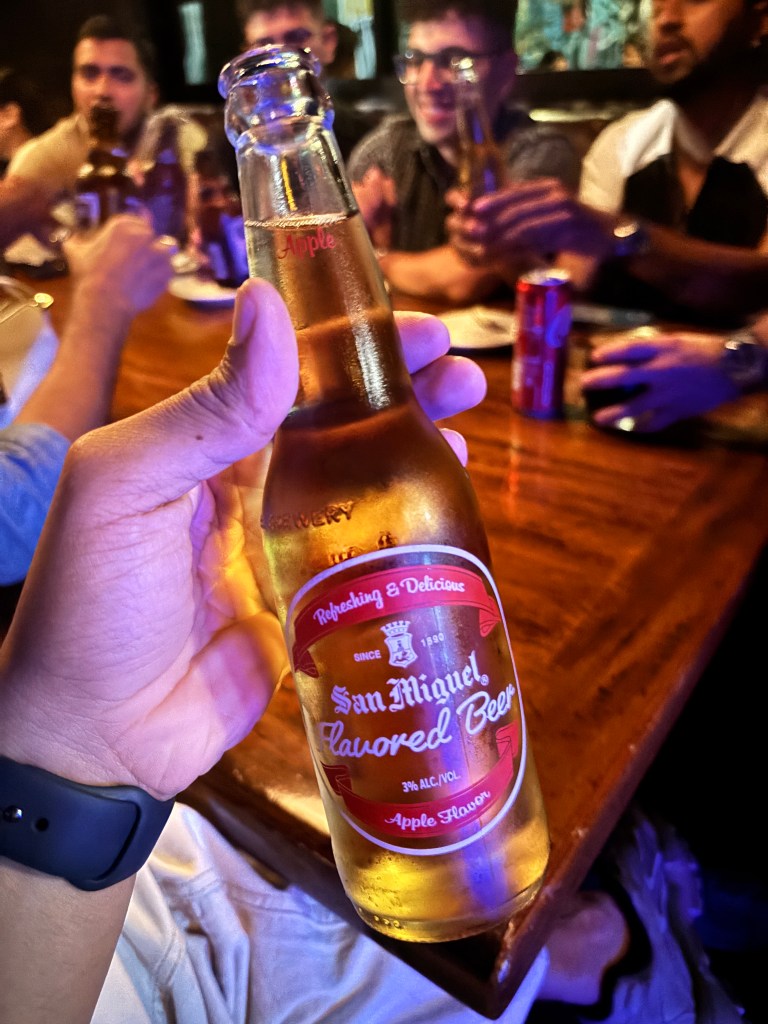
We finally returned and crashed.
On a scale from -5 to +5, I will rate Moalboal town +3, Pesador island snorkelling +3.5, Sardine Run +4.5, Kawasan Canyoneering +5, The Lost Unicorn +0, 7-11s in the Philippines +0.5.
Day 9 – 28th Dec, Sunday- Chill Day in Cebu: Brunch, Games & Speakeasy Night
After the madness of Moalboal and Kawasan, there was no way we were waking up at 4 am again for the Oslob whale shark experience. So 28th December was intentionally left activity-free — no pre-booked tours, no alarms. We all woke up late, lazed around the Marvel house, and then headed into Cebu City for a long, slow brunch, just to reset our bodies and brains.
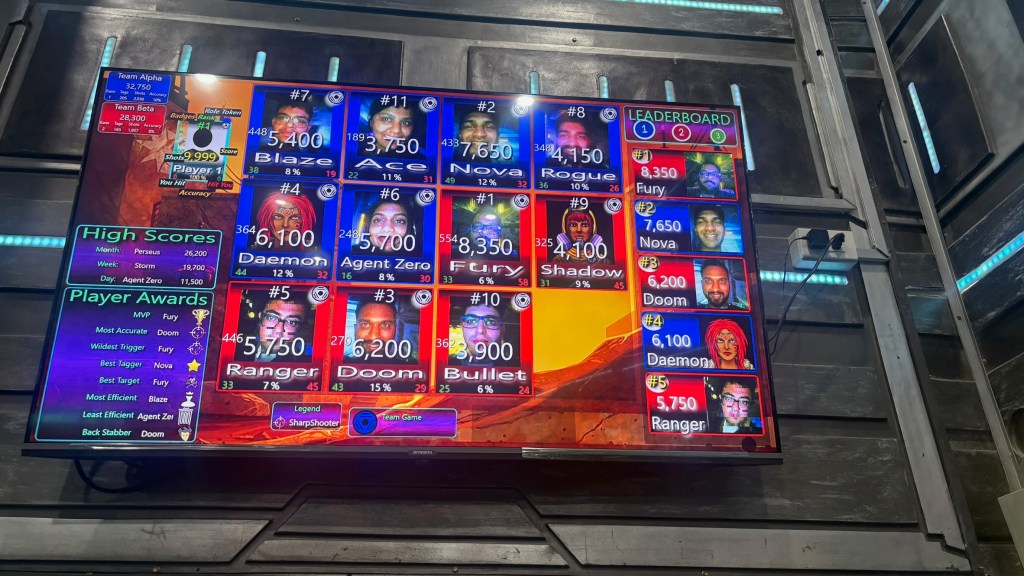
Post a long brunch at La Parisienne, the mood was “no more water, but let’s still do something fun,” so we went for some go-karting in the city, followed by laser tag at a mall. It was a nice change from all the nature and water.
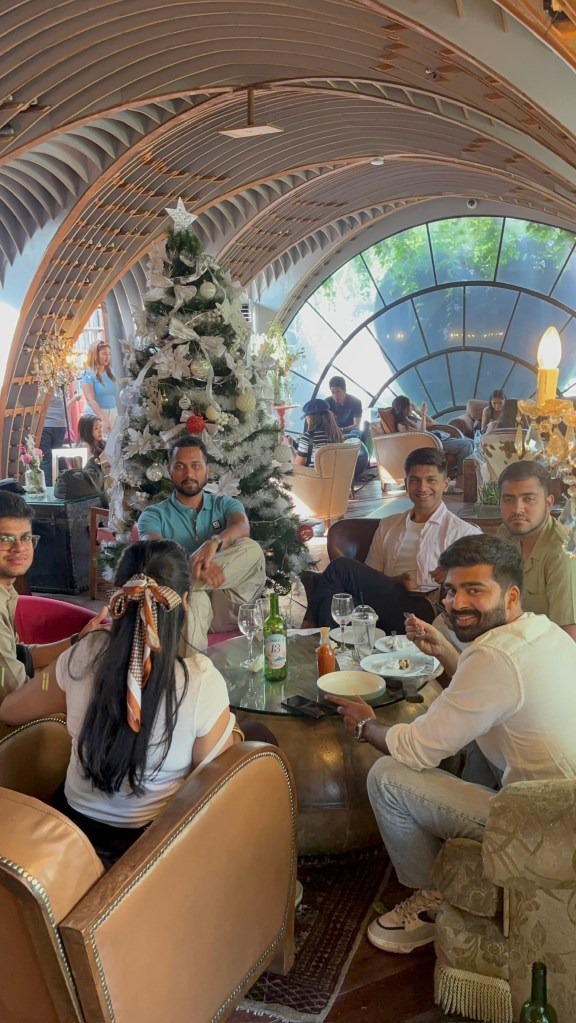
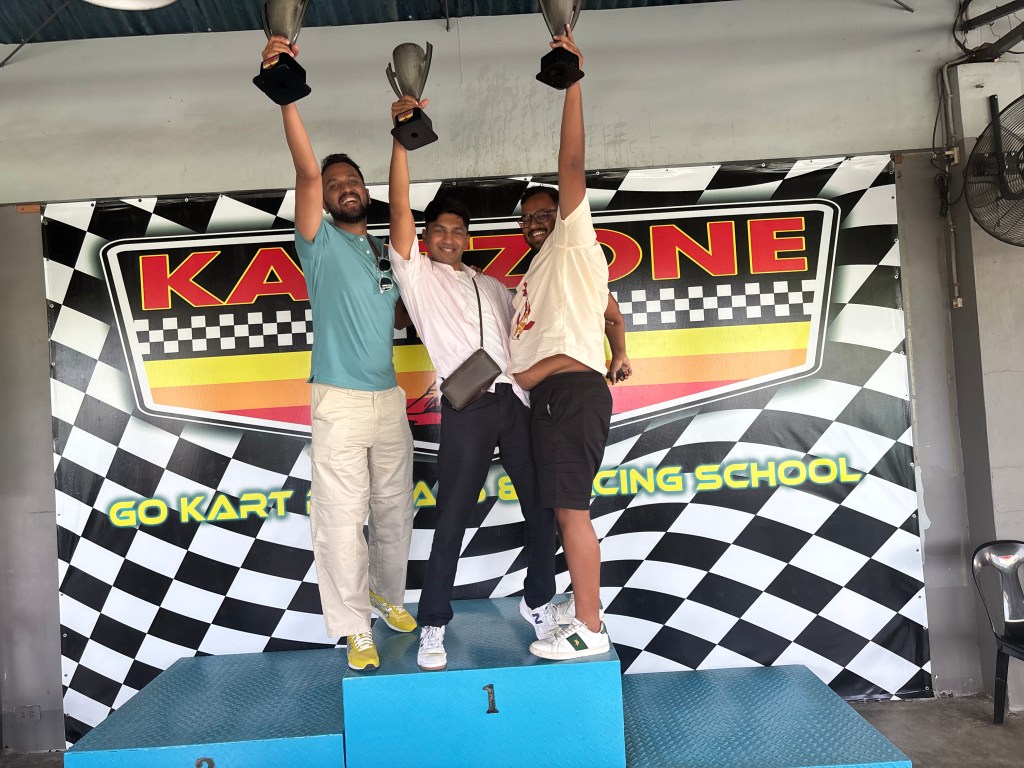
In the evening, we decided to stay in for dinner and ordered North Indian food on Grab back to our Marvel stay — comfort food after days of rice, veg curries, and random experiments.
Later at night, we felt like checking out a casino in Cebu – NUSTAR. It was a decent enough place — minimum roulette bets started from as low as 50 pesos, with games like blackjack and others. Unlike many casinos in other parts of the world, food and drinks weren’t free here, but it was still a fun little add-on at the end.
It was the perfect mid-trip “reset” day — no pressure to sightsee, just good food, fun activities, and a slightly fancy night out before the next island hop.
On a scale from -5 to +5, I will rate La Parisienne a +1.5, Go karting +3.5, Laser Tag +2, NUSTAR Casino +2.
Day 10 – 29th Dec, Monday- Flying to Boracay & First Night on White Beach
29th December was Boracay day. We checked out early from Cebu and headed to the airport for our flight to Caticlan (MPH), the gateway to Boracay. As usual in the Philippines, the baggage drama continued — expect strict weight checks on every domestic leg, so keep your bags under the exact allowance. Once we landed in Caticlan, the real transfer began.
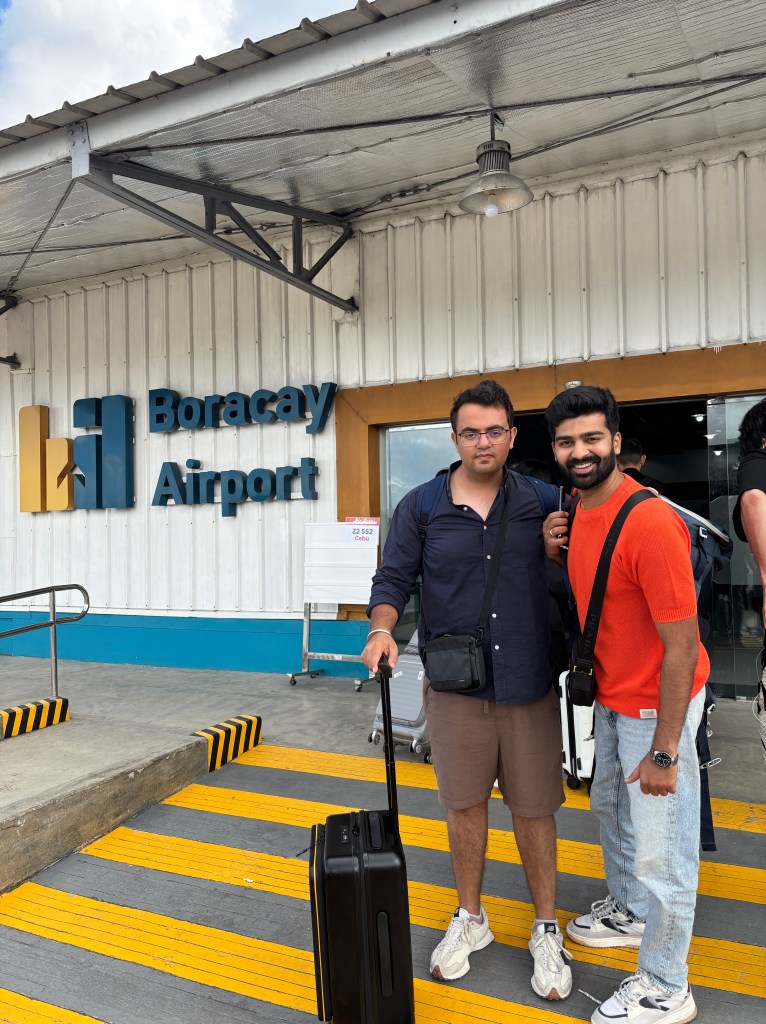
Boracay itself has no airport, so you first exit Caticlan, then take a 15-minute ferry hop to the island. Just outside arrivals, you’ll see counters offering all-in transfers — van to the jetty, boat to Boracay, and drop to your hotel — both ways. We chose one of these packages for about 1,000–1,200 pesos per person, handed over our luggage, and were shuttled by bus to the jetty, then by boat to Boracay, and finally by taxi to our stay. It’s very streamlined; you barely have to think.
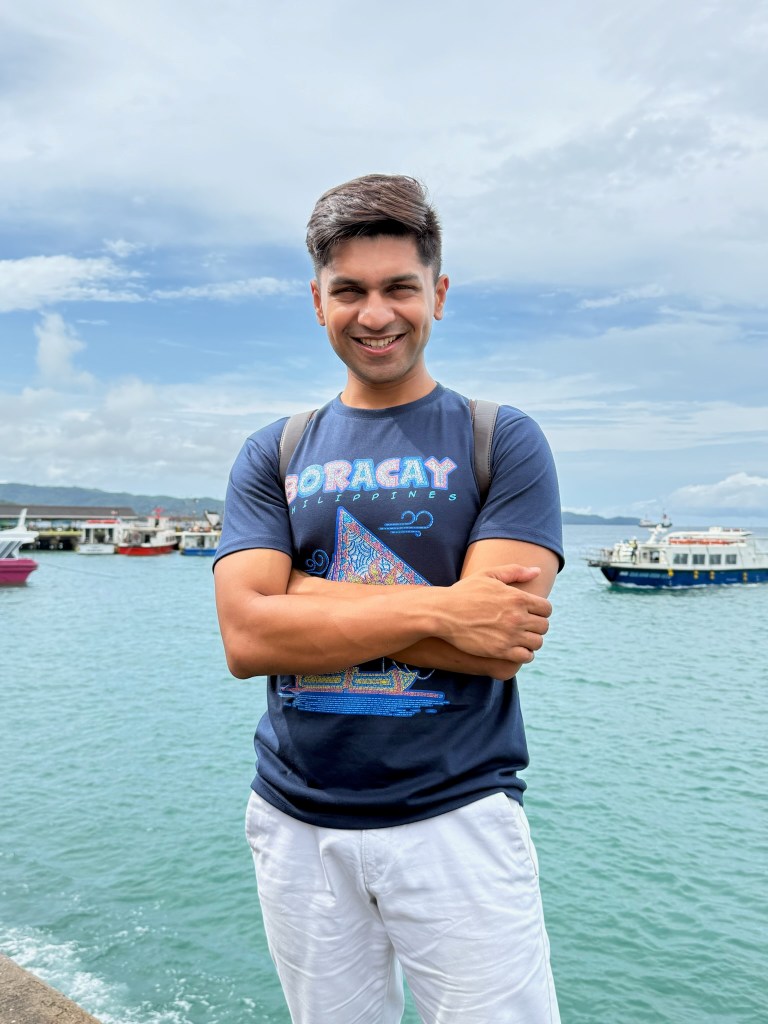
Boracay is a small island with two very different coasts. On one side is the famous White Beach — the main commercial strip with powdery white sand, calm turquoise water, cafés, bars, and resorts. On the opposite side is Bulabog Beach — windier, less commercial, and known more for kitesurfing and water sports rather than sunset lounging. White Beach is almost wave-less; if it weren’t so big, you’d think it was a lake. The water is so clear and shallow ( to a long stretch) that seaweed grows in a healthy green band even 10 metres out, making it perfect for stand-up paddleboarding and easy swims.
After checking into our hotel, we headed for lunch at Ambassador in Paradise on White Beach — and this place deserves a special mention. Everything we ate there was outstanding; easily one of the best meals of the trip.
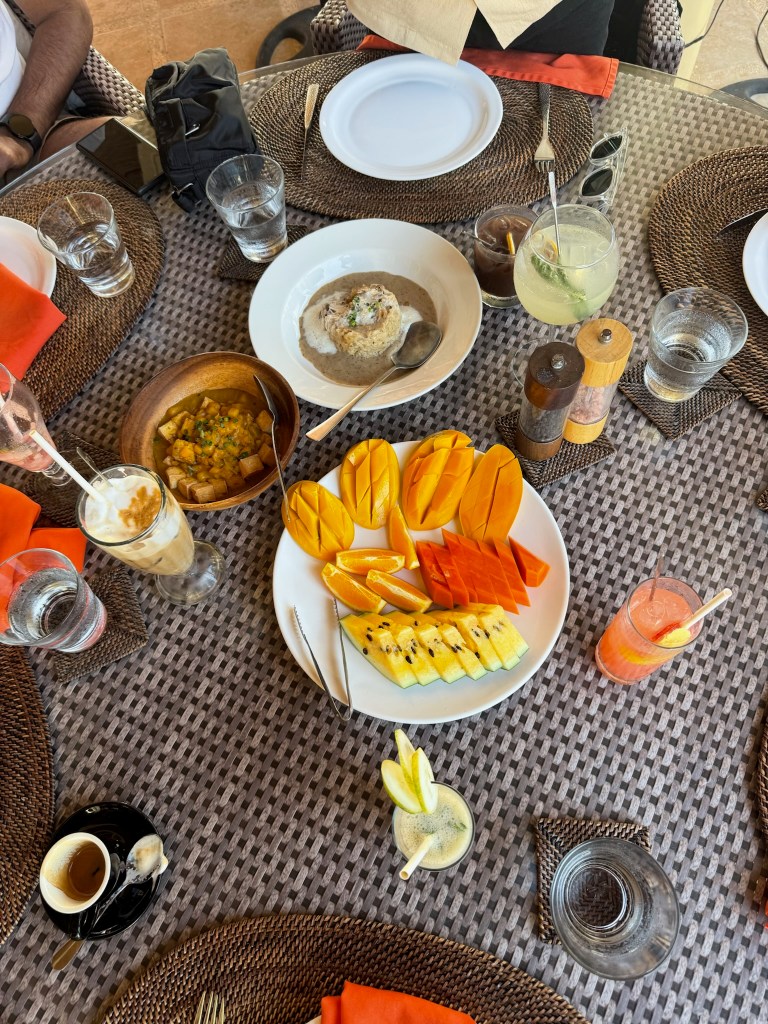
Post-lunch, we strolled along the White Beach path, soaking in the vibe. The entire beachfront is alive: people playing volleyball and tennis, doing SUP, shooting reels, tossing frisbees, booking island-hopping tours, or just lying on the sand waiting for sunset. We joined in with some frisbee, lazed by the water, and enjoyed the classic Boracay energy.
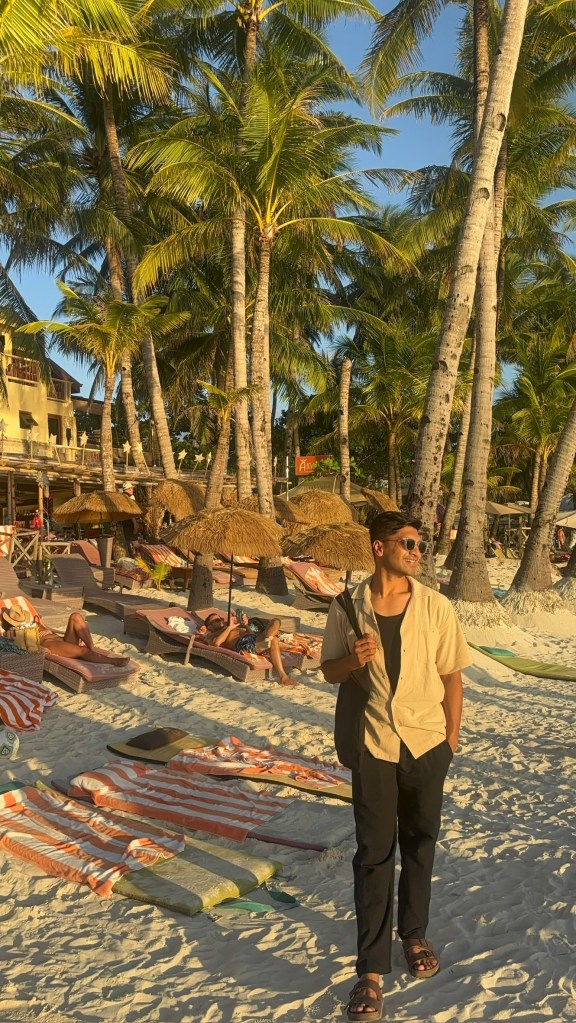
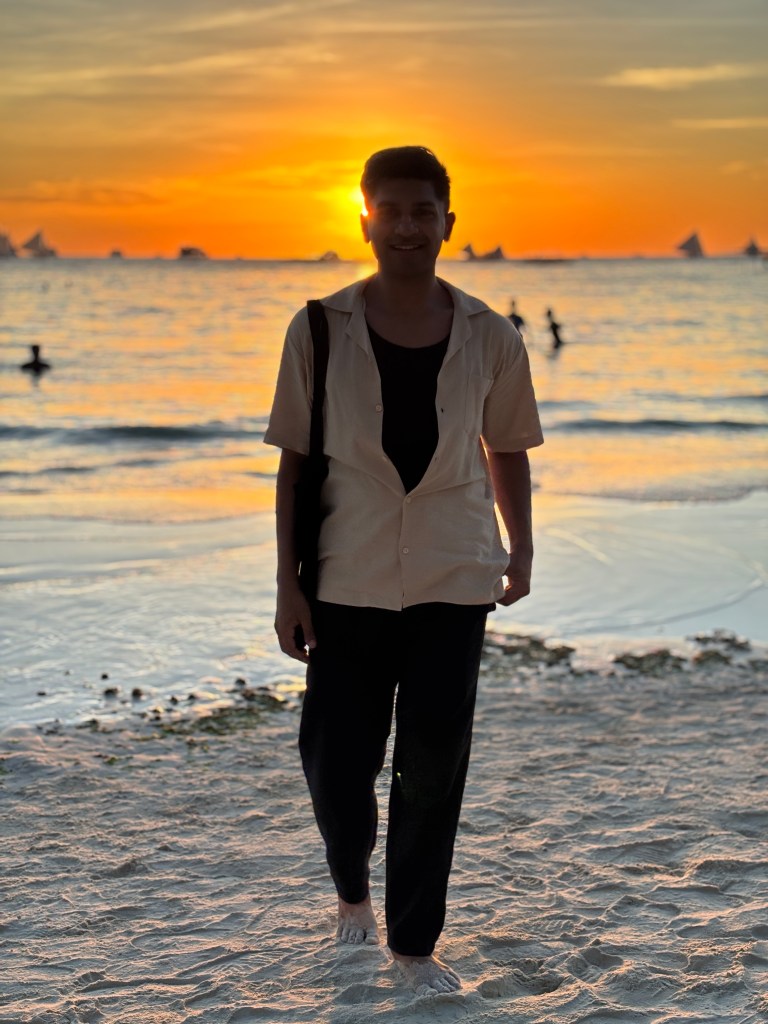
In the evening, we went back to our stay to regroup with the rest of the gang. This night was reserved for indoor traditions — our annual trip quiz night and Secret Santa. Everyone had brought gifts from India, so after running a fun quiz, we did the gift exchange, laughed at the reveals, and generally had a very cosy, home-like evening together.
Before that, though, we actually returned to Ambassador in Paradise for dinner because lunch had impressed us so much. Round two was just as good. At dinner, they even had fire dances and the traditional bamboo hopping dance too. After dinner and the Secret Santa session, we were content, tired, and ready to sleep. It was a softer, more emotional day — arriving in what many call one of the best beaches in the world, and ending it with our own little festival inside the group.
On a scale from -5 to +5, I will rate the transfer from Caticlan to Boracay +0.5, White Beach +4, Ambassador in Paradise +4.
Day 11 – 30th Dec, Tuesday- Beach Day & Boracay’s Amazing Cocktail Bars
We kept Day 11 completely free, and honestly, I loved this day more than I can explain. After a late night, we woke up slow and wandered out late morning for breakfast at a vegan café near White Beach- Smooth Cafe. Boracay is surprisingly good for vegan and veg-friendly food, and it felt nice to have a fresh, lighter start after so many heavy days.
From there, we headed towards the Bulabog beach on the other end— the stretch where you see those slanting coconut trees that everyone uses as a photo prop. We spent a long time just being kids: taking photos, doing handstands in the sand, yoga holds, back flips, hand springs and more. There was even a guy doing slackline/tightrope walking between two trees; we attempted it (of course) and failed gloriously, but it added to the fun.
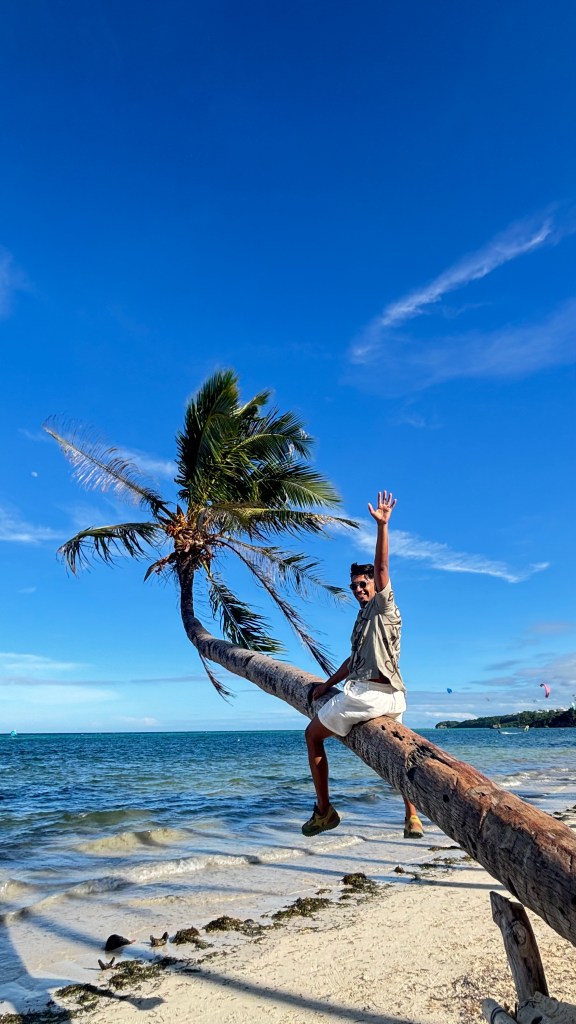
A bit later, we joined a volleyball game with some local kids on the beach and played for about an hour. It was that perfect mix of light sport, laughter and sweat in the sunset light. There was also a tree with a rope to climb, a bar to pull up or swing from, so we took turns swinging over the sand and water, chatting and just basking in the easy island vibe.
As evening came closer, we headed for dinner at Nonie’s. We, later, shifted gears to Boracay’s nightlife. People often say Boracay has some of the best cocktail bars in the country, and I can see why now. We first went to a lively tiki-style bar on the beach- Mai Tai — the kind of place where the DJ and a live percussionist play together, bartenders are vibing behind the bar, and everyone’s swaying with dark-rum cocktails in hand. Most bars in the Philippines don’t have full kitchens; they usually serve “pulutan” – basic bar snacks and packaged sides – so it’s more about the drinks and music than the food.
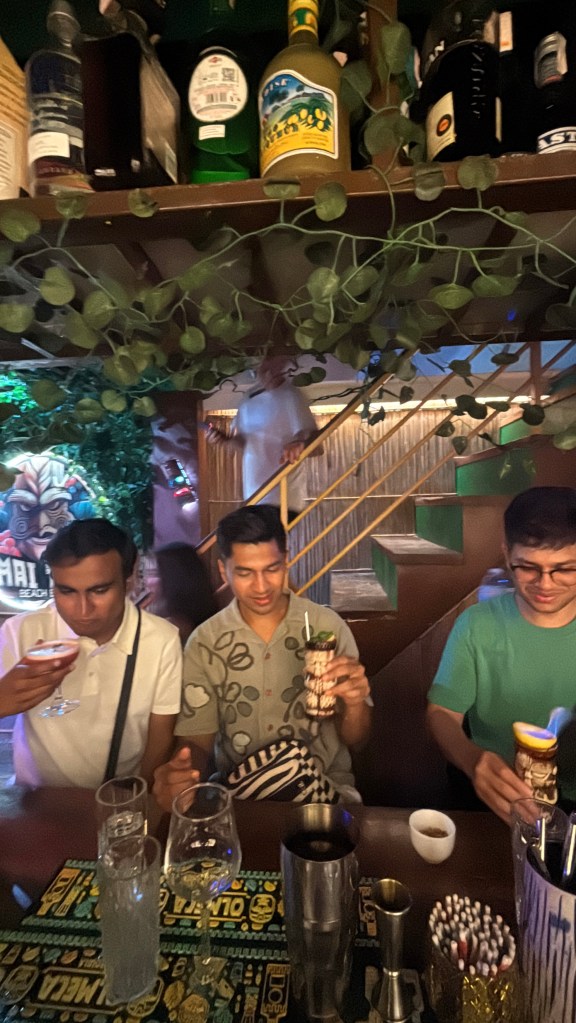
After about an hour and a half there, we moved on to a proper speakeasy-style bar called Battuta. It’s hidden in a really fun way: from one side, it looks like the back of an Italian restaurant, and from the “Indian side”, you actually walk through what looks like a wardrobe of hanging clothes to enter. From the Italian side, it’s just a plain white door that you’d never guess is an entrance. Inside, the interiors are gorgeous — dim, elegant, very thoughtfully done.
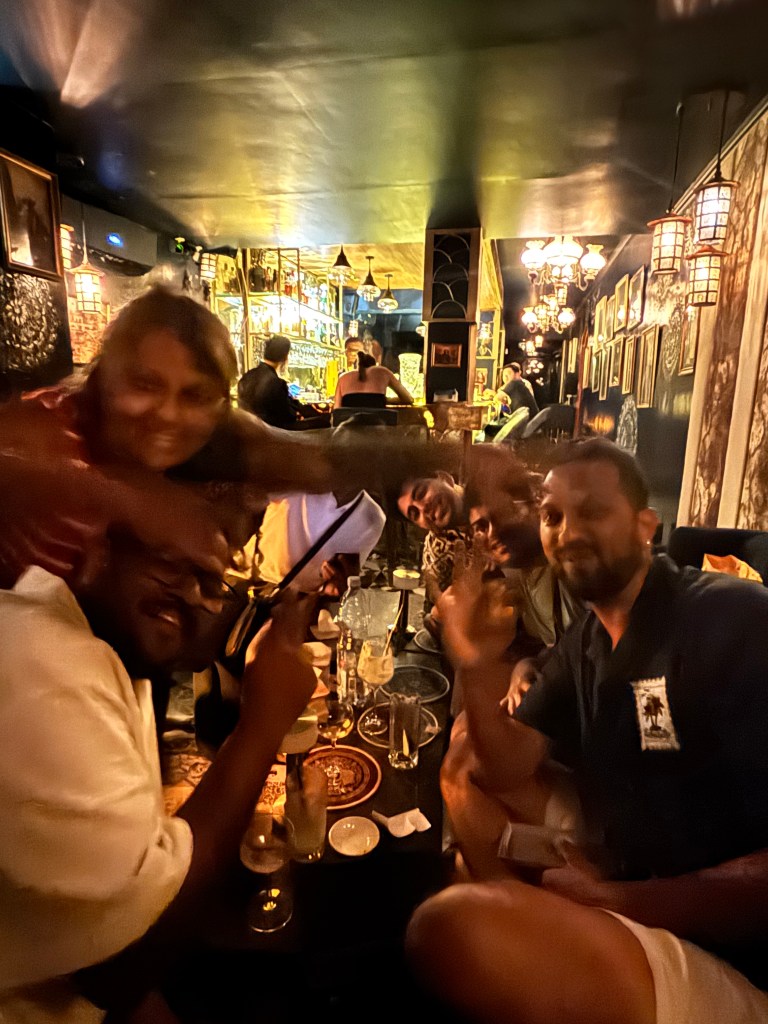
This is where I had the best cocktail of my life: Battuta de Battida- a mango-based drink that was so good I ended up having five glasses of it that night. More friends joined us later, and we all really drank, talked and soaked in the vibe. Some people from our group had skipped bar-hopping that night, but when we returned to our hotel, the energy was still so high that we called everyone into one room, put on Bollywood music, and danced like college kids.
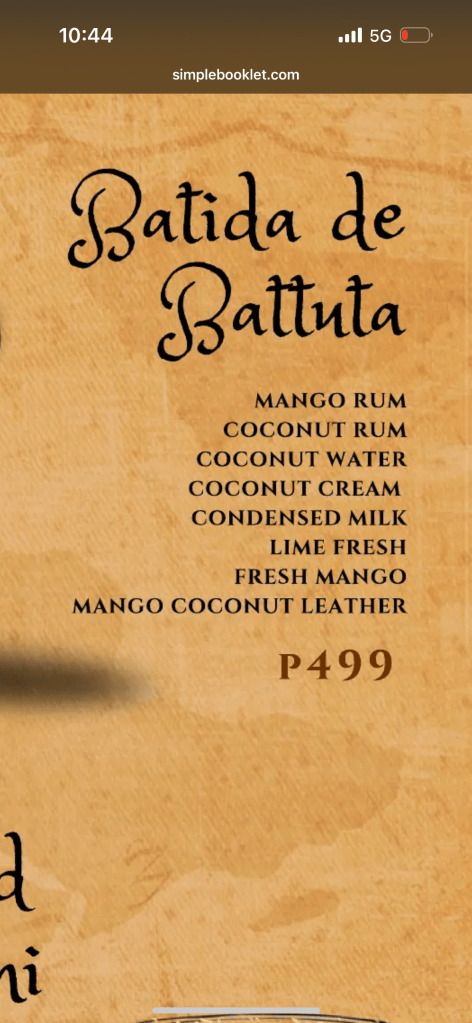
On a scale from -5 to +5, I will rate Smooth Cafe a +1, Bulabog Beach +3.5, Volleyball in Boracay +3, Nonie’s -2, Mai Tai +3, Battuta +5.
Day 12- 31st Dec, Wednesday- New Year’s Eve: Goodbye Boracay, Hello Manila Fireworks
31st December started with a little “last chance” moment. A couple of us woke up early for stand-up paddleboarding (SUP) on White Beach, because we hadn’t done it yet and didn’t want to leave Boracay without that experience. Gliding on completely calm water that barely had any waves, over clear shallows and soft seaweed beds, felt like floating on glass. The sand here is unreal — so soft and powdery that if you stand still for a few seconds, you can literally feel yourself sinking in.
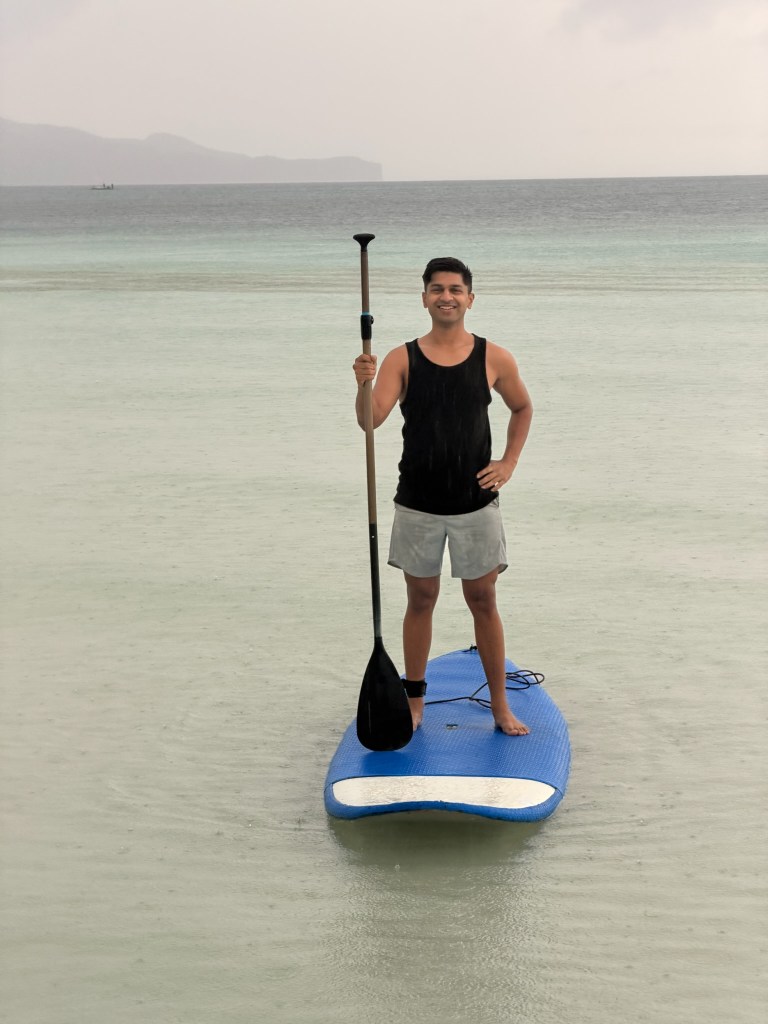
After the SUP session, we rushed back, showered, and did the familiar transfer routine in reverse: van to the jetty, ferry to Caticlan, shuttle to the airport, and then our flight to Manila. Being New Year’s Eve, Manila felt strangely peaceful during the day — roads were emptier than usual, and getting cabs from the airport wasn’t too hard initially. Our hotel was in the Greenbelt area (Makati), which I absolutely loved. It’s a clean, safe, walkable neighbourhood with parks and a more residential, lived-in feel. If BGC feels like a shinier, more commercial Singapore, Greenbelt feels like its calmer, more homely cousin — I’d highly recommend staying here.
Once we checked in, the evening plan was simple: chill, eat good Indian food, get dressed up, and then watch fireworks. For dinner, we went to Swagat al Rada (a nearby Indian restaurant) and finally had a proper North Indian meal after days of fusion and experimental vegetarian food. A quick note: cities like Manila and Cebu are full of 7-Elevens, but compared to Thailand or Japan, the assortment is weaker. Still, they work well for snacks, drinks, and basics, and we popped into a couple for chips and nibbles for later.
Back at the hotel, we rested for a bit and then got ready for one of our annual traditions: the VOMIT Awards — “Vacationer Of Magical International Trips.” I’d circulated a Google Form earlier in the day with fun award titles like best dancer, best photographer, most careless, lost child, etc., and everyone had voted based on the trip so far. We got a couple of wine bottles, did a full awards ceremony in the room, and started the night with a lot of laughter and light roasting.
The plan after that was to head to BGC (Bonifacio Global City) for the New Year’s fireworks. That’s when Manila reminded us it’s still a big city. Cabs were almost impossible to find, and those available were charging 3–5x surge fares. Somehow, we managed to flag down a couple of cars, paid extra and made it to BGC just in time.
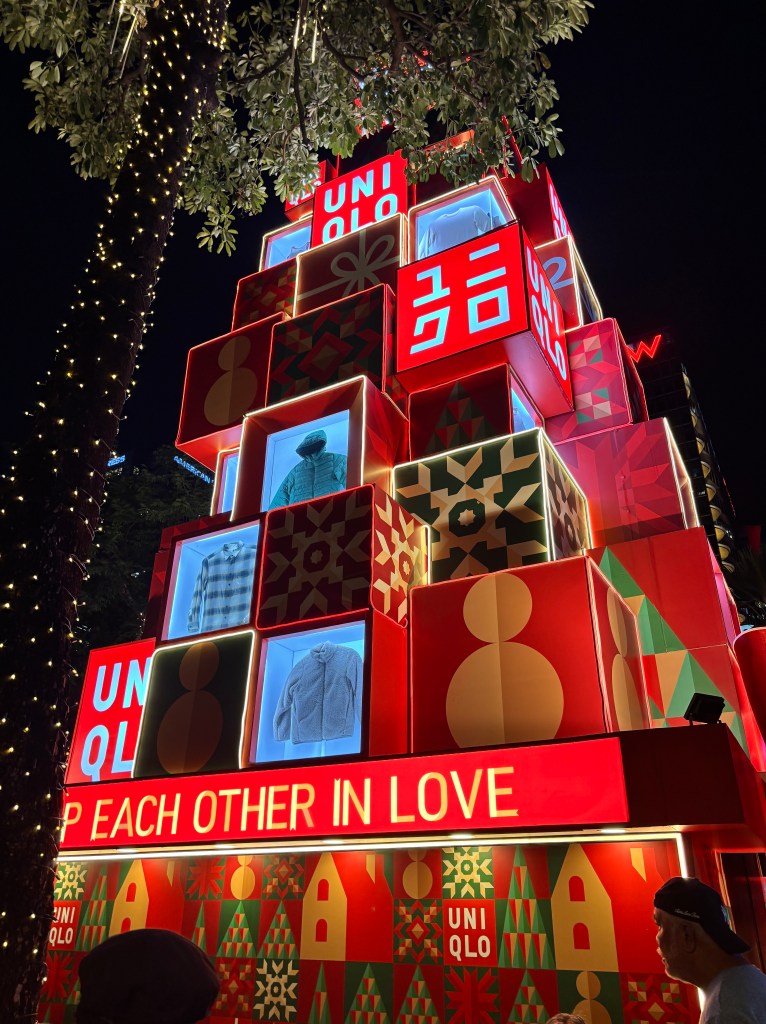
The BGC area was absolutely packed — thousands of people, all waiting for midnight. When the clock hit 12, the fireworks show began and went on for a full 15 minutes. It wasn’t a token 2-minute display; it was a proper, grand, continuous show. For that entire quarter-hour, all of us just stood there, necks craned, soaking in the lights and sound.
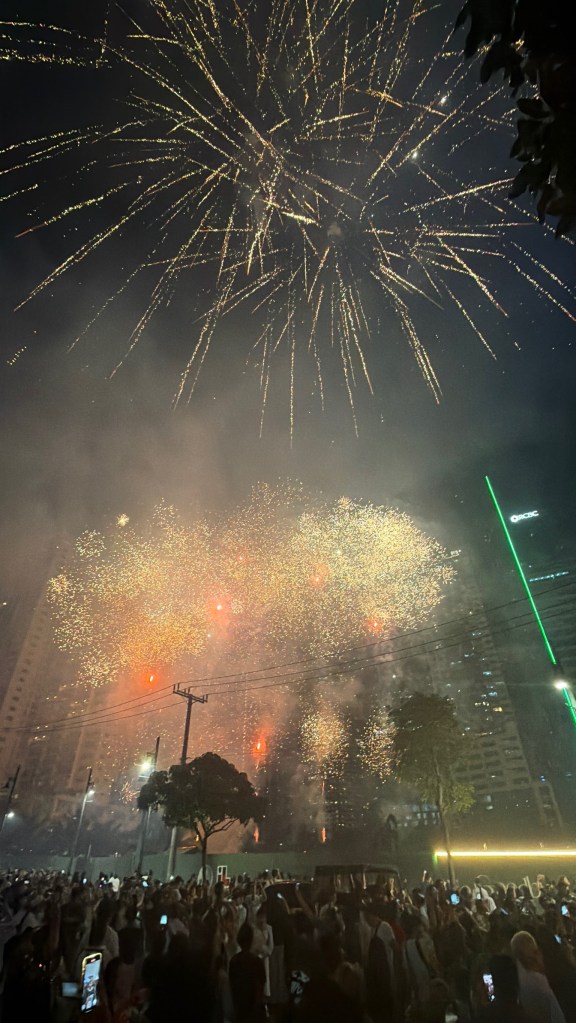
Once the fireworks ended, the crowd started thinning as people split into bars, parties, and homes. We were hungry by then, so we found an American burger chain- Shake Shack and all went for veg burgers and drinks. We also had some coffee at Harlen & Holden. Getting back to Greenbelt was another struggle: almost no cabs were taking app bookings because BGC was the hot exit point. Eventually, we negotiated with a driver who agreed to take us for a high flat fare, and we piled in however we could just to get back, even 7 people in a hatchback paying 5x the fare.
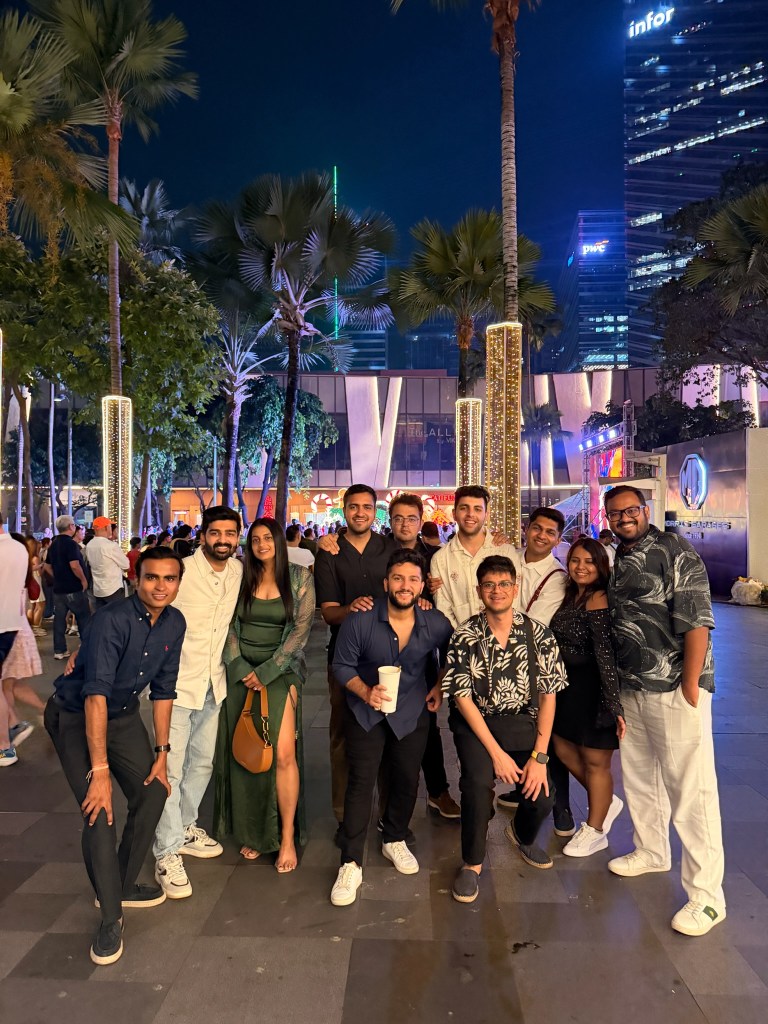
We’d originally thought of going clubbing instead of the fireworks, but somewhere along the way, we collectively accepted that we were too old for any full-blown club night, especially after so many days of drinking. So we called it: no clubbing, no FOMO. Back at the hotel, everyone went straight to bed, content with a New Year’s Eve that had just the right mix of tradition, chaos, and spectacle.
On a scale from -5 to +5, I will rate SUP in Boracay +2.5, Swagath al Rada +3, fireworks at BGC +4, Shake Shack +0.5, Harlen and Holden +3.
Day 13 – 1st Jan, Thursday – Intramuros, Bowling & Pub Crawling
We started our last full day in the Philippines slowly, getting ready late and then heading to Intramuros, Manila’s old Spanish-walled city. It’s quite something to see how much of the colonial charm still survives — cobblestoned alleys, old churches, stone walls, arches, plazas, cute cafés, and souvenir shops. We had purple yam (ube) ice cream too; it wasn’t great. The whole area feels like you’ve stepped into a different time, and it’s very walkable.
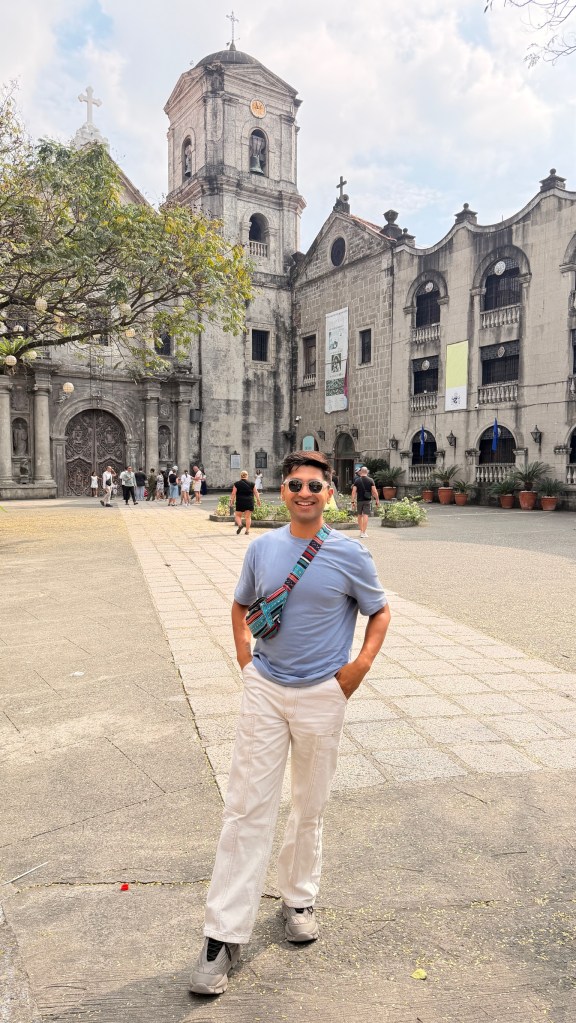
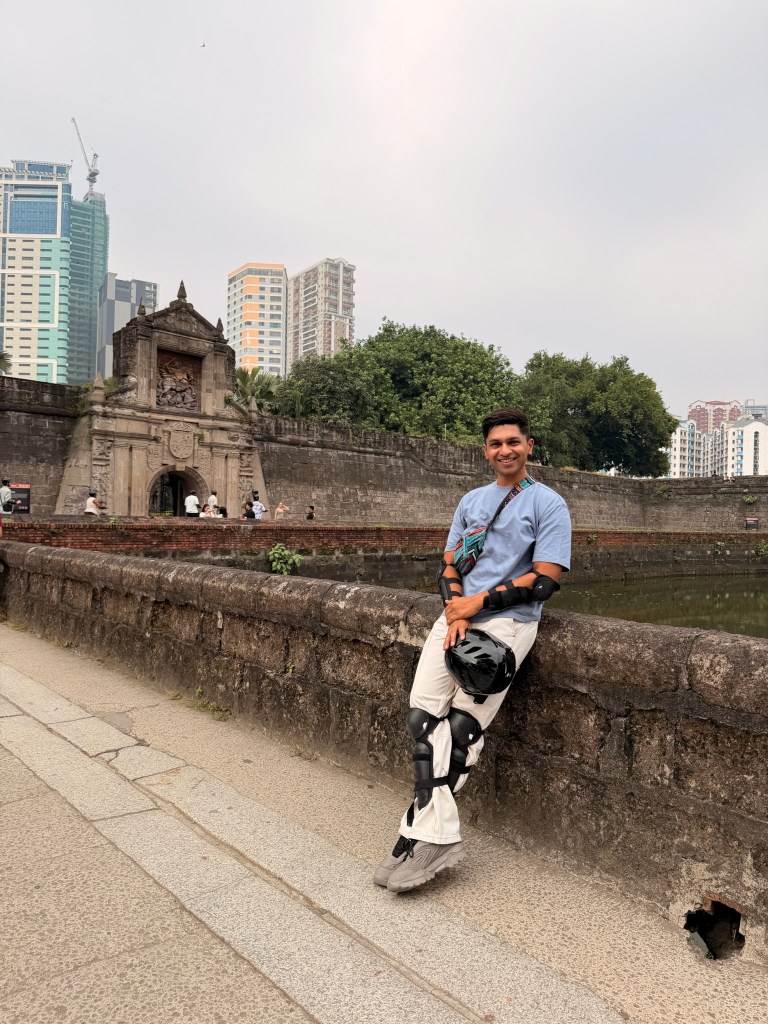
There are four main ways to explore Intramuros:
On foot, using an online map and wandering at your own pace.In a tuk-tuk/pedicab, with a local guide taking you to 10–12 key viewpoints and explaining things. On a bambike (the famous bamboo bicycle), which is quite unique to the area. Or on a Segway tour, which is what we chose — and honestly, I wouldn’t recommend it.
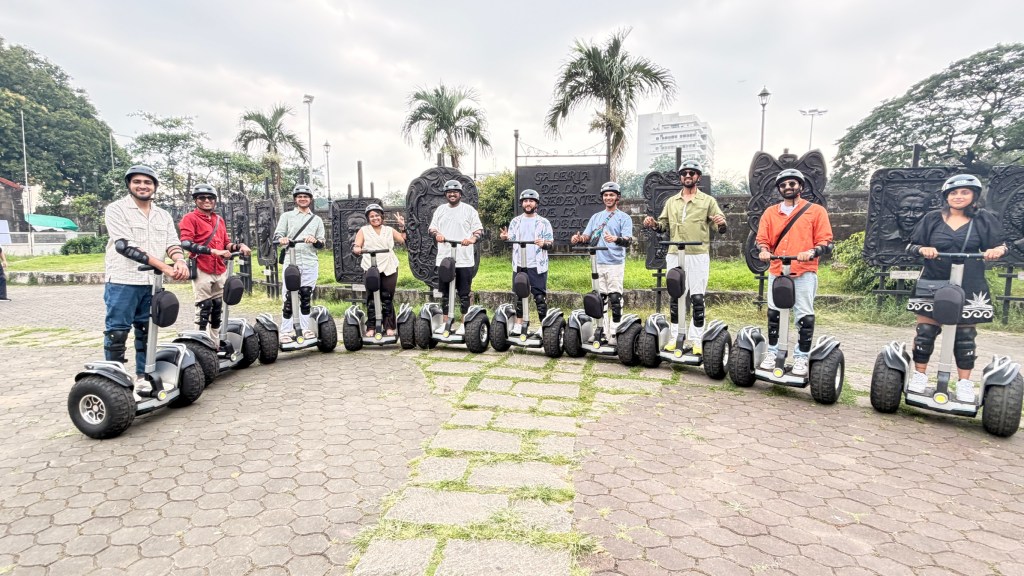
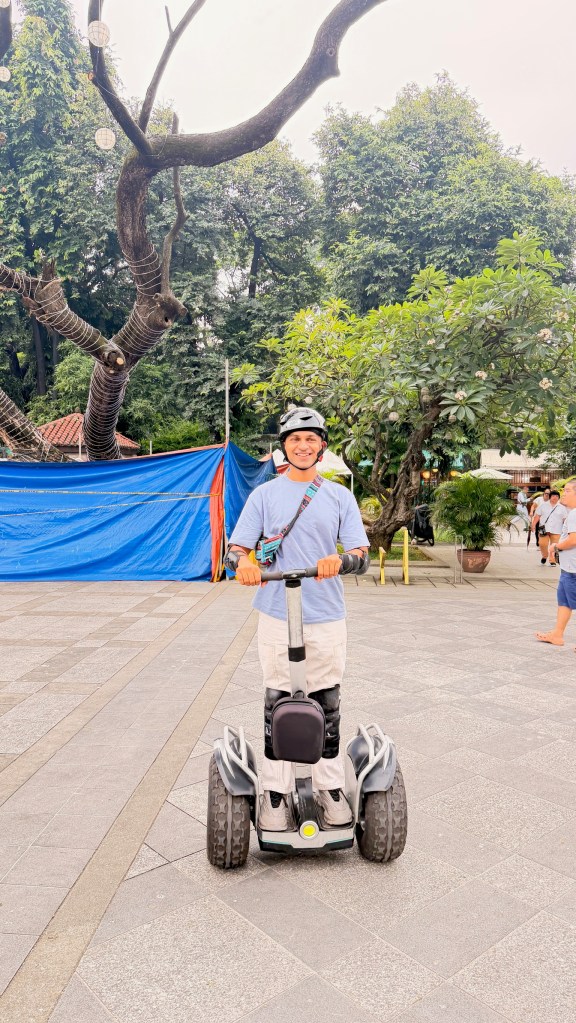
The Segway part is fun for about 10 minutes, and then it becomes more annoying than exciting. You’re in a tight single-file line, moving very slowly, always constrained by the pace of the slowest person. There’s also a constant risk of leaning wrong and falling face-first. You don’t really get the freedom to stop where you want, linger where you like, or weave through lanes; it feels like being on a school excursion train. The guide did explain the major sights and churches, and we did cover multiple points in Intramuros, but in hindsight, I really wish we’d taken the tuk-tuk tour or just walked and explored, as the Bambike was closed due to New Year’s Day.
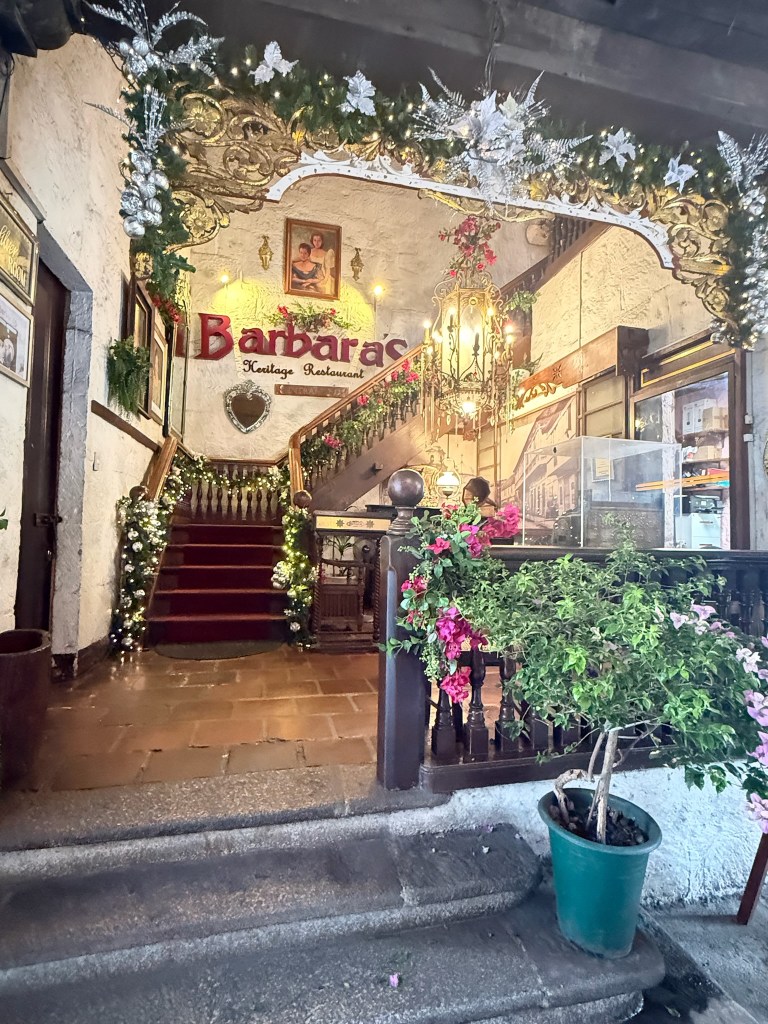
After the Segway tour, we finally had our first proper meal of the day at a Spanish restaurant in Intramuros.
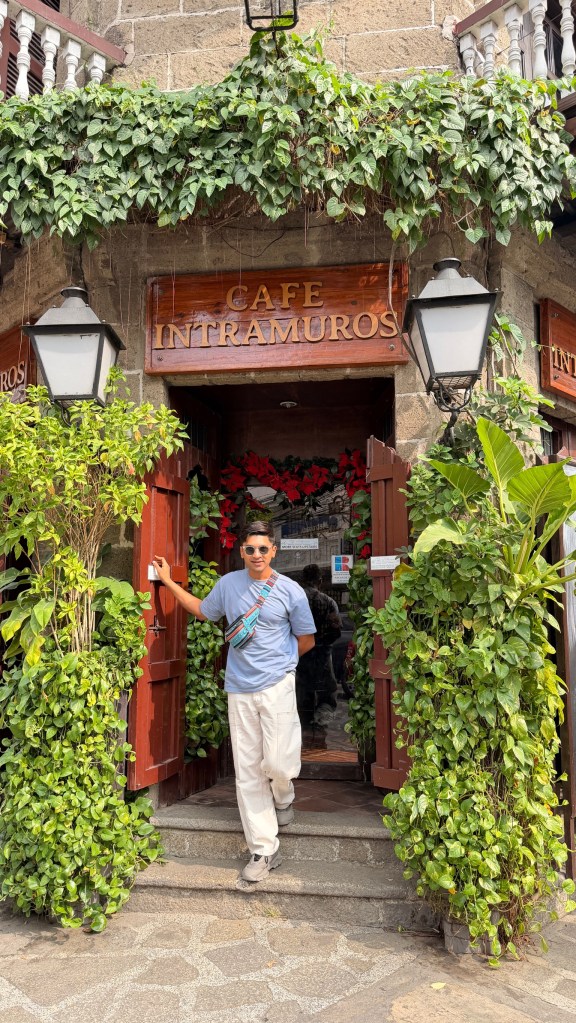
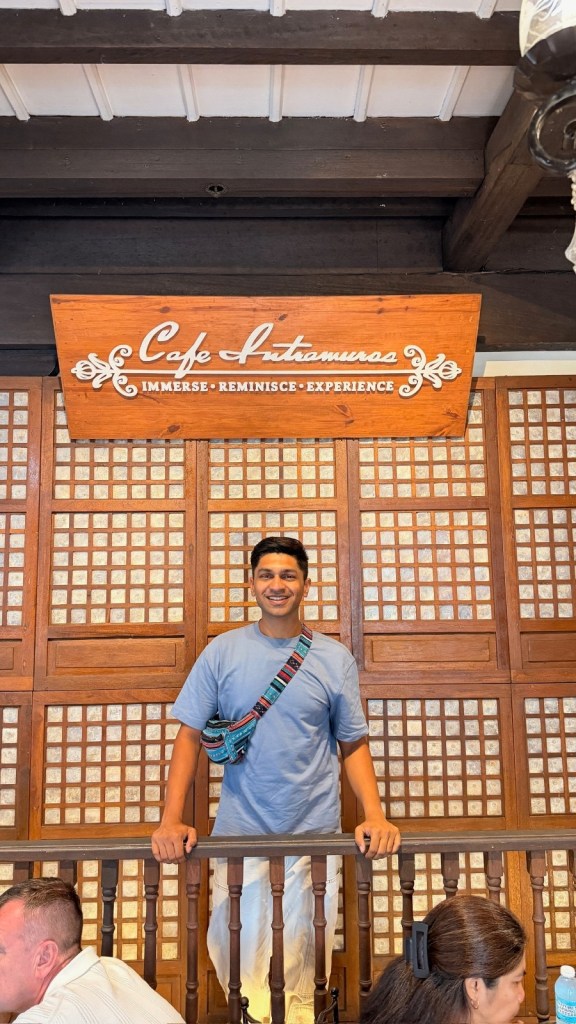
From there, we shifted back into “trip tradition” mode: bowling. Bowling has somehow become a ritual on our New Year trips, so we found a bowling alley, grabbed some beers, and played a few rounds. The plan after bowling was to try something a bit different: pickleball. Manila has an interesting roster-based setup — imagine four courts (16 players playing at a time) and a roster of up to 30 people. After each game, some players rotate out, and others from the roster rotate in. If you keep winning, the system matches you with similarly strong players, so you end up playing people closer to your level. We really wanted to book courts just for our group, but everything was full that evening, and the roster system didn’t work for us because we wanted to mostly play among ourselves. So we dropped the idea.
Instead, we pivoted to something Manila does very well: bar hopping in Poblacion. It’s also the red light area of the city. We tried a couple of different places, but my favourite by far was The Filling Station — a retro, American-diner-style spot with crazy décor, neon lights, vintage posters, and a super fun atmosphere. It’s one of those places where you keep noticing new details every time you look around.
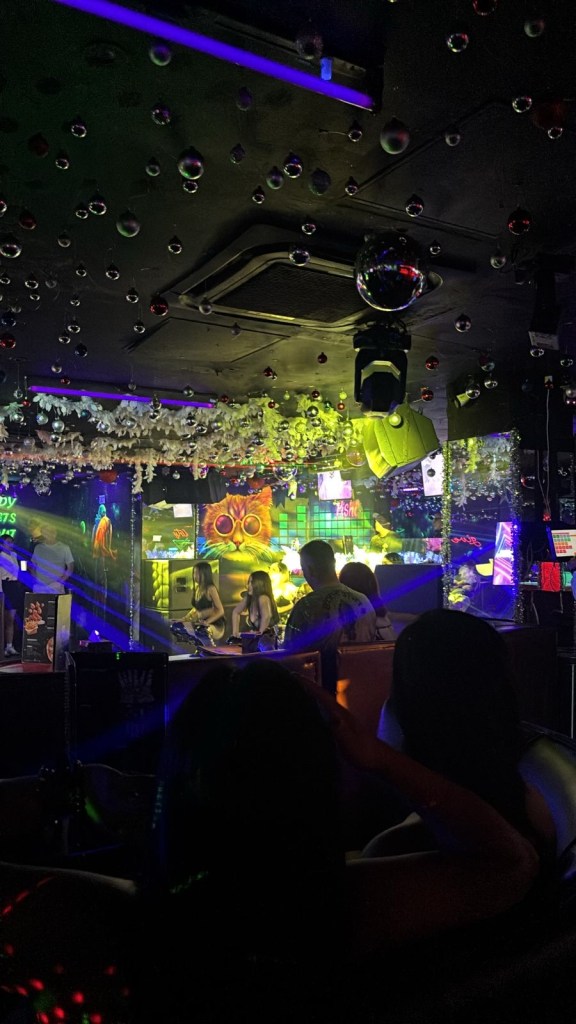
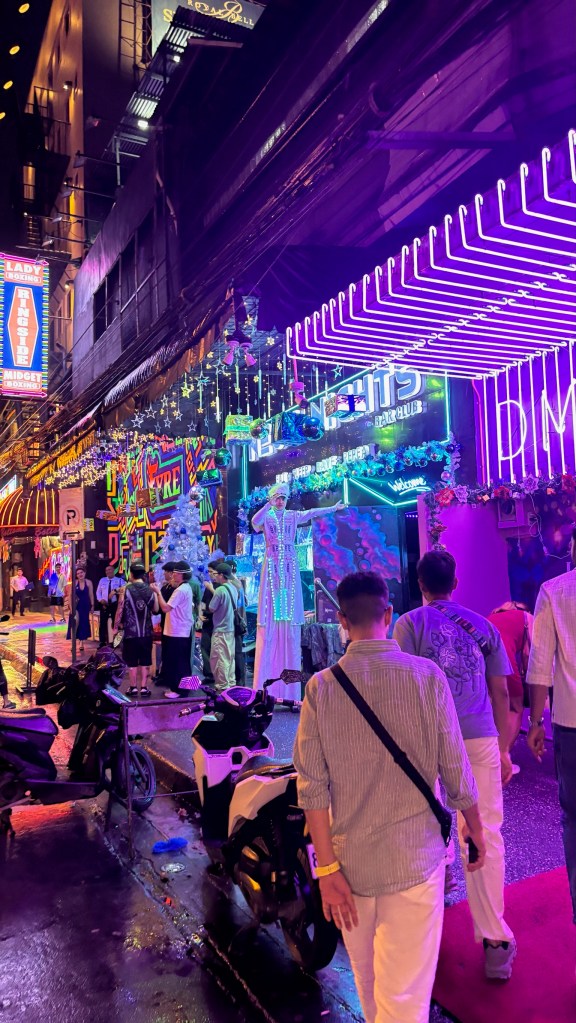
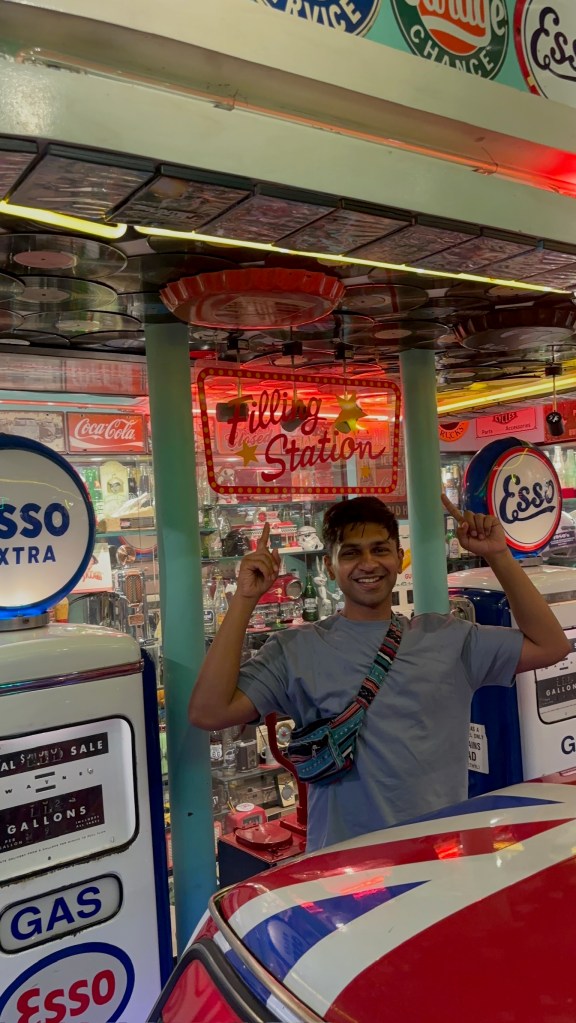
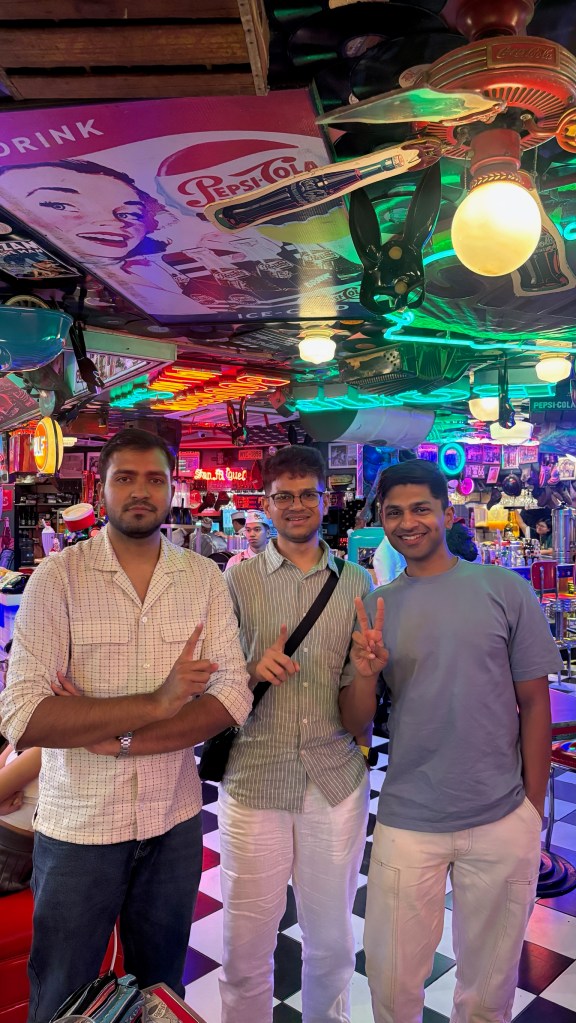
On a scale from -5 to +5, I will rate Intramuros +2.5, Segway tour -3, Bowling +2.5, The Filling Station +2.5.
Day 14- 2nd Jan, Friday – Malls, Souvenirs & Manila’s Best Cocktails
2nd January was our final full day in the Philippines. We started with a vegan breakfast at a plant-based café- Green Bar. From there, we visited a nearby mall that had a teamLab-style light installation called Space and Time Cube— interactive digital art, glowing structures, and immersive light play. It sucked big time. Disgusting.

But for the last day, we really wanted to shop properly, so we headed back to SM Mall of Asia. I loved this mall — it’s massive, has endless outlets for souvenirs, plus restaurants of every kind. We split up and gave ourselves free time: I bought shoes (Nike had what felt like the best collection ever), a few T-shirts, and some gifts to take home.
As evening approached, we switched into cocktail-hunt mode one last time. First, we went to Edoya, a Japanese restaurant, for an early dinner — simple, comforting Japanese food to line the stomach before drinks. Then we headed to Fat Cat, a cat-themed cocktail-and-tarot bar that does drinks inspired by cat tarot card archetypes. The concept is quirky, and the cocktails are genuinely interesting.
Our final stop was the most reputed cocktail spot in the city: The Curator Coffee & Cocktails in Legazpi Village, Makati. By day, it’s a speciality coffee shop, but at night, a hidden section opens into a dark, moody speakeasy. You enter through the coffee area, and inside it’s all low lighting, intimate tables, and a serious focus on drinks. The menu is creative, with cocktails themed around personalities and stories from around the world, and the place is consistently ranked among Asia’s best bars. We each picked something different, sipped slowly, and let the evening wind down.
After a few beautifully crafted cocktails, we walked back to our hotel, spent some quiet time chilling in the room, and then slept — bags packed, alarms set for flights.
On a scale from -5 to +5, I will rate Green bar -2, Space & Time Cube -3.5, SM Mall of Asia +3.5, Edoya +3, Fat Cat +2.5, The Curator Coffee +3.
Day 15- 3rd Jan, Saturday, Goodbye Philippines
We packed our bags, booked cabs, and headed to Manila airport, mentally preparing for the infamous check-in queues. Some airlines had insanely long lines — Cathay Pacific looked the worst — so we were relieved to see that Thai Airways was far better organised, and check-in for our flight was smooth.
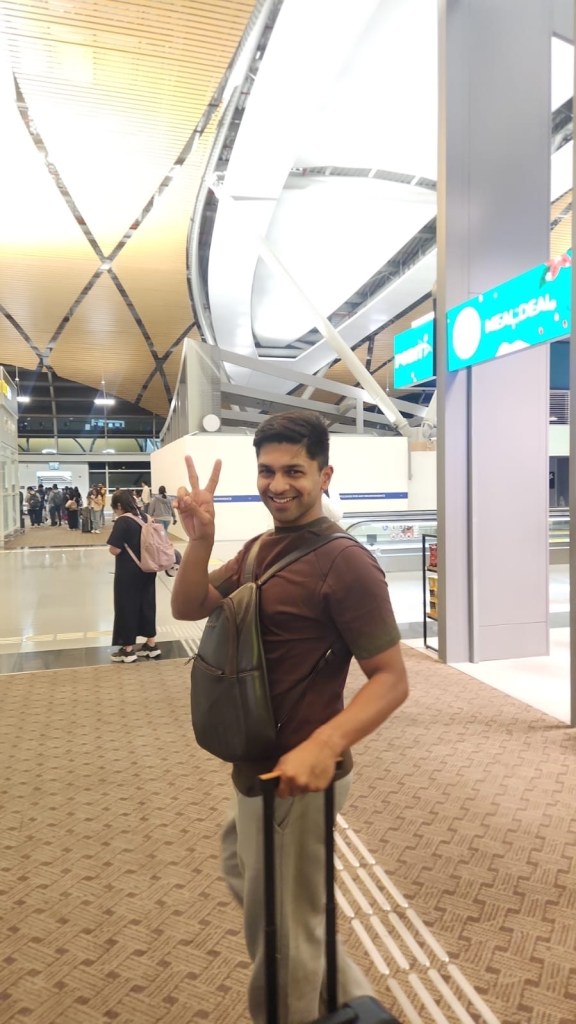
Post check-in, we tried our luck with airport lounges, only to hit a very Indian-traveller problem: almost no vegetarian food. Our cards got us into three different lounges, and all of them had the same story — plenty of meat options, but for vegetarians, basically just bread and cut fruits. So we munched on fruit, accepted defeat, and headed to the gate.
Our Thai Airways flight to Bangkok was on time, and from there, everyone connected onwards to their respective Indian home cities. Just like that, after nearly two weeks of islands, waterfalls, lagoons, cities, cocktails, and group traditions, our Philippines chapter came to an end.
 the 100 countries club
Leave a comment